
Inset vs. Above Counter Basins: Which Bathroom Sink Is Right for You?
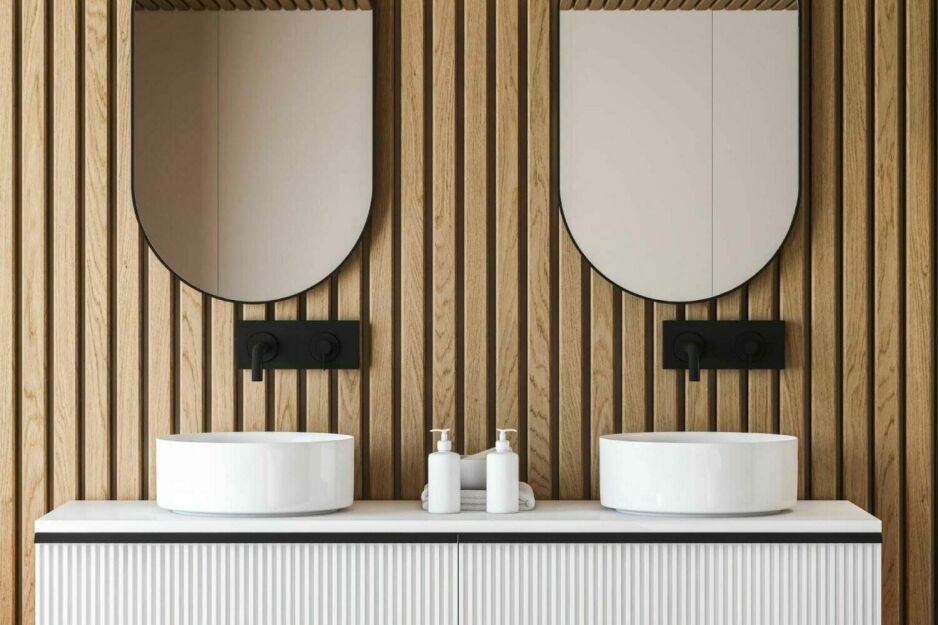
Most Perth bathroom renovations come down to two basin styles: the inset basin that’s recessed into the vanity top, and the above counter basin, also called a vessel basin, that rests on top of it. Both are popular, and both can look fantastic. The right choice comes down to how you use the bathroom, the look you want, and a few practical details that are easy to miss. After years of helping customers pick the right basin in our showroom, I’ll take you through how the two compare.
What Is the Difference Between an Inset and an Above Counter Basin?
An inset basin drops into a cut-out in the vanity top, so the rim remains just above the surface and the bowl is recessed below. You’ll also see it called an overmount basin or drop-in basin. An above counter basin, or vessel basin, is mounted fully on top of the vanity, like a bowl on a bench.
That mounting difference changes more than the look. It affects the tap you need, the vanity height that feels comfortable, splash control, cleaning, and how easy the basin is to change later. Worth saying up front: our current inset and above counter basin ranges are quality ceramic and carry a 5-year warranty, but always check the individual product page before you buy. This isn’t a simple “which one lasts longer” question. It’s about form, function and how the room gets used every day.
Inset vs. Above Counter Basins at a Glance
If you want the quick version, this table covers the main differences. The detail matters, especially with tapware and vanity height, but this gives you the starting point.
| Feature | Inset Basins | Above Counter Basins |
| Mounting | Drops into a cut-out in the vanity top, with the rim above and bowl below | Mounted fully on top of the vanity, like a bowl on the bench |
| Also called | Overmount basin or drop-in basin | Vessel basin |
| Look | Low-profile and streamlined | Feature bowl with more shape and height |
| Tap required | Standard basin mixer at normal height | Tall basin mixer or wall tap, depending on tap hole |
| Vanity height | Works with standard vanity height | Best with a lower vanity so the bowl is comfortable |
| Cleaning | Easy wipe-down around the rim | A little more wiping around the raised base |
| Splashing | More forgiving for daily use | Needs the right tap height and spout reach |
| Changing it later | Tied to the benchtop cut-out | Easier to swap if plumbing and tap position suit |
| Material and warranty | Quality ceramic, 5-year warranty across current range | Quality ceramic, 5-year warranty across current range |
| Best for | Busy family bathrooms and compact spaces | Ensuites, powder rooms and feature bathrooms |
Inset Basins: The Practical Choice

An inset basin gives you a clean, low-profile look that settles into the vanity rather than drawing all the attention. That brings real practical upsides. The near-flush rim leaves very little for grime to catch on, so wiping down the vanity top takes seconds. The lower bowl helps keep water contained, and it pairs with a standard basin mixer at a normal vanity height.
I usually point families with young kids toward inset basins first. They’re forgiving, easy to clean, and hard to make awkward. In a main bathroom that gets used by everyone, that matters more than people think at the buying stage.
The trade-offs are honest ones. An inset basin is the subtler look, so it won’t give you the same feature-bowl effect as a vessel basin. The size and depth of the bowl are also limited by what the vanity top can take. And because it’s set into the benchtop, swapping it down the track means working around that cut-out rather than lifting one bowl off and replacing it with another.
Above Counter Basins: The Statement Choice
An above counter basin rests fully on top of the vanity, and that’s its biggest draw. It turns a functional fixture into a visible design feature, and you get more choice in shape: round, oval, square, fluted, gloss and matte. Because it rests on top instead of being recessed into the benchtop, more of the vanity top stays on show.
The practical planning matters, though. A vessel basin needs either a tall basin mixer or a wall-mounted tap so the spout clears the rim and reaches the bowl properly. You also need to check whether the basin has a tap hole. Some do, some don’t. If there’s no tap hole, you’re choosing a wall tap or a tap mounted through the vanity top.
The vanity height needs attention too. Put a tall bowl on a standard-height vanity and the finished height can feel awkward, especially for kids or shorter adults. A slightly lower vanity usually works better. The raised base also creates a small seam to wipe around, and a tap that’s too tall or too far forward can splash. None of that’s a dealbreaker. It just needs planning before you buy.
Tapware, Vanity Height and Splashing
The tap is where a lot of basin choices either work well or become annoying. An inset basin keeps things simple because a standard basin mixer usually lands at the right height and angle. An above counter basin asks more from the tap because the water has to clear the rim, land in the bowl, and avoid splashing back onto the vanity.
For above counter basins, I like customers to choose the basin and basin mixer together, not separately. A tall mixer can look right but still be wrong if the spout reach is too short or the water lands too close to the front edge. A wall tap can be a great option, but the rough-in position needs to be planned before the walls are finished.
The same goes for vanity height. The comfortable finished height is the top of the bowl, not the top of the cabinet. That’s why a vessel basin often works better on a lower vanity, while an inset basin suits standard vanity height more easily. If you’re replacing only the basin, measure what you already have before you fall in love with a tall bowl.
Which Basin Suits Your Bathroom Type?
The best basin style usually becomes clearer once you think about the room, not just the product. A family bathroom, ensuite, powder room and small bathroom all ask different things from a basin.
For a family bathroom, I’d choose an inset basin most of the time. It’s easier to wipe, more forgiving with splashing, and less likely to get in the way during the morning rush. For an ensuite, an above counter basin can be a lovely choice because it gives the room more personality without needing a full redesign. For a powder room, a vessel basin often makes sense because the room gets lighter use and the basin can carry the look.
Small bathrooms need a little more care. An inset basin can make a compact vanity feel less crowded because the bowl doesn’t rise above the bench as much. But a small round or oval above counter basin can still work well if the vanity depth, tap position and bowl height are right. I’d avoid oversized feature bowls in tight bathrooms. They look good in photos but can steal too much usable bench space.
How They Compare on the Things That Matter
Quality and warranty: This one is a tie. Our current inset and above counter basins are quality ceramic with a 5-year warranty, so neither is the better-made option by default. Check the product page for the basin you choose, but treat this as a style and use decision first.
- Look: An inset basin blends into the vanity for a calm, streamlined finish. An above counter basin stands out more and gives you more shape to play with.
- Tap and vanity height: An inset basin works with a standard mixer at standard height. An above counter basin needs a taller mixer or wall tap and usually suits a lower vanity.
- Cleaning: An inset basin is the lower-maintenance choice. An above counter basin trades a little extra wiping around the base for its look.
- Cost: At Ross’s, our above counter basins run from around $110 to $260 at the time of writing. Whichever style you choose, factor in the tapware, since an above counter basin needs the right tall mixer or wall tap to work well.
- The room: For a hard-working family bathroom or compact bathroom, an inset basin is the practical pick. For an ensuite, powder room or any space where you want a feature, an above counter basin earns its place.
There’s no single right answer. It comes down to which of those points matters most in your room.
Our Range of Inset and Above Counter Basins in Perth
We stock both styles at our Guildford showroom and online. Browse our above counter basins if you want a feature bowl in round, square, oval or fluted shapes. Browse our inset basins if you want the flush, low-maintenance option.
If you choose an above counter basin, look at our basin mixers at the same time, because the right tall mixer or wall tap makes all the difference. For a wider look at every basin style, our guide to choosing the right bathroom basin runs through the lot. Come into the Guildford showroom and we’ll help you match a basin to your vanity and tap before you buy.
Frequently Asked Questions
So, Which Basin Should You Choose?
Choose an inset basin if you want the practical, easy-clean option for a main bathroom, compact bathroom or busy family space. It’s simple to pair with standard tapware, comfortable at standard vanity height, and forgiving with splashing. Choose an above counter basin if you want the basin to be a visible design feature and you’re happy to plan the tap height, vanity height and cleaning around it.
If I were choosing for my own main bathroom, I’d usually go inset. If I were choosing for an ensuite or powder room where the basin gets noticed more and used a little less heavily, I’d happily go above counter. That’s the balance I suggest to customers in our showroom too: choose the style that suits the room, then match the tap and vanity around it.
You can compare our bathroom basins online or visit our Guildford showroom to see the difference in person. Bring your vanity size if you have it, and we’ll help you match the basin, tap and vanity top before you commit.
