
Vanity Top Buying Guide: How to Choose the Right Surface for Your Bathroom
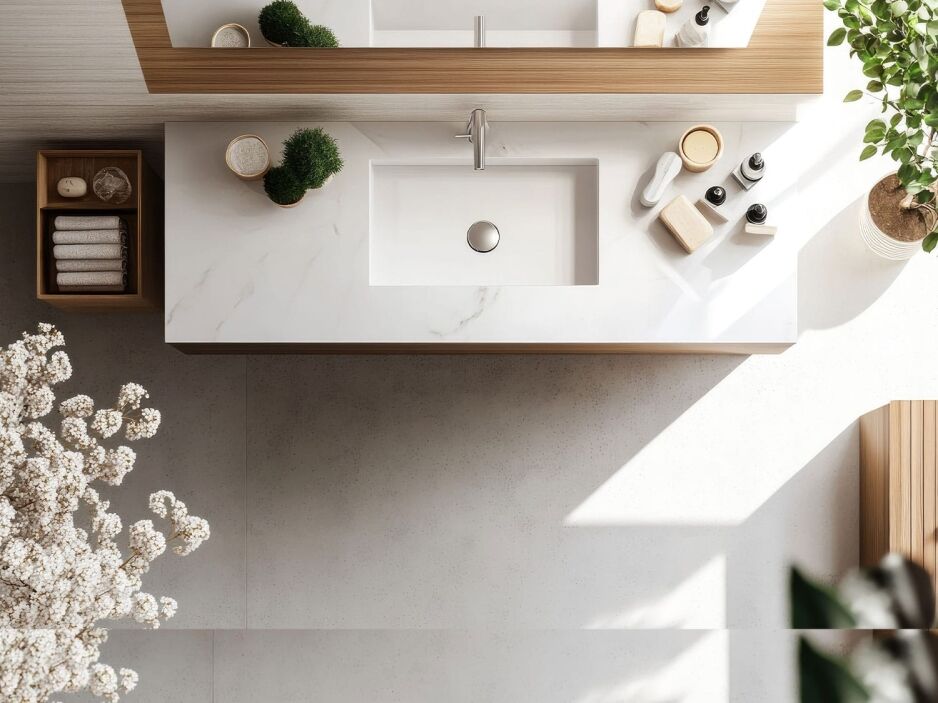
Choosing a vanity top means balancing the surface material, basin arrangement and measurements, not just finding a colour you like. A top that looks right still needs to cope with daily splashes, suit your tapware and fit the vanity cabinet underneath. Getting those details right early can save you an awkward change after ordering.
At Ross’s, we help customers compare vanity tops for all sorts of bathroom updates, from replacing a damaged ceramic top to choosing a new stone-look surface. Durability and ease of cleaning matter, but the first practical question is whether the top and basin will work with the cabinet and plumbing.
Ceramic and sintered stone are two useful starting points. The choice then comes down to whether you want a one-piece basin, a stone top with an undermount bowl, or a flat top for a separate above-counter basin. Each arrangement has different cleaning and fitting considerations.
This guide compares the materials, configurations, dimensions, tap-hole options and costs that matter when choosing a vanity top. It stays focused on the top itself; if you need to choose a complete new vanity unit, our separate bathroom vanity buying guide covers that decision.
Types of Vanity Top Materials (And Which Are Best in Bathrooms)

Your vanity top needs to do more than just look good—it has to handle moisture, heat, daily use, and bathroom cleaning products without cracking, staining, or warping. That’s why choosing the right top for your bathroom vanity is one of the most important decisions in your renovation. Below is a breakdown of the most common vanity top materials, starting with the ones we most often recommend for bathroom use.
Ceramic Vanity Tops
Ceramic vanity tops are one of the most reliable and low-maintenance options for any bathroom. They’re made from fired clay and coated in a durable glaze, which makes them non-porous, stain-resistant, and incredibly easy to clean. That glossy finish not only reflects light—making your bathroom feel brighter—it also prevents grime and mould from clinging to the surface.
At Ross’s, most of our ceramic vanity tops come as moulded vanity tops with an integrated basin, available in both single and double vanity top formats. That means there are no joins between the basin and benchtop, making them more hygienic and easier to wipe down. For everyday functionality in a family bathroom, ensuite or powder room, a ceramic vanity top is almost impossible to beat.
Sintered Stone Vanity Tops
Traditional engineered quartz combines stone particles with resins to create a consistent stone-look surface. In Australia, the manufacture, supply, processing and installation of engineered stone benchtops, panels and slabs that meet the regulated definition have been prohibited since 1 July 2024. This material should not be presented as a standard new vanity-top option.
For a new bathroom, resin-free sintered stone and porcelain are alternatives outside that engineered-stone prohibition, subject to the product’s actual composition. If you are comparing materials or reusing an existing top, confirm what the product is made from and seek appropriate advice before any cutting or modification.
Natural Stone (Granite/Marble)
Natural stone vanity tops offer beautiful, one-of-a-kind patterning and a premium feel, but they’re not always the most practical choice for a bathroom. Being porous, materials like granite and marble require sealing and regular maintenance to stay stain- and moisture-resistant. And even with reasonable care, they can be prone to etching, chipping or developing a dull finish over time.
While they make a statement in large, styled bathrooms, they’re not ideal for high-use areas unless you’re prepared for the upkeep. If you love the look of a stone vanity top with sink, but want less hassle, we often suggest considering sintered stone as a better-performing alternative.
Quartz/Engineered Stone
Traditional engineered quartz combines stone particles with resins to create a hard, consistent surface. However, Australia banned the manufacture, supply, processing and installation of engineered stone benchtops, panels and slabs that meet the regulatory definition from 1 July 2024.
If you’re comparing vanity top materials for a new bathroom, resin-free sintered stone and porcelain are alternatives that fall outside this prohibition. They offer a stone-look finish without the same restrictions. Always confirm the material composition and suitability of the product before buying.
Laminate
Laminate vanity tops can be a quick and affordable option if you’re renovating a bathroom on a very tight budget. Made by applying a decorative surface layer over MDF or particleboard, they’re available in plenty of colours and patterns—including faux stone or timber looks. However, laminate isn’t fully waterproof; over time, moisture can seep into the joins or edges, causing swelling or warping.
That makes laminate better suited to guest bathrooms or powder rooms that don’t get heavy use. It’s also important to avoid pooling water around tapware or basins with laminate, which can degrade the surface over time.
Timber/Concrete
Both timber and concrete vanity tops are popular in industrial or rustic bathroom designs—but they’re not as functional as ceramic or sintered stone. Timber creates a warm, organic feel, but it’s highly sensitive to water and must be sealed regularly to prevent staining or warping. It also needs gentle cleaners and extra care to preserve its finish.
Concrete vanity tops with integrated sinks look bold and custom-made, but they’re porous, heavy, and prone to cracking or staining if not perfectly sealed and maintained. These materials are more about style than practicality and are best reserved for low-traffic bathrooms or feature ensuites where maintenance isn’t a concern.
TL;DR: When choosing a vanity top for your bathroom, prioritise durability, water resistance, and ease of cleaning—especially if you’re planning for a family or high-use space. That’s why we typically recommend ceramic or sintered stone vanity tops as the most reliable, low-fuss solutions. They offer the best mix of form and function, with styles and colours that suit almost every bathroom.
Integrated Sink vs Flat Vanity Tops
Once you’ve settled on a material for your vanity top, the next choice is configuration—do you want a vanity top with an integrated sink, or a flat surface vanity top that pairs with a separate basin? Each option has strengths, and the right choice depends on your bathroom layout, style, and how you plan to use the space each day.
Integrated Vanity Tops (One-Piece)
A one-piece or moulded vanity top has the basin formed as part of the same piece, as is common with ceramic tops. The continuous glazed surface has no separate basin-to-top join, making it straightforward to wipe down. A sintered stone top fitted with an undermount ceramic bowl can look similarly streamlined, but the bowl is a separate component with a sealed joint.
That distinction matters for cleaning and maintenance. A moulded ceramic basin has no join around the bowl, while an undermount basin needs its joint and seal looked after. Both can suit busy bathrooms, provided the top, cabinet and basin arrangement are compatible. Check whether your chosen model comes with one or two basins before ordering.
Choose a one-piece top if minimal joins and easy wiping are the priority. Choose a stone top with an undermount basin if you prefer that surface appearance and are comfortable maintaining the basin joint.
Flat/Slab Tops for Above-Counter Basins

A flat or slab vanity top is a surface intended to take a separate basin, commonly an above-counter bowl. It gives you more freedom over basin shape and position, but the cut-out, waste, tapware clearance and finished basin height need to be planned together. A raised basin may also need a suitable waste fitting, depending on the top and basin specifications. Our range includes extended basin wastes for some configurations.
Our sintered stone flat vanity tops are especially popular for this type of installation. They’re available in versatile colours and finishes that pair beautifully with almost any basin, and their minimalist appearance suits contemporary and architectural bathrooms.
A flat or slab vanity top is a surface intended to take a separate basin, commonly an above-counter bowl. It gives you more freedom over basin shape and position, but the cut-out, waste, tapware clearance and finished basin height need to be planned together. A raised basin may also need a suitable waste fitting, depending on the top and basin specifications. Our range includes extended basin wastes for some configurations.
TL;DR: Whether you go with an integrated sink or a flat vanity top, the most important thing is finding a setup that matches how you use the space—and how much effort you want to put into cleaning and maintenance. If you’re not sure which way to go, our team at Ross’s can show you both options side by side and help you visualise the right fit for your bathroom.
Vanity Top Sizes and Configuration Options
Getting the size right is just as important as picking the right material or finish for your vanity top. Your top and your vanity cabinet need to be a perfect match—so either your vanity top defines your vanity size, or your vanity cabinet determines the top you’ll need. There’s no room for error here; mismatched sizes won’t align and can lead to costly rework.
At Ross’s, we stock a wide range of vanity top sizes to suit everything from compact powder rooms to large, shared family bathrooms. Whether you’re updating an old vanity or buying a new bathroom vanity and top combination, here’s what you’ll need to consider.
What to Check When Replacing an Existing Vanity Top
If you are keeping the existing cabinet, the replacement top must suit more than its nominal width. Measure and confirm the following before ordering:
- Overall dimensions: Measure the existing top’s full width and depth, including any overhang.
- Cabinet support: Check where the top will rest and how the new top must be secured.
- Basin clearance: Confirm that the basin and waste will not interfere with drawers, shelves or cabinet framing.
- Waste alignment: Check where the outlet and pipework will sit in relation to the existing plumbing.
- Tapware and height: Allow for tap-hole placement, spout reach and the finished height of any separate basin.
Standard widths do not guarantee a matching fit. Confirm the precise product dimensions and installation requirements, and have your plumber check any proposed changes to wastes or tapware.
Standard Sizes at Ross’s Discount Home Centre
To simplify your planning, we stock vanity tops in a variety of standard widths, including:
- 600mm, 750mm, and 900mm vanity tops – best for small to medium bathrooms or guest spaces
- 1200mm bathroom vanity tops – ideal for medium to large layouts
- 1500mm and 1800mm options – often used in main bathrooms or where dual-basin setups are preferred
Many vanity tops in the range are approximately 460mm or 465mm deep, but measurements vary by model. Check the exact width, depth and edge profile in the product specifications. A top with a familiar nominal width may still have different fixing points, overhang or basin clearance from your existing unit.
Some larger sizes are offered with either a single or double basin. Check the selected product’s configuration rather than assuming a particular width always includes two bowls.
Single vs Double Basin Options
Vanity tops are available with different basin configurations, and the choice must suit the cabinet and available plumbing.
A single-basin top generally leaves more uninterrupted bench space. A double-basin top gives two people separate washing areas, but it also needs the right cabinet support and waste arrangement.
Check the dimensions and specifications of the selected model before ordering. Larger vanity tops are not necessarily interchangeable between single- and double-basin arrangements.
If you are deciding whether two basins make sense for your household, the space, storage and cost trade-offs are explained in our single vs double basin vanity comparison.
Tap Hole Configurations: One or Three?
Another detail you’ll need to consider is the number of tap holes in your vanity top. Most tops are pre-drilled with either a single tap hole for a basin mixer, or three tap holes for a traditional hot and cold tap with a central spout.
- One tap hole is suited to basin mixers, offering a cleaner, more modern look. These are the most popular choice in Australian bathrooms, especially for ensuites and minimalist designs.
- Three tap holes allow you to install a three-piece tapware set, which suits traditional or federation-style bathrooms. They’re often chosen for their symmetry and tactile control over hot and cold water.
At Ross’s, tap-hole arrangements vary by vanity top model. Some ceramic tops are available with either one or three tap holes, while other tops have one hole or no pre-drilled tap holes. Check the exact product specification against your chosen tapware. For wall-mounted tapware or a separate above-counter basin, confirm the fitting and clearance requirements with your plumber before ordering.
Choosing the right tapware layout in the early planning stages, including which basin tap set suits your tap holes, can help avoid unexpected adjustments later in your renovation. If you’re unsure, we’re happy to discuss your options in-store.
Style and Colour Considerations

Your vanity top colour and surface finish should work with the cabinet, basin and surrounding tiles. White, grey and black finishes suit many bathroom schemes, but the practical choice also depends on how easily the surface shows watermarks and how it should be cleaned. Choose from finishes actually available for the material and model you need.
Neutral Colours Are a Safe and Stylish Choice
If you’re unsure where to start, stick with neutral tones like white, grey, or black. These colours are versatile and timeless, making them easy to pair with a wide range of tile, paint, and vanity cabinet finishes. A white vanity top feels clean and classic, especially in smaller spaces, while grey or black tops offer more visual contrast and can add a modern or moody edge—particularly in larger bathrooms or ensuites.
At Ross’s, many of our vanity tops come in a range of neutral colours across both ceramic and sintered stone options, making it easy to find something that fits your scheme.
Finish Matters: Matte vs Gloss
Gloss surfaces reflect more light and are often easy to wipe clean, although watermarks can be visible. Matte finishes reflect less light, but their ability to hide marks depends on the material, colour and surface texture. Always follow the individual product’s cleaning instructions rather than assuming one finish is lower maintenance in every case.
Both finishes can work well depending on your tapware and tile selections, so think about what will complement the rest of your bathroom.
Coordinate with Tile Colours and Textures
Consider how your vanity top will sit alongside your floor and wall tiles to tie your look together. For example:
- White or grey vanity tops work beautifully with white tiles for a soft, cohesive look, or with charcoal tiles for contrast.
- A black top adds drama against beige tiles or wood-look flooring.
- If you’re using green or blue tiles as a feature, a soft grey or white top will balance the colour and keep the space from feeling too bold.
Whether you want a bold contrast or a calm, cohesive palette, choosing the right vanity top colour and finish will help you achieve a polished, well-thought-out bathroom design.
Budgeting for Your Vanity Top
Like any part of your bathroom renovation, your vanity top is an investment. And while it might be tempting to choose the cheapest option upfront, it’s often the long-term performance and maintenance requirements that really determine value for money. Here’s what to consider when budgeting for your bathroom vanity top.
Cost vs Longevity
At Ross’s Discount Home Centre, our vanity top range starts at just $135, with premium sintered stone options reaching $980. Prices vary depending on material, size and basin configuration. Ceramic tops are generally the more affordable choice, while larger sintered stone tops and double-basin configurations tend to cost more.
Ceramic and sintered stone tops can offer good long-term value because they resist moisture and are relatively straightforward to maintain. Compare the product price with what is included, the condition of your cabinet and any plumbing or fitting work needed. These details often matter more than the cheapest ticket price.
Beware of High-Maintenance Materials
While options like laminate, natural stone, and concrete vanity tops may initially seem budget-friendly or on-trend, they can come with higher upkeep costs over time. You might save on the initial spend, but repairs, resealing, and early replacements can quickly eat into those savings.
Choosing a moisture-resistant, easy-clean surface can help reduce ongoing upkeep. Compare the care requirements of each material rather than assuming a more expensive top will always last longer.
Installation Costs Matter Too
Your configuration choice will also affect cost. Flat vanity tops paired with separate basins may require additional plumbing and custom drilling, depending on where the basin is placed. This can add labour time and expense. On the other hand, integrated vanity tops—where the sink and top are one piece—are generally quicker to install, with fewer moving parts.
If you choose a custom vanity top for a unique layout or basin, factor in fabrication and installation into your budget.
TL;DR: When setting your budget, don’t just focus on what you’ll pay at the checkout. Consider how your vanity top material will perform over time and what level of maintenance you’re willing to take on. A wise investment now can save you time, stress, and money later.
Final Advice from Ross’s
Choosing a moisture-resistant, easy-clean surface can help reduce ongoing upkeep. Compare the care requirements of each material rather than assuming a more expensive top will always last longer.
At Ross’s, you can buy vanity tops separately for compatible cabinets, or choose a complete vanity and top combination. If you are replacing only the top, bring the cabinet measurements and existing plumbing details so our team can help you check the options.
Not sure whether you want a flat top or a one-piece? Head into our bathroom warehouse at 57 James Street, Guildford, and see the difference for yourself. You can compare finishes side-by-side, get a feel for colour tones under different lighting, and chat with our team about matching your top with your wall tiles, tapware, and layout.
For a closer look at the materials and basin arrangements, visit our Guildford showroom. If you are choosing an entire unit rather than just the surface, use our bathroom vanity buying guide for the broader cabinet and layout decisions.
