
Types of Laundry Cabinets: A Comprehensive Guide to Organising Your Space
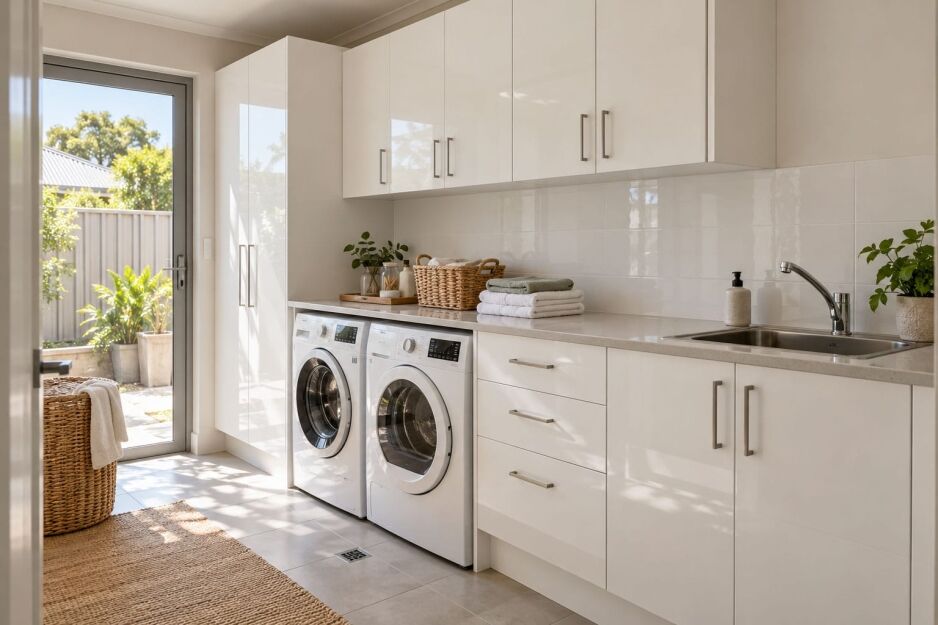
Choosing between the different types of laundry cabinets can get confusing quickly. You might need base cabinets for bench space, overhead cupboards for everyday supplies, drawers for easier access, or a tall cupboard for the broom, mop and vacuum. An all-in-one trough unit solves a different problem.
I’ve found that the best laundry rarely comes from simply adding as many cupboards as the room will take. It comes from choosing the right mix for what you actually store and how you use the space.
We offer both modular cabinetry and all-in-one laundry units. Our modular cabinets come from the same Q range we use for kitchens, so you can combine base, wall, drawer and tall cabinets to suit the room.
What Are the Main Types of Laundry Cabinets?
The main types of laundry cabinets include base cabinets, wall or overhead cabinets, tall broom and linen cupboards, drawer cabinets, pull-out utility cabinets, corner cabinets and pantry toppers. All-in-one trough units are another option because they combine a trough and cabinet in one complete unit.
The easiest way to compare them is by what each type actually does in the room.
| Laundry cabinet type | Best used for |
| Base cabinets | Under-bench storage and supporting useful worktop space |
| Wall or overhead cabinets | Adding storage without using floor space |
| Tall broom or linen cupboards | Storing brooms, mops, vacuums, linen and other bulky items |
| Drawer cabinets | Keeping smaller items visible and easy to reach |
| Pull-out utility cabinets | Adding specialised pull-out storage within a cabinet run |
| Corner cabinets | Making better use of an L-shaped or return layout |
| Pantry toppers | Adding extra storage higher up the wall |
| All-in-one trough unit | Combining a trough and enclosed cabinet in one all-in-one unit |
If you call them cupboards rather than cabinets, the same laundry cupboard types apply. Focus on what each configuration does rather than the label.
Pre-assembled and modular describe how cabinetry is supplied and combined, not separate cabinet categories. Compact, white and modern describe size, colour or style rather than function.
So what does each modular cabinet type actually give you?
Modular Laundry Cabinet Types Explained

Once you understand the main cabinet options, the next step is deciding which ones should work together. Most laundries work better with a mix rather than rows of the same cupboard.
Our modular laundry cabinetry comes from the same Q cabinet range we use in kitchens. The main configurations are base, wall, tall, drawer, pull-out utility, corner and topper cabinets.
Base Cabinets
Base laundry cabinets sit at floor level and usually form the foundation of a longer run. They give you enclosed storage below a benchtop and useful work space above.
I like base cabinets for bulkier cleaning products, baskets and spare supplies. Choose shelves, drawers or a specialist pull-out configuration based on what needs to go inside.
Wall and Overhead Cabinets
Wall laundry cabinets use vertical space without taking up floor area, which can make a big difference in a smaller laundry.
They work well for detergents, sprays and spare supplies you want off the benchtop. Check windows, appliances, head clearance and how easily you can reach the contents.
Tall, Broom and Linen Cupboards
Tall laundry cabinets are some of the most useful laundry room cupboards for items that simply do not fit neatly into base cabinets.
A laundry broom cupboard can hold brooms, mops, a vacuum cleaner or ironing board. Tall cupboards can also work well for linen, towels and bulk supplies.
Our tall Q cabinets use adjustable shelving, and the shelves can be removed when you need uninterrupted vertical space.
If you’re looking at floor standing laundry cabinets, a tall cupboard usually gives you the most useful vertical storage for long or bulky items.
I’ve made the mistake of thinking a laundry needed more standard cupboards when it really needed one good tall cabinet. Once the mop, vacuum and ironing board had a proper home, the rest of the room could be used for drawers and bench space.
Drawer Cabinets
Drawer laundry cabinets make smaller items much easier to see and reach.
I prefer drawers for pegs, cloths and smaller cleaning products because you can see the contents at a glance. Shelved cupboards still make more sense for larger bottles and bulkier items, so a mix often works best.
Pull-Out Utility Cabinets
Pull-out utility cabinets give you specialised storage within a modular run.
Depending on the configuration, they can take baskets, bins or other inserts. They are useful when the pull-out makes the contents easier to reach.
Corner Cabinets
Corner laundry cabinets can recover useful storage in an L-shaped or return layout.
I would only use one where the room naturally creates a corner. In a straight cabinet run, there is no reason to force in a corner solution.
Pantry Toppers and Extra Vertical Cabinets
Pantry toppers add enclosed storage higher up the wall, which can be handy for spare towels, bulk cleaning supplies or items you do not need every day.
Once you know what each configuration does, you can compare our laundry cabinet range based on function rather than simply choosing whatever fits along the wall.
Laundry Trough Cabinets and Laundry Units
A combined trough-and-cabinet unit is a different product format because the trough and enclosed storage come together as one piece. We offer these alongside our modular cabinetry.
This format can make sense if you mainly need a trough and basic storage underneath. If you also want drawers, overhead cupboards, tall storage and a longer benchtop, modular cabinetry gives you much more flexibility.
It can also be a practical replacement where an older freestanding trough already occupies the same part of the room.
| Decision point | Modular cabinetry | All-in-one trough unit |
| Storage flexibility | High, with different cabinet types combined | Basic enclosed storage below the trough |
| Bench space | Can create a longer work surface | Usually limited around the unit |
| Trough / sink | Planned separately | Included in the unit |
| Tall storage | Can be added as part of the layout | Normally separate |
| Best suited to | Full laundry layouts | Simple or compact laundry setups |
Neither option is automatically better. Choose the all-in-one format for a simple trough-and-storage setup, or modular cabinetry when the laundry needs to do more.
There is one compliance point worth knowing. For Class 1 buildings, the National Construction Code residential laundry provisions require clothes-washing facilities to include at least one wash tub and space in the same room for a washing machine.
If you want to compare trough options in more detail, our laundry tub buying guide covers that decision separately, while our laundry sinks and troughs range is the place to compare the current product options.
How to Choose the Right Mix of Laundry Cabinets
If you’re wondering how to choose laundry cabinets, start with what actually needs to fit in the room. I always sort out function first. Style and finishes can come later.
- Start with the tall items. Brooms, mops, vacuum cleaners and ironing boards need vertical space. If you have several, a tall cupboard can be more useful than another base cabinet.
- Work out what needs to be within easy reach. Smaller everyday supplies are usually easier to manage in drawers or accessible wall and base cabinets.
- Protect useful bench space. Base cabinets can support a practical surface for folding and sorting, while too much tall cabinetry can cut into that bench space.
- Choose between drawers and shelves. Drawers improve visibility and access. Shelved cupboards suit larger bottles, baskets and bulkier supplies.
- Use corners only where they earn their place. A corner cabinet can recover storage in an L-shaped laundry, but it adds little to a straight run.
- Decide whether you need a full cabinet run. If your needs are simple, an all-in-one trough unit may give you the sink and storage you need without filling the room with cabinetry.
Once the cabinet mix works, you can move on to laundry cabinet design and layout ideas. If you need help deciding what belongs inside each cupboard, our laundry cupboard organisation ideas cover that separately.
Check Your Space Before Choosing Cabinet Types
Once you know which cabinets would be useful, check whether they actually fit the room.
I start with the fixed parts of the laundry. Measure usable wall and floor space, then mark out doors, windows and awkward corners. It is easier to rule out a cabinet on paper before planning the rest of the room around it.
Allow for the washing machine and dryer as well. Their positions affect how much base cabinetry, wall cabinetry and benchtop space you can use.
Then check plumbing, power points and switches. If the trough or sink is staying in roughly the same position, that will influence the layout straight away. Keep access to services clear.
Also think about appliance clearances and service access. A cabinet can fit into a gap and still be a poor choice if it makes the washing machine difficult to remove.
Finally, weigh bench space against tall storage. A tall cupboard can solve a lot of storage problems, but in a small laundry it may also shorten the benchtop.
Get those basics right and choosing laundry cabinets becomes much easier because you are working with the room you actually have.
What Pre-Assembled and Modular Laundry Cabinets Mean
Pre-assembled and modular describe how the cabinetry works, not separate cabinet types.
Our base, wall and pantry cabinets arrive pre-assembled, so the cabinet box is already put together before it reaches you.
Modular means you can combine individual configurations to suit the room. A laundry might use base cabinets, drawers, overhead cupboards and a tall broom cupboard from the same range.
That is why our Q cabinet range works across kitchens and laundries. In one of my renovations, I used the same system in both rooms, but the laundry needed far more tall cleaning storage and overhead space.
The cabinetry uses 18 mm HMR MDF doors, 16 mm HMR particleboard carcasses and adjustable shelving. The current manufacturer warranty is 10 years.
If you want to compare the construction in more detail, our laundry cabinet materials guide covers that separately.
Frequently Asked Questions About Laundry Cabinet Types
These are the questions I hear most often from people comparing cabinet options and working out what will suit their laundry.
Which Laundry Cabinet Setup Is Right for Your Laundry?
The right setup comes down to how much you need the room to do.
If you mainly need a trough and basic enclosed storage, an all-in-one trough unit may be enough. If you want bench space, overhead storage, drawers or tall broom storage, modular cabinetry gives you more flexibility.
In most laundries, the best result comes from combining a few cabinet types rather than simply adding more cupboards.
That is the approach I recommend. Start with what you need to store, how often you use it and how much benchtop space matters. Then choose the types of laundry cabinets that solve those needs.
Our Q cabinets are pre-assembled and can be configured for laundry use. You can compare our pre-assembled laundry cabinets online or visit our Guildford showroom for practical help planning the right combination.
