
Basin Buying Guide: How to Choose the Right Bathroom Basin
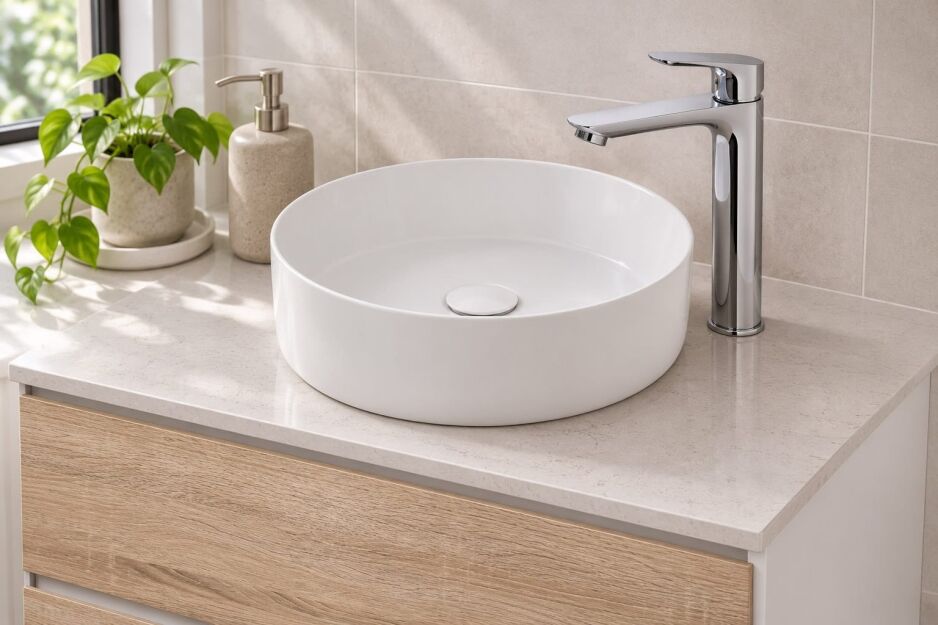
Choosing a bathroom basin sounds simple enough until you realise how many options there are. This basin buying guide will help you narrow them down by looking at what really matters: how the basin fits, how comfortable it is to use, how easy it is to clean, and whether it works with your existing fittings.
If you’re wondering how to choose a bathroom basin, don’t start with the shape you like best. Start with the space you’ve got and how you’ll use it. An above-counter basin might look fantastic, but its raised rim adds height. A compact basin might save width but still project too far into the room. These are the sorts of details that can make a real difference once the basin is installed.
I’ll walk you through the different basin types, sizes and materials, along with the practical checks worth making before you buy. By the end, you’ll know what to look for and which options make the most sense for your needs.
How to Choose a Bathroom Basin
The best way to choose a bathroom basin is to start with how it will be installed, then check the available space, bowl size and material. Finally, make sure the basin works with your intended tapware and waste fittings and will be comfortable to use every day.
Follow these five steps to narrow down your options:
- Choose the basin type: Decide between above-counter, inset, undermount, semi-recessed, wall-hung or pedestal designs. Each has different space requirements and practical advantages.
- Measure your space: Check the basin’s width, front-to-back projection and overall height, allowing enough room to use it comfortably.
- Consider the bowl: Look beyond the outside dimensions. The internal depth and shape affect how much usable washing space you get and how easily water splashes.
- Compare materials: Consider durability, cleaning requirements and how the surface will handle everyday use.
- Check compatibility: Confirm the mounting requirements, tap-hole configuration, spout position and waste fitting before buying.
If you’re replacing an existing basin, the current cut-out, mounting points and plumbing position may limit your options. A new installation generally gives you more flexibility.
Keep these priorities in mind as you work through this basin buying guide. Choosing a bathroom basin becomes much easier once you know which features are essential and where you can compromise.
Types of Bathroom Basins: Which One Should You Choose?
The different bathroom basin types each have their advantages, but the way a basin is mounted can make a bigger difference than its appearance. Some save valuable space, others make cleaning easier, and certain designs need specific benchtops or plumbing arrangements. Understanding these differences will help you narrow down the options.
Here’s how the main types of bathroom basins compare.
| Basin Type | How It’s Mounted | Main Advantage | Main Drawback | Best Suited To |
| Above-counter (vessel) | Sits on top of a benchtop | Distinctive design with flexible bowl placement | Adds height and occupies bench space | Bathrooms where height and tap position can be planned |
| Inset (drop-in) | Fits into a benchtop cut-out with a visible rim | Practical, secure fit with straightforward cleaning | Rim can collect grime | Everyday family bathrooms |
| Undermount | Secured beneath a compatible benchtop | Clear bench surface that’s easy to wipe down | Requires suitable benchtop and support | Bathrooms prioritising easy cleaning |
| Semi-recessed | Partly recessed, with the front extending beyond the bench | Allows a usable bowl on a shallower benchtop | Projects beyond the cabinet front | Narrow bathroom spaces |
| Wall-hung | Fixed directly to a suitable wall | Keeps floor space clear | No built-in storage or bench space | Compact bathrooms and powder rooms |
| Pedestal | Basin supported by a pedestal with suitable wall fixings | Conceals plumbing without cabinetry | No storage or useful bench space | Bathrooms with exposed plumbing |
| Integrated basin top | Basin and vanity top form one unit | Fewer joins around the bowl | Less flexibility in basin replacement | Straightforward basin-and-top arrangements |
For everyday use, an inset basin is often a sensible choice if the benchtop is compatible. Above-counter models offer more flexibility in bowl placement, provided the finished height works. Wall-hung and semi-recessed designs are worth considering where space is limited.
Above-Counter and Inset Basins

Above-counter basins sit entirely or mostly above the benchtop, making the bowl a prominent feature. They’re available in various shapes and can work well with a suitably positioned wall-mounted or tall basin mixer. However, the raised rim increases the finished washing height, which may be uncomfortable for children or shorter adults.
Cleaning around the bowl’s base also requires attention, particularly where it meets the benchtop.
Inset basins, sometimes called drop-in basins, sit within a cut-out with a narrow rim resting on the surface. They’re practical for busy bathrooms because the bowl sits lower and the surrounding bench remains accessible. The rim does create an edge that needs cleaning, though.
If you’re deciding between these two configurations, our inset vs above counter basin comparison explains their everyday differences in more detail.
Undermount and Semi-Recessed Basins
Undermount basins attach beneath the benchtop, leaving no raised rim around the opening. You can wipe water directly from the bench into the bowl, making them a practical option if easy cleaning is a priority.
The trade-off is installation. The benchtop must be suitable for the cut-out, exposed edges and mounting system. Replacing an existing undermount basin can also be more involved.
Semi-recessed basins solve a different problem. Part of the bowl extends beyond the front of the benchtop, allowing a usable washing area without requiring a particularly deep surface. They’re worth considering where a full-depth basin would project too far into the available space.
However, the projecting front needs to be accounted for when measuring clearance.
Wall-Hung, Pedestal and Integrated Basin Tops
Wall-hung basins attach directly to a suitable wall, leaving the floor clear underneath. They’re particularly useful in compact spaces, although you’ll sacrifice the storage and bench space provided by other arrangements. Wall strength, fixing requirements and visible plumbing also need consideration.
Pedestal basins offer a similar alternative without cabinetry, but the pedestal helps conceal the plumbing. They’re practical where that arrangement suits the existing connections, although cleaning around the base can be less convenient.
For more compact options, our guide to bathroom basins for small bathrooms covers suitable configurations in greater detail.
Integrated basin tops combine the bowl and surrounding surface into one unit. With fewer joins to clean, they’re a practical option if you prefer a straightforward arrangement, although your choice of basin shape and future replacement options may be more limited.
Ultimately, the right mounting style is the one that works with your available space, feels comfortable to use and suits the amount of cleaning and maintenance you’re prepared to do.
What Size and Shape Bathroom Basin Should You Choose?
Getting the bathroom basin size right involves more than checking whether it fits the available width. You also need to consider how far it projects, how high the rim will be once installed, and how much usable space you actually get inside the bowl. A basin can look generously sized from the outside but feel surprisingly cramped when you’re washing your hands or face.
Measure Width, Projection and Overall Height
Before choosing a size, check these measurements:
- Width: Measure the available space and compare it with the basin’s full external width, including any rim or edges.
- Projection: Check how far the basin extends from the wall or front of the benchtop. A narrow basin can still project too far into a compact bathroom.
- Overall height: For above-counter basins, add the bowl’s height to the benchtop height. A basin that looks comfortable on its own might end up sitting too high.
- Tap clearance: Allow enough space behind or beside the bowl for the intended tap arrangement.
- Existing cut-out: If you’re replacing a basin, measure the current opening. The replacement must suit the cut-out and mounting arrangement.
Don’t rely on a product’s advertised width alone. Check the full specifications before ordering.
Consider Bowl Depth and Shape
Two basins with similar outside dimensions can feel completely different to use. One might have a deep, generously sized bowl, while another has thick edges or sloping sides that reduce the usable washing space.
Round and oval basins generally have curved interiors that are easy to wipe clean, with fewer corners where residue can collect. Rectangular and square basins can offer generous washing space, although the actual bowl shape matters more than its outline.
Bowl depth also deserves attention. A shallow basin may look neat but can be more prone to splashing, particularly if the tap delivers water from a considerable height. A deeper bowl can help contain water, but the tap’s position and where the water lands are just as important.
The best choice is a basin that fits comfortably without sacrificing the bowl space you need. Check both the external dimensions and the internal bowl before deciding.
Which Bathroom Basin Material Is Best?
Ceramic is one of the most practical bathroom basin materials for everyday use. It’s durable, relatively easy to clean and available in plenty of shapes and finishes. You’ll also come across terms such as porcelain and vitreous china, which can make choosing a basin material sound more complicated than it needs to be.
Ceramic, Porcelain and Vitreous China: What’s the Difference?
Porcelain is a type of ceramic, while vitreous china is a glazed ceramic material commonly used for bathroom basins. These aren’t necessarily three completely different options, despite how they’re sometimes described in product listings.
Many of our basins at Ross’s use vitreous china, including the Ronnie Vanity Basin and Eden Vanity Basin. Their smooth glazed surfaces are practical for regular cleaning, although you should still follow the manufacturer’s care instructions.
You’ll also find ceramic basins in different surface finishes. Here’s what to consider:
| Finish | Practical Advantage | What to Consider |
| Gloss ceramic | Smooth, glazed appearance that wipes clean easily | Watermarks and soap residue can be noticeable |
| Matte ceramic | Softer, non-reflective appearance | Check the specific care instructions, as marks and cleaning requirements can differ |
These finishes don’t necessarily indicate different underlying materials.
Other basin materials, such as natural stone, glass and solid-surface composites, have different characteristics and care requirements. However, there’s little point choosing an unusual material simply for its appearance if it doesn’t suit how you’ll use and maintain the basin.
For most households, a good-quality glazed ceramic basin is a sensible starting point. Focus on the actual product’s construction, finish and maintenance requirements rather than assuming a particular material name automatically means better quality.
What Should You Check Before Buying a Bathroom Basin?
A basin might look perfect in a photo, but that doesn’t mean it’ll fit your space or work with your existing fittings. Before ordering, there are a few details worth checking. This final checklist brings together the practical points from our basin buying guide so you can make your choice with confidence.
Your Bathroom Basin Buying Checklist
- Double-check the dimensions: Confirm the basin’s external width, depth and projection against your available space. Don’t forget to check the usable bowl depth, as two similarly sized basins can offer very different washing space.
- Check the mounting requirements: Make sure your chosen basin suits the available support and installation arrangement. If you’re replacing an existing basin, check the benchtop cut-out and fixing positions. A replacement basin won’t necessarily fit just because its outside dimensions are similar.
- Allow for the finished height: Above-counter basins sit above the benchtop, so the bowl height adds to the overall washing height. Check that the finished rim will be comfortable for everyone using it.
- Confirm the tap-hole configuration: Some basins have no tap holes, while others have one or three. Your intended tapware needs to match. For example, Ross’s Eden Vanity Basin is available in both one-tap-hole and three-tap-hole configurations. Also check that the spout reaches far enough into the bowl without causing excessive splashing.
- Check the overflow and waste: Not every bathroom basin has an overflow, and this affects which waste fitting you need. Confirm the basin’s specifications before ordering. Our guide to choosing a basin waste explains how to match the waste to your basin.
- Read the installation specifications: Check the manufacturer’s requirements for mounting, support and plumbing connections. If anything is unclear, have your installer confirm compatibility before you purchase, particularly for wall-hung and undermount basins.
- Consider the cleaning requirements: Think about how easily you’ll be able to reach around the bowl, underneath the rim and along any joins. Check the manufacturer’s care instructions for your chosen material and finish.
One detail that’s easily overlooked is the difference between a basin’s overall dimensions and the space needed to install it properly. Allowing room for the bowl is one thing. Making sure the mounting, tapware and waste connections will all work is another.
A few minutes checking these details can save you from ordering a basin that looks right but isn’t suitable for your bathroom.
Bathroom Basin Buying FAQs
Still weighing up your options? These common questions cover a few practical details that can help you make the final choice.
Which Bathroom Basin Is Right for You?
The right bathroom basin is the one that fits your space, feels comfortable to use and suits your daily routine. An inset basin is a practical choice for a busy family bathroom, while an above-counter basin works well if you can accommodate the extra height. Wall-hung basins keep the floor clear, and semi-recessed designs are worth considering where bench depth is limited.
Before making your final choice, check the basin’s dimensions, mounting requirements, tap-hole configuration and waste compatibility. It’s much easier to get these details right before ordering than to discover a problem during installation.
With the information in this basin buying guide, you should now have a clearer idea of which configurations to shortlist and what to look for in each. You can compare our bathroom basin range online or visit Ross’s Discount Home Centre at 57 James Street, Guildford, to see the options in person and get help choosing a basin that suits your needs.
