
A Beginner’s Guide to Choosing Porcelain Tiles in Perth
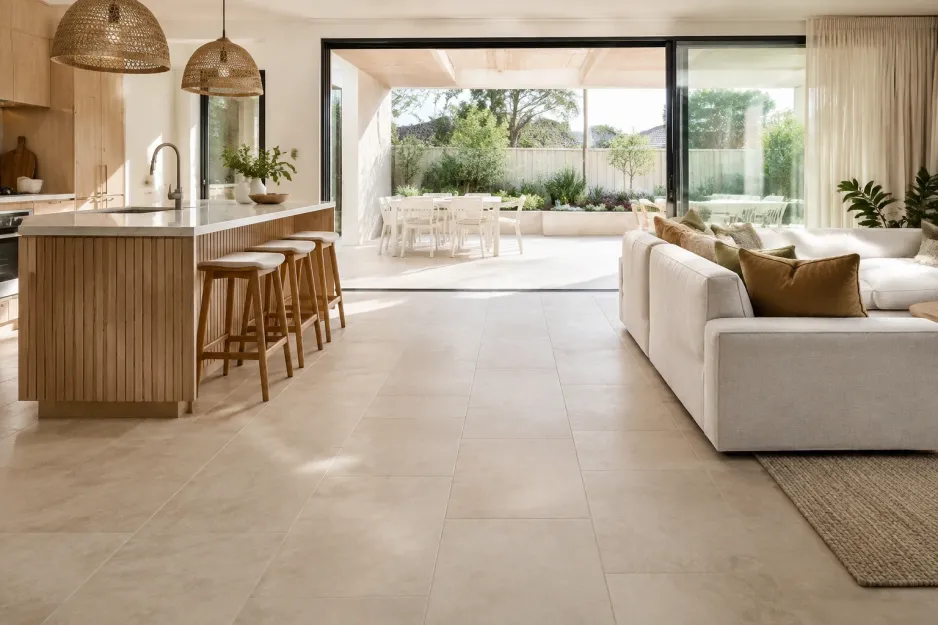
Every week, someone walks into our showroom with a photo of a tile they love and asks, “Will this work in my bathroom?” It sounds like a simple question. The answer depends on far more than whether the tile is porcelain.
I have helped Perth homeowners choose tiles for more than 30 years. One mistake I often see is choosing the colour or pattern first, then checking where the tile can be used. Choosing porcelain tiles becomes much easier when you reverse that order.
To understand how to choose porcelain tile, start with the exact surface and conditions. Confirm that the product is intended for the floor, wall, wet area or outdoor location. Then check its tested slip performance, finish, size, maintenance instructions and installation requirements.
The porcelain label tells you about the tile material, but it does not confirm every application. A low water absorption rate does not make a bathroom floor waterproof. A matt finish does not automatically make a tile slip-resistant. Even two tiles from the same collection can have different uses based on their size and finish.
If you are still comparing materials, my broader guide to choosing tiles for your home covers that first decision. Here, I will focus on porcelain. I will explain the different types, finishes and ratings, then show you what to check for bathrooms, living areas and outdoor spaces.
What Makes a Tile Porcelain?
Porcelain is part of the broader ceramic tile family. It is made from refined raw materials that are pressed and fired to create a dense tile body.
Under recognised ceramic tile classification standards, porcelain generally has a water absorption rate of 0.5% or less. That low absorption is useful, but it does not answer every suitability question.
What Does Low Water Absorption Tell You?
Low water absorption means the tile body takes in very little water. This characteristic can make porcelain suitable for many floors, walls and moisture-prone areas.
It does not mean that every porcelain tile can be used in every application. The porcelain classification alone does not confirm:
- Floor or wall suitability
- Wet-area or outdoor suitability
- Tested slip performance
- Surface-wear resistance
- Sealing requirements
- Installation requirements
Those details must come from the information supplied for the exact product.
Does Porcelain Make a Bathroom Waterproof?
No. Low water absorption does not make a completed bathroom waterproof. Porcelain is the visible surface, while a compliant waterproofing system protects the building elements beneath it.
The Australian Building Codes Board explains the separate waterproofing requirements for wet areas, including where AS 3740 may form part of the chosen construction solution.
Porcelain is also usually denser and harder to cut than many ceramic tiles. This can increase the need for suitable cutting equipment, substrate preparation and professional installation.
If you are still deciding between the two materials, my guide to comparing porcelain and ceramic tiles explains their practical differences. Once you know porcelain suits your project, the next step is understanding the different types available.
What Are the Main Types of Porcelain Tiles?

When customers ask about the different types of porcelain tiles, the terminology can become confusing. Glazed and unglazed describe the surface. Colour-bodied, full-body and through-body describe what happens beneath that surface.
These terms are not always mutually exclusive. For example, a porcelain tile can be both glazed and colour-bodied. The exact supplier description matters when comparing products.
Glazed Porcelain Tiles
Glazed porcelain tiles have a decorative surface layer fused to the tile body. This layer can carry the colour, pattern, texture and sheen.
Glazing creates a wide choice of stone, concrete, marble, terrazzo and timber looks. It does not automatically tell you whether the tile suits a floor, wet area or outdoor surface. Glazed products can have very different applications and slip-test results.
Unglazed Porcelain Tiles
Unglazed porcelain tiles do not have a separate decorative glaze over the surface. Their visible face comes from the tile body itself.
Unglazed does not automatically mean textured, slip-resistant or suitable outdoors. Some unglazed and polished porcelain products may also need sealing or pre-grout treatment. I recommend checking the supplier’s instructions for the exact tile rather than relying on the word “unglazed”.
Colour-Bodied Porcelain Tiles
A colour-bodied porcelain tile has colour running through its body. The body colour usually sits close to the surface colour, which can make small chips less noticeable.
However, the printed pattern on the face may not continue through the tile. A colour-bodied tile can also have a glaze, so it should not automatically be described as unglazed or full-body.
Full-Body and Through-Body Porcelain Tiles
With full-body porcelain tiles, the colour and design continue through the tile’s thickness. This can make wear or surface damage less noticeable because there is no sharply contrasting body beneath the face.
The term through-body porcelain tiles is sometimes used in the same way. However, some suppliers use “through-body” when describing a colour-bodied product whose face pattern does not continue through the tile.
The Stoneworld tile terminology guide distinguishes colour-bodied porcelain from full-body porcelain. When the construction matters to your decision, check how the supplier describes that exact range.
These construction differences are useful, but they still do not decide where a tile can be installed. The next step is matching the exact porcelain product to the room, surface and conditions.
How to Choose Porcelain Tile by Room and Application
The best way to understand how to choose porcelain tile is to start with the exact surface. A bathroom wall, shower floor and outdoor path can all use porcelain, but they do not place the same demands on the tile.
Use this table as a starting point. It shows what to check rather than prescribing one finish or rating for every project.
| Application | Main Checks | Do Not Assume |
| Bathroom wall | Wall suitability, tile weight, substrate, size and cleaning | Every porcelain floor tile can be fixed to every wall |
| Bathroom floor | Floor and wet-area suitability, tested wet slip performance, drainage and falls | P3 is universally required or matt automatically means safe |
| Shower floor | Exact product suitability, wet conditions, falls, drainage and layout | Low water absorption makes the shower waterproof |
| Kitchen or living floor | Floor suitability, surface wear, cleaning, transitions and substrate | Every porcelain tile has the same PEI rating |
| Outdoor floor | Exterior suitability, wet conditions, slope, drainage, direct sun and installation | Every porcelain tile can be used outdoors |
| Pool surround | Exterior and pool-surround suitability, barefoot use, drainage and specialist requirements | An R rating alone proves pool suitability |
Choosing Porcelain for Bathroom Walls and Floors
Many porcelain tiles for bathrooms can be used on walls or floors, but these surfaces need different checks. A wall tile must suit the substrate, fixing method and installed weight. A floor tile must suit foot traffic and the likely wet conditions.
When choosing porcelain tiles for bathroom floors, check the exact product’s intended use and tested wet slip performance. Do not rely on words such as matt, honed or textured as proof that the surface is appropriate. My guide to non-slip bathroom floor tiles explains the additional checks involved when underfoot safety is a key concern.
Tile size also matters. Large formats can reduce grout lines, but they may make falls and cuts around a floor waste more difficult. The tiler should review the layout before you order.
I have seen customers arrive with their hearts set on a polished bathroom floor because they love the way it reflects light. Once we discuss wet use, cleaning and the exact product data, they often choose a different finish for the floor. They keep the polished tile on the walls and still get the look they wanted without forcing one tile into every application.
Porcelain bathroom tiles form the visible finish. They do not replace the waterproofing system beneath the tiles.
Porcelain Tiles for Kitchens and Living Areas
For kitchens and living areas, start by confirming that the product is floor-rated. Then consider surface wear, cleaning, room transitions, tile size and substrate condition.
Some glazed floor tiles include PEI abrasion information, but not every porcelain product carries the same rating. Do not choose a kitchen floor from a generic PEI recommendation. Check the information supplied for the exact tile.
A dense porcelain tile can also require specialist cutting around doorways, cabinetry and floor penetrations. Include those cuts when planning the layout and wastage.
Choosing Outdoor Porcelain Tiles
Outdoor porcelain tiles must be identified as suitable for exterior use. The porcelain material alone does not confirm that the surface, thickness or product construction suits your project.
Consider how rain, pool water, leaves, dirt and cleaning residue may affect the surface. Slope and drainage matter too. An undercover alfresco and an exposed path may need different performance.
For pool surrounds, consider barefoot use and any specification set by the builder, designer or relevant project professional. Do not rely on an R rating alone. My guide to choosing outdoor tiles for poolside areas looks more closely at this particular application.
Direct sun, shade, surface heat and UV exposure should also be checked. Manufacturer guidance must support any claim that a product is fade-resistant or intended for prolonged outdoor exposure.
The CSIRO’s slip-resistance guidance also explains that wear, contamination, cleaning and maintenance can affect underfoot performance over time. Once you have matched the tile to its application, you can assess what its ratings and technical information mean.
How to Read Porcelain Tile Ratings and Product Information
Tile ratings can help you compare porcelain products, but only if you understand what each test measures. A higher number in one test does not make a tile better for every room.
What Do P Ratings Mean?
P0 to P5 classifications come from wet-pendulum testing. The test assesses the slip resistance of a pedestrian surface under specified wet conditions. P5 is the highest classification within that particular test.
That does not mean every bathroom needs a P3 tile or every outdoor area needs the highest available rating. The right classification depends on the location, likely use and conditions. Guidance such as SA HB 198 helps project professionals consider those factors when selecting pedestrian surfaces.
What Do R Ratings Mean?
R9 to R13 classifications come from an oil-wet ramp test. The test uses oil, specified footwear and an inclined surface.
This makes R ratings particularly relevant to commercial and industrial areas where oil or grease may be present. They should not be treated as a simple residential scale where a higher number automatically means a better outdoor porcelain tile.
What Are Wet-Barefoot Classifications?
A, B and C classifications come from a separate wet-barefoot ramp test. They may be relevant around pools, showers and other areas where people are likely to walk barefoot.
The three test systems measure different conditions. AS 4586 slip-resistance classifications provide the relevant Australian framework, so P, R and wet-barefoot results should not be treated as interchangeable.
For a private pool or wet area, do not select a classification from a generic online table. The builder, tiler or project specifier should confirm what the application requires.
What Do PEI Ratings Measure?
PEI-style ratings relate to surface abrasion on glazed floor tiles. They indicate how well the glazed surface resists wear under the relevant test.
PEI does not measure slip resistance, waterproofing or overall tile quality. It also does not apply to every porcelain product. The ISO 10545-7 abrasion test specifically concerns the surface abrasion resistance of glazed ceramic tiles.
What Else Should You Check?
Ratings are only part of the product information. Before ordering, also confirm:
- Floor or wall suitability
- Internal or external use
- Wet-area suitability
- Shade variation
- Batch and calibre
- Cleaning and sealing instructions
- Installation requirements
My guide to understanding tile ratings and grades explains these classifications in more detail.
If your project requires formal slip documentation, ask the builder, tiler or project specifier what test result or certificate they need before purchasing. Ross’s is a retailer rather than the tile manufacturer, so required documentation must be confirmed for the exact product and project.
Comparing Porcelain Tile Finishes
Porcelain tile finishes change how a tile looks, feels and responds to everyday cleaning. They can also affect where marks show and how much effort the surface takes to maintain.
The finish name is useful, but it does not prove that a tile suits a wet floor or outdoor area. Always check the exact product’s intended use and tested performance.
| Finish | Appearance and Practical Characteristics | What You Still Need to Check |
| Polished | Polished porcelain tiles have a reflective surface that can make colours and patterns appear more vivid. The shine may show water marks, footprints and cleaning residue. | Floor suitability, wet slip performance and any sealing or pre-grout instructions |
| Matt | Matt porcelain tiles have little surface shine and often conceal everyday marks better than polished finishes. | Matt does not automatically mean slip-resistant, floor-rated or suitable outdoors |
| Honed | Honed porcelain has a smooth, satin-like surface with less reflection than a polished tile. | Floor, wet-area and exterior suitability for the exact product |
| Lappato | Lappato porcelain tiles have a semi-polished surface with areas of sheen. The finish sits visually between matt and fully polished. | Intended application, tested performance, cleaning and sealing guidance |
| Structured or grip | These tiles have a more pronounced texture. Some are made for demanding wet or exterior conditions, but deeper texture can hold more dirt and require extra cleaning. | Exact product approval, relevant test results and maintenance requirements |
| SmoothGrip | SmoothGrip is a supplier finish or surface technology available in parts of our current range. It aims to balance a smoother feel with grip characteristics. | The approved application, technical information and care instructions for the exact tile |
I often find customers start by comparing polished and matt tiles because the visual difference is easy to see. The practical difference becomes clearer once we discuss where the tile will go, how often it will get wet and how much cleaning the surface may need.
More texture may provide useful grip characteristics in an appropriate product, but it can also collect dirt, soap residue or outdoor grime. Poor cleaning and residue build-up can affect how the surface performs underfoot. A smoother tile may be easier to clean, but that does not confirm it is suitable for a wet floor.
My guide to the different types of tile finishes explores these surface options in more detail. If you are deciding whether a grip surface suits your project, the guide to whether non-slip floor tiles are worth it also explains the practical advantages and trade-offs.
My advice is simple. Choose the finish you like, then confirm that the exact tile suits the room, conditions and cleaning routine. Appearance should narrow the options, not override the product information.
Do Porcelain Tiles Need Sealing?
Some porcelain tiles do not need surface sealing, while others may need sealing or pre-grout treatment. The correct approach depends on the product, surface finish, grout and supplier instructions.
Many glazed porcelain tiles have a protective surface that requires little more than regular cleaning. However, that does not mean every porcelain tile should be treated the same way.
The Stoneworld Tile & Stone Maintenance Manual recommends sealing unglazed products, including polished porcelain, through an experienced applicator. It also recommends using suitable products from a reputable specialist and testing them on a small, less visible area first.
That is general guidance rather than a rule for every polished tile. Before sealing, check the instructions supplied for the exact product. The tile manufacturer or supplier may also require treatment before grouting to prevent grout residue or staining.
For routine care, I recommend keeping the process simple:
- Remove loose grit before mopping
- Use a suitable neutral-pH cleaner
- Follow the cleaner’s dilution instructions
- Rinse the surface where directed
- Avoid allowing soap or cleaning residue to build up
- Treat grout as a separate maintenance consideration
Do not use a strong acid or harsh chemical because someone online recommends it for tiles generally. The wrong product can damage the surface, grout or sealer.
My tile cleaning and maintenance guide explains how to care for tiled surfaces after installation. The key point is to follow the instructions for your tile, grout and sealer rather than relying on one cleaning method for every porcelain surface.
Choosing the Size and Edge
Tile size and edge type affect more than the finished look. They also influence the layout, grout joints, cuts and installation. I recommend settling these details with your tiler before ordering, especially for bathrooms and large open areas.
Choose the Tile Size for the Surface
Large-format porcelain tiles can create a clean look with fewer grout lines. However, they need a suitably flat substrate and careful handling. Dense porcelain can also require specialist cutting equipment, particularly around corners, floor wastes and plumbing penetrations.
Small tiles are not automatically best for small bathrooms, just as large tiles are not always best for large rooms. The right size depends on the surface dimensions, layout and cuts.
Wet-area floors need extra consideration. Large tiles can make it harder to form the required falls to a floor waste without awkward cuts or lippage. A smaller format may suit some shower floors or complex layouts better.
My tile size guide explains how different formats affect room proportions, grout lines and installation.
Compare Pressed and Rectified Edges
Pressed tiles have edges formed during manufacturing and may show more size variation. They generally need wider grout joints to accommodate those differences.
Rectified tiles are mechanically finished after firing to produce straighter, more consistent edges. They can support narrower, more uniform grout joints where the product instructions and installation conditions allow. They do not create a grout-free surface.
Narrow joints can make lippage more noticeable, particularly with large formats, reflective finishes or an uneven substrate. My guide to pressed and rectified tile edges explains these practical differences in more detail.
Before placing the order, ask your tiler to review:
- Room and surface measurements
- Proposed tile layout
- Substrate condition and flatness
- Floor wastes and required falls
- Cuts around fittings and edges
- Grout-joint requirements
- Transitions into adjoining rooms
This review can prevent a beautiful tile from producing an awkward layout or avoidable installation problems.
Practical Considerations for Perth Homes
Perth’s strong sun, outdoor exposure and varying water quality can affect how a porcelain tile feels and looks in daily use. These factors should guide your choice, but the exact product information still comes first.
Direct Sun and Surface Heat
Any outdoor surface exposed to direct sun can become hot. The surface temperature depends on more than the air temperature. Tile colour, shade, exposure, solar reflectance and the way the surface absorbs and releases heat can all make a difference.
A pale tile may stay cooler than a dark tile under the same conditions, but colour alone does not guarantee comfortable barefoot use. If surface heat matters, place a sample in a similarly exposed area and check it at the hottest part of the day.
UV and Exterior Exposure
Only use a porcelain tile outdoors when the exact product is approved for exterior use. Check the manufacturer’s UV or fade-resistance information rather than assuming every porcelain product will perform the same way.
Body construction and UV performance are separate questions. A tile does not become suitable for prolonged outdoor exposure simply because it is described as colour-bodied, full-body or through-body.
Shade, drainage and the installation system also matter. An exposed path, uncovered patio and shaded alfresco area can place different demands on the tile.
Water Hardness and Cleaning
Water quality varies across Perth’s supply areas. Mineral spotting may be more noticeable in some homes, particularly on dark, polished or highly reflective surfaces.
Water Corporation provides drinking-water quality information for Perth supply areas, which is more reliable than making a general assumption about a suburb.
I learnt this the hard way in my own laundry. The first time, I used a gloss tile and calcium marks became a constant cleaning issue within months. When I retiled, I chose a matt concrete-look finish because of that experience. It has been much easier to maintain.
Before choosing a finish, consider how visible dried water marks, dust and cleaning residue may be. Compare samples in realistic light and check the recommended cleaning method. A finish that looks flawless on a display board may need more regular attention in a bathroom, laundry or outdoor area.
Plan the Quantity, Batch and Installation
Good planning protects both the finished result and your ability to raise a product concern. Once tiles have been fixed, correcting a quantity, batch or visible-fault issue becomes much harder.
Before installation:
- Measure every surface separately.
- Allow around 10% wastage for a straightforward layout.
- Ask your tiler whether large cuts, diagonal patterns or a complex room need a different allowance.
- Order the full quantity together where practical.
- Check the product, finish, batch, shade and size before installation.
- Open several boxes and compare tiles under similar lighting.
- Stop before laying if the product appears incorrect or anything looks unusual.
- Keep matching spare tiles for possible future repairs.
- Protect installed tiles from damage caused by later trades.
The 10% allowance is a starting point, not a rule for every project. Your tiler may recommend more or less based on the tile format, room shape, layout, breakages and number of cuts.
Ordering together also improves the chance of receiving tiles from the same production batch. Some shade and size variation is expected with many tile products, but mixing batches can make those differences more noticeable.
Check the Tiles Before They Are Laid
Stoneworld’s warranty requires tiles to be inspected before installation. Claims involving visible faults or differences in size, shade or finish that should have been identified beforehand may not be accepted once the tiles have been fixed.
Stoneworld tiles supplied by Ross’s are backed by Stoneworld’s 10-year tile warranty, subject to its terms, inspection requirements and installation conditions. The warranty does not guarantee a fixed service life or cover poor workmanship.
Confirm the Installation Requirements
Porcelain can require careful substrate preparation, suitable adhesives and grout, specialist cutting equipment and installation methods appropriate to the application. Wet areas also need compliant waterproofing, falls and drainage.
My guide to the bathroom tile installation process provides an overview of the main stages. Complex layouts, large-format porcelain and wet-area work should still be assessed by an appropriately qualified installer before the tiles are ordered.
Porcelain Tile Advantages and Limitations
Porcelain suits many home projects, but it is not automatically the right tile for every surface. Its dense body and low water absorption provide practical benefits, while its weight and installation demands can create trade-offs.
| Advantages | Limitations |
| Low water absorption makes porcelain suitable for many moisture-prone applications when the exact product is approved. | Low water absorption does not make a bathroom waterproof or confirm exterior suitability. |
| Porcelain is available in a wide range of colours, patterns, sizes and finishes. | The printed face of some products can look different from the tile body if an edge becomes chipped. |
| Many products are made for floors, walls, wet areas or exterior surfaces. | The porcelain label alone does not prove that a tile suits any of these applications. |
| Dense porcelain can perform well in demanding residential areas. | Its density can make it harder to cut than many ceramic tiles. |
| Many glazed products are straightforward to maintain with regular cleaning. | Polished surfaces may show marks, while heavily textured finishes can require more cleaning. |
| Approved exterior products can provide a consistent tiled finish between indoor and outdoor areas. | Exterior installations need suitable drainage, substrate preparation, adhesives and movement provisions. |
Porcelain can also feel hard and cold underfoot, and larger tiles can be heavy to handle. These points may not rule it out, but they should be considered alongside the room, substrate and installation method.
I usually recommend treating the material type as the starting point. The final decision should come from the exact product’s intended use, finish, technical information and installation requirements. If you are still weighing the material itself, my guide to the pros and cons of porcelain tiles covers the trade-offs in more detail.
Frequently Asked Questions
So, Which Porcelain Tile Should You Choose?
The selection becomes much easier when you work through the decisions in the right order:
- Start with the room and exact surface.
- Confirm that the product suits the intended wall, floor, wet area or outdoor application.
- Check the relevant ratings and technical information.
- Compare the finish, size, edge and cleaning requirements.
- Ask your tiler to confirm the substrate, layout, quantity and installation method.
- Inspect the tiles, batch, shade and finish before anything is laid.
I always recommend completing those checks before getting too attached to a colour or pattern. The right porcelain tile should suit both the look you want and the conditions it will face every day.
Once you know the application and performance requirements, you can compare our current porcelain tile range with a much clearer idea of what will work. If you are unsure about a product, ask for its intended use and technical information before placing the order.
