
How to Choose the Perfect Kitchen Sink
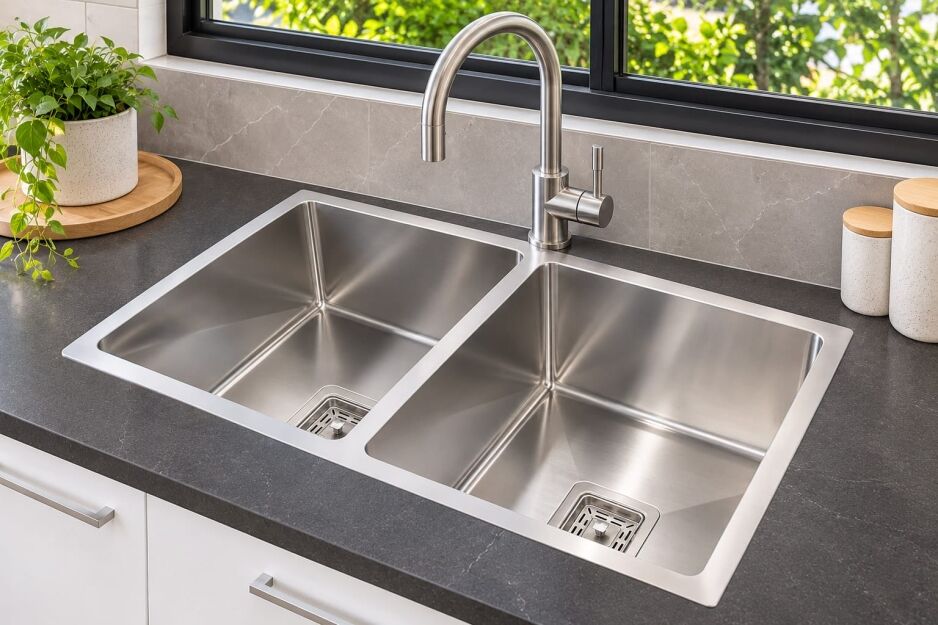
Choosing a kitchen sink starts with getting the practical details right. If you’re wondering how to choose a kitchen sink, first check your available cabinet and benchtop space. Then consider the bowl configuration, mounting style, material and features that will suit how you use your kitchen.
It’s easy to be drawn to a sink’s appearance, but the wrong size or configuration can become a daily frustration. If you’re replacing an existing sink, the cabinet and benchtop opening may limit your options. Planning a new kitchen gives you more flexibility, but those decisions still need to work together.
Len Larking, an experienced industry specialist from Everhard Industries, makes a useful point: “When selecting a kitchen sink, prioritise functionality and practicality. Start by choosing a material that suits your household’s lifestyle and needs.”
Those checks help you rule out unsuitable models before getting caught up in finishes and accessories.
Start With Your Kitchen Sink Measurements

A kitchen sink might look like the right size in a product photo, but that doesn’t mean it will fit your benchtop or cabinet. Before comparing styles, you need to know how much space you actually have to work with.
There are three measurements worth understanding. The sink’s overall dimensions tell you how much benchtop space it occupies, while the internal bowl dimensions determine how much usable washing space you get. Bowl depth also matters, particularly if plumbing or cabinet fittings restrict the space underneath.
One important distinction is that the sink’s external width isn’t the same as the benchtop cut-out it requires. A sink might appear to fit across the cabinet but still have insufficient internal clearance.
If you’re replacing an existing sink, the current opening and cabinetry will influence your options. With a new kitchen, you have more freedom to plan the sink and cabinet together.
Our kitchen sink dimensions guide explains how to measure your space and check the clearances before choosing a model.
Choose the Right Kitchen Sink Configuration
The best kitchen sink configuration depends on how you use your sink, not simply how many people live in your home. Think about the size of your cookware, whether you wash and rinse dishes separately, and how much benchtop space you’re prepared to give up.
Single Bowl, Double Bowl and One-and-a-Half Bowl Sinks
A large single bowl gives you uninterrupted washing space, making it particularly useful for oversized pots, baking trays and roasting dishes. Two bowls let you separate tasks, but each bowl may be smaller than you’d expect.
Len Larking from Everhard Industries highlights the appeal of double-bowl configurations: “Double-bowl sinks remain a popular choice, with many homeowners preferring dual bowls of identical size for their practicality and versatility in a functional home.”
Here’s how the main options compare:
| Configuration | Main advantage | Main compromise |
| Single bowl | More uninterrupted space for bulky cookware | No separate bowl for rinsing |
| Double bowl | Wash and rinse in separate bowls | Less room for oversized items |
| One-and-a-half bowl | Full-sized main bowl with a smaller secondary bowl | Secondary bowl has limited capacity |
The right choice comes down to what you regularly wash and how you prefer to work.
You can compare our single bowl kitchen sinks and double bowl kitchen sinks, or read our Double vs Single Bowl Kitchen Sinks guide for a closer look at the trade-offs.
Is a Drainer Worth the Bench Space?
An integrated drainer gives wet dishes and cookware somewhere to sit while water runs back into the sink. It’s particularly useful if you regularly wash items by hand.
The trade-off is the benchtop space it occupies. Also check whether the drainer is positioned on the correct side for your layout, or whether the model is reversible.
Understand the Different Types of Kitchen Sinks
Once you’ve settled on a bowl configuration, the next decision is how the sink will fit into your benchtop. The main types of kitchen sinks differ in how they’re mounted, which affects their appearance, cleaning access and suitability for different benchtop materials.
Top-Mount Kitchen Sinks
A top-mount sink, also called a drop-in sink, has a visible rim that rests on the benchtop. It’s a practical option for many kitchen renovations, particularly when replacing an existing sink.
The rim covers the edge of the benchtop opening, although you’ll need to clean around it to prevent grime building up.
Our top-mount kitchen sinks include different bowl configurations to suit your available space.
Undermount Kitchen Sinks
An undermount sink is fitted beneath the benchtop, leaving the benchtop edge exposed around the opening. This creates a clean, uninterrupted appearance and makes it easier to wipe crumbs and water directly into the bowl.
However, undermount installation requires a suitable benchtop material, properly finished edges and adequate support.
You can compare the available undermount kitchen sinks or read our Undermount Sinks vs Top-Mount Sink comparison for a closer look at the differences.
What About Dual-Mount Sinks?
Some sinks are designed for either top-mount or undermount installation, giving you more flexibility.
Len Larking from Everhard Industries explains their appeal: “Multi-use sinks continue to be highly sought after, offering the flexibility of being undermounted or top-mounted.”
The main differences are worth keeping in mind:
| Mounting Style | Main Fit Consideration | Practical Difference |
| Top-mount | Benchtop opening and rim support | Visible rim around the sink |
| Undermount | Suitable benchtop, finished edges and secure support | Exposed benchtop edge around the bowl |
Neither mounting style is automatically better. Choose one that suits your benchtop and preferred appearance, then confirm the specific sink is approved for that installation method.
Compare Kitchen Sink Materials and Quality
Kitchen sink materials differ in durability, appearance and maintenance requirements. However, the material alone doesn’t tell you how well a sink will perform. Construction quality, bowl design and the manufacturer’s specifications are just as important, especially for a sink you’ll use several times a day.
What to Check in a Stainless Steel Sink
Stainless steel remains a practical choice for busy kitchens, and it’s the main material you’ll find in our kitchen sink range.
Len Larking from Everhard Industries explains why: “Steel remains the market leader due to its durability, practicality, and ease of maintenance, making it a reliable choice for busy households.”
But not all stainless steel sinks are made the same way. If you’re comparing models, look beyond the finish and check the following details.
| Quality Feature | What to Check | Why It Matters |
| Stainless steel grade | Look for a specified grade, such as 304 stainless steel | Helps establish the material’s corrosion resistance and suitability for kitchen use |
| Steel thickness | Compare the stated thickness of different models | Thicker steel can improve rigidity and reduce flexing, although construction quality also matters |
| Sound reduction | Check for sound-dampening pads or coatings | Helps reduce noise from running water and cookware |
| Bowl corners and finish | Examine corner shapes, surface texture and cleaning access | Tighter corners can be harder to clean, while different finishes show scratches and watermarks differently |
| Manufacturer’s warranty | Check the coverage, exclusions and conditions | Shows what protection applies to that particular sink rather than assuming every model has the same warranty |
A sink with thicker steel or a longer warranty isn’t automatically the better purchase. The overall construction, practical features and suitability for your household should guide your decision.
What About Other Kitchen Sink Materials?
Composite, ceramic and stone-based sinks offer different appearances and surface characteristics. However, their resistance to heat, scratches, staining and impact varies by product, so it’s important to check the manufacturer’s specifications rather than relying on general material claims.
Compare the construction and practical features of models made from materials that suit your needs, rather than choosing by appearance alone.
Check These Details Before Choosing Your Kitchen Sink
Once you’ve narrowed down your options, there’s one final job before ordering: checking that your preferred sink will actually work in your kitchen. Don’t rely on the product photo or headline dimensions. Use the manufacturer’s specification drawing to confirm the details of that particular model.
Cabinet and benchtop compatibility: Check the minimum cabinet requirements, mounting method and benchtop cut-out against your existing or planned kitchen. If you’re replacing a sink, make sure the new model is suitable for the opening you already have.
Plumbing and internal clearance: Confirm that the waste position and bowl depth leave enough room for existing pipework, drawers, pull-out bins and other fittings beneath the sink.
Tapware and drainer orientation: Check whether the sink has a tap hole or requires a separate benchtop-mounted tap. If you’ve chosen a sink with a drainer, confirm it’s on the correct side or that the model is reversible.
Included components: Check whether basket wastes, mounting hardware and other accessories are supplied with the sink or need to be purchased separately.
If your choice requires changes to the water supply or drainage connections, have a licensed plumber confirm what’s involved. In WA, regulated plumbing work must be carried out by an appropriately licensed plumber.
A few minutes checking the exact specifications can prevent you from ordering a sink that doesn’t suit your kitchen.
Kitchen Sink FAQs
Still deciding which sink will work best in your kitchen? These answers cover a few practical questions worth considering before making your final choice.
So, Which Kitchen Sink Should You Choose?
The right kitchen sink is one that fits your available space and makes everyday tasks easier. Start with your cabinet and benchtop dimensions, choose a bowl configuration that suits how you use your kitchen, then consider the mounting style and material.
The final step in how to choose a kitchen sink is checking your preferred model against its specifications. Make sure the dimensions, installation requirements and practical features all work together before committing to a purchase.
At Ross’s, we have a range of kitchen sinks in different sizes and configurations to suit your renovation. You can compare the options online or bring your measurements into our Guildford showroom, where we’ll help you find a sink that works for your kitchen.
