
What Is a Pop-Up Waste? How to Choose the Right Bath or Basin Waste
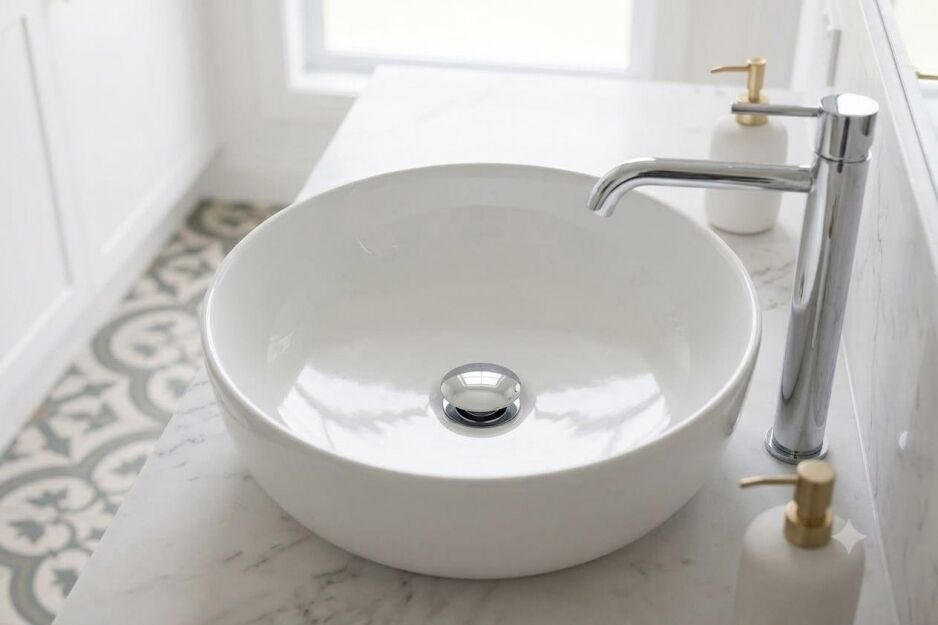
You have picked the basin and the tap, then the waste question comes up and the product names all start sounding the same. So what is a pop-up waste, and why is it sold separately? It is the part that seals the basin or bath and lets it drain, and it is easy to order the wrong one if the names throw you.
A pop-up waste is the combined plug and drain fitting in a basin or bath that you press to seal and press again to release. It replaces the old loose plug and chain, sitting close to flush for a cleaner look while still controlling the water.
Many shoppers still call it a pop up basin plug, but the correct term is usually basin waste, bath waste or pop-up waste. This guide covers basin and bath wastes, not the floor waste set into the bathroom floor, which is a separate fitting. I will walk you through the types, the overflow decision, sizing, finish, who fits it, and keeping it working in our Perth water.
How Does a Pop-Up Waste Work?
A bathroom waste is the fitting that seals your basin or bath and lets the water drain away. The pop-up is the most common type we sell for new Perth bathrooms, and people often ask what is a pop-up waste expecting something complicated. The action is simple.
Press the top once and a seal closes inside the waste body, so the water holds in the basin. Press it again and the seal lifts, letting the water drain out through the waste outlet and trap into the pipes. Whether you are choosing a pop-up waste for a basin or for a bath, the mechanism is the same. You might also hear it called a click-clack waste, after the quiet sound it makes.
The visible cap rests close to flush with the basin or bath surface, which is the clean look most people want today. It replaced the old plug-and-chain you would lift out by hand. There is no loose plug to keep track of and no chain to fiddle with, just a press to seal and a press to drain.
What Types of Bath and Basin Waste Are There?
The word “waste” covers several different fittings, not a single product. The right one depends on your basin or bath and the look you are after, so it helps to see the full set of types of bath and basin waste side by side.
Most modern bathrooms use a pop-up or click-clack, while the others still turn up in specific situations.
| Waste type | How it works | Best for |
| Plug and waste | A separate loose plug seals the outlet | Budget jobs, some baths, traditional looks |
| Pop-up / click-clack | Press to seal, press again to release | Most new basins and baths; clean flush look |
| Pop-down | Press the top down to open; sits proud when closed | A design preference alternative to the pop-up |
| Lift-and-turn | Twist the top to seal or release | Replacements matching older fittings |
| Sprung | A spring mechanism pushes the plug up | Some baths and basins |
| Push-button (bath) | A button on the overflow operates the plug | Baths, especially where the waste sits out of reach |
For most Perth basins and baths, a pop-up gives the best mix of looks and ease, which is why it has become the default. The pop-down is the main alternative people weigh it against, but that pop-up vs pop-down waste decision comes down to look and feel rather than how it works.
Over the years, the single most common waste complaint we heard was the loose plug going missing. People would come in after one too many lost plugs, and that frustration is a big part of why pop-ups took over the way they did. That reason alone is enough for me to recommend them.
Do You Need a Slotted or Unslotted Waste?

This one choice trips up more people than any other, and it comes down to a single thing: does your basin or bath have an overflow hole?
The overflow is the small hole near the top lip that drains water away if the basin or bath is overfilled, so an unattended tap does not flood the room. The waste has to suit it. Get this right, and the basin behaves as it should. Get it wrong, and the water either backs up or escapes where it should not.
The slotted vs unslotted basin waste decision follows one rule:
- Slotted. A basin with an overflow needs a slotted waste. The slotted body has an opening in its side that lets the overflow water pass through into the drain, which is why this is sold as a pop-up waste with overflow.
- Unslotted. A basin without an overflow needs an unslotted waste. It has no opening, because there is no overflow water to carry away, so this is a pop-up waste without overflow.
Baths work a little differently, so take yours case by case. Some baths use a plain 40mm bath waste, while others, including many freestanding baths, need a bath-specific waste and overflow kit or a separate overflow fitting. Do not assume every bath is the same. Check the bath spec sheet and have your plumber confirm the correct fitting before you order.
The practical check is easy. Look for the overflow hole near the top lip before you order. If you are still choosing, a basin with an overflow hole is the common setup in most vanities, so check the model in front of you rather than guess.
What Size Waste Do You Need, 32mm or 40mm?
Sizing is simpler than it looks. There are two common sizes, and they map cleanly to basin versus bath, so if you are wondering what size pop-up waste do I need, the answer usually follows the fitting.
A 32mm basin waste is the standard for basins. A 40mm bath waste is the standard for baths, because a bath needs the larger waste outlet to drain a far greater volume of water faster. The two are not interchangeable in size, so order the fitting in front of you rather than by guessing.
There is a middle option too. Universal wastes that suit both 32mm and 40mm outlets exist, and a universal waste can simplify the choice if you are buying for more than one fitting at once.
One thing competitors often skip is depth. Some above-counter basins, a thicker vanity top, or a stone-style top can mean the standard thread does not reach far enough, and that is where an extended basin waste comes in. It gives the extra thread depth so the fitting seats correctly. Treat this as a buying check, not a job to sort yourself.
Before you order your new bath or basin, check the outlet size, waste type and thread requirements against the spec sheet. Your plumber confirms the final fit at fit-off.
How Do You Match a Waste to Your Tapware?
The waste is the small detail that either completes a basin or stands out for the wrong reason. Match the finish to your tapware, and it pulls the whole look together. Leave it as an afterthought, and it becomes the one part that does not belong.
We stock the finishes that suit how most Perth bathrooms are put together. Chrome is the long-standing all-rounder, matte black has become the go-to for modern fittings, and matte white suits softer, lighter schemes. Whichever you pick, the pop-up waste finishes you land on should follow the basin mixer and the rest of the room, the same way you would coordinate handles and towel rails for a cohesive look. If you want the colours to match your finishes across the whole bathroom, line the waste up against your bathroom tapware first, then work outward. Coloured and PVD finishes do need gentle cleaning to protect the coating, which I come back to further down.
Here is what I see most at Ross’s. Customers forget the waste until the basin is in and the matte black tap is on, then they want the waste to match. We keep the popular finishes in stock so that is an easy fix, not a reorder.
Can You Fit a Waste Yourself, or Do You Need a Plumber?
In WA, fitting or replacing the waste itself is licensed plumbing work, so this is a job for a plumber, not a weekend DIY swap. The only simple DIY task here is replacing a loose plug that drops into an already-fitted waste.
Changing a loose plug is fine to do yourself. A loose rubber plug, or a universal drop-in plug that drops into a waste already fitted to your basin, is not plumbing. If yours is worn or the wrong size, pick up a replacement and drop it in at the sink.
The waste itself is different. A pop-up waste is the fitting set into the basin that seals to the bowl and connects to the trap underneath. Putting one in, or replacing a worn one, means disconnecting the trap and making a watertight seal, and in WA, that is sanitary and drainage plumbing work only a licensed plumber can legally do. WA homeowners can handle a few small plumbing tasks, such as replacing a showerhead or doing basic tap repairs. A waste connection is not one of them. A seal that fails under the vanity can leak unseen and rot the cabinet, which is the real reason behind the rule. Your licensed plumber fits the waste in line with AS/NZS 3500.2 and the Plumbing Code of Australia. Swapping an old loose-plug setup for a pop-up is plumber work, because that changes the waste, not just the plug.
The part you buy must also be compliant. A bathroom waste must carry WaterMark certification where required for legal installation in Australia. The basin or bath does not need WaterMark approval, but the waste outlet fitted into it does because it connects to the drainage. WELS does not apply to a waste; WELS rates water-using products like taps and toilets. For a waste, the certification that matters is a current WaterMark.
We supply the waste, and your licensed plumber fits it off. We leave the connection to the trade, the way the rules intend.
How Do You Keep a Waste Working in Perth’s Hard Water?
Water hardness varies across Perth, and in the harder-water suburbs, especially areas drawing more groundwater, build-up is often what stops a pop-up sealing cleanly or sitting flush.
The cause is simple. Over time, mineral scale and soap scum gather around the seal and across the finish, and that film stops the cap closing the way it should. The Water Corporation notes that hard water leaves mineral spots on fixtures once the water evaporates, and that drying surfaces after use keeps them at bay. A little upkeep does the same for your waste.
- Wipe it dry after use. A quick wipe stops minerals settling around the cap.
- Clean with a mild or citrus cleaner. Gentle is enough to lift soap scum and light scale.
- Skip the abrasives and harsh chemicals. They strip coloured and PVD finishes and leave them dull.
- Lift and clear the plug regularly. Pull it up and clear out hair and residue so it keeps sealing.
A good-quality waste, looked after this way, lasts for years.
Frequently Asked Questions
So, Which Bath or Basin Waste Is Right for You?
If you came in asking what is a pop-up waste, you now know the answer is the simple part. The real decision comes down to three quick checks. Look at whether your basin has an overflow, which tells you slotted or unslotted. Match the size to the fitting: 32mm for a basin and 40mm for a bath. Then pick a finish that matches your tapware, and have a licensed plumber fit it.
For most Perth bathrooms, a quality WaterMark-certified pop-up waste in a finish that matches the tap is the easiest right choice. Get those three things right and the rest takes care of itself.
When you are ready, browse our full range of bathroom wastes in store or online. We deliver across Perth Metro at a flat $100, back every order with a 14-day money-back guarantee, and you can see the finishes in person at our Guildford showroom.
