
Marble-Look Tiles vs Natural Marble: Which Is Better for Your Bathroom or Home?
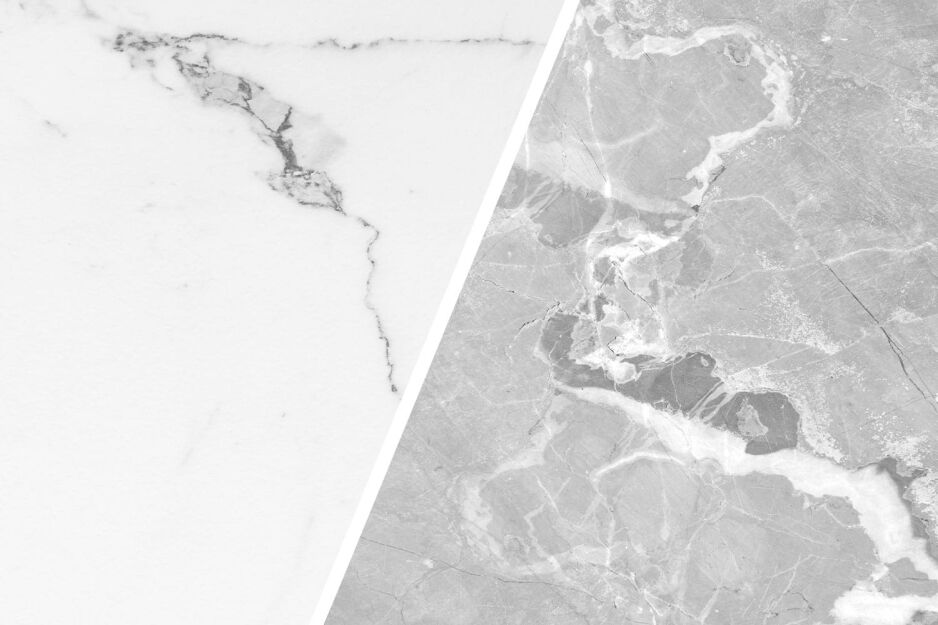
Choosing between marble-look tiles and genuine marble is mostly a choice between practical consistency and natural stone character. Both can create a marble-style interior, but they differ in price, care, installation and how they respond to everyday use.
A customer once brought a bathroom photo into our Guildford showroom and asked for the exact marble pattern. She loved the broad Calacatta-style veining, but she did not want one delivered slab or tile to vary from the next. Once we discussed natural variation and printed tile faces, she knew which compromise suited her.
This Marble-Look Tiles vs Natural Marble guide compares appearance, cost, durability, maintenance, installation and bathroom suitability. It will help you decide between marble-look tiles or real marble without treating either material as suitable for every project.
What’s the Difference Between Marble-Look Tiles and Natural Marble?
Marble-look tiles are manufactured ceramic or porcelain products printed to resemble marble. Natural marble is quarried stone cut into slabs or tiles. Marble-look products offer controlled colour and pattern, while real marble provides unique veining, natural variation and different care requirements.
The right option depends on the surface, room, budget and finish you want. Tile format, slip resistance, maintenance and installation requirements matter as much as the pattern.
What Are Marble-Look Tiles?

These products use printed graphics and surface finishes to reproduce the colour, veining and movement associated with marble. Porcelain options generally suit a wider range of floor applications, while ceramic products are commonly selected for walls. The individual product specification remains the final guide.
Current designs cover white, grey, beige and black marble effects, including patterns inspired by Carrara, Calacatta, Statuario and Nero Marquina. Large-format marble effect tiles reduce the number of grout joints, although the room dimensions and tiling layout determine the final result.
Manufacturers use several print faces to reduce obvious repetition. Ask how many faces a range includes, then dry-lay or plan the tiles so similar veins do not sit together. Our marble tile vs porcelain tile comparison explains the material differences in more detail.
What Is Natural Marble?
Natural marble is metamorphic stone formed from limestone and quarried from the earth. Each piece has its own veining, colour shifts and mineral markings, so a sample can guide your choice but cannot guarantee an exact match across the finished installation.
The stone can be cut into tiles or slabs and finished in different ways, including polished or honed surfaces. Its absorption, strength and response to acids vary by variety and finish. Supplier advice and batch inspection are essential before installation.
Marble is one type of natural stone. For a broader comparison covering slate, travertine, granite and other finishes, read our guide to stone-look tiles versus natural stone tiles. Travertine raises the same sealing and etching questions marble does, and travertine look tiles versus natural travertine works through that comparison in full.
Marble-Look Tiles vs Natural Marble: The Key Differences
Manufactured marble-effect tiles usually cost less, need less routine care and provide more predictable sizing and pattern control. Quarried marble offers genuine material variation and may be repairable or refinished in some situations. The better option depends on whether practicality or natural authenticity carries more weight in your project.
When choosing between natural marble and marble-look tiles, the decision often comes down to five key factors: cost, durability, appearance, installation, and environmental impact. Below is a detailed comparison to help you weigh the advantages of marble look tiles against natural stone’s classic appeal and higher maintenance.
Appearance and Pattern Variation
Real marble carries variation that printing cannot reproduce exactly. Veins can change direction, colour and intensity from one piece to the next. Mineral deposits and small natural marks are part of the material rather than manufacturing defects.
Marble-effect tiles provide more control. You can select a colour, variation level and finish that stays reasonably consistent across a bathroom or open-plan floor. Printed faces can repeat, so careful layout makes a major difference to how natural the installation looks.
I have seen customers dismiss a tile after looking at one face, then change their mind when we laid several pieces together. A marble-look design should be judged as a group. One tile cannot show the full pattern or variation across a finished room.
Why Some Homeowners Still Choose Natural Marble
Some homeowners choose natural marble because every piece is genuine and unique. They value its tonal depth, irregular veining and the knowledge that the surface has been formed rather than printed. It can work well as a feature where material authenticity is the priority.
Correctly selected, installed and maintained marble can provide a long service life. Some surfaces may also be professionally honed or refinished. Those benefits come with trade-offs, including natural batch variation, etching, staining, sealing, specialist installation and less predictable project costs.
Cost of Marble-Look Tiles or Real Marble
Quarried marble pricing varies widely by grade, thickness, finish, origin and slab or tile size. Cutting, substrate preparation, specialist installation, sealing and future care can add substantially to the material price. Obtain a complete project quote for the exact stone rather than relying on a broad square-metre estimate.
At Ross’s, our marble-look tiles currently range from $40–$70/m², depending on the design, size and finish. We sell ceramic and porcelain marble styles only. We do not sell genuine natural marble.
Compare waste allowances, delivery, adhesive, grout, cutting, waterproofing, substrate work and labour before making a decision. A lower tile price does not remove the need for correct preparation and installation.
Durability, Etching and Maintenance
The natural stone can scratch, chip and crack. Acidic substances such as citrus, vinegar and some cleaners can etch the surface. Sealing may improve stain resistance, but it does not make marble stain-proof or prevent acid etching. The stone supplier should specify the correct sealer and care schedule.
Porcelain marble-effect tiles have low water absorption and generally resist everyday stains well. Ceramic and porcelain are not interchangeable for every job, and no tile is damage-proof. Check the manufacturer’s wall, floor, wet-area and outdoor ratings before ordering.
Most glazed ceramic and porcelain options do not need surface sealing. Grout or some specialised finishes may have separate care requirements. Use a cleaner approved by the tile and grout manufacturer rather than assuming any household product is safe.
Installation Requirements
Genuine marble often needs an experienced installer because pieces can vary in thickness, colour and strength. The installer may need to blend the batch, use stone-compatible adhesive, make specialist cuts and manage sealing before or after grouting.
Manufactured tiles usually have more consistent dimensions, but porcelain can still be difficult to cut, especially in large formats. Curved surfaces normally require suitably sized tiles, mosaics or a product and system approved for that radius. A flat full-size tile should not be forced around a curve.
Sustainability and Product Information
Neither option should be labelled sustainable without product-specific evidence. Quarried marble involves extraction, processing and transport. Ceramic and porcelain production uses raw materials and high-temperature firing. Ask for verified environmental declarations, recycled-content information and sourcing details if environmental performance affects your decision.
What Are the Disadvantages of Each?
Both materials have limitations. The most relevant disadvantages depend on the chosen product, finish and location, so use these points as a shortlist for questions rather than universal rules.
Disadvantages of Natural Marble
- Etching and staining: Acidic products can dull the surface, while absorbed liquids may leave stains.
- Ongoing care: Some marble needs periodic sealing and stone-compatible cleaning products.
- Natural variation: The delivered pieces will not match a small sample exactly, and batch blending may be required.
- Installation and cost: Material handling, specialist cutting and extra preparation can increase labour and waste.
A polished marble finish may be unsuitable for some wet floors. Confirm the slip classification and manufacturer’s intended use before selecting any natural marble tiles for a bathroom.
Disadvantages of Marble-Look Tiles
- Printed repetition: A small number of faces or poor layout can make repeated veins obvious.
- Less natural depth: A printed surface cannot fully reproduce the mineral variation of genuine marble.
- Limited refinishing: A damaged ceramic or porcelain tile usually needs replacement rather than honing.
- Hard surface: Like natural stone, tile feels firm underfoot and can feel cold without heating.
These tiles can also chip or crack if the substrate, movement joints or installation are inadequate. Their practical advantages do not compensate for poor preparation.
Where Do Marble-Look Tiles and Natural Marble Work Best?
Choose the exact product for the exact surface. A tile sold for walls may not suit floors, and a suitable bathroom tile does not automatically suit a shower floor or outdoor area.
Bathrooms and Wet Areas
Now that we’ve explored the pros, cons, and differences between the two materials, it’s worth considering where each type shines in a real-world setting. Choosing the right surface often depends on how much use the space will get, how much maintenance you’re comfortable with, and what kind of visual impact you want to achieve.
Best Uses for Marble-Look Tiles
Thanks to their durability, water resistance, and consistent finish, marble-look tiles are ideal for spaces that demand style and practicality. Here’s where they perform best:
- High-Traffic Areas: Kitchens, bathrooms, laundries, hallways, and open-plan living zones where spills, dirt, and daily wear are common. The stain resistance and toughness of porcelain marble look tiles make them an easy-care solution that still delivers on luxury.
- Wet Zones: If you’re tiling a shower, a full-height wall behind a vanity, or a bath hob, marble look bathroom tiles outperform real marble in terms of safety and longevity. They won’t etch or discolour when exposed to moisture or cleaning products.
- Large-Scale Applications: The uniform veining and availability of large marble look tiles make them perfect for creating seamless floor-to-ceiling looks or feature walls that feel cohesive rather than chaotic. Whether you want a soft white marble effect tile or a bold black marble look tile, you’ll find a finish to suit.
Best Uses for Natural Marble
While more delicate, natural marble remains a beautiful choice in lower-traffic spaces or where aesthetics is the top priority. Here’s where it works best:
- Feature Surfaces: Use natural marble to make a statement on a powder room wall, vanity benchtop, or a fireplace surround. These are “hero” surfaces with low daily wear, but visual impact is everything. The natural variation and richness of the stone will elevate the entire room.
- Benchtops and Vanities (with Care): Natural marble still has its place in areas where you’re willing to invest time in maintenance and cleaning. Just ensure it’s not in the splash zone, and always use trays or mats to protect the surface.
- Formal Spaces: Entry foyers, formal sitting rooms, or powder rooms where guests visit, but everyday use is minimal. These are ideal areas to showcase the advantages of natural marble without worrying about durability.
Still unsure where marble or marble-look tiles make the most sense in your home? Visit us at Ross’s Discount Home Centre in Guildford, and we’ll walk you through your options in person.
Final Advice from Ross’s
If you love the look of marble but don’t want the price tag, maintenance, or risk that comes with it, marble-look tiles are a smart and stylish alternative—especially in Australian bathrooms. They offer the beauty of marble with the practicality of porcelain, making them a popular choice for homeowners who want the best of both worlds.
At Ross’s, we stock a wide range of marble look tiles in Perth, inspired by popular stone styles like Carrara, Calacatta, Nero Marquina, and Crema Marfil. Whether you’re after grey marble tiles, soft whites, or bold black marble look tiles, you’ll find finishes that work across floors, walls, splashbacks, and more. Tiles form the visible finish in a bathroom, but they are only one part of the wet-area system. WA Building and Energy describes waterproofing as a combination of the substrate, membrane, bond breakers, water stops, sealants, adhesives and finishes. Read its wet-area compliance guidance before assuming that a low-absorption tile makes the room waterproof.
Check the tile’s intended use and slip classification for floors, especially shower bases. Finish matters. A polished surface that suits a wall may not provide the performance required underfoot when wet.
Best Uses for Marble-Look Tiles
- Bathrooms and laundries: Use suitable marble-look bathroom tiles on walls or floors where the product rating matches the location. Browse our bathroom tile range for current options.
- Busy floors: Floor-rated porcelain suits many kitchens, hallways and living areas where easy routine care is a priority.
- Walls and splashbacks: Marble-look wall tiles and suitable marble splashback tiles create veining without the same etching risk as real marble.
Outdoor use depends on the individual product’s rating, finish and slip performance. Do not assume every porcelain marble-look tile can be used outside or around a pool.
Best Uses for Natural Marble
- Feature applications: A powder-room wall, fireplace surround or carefully chosen vanity can showcase genuine veining with less foot traffic.
- Projects centred on authentic stone: This material may suit homeowners who accept variation and ongoing care as part of their choice.
Real marble can be used on some floors, walls and benchtops, but suitability must be confirmed for that stone, finish and location. Wet, outdoor and food-preparation areas need especially careful advice.
Are Marble-Look Tiles Out of Style?
These designs are not inherently out of style. The finished room dates more quickly when one strong vein pattern is repeated too often or paired with several competing finishes. A restrained pattern, suitable scale and considered layout usually has greater longevity.
White and grey marble effects remain versatile, while warmer beige and cream designs suit softer colour schemes. Choose the tone alongside cabinetry, paint, grout and lighting instead of judging the tile by itself.
Real Marble or Marble-Look Tiles: My Practical Recommendation
A couple renovating an investment property once compared both options in our showroom. They liked real marble, but predictable maintenance and replacement costs mattered more for that project. They chose porcelain after checking the floor rating and looking across several print faces, not because marble was a poor material.
For most busy Perth homes, I recommend marble-look porcelain where the specification suits the surface. Choose genuine marble if authentic variation matters more to you and you are comfortable with its care, installation and cost. Ross’s sells ceramic and porcelain marble styles only. You can shop marble look tiles in Perth online or visit our Guildford showroom to compare colours, finishes and print variation in person.
