
What Size Bath Do I Need? Bath Sizes in Australia Explained
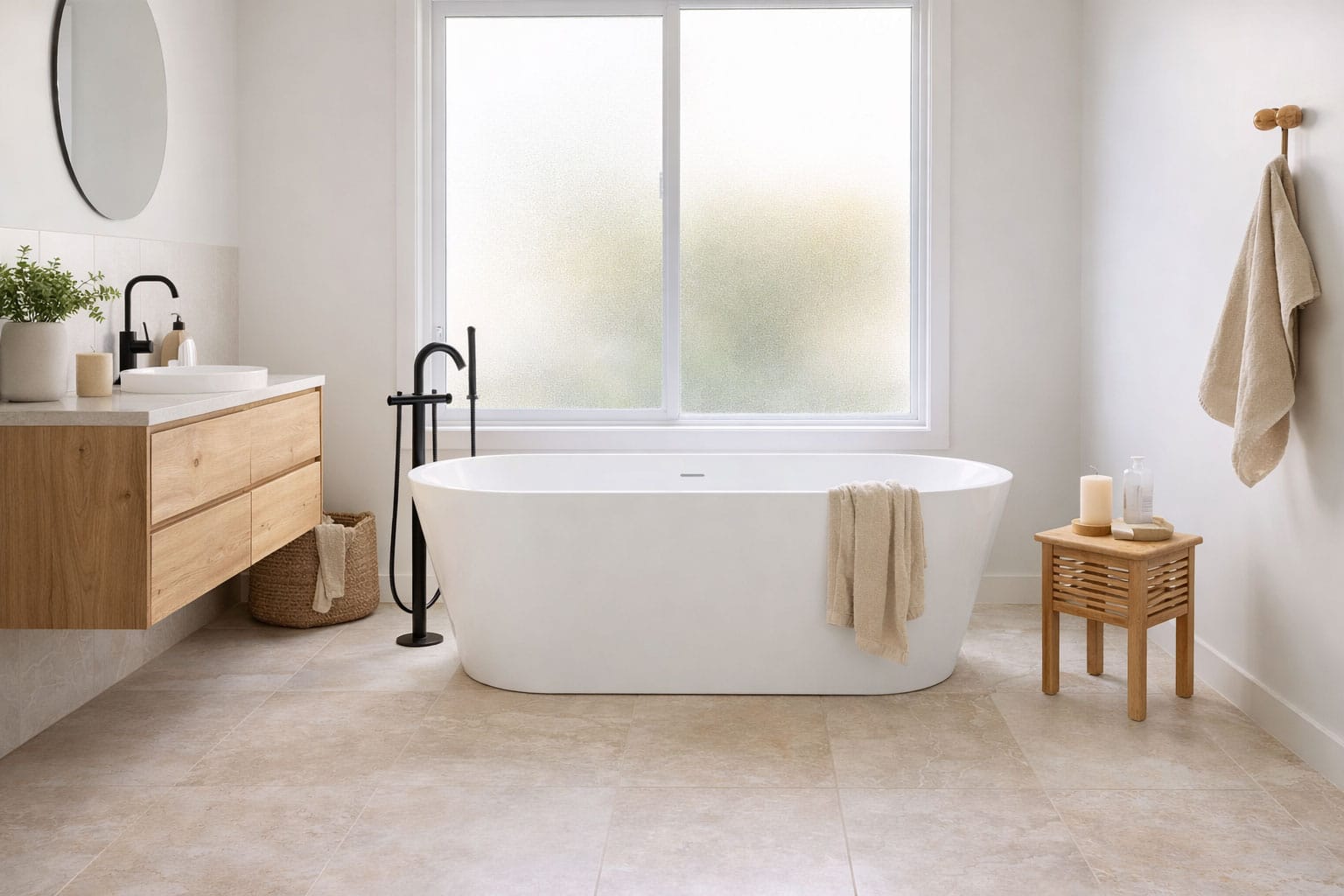
Buying the wrong bath size is one of the most expensive mistakes you can make in a bathroom renovation. And it happens more than you’d think. Someone falls in love with a freestanding bath online, orders it, and then discovers it won’t fit through the door. Or they squeeze a 1700mm bath into a space that really needed a 1500mm, and now the toilet door won’t open properly. Getting your bath size right before you buy saves you money, stress, and a very awkward phone call to your plumber.
This guide covers everything you need to know about bathtub dimensions in Australia — from the difference between a 1500mm and a 1700mm bath, to which size suits your bathroom type, to how to measure your space properly before you commit.
We’ve seen every sizing mistake in the book at Ross’s. Here’s the practical guide to avoiding them.
What Size Bath Do I Need? Quick Answer
The standard bath size in Australia ranges from 1500mm to 1700mm in length and 700mm to 800mm in width. For most Perth bathrooms, one of these sizes will work — it’s really about matching the length to your available floor space and the width to your comfort needs.
Here’s a quick overview of the average bath sizes:
- 1300mm — most compact option, suits very tight ensuites and apartments
- 1500mm — best for ensuites and compact bathrooms
- 1600mm — a useful in-between size, less common but worth considering if your space sits between the two standards
- 1700mm — the most common bath size in Australian homes, suits most family bathrooms comfortably
Length gets most of the attention, but width and soaking depth matter too — especially if you’re tall, you shower over the bath, or you’re replacing a deeper older model.
Standard Bath Sizes in Australia — What the Numbers Actually Mean
Most people shop for baths by length. That’s the right instinct, but the number alone doesn’t tell you much without knowing what it means for your specific bathroom. Here’s what each size actually delivers.
1300mm Baths
If space is genuinely tight, the Galaxy Oval Freestanding Bath is available at 130cm — the smallest bath in our range. This small bath is worth considering for compact ensuites or apartments where even a 1500mm bath is a stretch. You still get a proper soaking bath at this size, but it’s a snug fit for anyone over average height and isn’t suitable for showering over.
1500mm Baths
A 1500mm bath suits ensuites and smaller bathrooms well. It’s comfortable for most adults under 180cm and fits into a room with as little as 1650mm of length on the bath wall.
Our 1500mm range includes a few distinct options. The Pavillion Inset Bath at 1525mm is the practical choice for anyone wanting an insert bath that doubles as a shower-bath combination. If you’re after a freestanding look at this size, the Morocco Back to Wall Freestanding Bath and the Galaxy Oval Freestanding Bath are both available at 150cm — the Morocco also comes in grey and white and black and white if you want something beyond standard white.
The main trade-off with this size is shower space. A 1525mm bath is noticeably shorter underfoot than a 1700mm bath, which matters if showering over the bath is part of the daily routine.
1600mm Baths
The 1600mm size is less common across the industry, but we do have two options at this length. The Madrid Corner baths are available at 160cm in left-hand and right-hand configurations — a smart pick for corner layouts where a straight bath won’t work. The Cube Freestanding Bath also measures 160cm, with a clean, rectangular profile that suits modern bathrooms.
If your space sits right in this middle ground, a 160cm bath is worth considering before automatically opting for 1700mm. The extra 100mm rarely makes a meaningful difference to comfort, but it can make a real difference to how the rest of your bathroom layout works.
1700mm Baths
This is the most popular bath size in Australian homes, and for good reason. You need around 1800mm of room on the bath wall, which most standard family bathrooms can accommodate. A 1700mm bath is long enough for taller people to lie flat comfortably, and it gives noticeably more shower space than the smaller sizes.
The Pavillion Insert Bath is available in 1700mm, and the Morocco and Galaxy Oval freestanding ranges both extend to 170cm.
How to Measure Your Bathroom for a Bath
Getting the bathtub dimensions right before you buy is where most people come unstuck. It’s not complicated, but there’s more to it than measuring the wall and comparing it to the bath length.
Here’s what to measure before you buy.
- Bath length: Measure the wall the bath will sit against. You need at least 100mm more than the bathtub size you’re considering, allowing for tapware, wall finishes, and installation. A 1700mm bath needs a minimum of 1800mm on that wall.
- Clearance in front: You need at least 700mm of clear floor space between the edge of the bath and the opposite wall or fixture. This is the minimum for comfortable entry and exit — more is always better.
- Bath width: A 700mm wide bath feels noticeably tighter than a 750mm or 800mm option, especially when showering over it. Don’t just measure whether the bath fits — measure whether it will feel comfortable once it’s in.
- For freestanding baths: Measure all four sides, not just the wall it sits nearest to. Freestanding baths require 100–150mm of clearance on all sides. Our guide on how to incorporate a freestanding bath in a small bathroom covers this in more detail if you’re trying to make a freestanding bath work in a tighter space.
- The path to the bathroom: This one catches people out more than anything else. Measure the doorway, any hallway corners, and the bathroom door itself before you order — particularly for freestanding baths. A bath that fits the room but won’t go through the door is an expensive problem.
The most common mistake is measuring length and stopping there. Door swing, vanity placement, and toilet clearance all affect what size bath actually works in your space. Measure everything before you fall in love with a particular model.
Which Bath Size Suits Your Bathroom?
Choosing the right bath size in Australia comes down to three things: your bathroom dimensions, who’s using it, and what you need the bath to do. Here’s how all three come together.
Best Bath Size for Ensuite or Compact Bathrooms
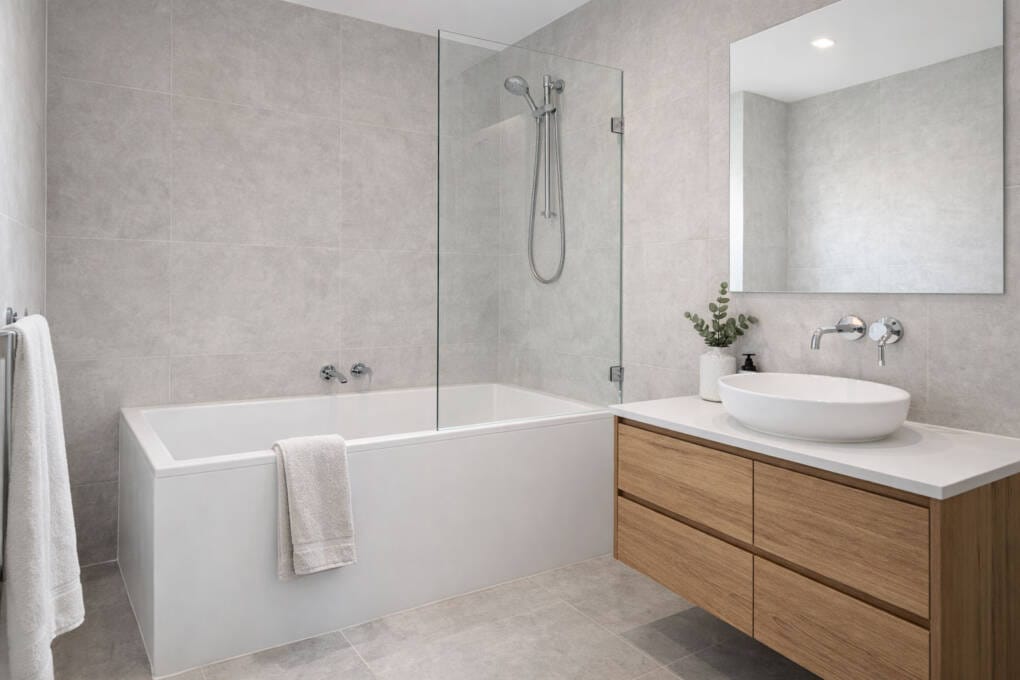
For a compact ensuite, small bath sizes in the 1300mm–1500mm range are the practical starting point. The key question is whether you need the bath to double as a shower. If you do, an insert bath is the smarter choice — it sits flush against the wall, works with a screen, and doesn’t demand the clearance space a freestanding bath does. If the ensuite is generous enough to support a freestanding, the 130cm options give you that look without overwhelming the room.
Best Bath Size for Standard Family Bathroom
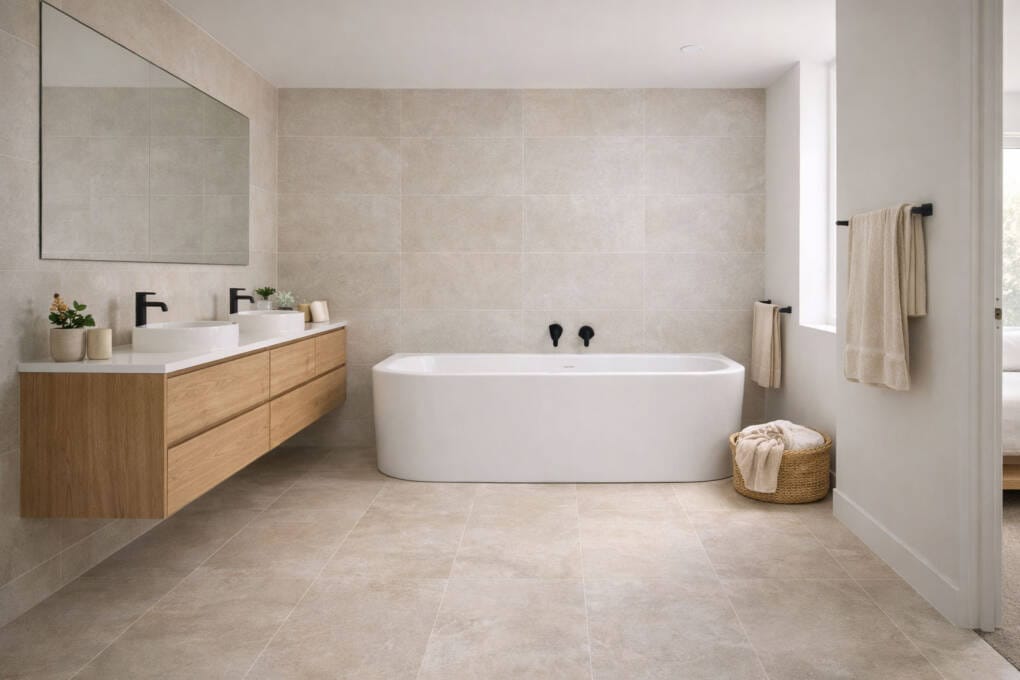
A 1700mm bath is the right call for most family bathrooms. It comfortably suits adults of all heights, works for bathing young kids, and is the size most buyers expect to see in a main bathroom, which matters for resale.
A shower-bath setup is worth considering in a family bathroom — it keeps the bath and adds a functional shower without needing extra floor space. If you’re on the fence, our article on the Benefits of a Shower Bath Combination is a good read before you commit.
Best Bath Size for Larger Bathroom or Master Ensuite
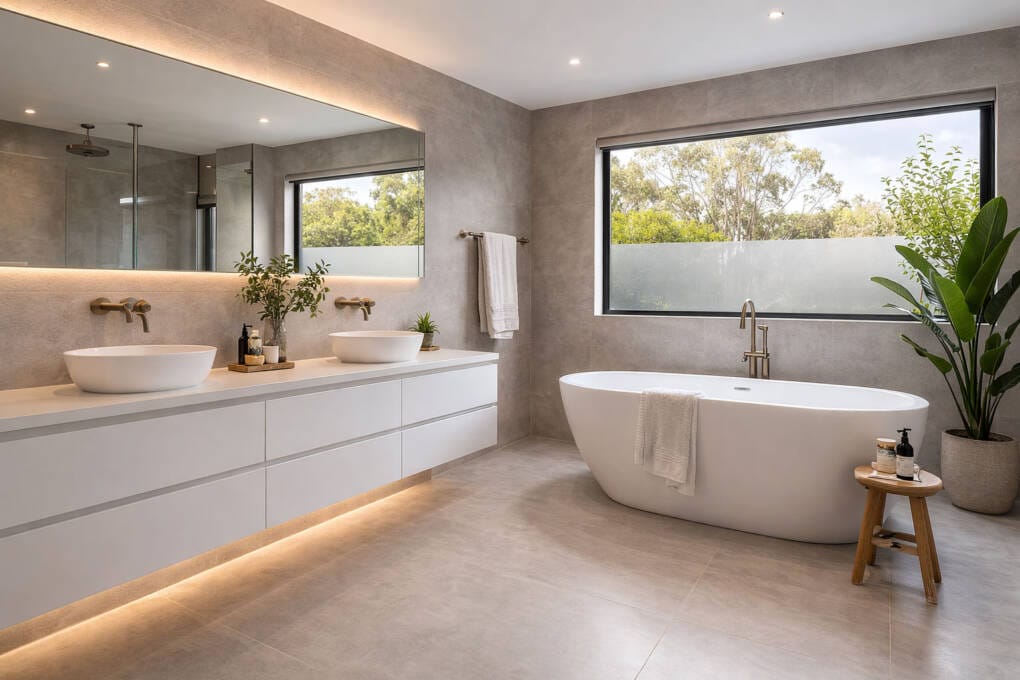
A larger bathroom shifts the decision from pure practicality to design as well. At 160cm–170cm, large bath sizes give you enough length to make the bath a genuine feature of the room rather than just a functional fixture. Back to wall baths give a cleaner built-in look; a true freestanding bath works as a centrepiece with breathing room on all sides. Either way, the bath type selection matters as much as the size at this end of the range.
Does Bath Width and Depth Matter as Much as Length?
Length dominates the conversation when people are shopping for a bath, but bathtub dimensions are three-dimensional, and the bath width and depth have a bigger impact on daily comfort than most people realise before they buy.
Bath width: The functional minimum is 700mm, but 750–800mm is noticeably more comfortable for showering and for larger people. It’s the dimension most buyers underestimate until they’re actually using the bath every day.
Soaking depth and bath height: Insert baths sit at around 380mm in height, which gives you a comfortable bath water depth without being difficult to climb in and out of. Freestanding baths are generally deeper and sit higher off the floor, which improves the soaking experience but does affect ease of entry and exit. For older family members or anyone with mobility considerations, an accessible bathroom starts with choosing a bath height that works for them, not just one that looks good.
Bath water depth is also worth checking beyond the overall height measurement. The internal soaking depth — the actual water depth when the bath is full — varies between models, even at the same external dimensions. If a deep soak is the whole point, check the internal measurements, not just the external ones.
In my experience, people most consistently underestimate the width of a bath. Nobody complains that their bath is too wide.
Common Bath Sizing Mistakes and How to Avoid Them
Getting bath size wrong is more common than it should be — and most mistakes are avoidable with a bit of bathroom planning before you commit. These are the ones we see most often.
- Buying for length and ignoring width: Most people lock in a standard bath size for their space and stop there. Length is important, but a bath that’s the right length and too narrow will frustrate you every time you use it. Width deserves equal consideration.
- Forgetting freestanding clearance: A freestanding bath needs 100–150mm of clear space on all four sides. It’s one of the most common bathroom renovation tips we give — the bath dimensions on the spec sheet and the floor space you actually need are two different numbers.
- Not checking the delivery path: A bath that fits the room but won’t travel through the front door, down the hallway, or around a tight corner is an expensive mistake. Measuring for a bath means measuring the whole journey, not just the bathroom wall.
- Choosing a bath size based on the showroom model: Display baths look great in a spacious showroom setting. That same bath in your ensuite can feel completely different. Always bring your bathroom measurements and make the decision against your actual space, not the display environment.
- Overlooking soaking depth when replacing an older bath: Older baths were often deeper than modern equivalents. If you’re replacing one, check what to look for before buying a bath in terms of internal depth — not just external dimensions — otherwise you may end up with a bath that looks identical but delivers a noticeably shallower soak.
What’s Available at Ross’s — Our Bath Range by Size
If you’ve worked out the right bath size for your bathroom, here’s where our range maps to each option. Bath sizes in Australia vary widely across retailers — what follows is a straightforward guide to what we stock, what it costs, and what each product is best suited to.
| Size | Product | Type | Price (inc. GST) |
| 1300mm | Galaxy Oval Freestanding | Freestanding | $1,340–$1,390 |
| 1525mm | Pavillion Insert Bath | Insert | $280 |
| 1500mm | Morocco Back to Wall, Galaxy Oval | Freestanding | from $1,380 |
| 1600mm | Madrid Corner, Cube | Corner / Freestanding | from $1,440 |
| 1700mm | Morocco, Galaxy Oval, Pavillion Insert | Freestanding / Insert | from $1,440 |
The Morocco Back to Wall bath is available in white, grey and white, and black and white across both the 150cm and 170cm sizes — worth knowing if finish is part of the decision.
For a broader look at what to consider before you buy, our Ultimate Bath Buying Guide covers bath types, materials, and installation considerations.
-

 Price range: $1,440.00 through $1,490.00 inc.GSTSelect options This product has multiple variants. The options may be chosen on the product page
 -

 Price range: $1,440.00 through $1,490.00 inc.GSTSelect options This product has multiple variants. The options may be chosen on the product page
 -

 Price range: $1,380.00 through $1,430.00 inc.GSTSelect options This product has multiple variants. The options may be chosen on the product page
How to Choose the Right Bath Size
The question of what size bath do I need doesn’t have a single answer — but it does have a logical one once you know your bathroom dimensions, your household’s needs, and what you want the bath to do.
For most Perth family bathrooms, 1700mm is the right bath size. It’s long enough for adults of all heights, practical for young kids, and the size buyers expect to see when they’re inspecting a home. For ensuites and tighter spaces, 1500mm–1525mm is the smart call — enough bath to be genuinely useful without compromising the rest of the layout. For larger bathrooms where choosing a bathtub that makes a design statement is part of the brief, 160cm–170cm gives you the presence to do that without going oversized.
Whatever size you land on, measure twice — length, width, clearances, and the path the bath needs to travel to get into the room. Bathtub selection is one of those decisions that’s very hard to reverse once the plumber has been.
Browse our full bathroom range online or come into Ross’s showroom to see our baths in person — we’re happy to help you work through the options for your specific bathroom upgrade and renovation plans.
