
Pros and Cons of Pre-Assembled Kitchen Cabinets
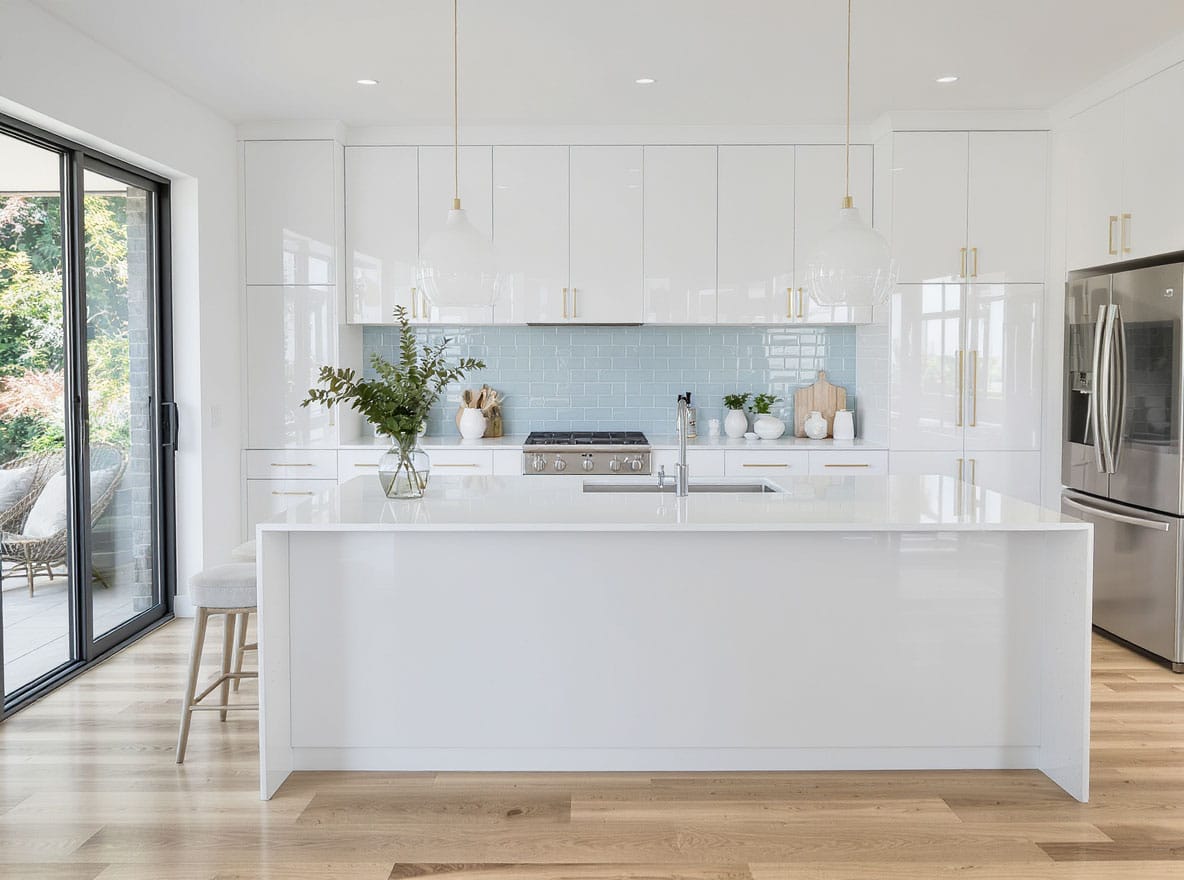
A kitchen renovation can turn messy fast when the cabinets slow everything down. Most Perth homeowners I speak with want the control of a DIY kitchen without spending nights building cabinet boxes on the garage floor.
That is why the pros and cons of pre-assembled kitchen cabinets are worth weighing up before you order. Pre-assembled cabinets can save time, reduce mistakes and make the project feel more manageable. They still need the right layout, careful measuring and a clear plan before delivery.
I have seen plenty of customers come into our showroom after realising the cabinet choice affects timing, storage, access and finish quality. Below, I cover the benefits, drawbacks, quality checks, buying checks and when another option may suit better.
What Are The Pros And Cons Of Pre-Assembled Kitchen Cabinets?
Pre-assembled kitchen cabinets save time, reduce assembly mistakes and give homeowners a factory-built cabinet that is ready to install. The main drawbacks are bulkier delivery, less design freedom than custom cabinetry and the need to work with modular cabinet sizes. They suit renovators who want speed, consistency and a cleaner DIY process.
| Pros | Cons |
| Faster to install than cabinets that need assembly | Bulkier to deliver and store before installation |
| Fewer cabinet assembly mistakes | Less design freedom than fully custom cabinetry |
| More consistent cabinet build | Must work with modular cabinet sizes |
| Cleaner DIY process | Access and measurements matter more before delivery |
| Good fit for standard layouts | Unusual spaces may still need custom work |
The pros and cons of pre assembled kitchen cabinets usually come down to layout, budget, quality expectations and DIY confidence. If your kitchen has a standard layout, pre assembled kitchen cabinets can make the job feel more controlled.
The trade-off is that you need to plan earlier. Delivery access, storage space, cabinet measurements and modular sizing all matter before the cabinets arrive.
What Are Pre-Assembled Kitchen Cabinets?
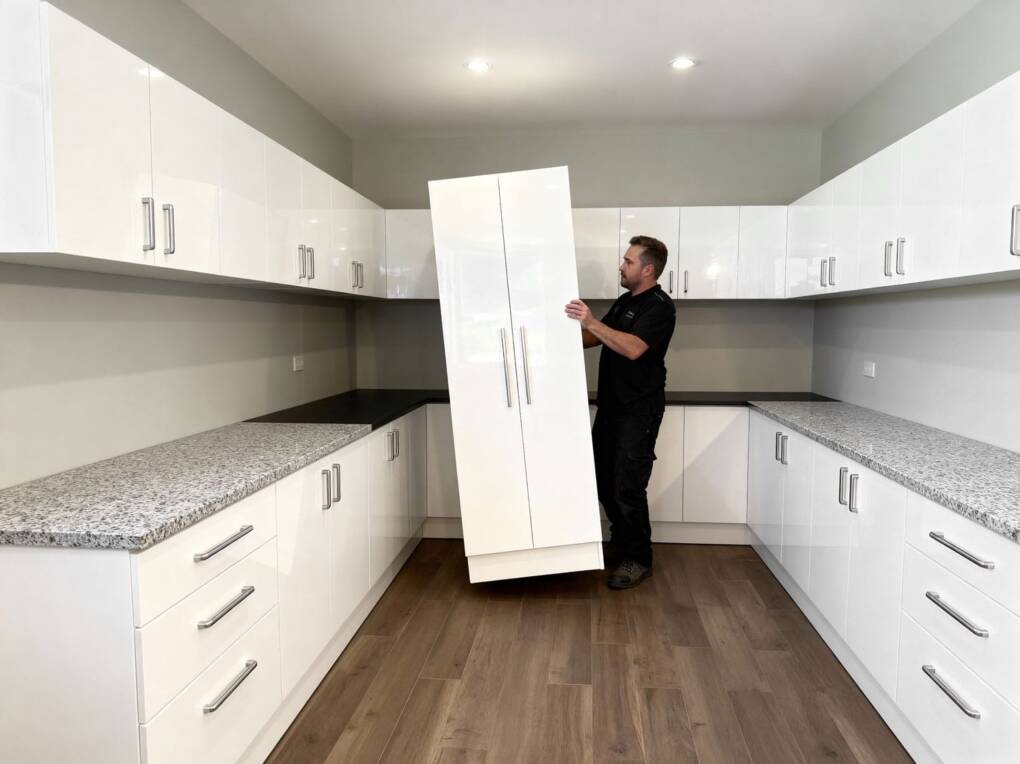
Pre-assembled cabinets arrive with the cabinet boxes already built. This is different from flat pack cabinetry, where the buyer or installer assembles the cabinet before fitting it.
With fully assembled kitchen cabinets, the job moves more quickly into positioning, levelling, fixing and finishing. You still need to measure carefully and install the cabinets properly, but you are not building every cabinet box from loose panels.
At Ross’s, our Q range includes base, wall and pantry options that arrive pre-assembled. They work as ready to install kitchen cabinets for homeowners who want a cleaner DIY process. You can compare sizes and cabinet types in our kitchen cabinets range before planning your layout.
The Main Benefits Of Pre-Assembled Kitchen Cabinets
The benefits of pre assembled kitchens are mostly practical. They reduce the work before installation starts and help keep a renovation moving.
- Faster project progress: The cabinets arrive already built, so you can move sooner into positioning, levelling and fitting.
- Fewer assembly mistakes: You are not trying to square cabinet boxes, align panels or assemble drawers from loose parts. I have renovated enough kitchens to know that small errors can show up later as uneven doors or rough drawers.
- Cleaner DIY experience: Pre-assembled cabinets mean less hardware sorting, less packaging across the room and less time spent building before the kitchen takes shape.
- More consistent cabinet finish: Factory assembly and consistent materials help the finished kitchen feel more uniform. That matters with high-gloss cabinetry because alignment issues show under bright Perth light.
- Better planning confidence: Pre assembled kitchens work best when the layout suits modular cabinetry. Once you know the cabinet sizes, you can plan the room with more certainty.
- Useful for investment properties: Speed and consistency help when an investment property needs a practical kitchen upgrade. I look for finishes and layouts that can handle real use, not just look good on handover day.
The benefits of pre-assembled kitchen cabinets are strongest when the room works with standard cabinet sizes. That is why quality is the next thing to check.
Lead Time And Warranty At A Glance
Before you weigh the pros and cons in detail, here is a quick snapshot of how the three cabinet types compare on time and warranty. Flat pack and custom figures are general Australian industry ranges and worth a quick sanity check against current supplier data before publishing; the pre-assembled figures are Ross’s own confirmed numbers.
| Item | Pre-Assembled (Ross’s) | Flat Pack | Custom |
| Typical lead time | Usually in stock | Typically 1–4 weeks, depending on finish and supplier | Typically 6–12 weeks, depending on design complexity |
| Typical install time | 1–3 days, depending on trade experience | Full DIY assembly required – often several days to a week or more | Usually 3–7 days once cabinets arrive on site |
| Manufacturer warranty | 10-year manufacturer warranty | Commonly 1–3 years, varies by supplier | Commonly 1–5 years, varies by cabinetmaker |
For the fuller cost and time breakdown across all three cabinet types, see our comparison guides linked later in this article.
Are Pre-Assembled Kitchen Cabinets Good Quality?
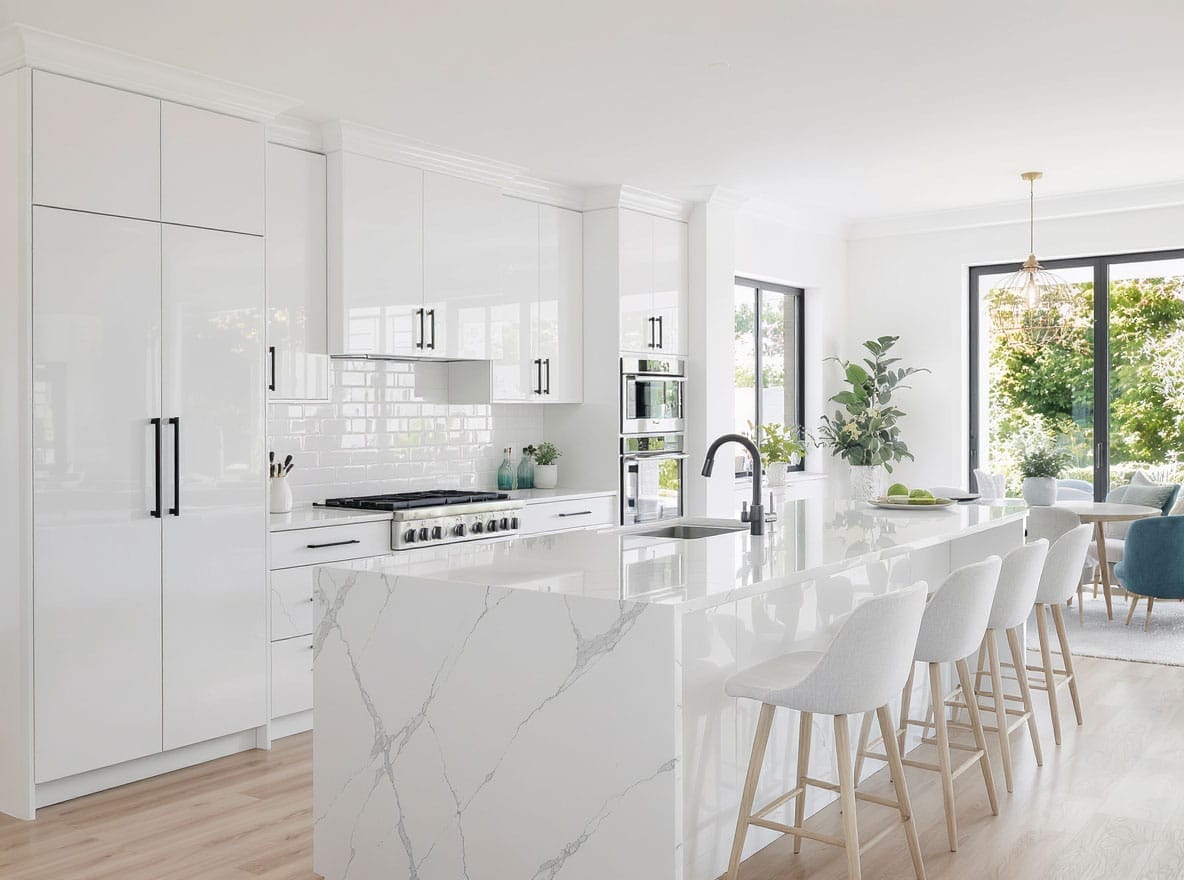
Pre-assembled cabinets can be good quality, but the delivery format is only one part of the decision. It tells you the cabinet arrives built. It does not prove the cabinet is strong.
This is where I tell customers to look past the label. Quality comes from the board, finish, runners, hinges and warranty.
Our Q kitchen cabinets use 18mm HMR MDF doors, which means high moisture resistant MDF. The carcasses use 16mm HMR particleboard. The doors have a multi-layer 2-pack epoxy painted finish that is sanded and hand-polished for a high-gloss result. The cabinets also have a high-gloss PET laminated finish inside and out.
DTC drawer runners and quick-release hinges help drawers and doors feel smoother in use. The hinges make door removal easier during adjustment or cleaning. Adjustable feet from 145mm to 175mm help on uneven floors, and the 10-year manufacturer’s warranty gives buyers a clear term to check.
The high-gloss 2PAC finish is easy to live with day to day. A damp microfibre cloth and a mild detergent keep it looking sharp, and it is worth skipping abrasive cleaners or scouring pads, which can dull the gloss over time.
Before choosing preassembled kitchen cabinets or ready made kitchen cabinets, I would check:
- Door thickness and material
- Cabinet carcass material
- Internal cabinet finish
- Drawer runner and hinge quality
- Warranty length
- Ease of adjustment and maintenance
A good pre-assembled cabinet should make the job quicker and still give you confidence in the construction behind the finish.
The Drawbacks Of Pre-Assembled Kitchen Cabinets
Pre-assembled cabinets can make a renovation easier, but they still have limits. I would rather a customer know the trade-offs before delivery.
- Bulkier delivery: Pre assembled cabinets take up more space than flat pack cartons, which affects delivery and storage.
- Storage before installation: You need a clean, dry area to keep assembled kitchen cabinets safe before installation.
- Access checks matter: Doorways, staircases, hallway turns and garage access all need checking before ordering.
- Modular sizing limits: This format works around modular cabinet sizes. That suits many standard layouts, but it can limit unusual wall lengths or awkward appliance spaces.
- Less design freedom than custom: Custom cabinetry gives you more control over special sizes, door profiles, unusual layouts and one-off finishes.
- DIY still requires care: Pre-assembled does not remove the need for accurate measuring, levelling, fixing and aligning. The cabinet boxes arrive built, but the final result still depends on careful installation.
These drawbacks do not make this cabinet type a poor choice. They mean you need to check the room, layout and delivery path before you commit.
Who Should Choose Pre-Assembled Kitchen Cabinets?
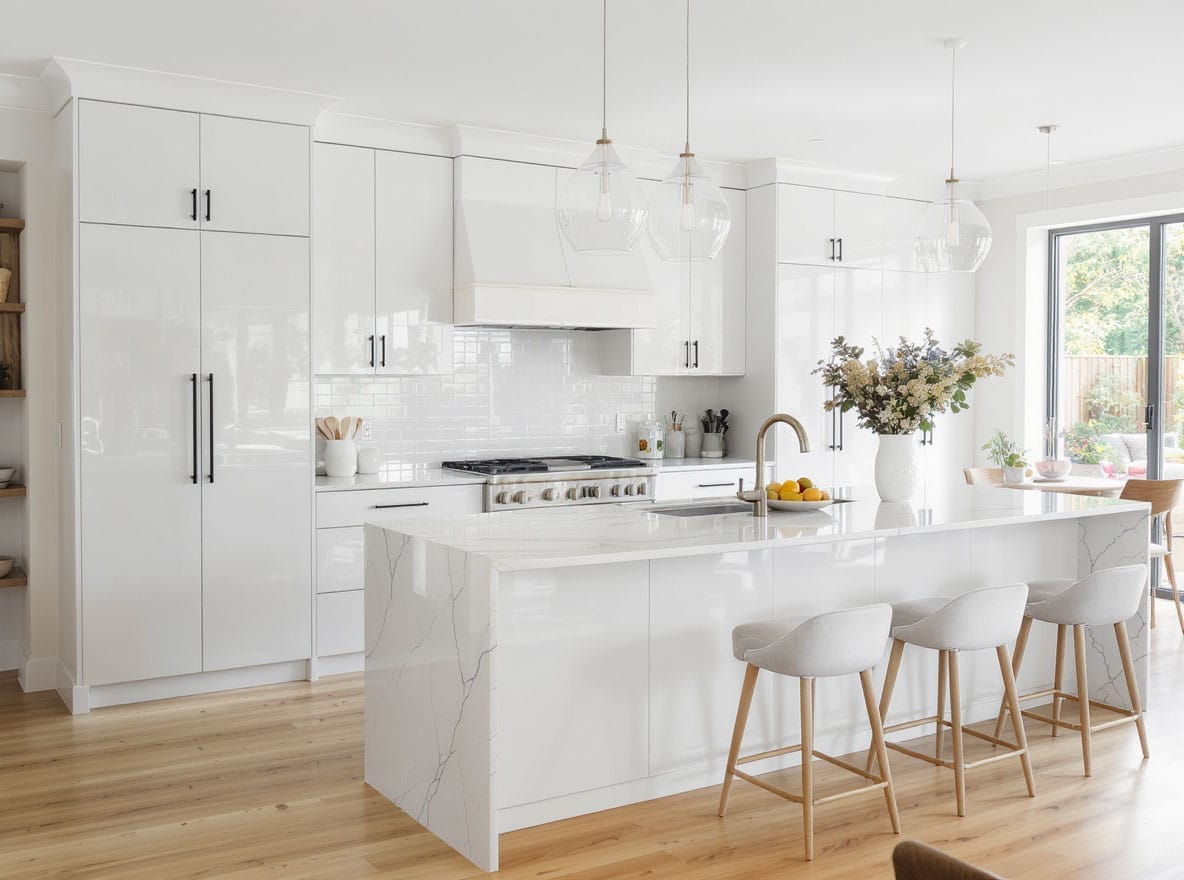
Pre-assembled cabinets suit renovators who want speed, consistency and simpler planning. They are not right for every kitchen, but they make sense when the room works with standard cabinet sizes.
They are a good fit for:
- DIY renovators who want to avoid cabinet assembly
- Perth homeowners with standard kitchen layouts
- Investors who want a practical, clean-looking kitchen upgrade
- Families who need the project to keep moving
- Buyers who want a consistent white high-gloss cabinet finish
- Renovators who prefer to inspect products in our Guildford showroom before buying
I often see this choice suit people who are confident with planning and measuring, but do not want the extra work of cabinet assembly. In my own renovations, reducing early mess is worth considering.
Pre built kitchen cabinets and pre made kitchen cabinets can also help investors keep the project simple. You can plan around set sizes, choose a clean finish and avoid a full custom design process.
Before ordering, I recommend testing the layout properly. Our 3D kitchen planner helps you see how the base units, wall units and pantry storage work together before you commit.
What To Check Before Buying Pre-Assembled Kitchen Cabinets
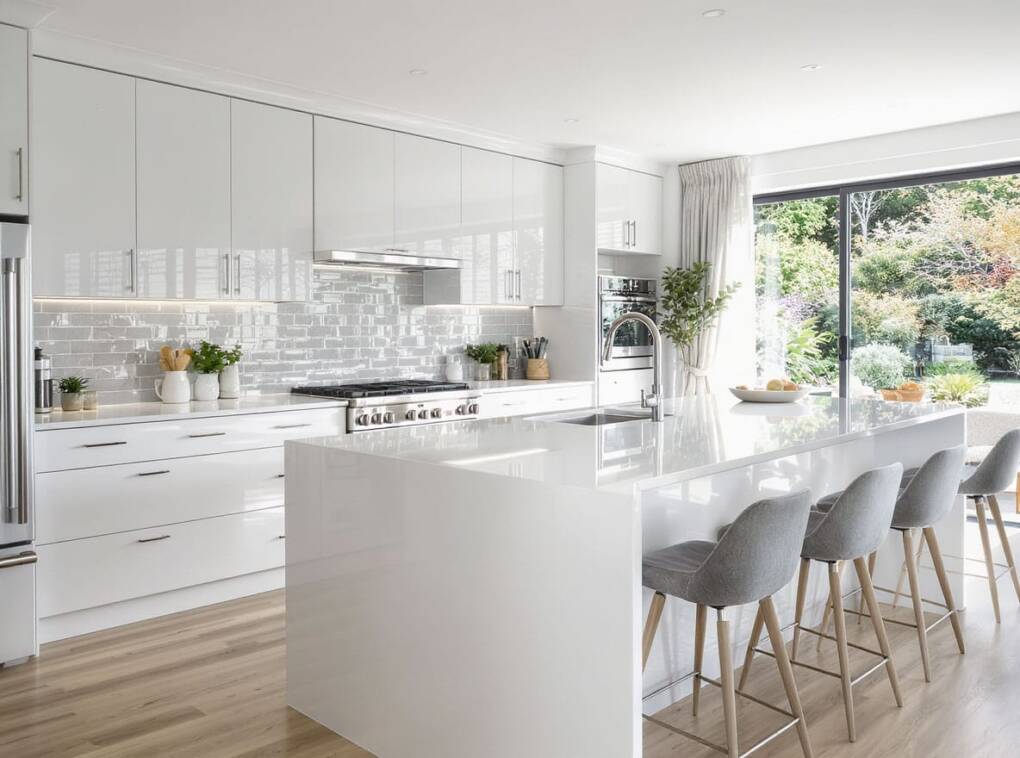
Pre-assembled cabinets make the cabinet stage simpler, but only if the planning is right before you order. The pros and cons of pre assembled kitchen cabinets are easier to manage when you check the room, access and finishing pieces upfront.
- Measure the full kitchen space, not just the old cabinets. Old cabinets can hide uneven walls, odd gaps or past changes.
- Check appliance openings, sink location and wall lengths. Appliance widths, plumbing points and windows can affect cabinet positions.
- Confirm whether the layout works with standard cabinet sizes. Pre-assembled cabinets use modular sizes, so check where fillers or end panels may be needed.
- Plan base cabinets, wall cabinets, drawers and pantry storage. Start with the working zones first. Our base cabinets form the lower storage run, while wall cabinets help make use of vertical space.
- Allow for fillers, end panels, kickrails and finishing pieces. These parts close gaps where cabinet sizes do not match the wall length exactly.
- Check delivery access, doorways and temporary storage space. Pre-assembled cabinets are bulkier than flat pack cartons, so check access and storage space.
- Think about door swing, reversible doors and handle placement. Reversible doors help with layout flexibility, and the supplied handle drilling template and drill bit make handle placement easier to plan.
- Use the 3D kitchen planner before buying. A planner helps you see appliance openings, pantry cupboards, drawers and wall storage before delivery.
- Decide whether you will install yourself or get trade help. Pre-assembled cabinets reduce assembly work, but you still need accurate measuring, levelling, fixing and alignment. Adjustable feet from 145mm to 175mm help with uneven floors, but they do not replace careful installation.
When Flat Pack Or Custom Cabinets May Suit Better
Pre-assembled cabinets are a practical middle ground, but flat pack or custom cabinetry may suit better in some projects.
Flat pack cabinets may suit buyers who want the lowest upfront cabinet price and are comfortable assembling each cabinet. For a deeper breakdown, read our guide to pre-assembled vs flat pack kitchen cabinets.
Custom cabinetry may suit unusual layouts, non-standard sizes, special door profiles or finishes outside a ready-made range. Our pre-assembled vs custom kitchen cabinets guide covers that choice in more detail.
If you want speed, consistency and less assembly work, pre built cabinets can still be the practical option. The key is making sure the layout suits the room before you order.
Frequently Asked Questions
Are Pre-Assembled Kitchen Cabinets Worth It?
Pre-assembled kitchen cabinets are worth it when you want faster installation, fewer assembly steps and a more consistent cabinet build. If you are weighing the pros and cons of pre assembled kitchen cabinets, they make the most sense when your layout works with modular sizes. Ready assembled cabinets still need accurate measurements and the right finishing pieces before installation.
Are Pre-Assembled Kitchen Cabinets Better Than Flat Pack?
Pre-assembled kitchen cabinets are often better than flat pack for renovators who want to save time and avoid cabinet assembly. Flat pack can still suit buyers chasing the lowest upfront cabinet cost and who feel confident assembling cabinets themselves. The better choice depends on your budget, skill level and how quickly you want the kitchen to come together.
Are Pre-Assembled Cabinets Cheaper Than Custom Cabinets?
Pre-assembled cabinets are generally cheaper than fully custom cabinets because they use standard sizes and pre-built formats. Custom cabinets may still suit unusual layouts, custom finishes, special door profiles or exact design requirements. For standard kitchens, pre assembled cabinets can offer a practical balance between cost, speed and finish consistency.
Can I Install Pre-Assembled Kitchen Cabinets Myself?
Many DIY renovators can install pre-assembled kitchen cabinets themselves if they can measure accurately, level cabinets properly and fix units safely. Our step-by-step guide to installing kitchen cabinets walks through the process in more detail. The cabinet boxes arrive built, but the kitchen still needs careful alignment. Tricky layouts, plumbing, electrical work and benchtop installation may still need trade help.
Do Pre-Assembled Kitchen Cabinets Fit Every Kitchen?
Pre-assembled kitchen cabinets do not fit every kitchen perfectly because they rely on standard cabinet sizes. Most standard kitchens can still be planned well with the right mix of base cabinets, wall cabinets, drawers, pantry cupboards, fillers and end panels. The layout should be checked before ordering, not after delivery.
What Should I Check Before Ordering Pre-Assembled Cabinets?
Buyers should check room measurements, cabinet sizes, appliance openings, door swings, delivery access and temporary storage before ordering pre-assembled cabinets. A planner can help confirm the layout before purchase. Visiting our Guildford showroom can also make it easier to compare cabinet sizes, finishes and storage options in person.
Should You Choose Pre-Assembled Kitchen Cabinets?
You should choose pre-assembled cabinets if you want a faster kitchen renovation, consistent construction and less assembly work before installation starts. They suit standard layouts, DIY renovators and Perth homeowners who want a more controlled cabinet stage.
They are not right for every project. If your kitchen has unusual angles, special cabinet sizes or a finish outside a ready-made range, custom cabinetry may suit better. If your room works with modular sizing, the pros and cons of pre assembled kitchen cabinets usually point to a practical middle ground.
If this cabinet style sounds like the right fit for your renovation, compare our pre-assembled kitchen cabinets online or visit our Guildford showroom to plan your layout with more confidence.
