
Semi-Frameless Shower Screen Pros and Cons
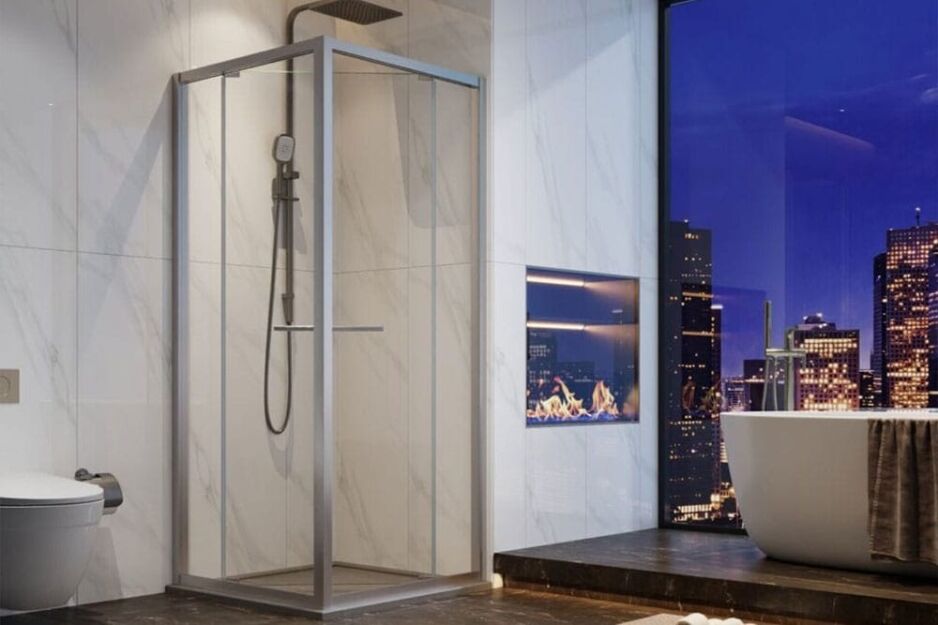
Semi-frameless shower screens are the most-asked-about screen type in our Guildford showroom, and the question is almost always the same: are they actually worth it, or am I just compromising on a fully frameless screen because of the price?
It’s a fair question. I’ve helped hundreds of Perth homeowners work through the pros and cons of semi frameless shower screens over the years, and the honest answer is that they’re genuinely the right call for most bathroom renovations. Not because they’re the cheapest option or the easiest to install, though they are both of those things. Because for the majority of Perth bathrooms, the result looks sharp, holds up well, and delivers real value.
That said, they’re not for everyone, and there are trade-offs worth knowing before you buy. This article covers what a semi-frameless shower screen actually is, the real pros and cons, how it compares to fully frameless, what configurations are available, what it costs, how to install it, and how to maintain it in Perth’s hard water conditions. If you’ve already decided and want to browse the range, our semi-frameless shower screens page has everything in stock. If you’re still working through the decision, read on.
What Is a Semi-Frameless Shower Screen?

A semi-frameless shower screen uses a slim aluminium perimeter frame around the outside edges of the screen, while the door and internal glass panels remain unframed. That combination is what gives it the hybrid look — more open and modern than a fully framed screen, more accessible in price than a fully frameless screen.
The glass is 6mm toughened safety glass, compliant with AS/NZS 2208:1996, which is the Australian standard for safety glazing in wet areas. Fully frameless screens use 10mm glass because they rely on the glass itself for structural rigidity. In a semi framed shower screen, the aluminium perimeter frame carries that load, so the thinner glass works without compromise. Door mechanisms are either pivot or sliding, depending on the configuration.
A good concrete example is the Alpine Pivot Door and Return Matte Black. What you see is a slim matte black frame running around the outer edges, an unframed pivot door that swings clean, and a result that reads as genuinely contemporary without the price tag of a fully frameless screen.
| Feature | Semi-Frameless |
| Glass thickness | 6mm toughened safety glass |
| Frame type | Slim aluminium perimeter |
| Door options | Pivot or sliding |
| Typical cost range | See cost section below |
| Installation | DIY-suitable |
| Maintenance | Easy — fewer crevices than fully framed |
| Warranty | 15 years (Alpine range) |
Semi-Frameless Shower Screen Pros and Cons
The pros and cons of semi-frameless shower screens come down to a clear set of trade-offs. You get 6mm toughened glass with a slim aluminium perimeter frame, giving you a modern, open look at a lower price than fully frameless. The main pros are affordability, easier installation, better water retention, and DIY-friendliness. The main cons are the visible frame line and slightly less seamless appearance than frameless glass.
Benefits of Semi-Frameless Shower Screens
The main semi-frameless shower screen benefits come down to cost, practicality, durability, and a cleaner look than standard framed designs.
Cost-effective. Semi-frameless screens cost less than fully frameless because they use 6mm glass rather than 10mm, and the aluminium frame removes the need for the heavy hardware that holds unframed glass in place. Our Alpine Pivot Door and Return Silver starts at $760 for a 900x900mm configuration, which is meaningfully below the entry point for frameless. For most bathroom renovation budgets, that gap is significant.
DIY-friendly installation. The aluminium perimeter frame is self-supporting, which makes alignment considerably more forgiving than frameless installation. There’s no need to drill directly into glass or set heavy panels without a frame to guide placement. Perth homeowners doing a supply-only renovation can tackle this themselves with accurate measurements and standard tools. Our how to measure a shower screen guide covers the prep work before you order.
Better water retention than frameless. The framed perimeter seals more tightly against tiled walls and the shower base than an unframed screen can. That tighter seal reduces water escape at the edges, which is a genuine practical advantage in family bathrooms where the shower gets heavy daily use.
Works with imperfect walls. Aluminium frames are adjustable and can accommodate walls and floors that aren’t perfectly square. That matters more in Perth than in many other markets. A lot of homes built here before the 1990s have settled over time, and perfectly plumb bathroom walls are the exception rather than the rule. A semi-frameless screen handles that variance in a way fully frameless glass cannot.
Easy to maintain. Fewer metal sections than a fully framed screen means fewer crevices for soap scum and mould to collect. Our Alpine range also includes EASYClear glass coating, which is particularly useful for Perth bore water conditions. Hard water leaves mineral deposits on glass faster than town supply, and the coating slows that build-up considerably.
Drawbacks of Semi-Frameless Shower Screens
The main drawbacks of semi-frameless shower screens are worth understanding before you choose one, especially if you’re comparing them against a fully frameless design.
Visible frame line. The aluminium perimeter is always visible. A semi-frameless screen does not achieve the completely uninterrupted glass look of a frameless screen, and no finish or colour choice changes that. If a seamless glass wall is non-negotiable, semi-frameless won’t deliver it.
Frame edges collect residue over time. There are fewer crevices than a fully framed screen, but the frame channel where aluminium meets tile does collect soap scum and grime. One downside of semi-frameless shower screens in Perth, specifically, is that hard water accelerates the build-up. The frame channel here needs more frequent attention than it would in a softer-water area.
Minor door gap water leakage. Because the door itself is unframed, small gaps where the door meets the fixed panel can allow some water to escape during showering. It’s manageable with correct installation — the gradient of the shower base matters here — but worth knowing for anyone who wants maximum water containment.
Glass shatter clean-up. If the 6mm toughened glass breaks, it shatters into small cubes rather than sharp shards. That’s safe by design under AS/NZS 2208:1996, but the clean-up is still messy. It’s worth noting that this is a property of all toughened glass products, not something specific to semi-frameless screens.
I’m always straight with customers in the showroom about the frame line. If someone comes in with a clear picture of a seamless glass wall in their head, I’ll tell them semi-frameless won’t get them there and point them toward frameless instead. But for most Perth bathroom renovations I’ve seen over the years, the semi-frameless result looks genuinely impressive, and the price difference is enough to cover a good portion of the tiling or tapware budget.
Semi-Frameless vs Frameless — Which Is Right for You?
The decision between semi-frameless and frameless comes down to three things: budget, how much the visible frame bothers you, and whether your walls and floor are installation-ready for frameless glass.
| Feature | Semi-Frameless | Frameless |
| Glass thickness | 6mm toughened safety glass | 10mm toughened safety glass |
| Cost range | From $480* (door only) to $760+* (door and return) | From $840* (door only) to $1,128+*(door and return) |
| Frame visibility | Slim aluminium perimeter frame visible | No visible frame |
| Installation difficulty | DIY-suitable, forgiving on uneven walls | More complex, requires precise wall and floor prep |
| Water retention | Strong — framed perimeter seals tightly | Good — relies on correct installation tolerances |
| Maintenance | Easy — fewer crevices than fully framed | Easiest — no frame channels to clean |
| Best for | Budget-conscious renovators, older homes, family bathrooms | Maximalist glass look, new builds, premium bathrooms |
*Prices as of May 2026, subject to change.
Semi-frameless is the practical choice for most Perth bathroom renovations. It delivers a genuinely modern result, handles the imperfect walls common in older Perth homes, and leaves some of your budget available for other finishes. Frameless is the right call when the completely uninterrupted glass look is the priority, and the budget and substrate can support it. When comparing semi frameless vs framed shower screen options more broadly, semi-frameless comes out ahead for most mid-range renovations — better looking than fully framed, more accessible than fully frameless. For the full comparison across all three types, see our frameless vs semi-frameless buyers guide.
We stock both types here at Ross’s, so you can compare the frame details and glass weights side by side before committing.
Semi-Frameless Configurations — Pivot, Sliding, and Corner Entry
Semi-frameless screens come in three main door configurations — pivot, sliding, and corner entry. The right choice depends on your bathroom layout, available floor space, and whether the shower is recessed, against a single wall, or tucked into a corner. If you’re still working out which configuration suits your bathroom, our guide to types of shower screens covers the full picture.
Pivot Door Semi-Frameless Screens
A pivot door shower screen swings outward on a pivot hinge, which means you need clear floor space in front of the shower for the door arc. It’s the most popular configuration in our showroom, and for good reason — it suits the alcove and wall-to-wall layouts that make up the majority of standard Perth bathroom designs. Our Alpine Pivot Door and Return is available in both Silver and Matte Black, and it’s the configuration I’d recommend as the starting point for most renovators unless the floor plan rules it out.
Sliding Door Semi-Frameless Screens
A sliding shower screen runs on a track and requires no floor clearance for the door, which makes it the practical choice for smaller bathrooms where a swinging pivot door would eat into the available space. Perth’s older homes often have compact bathrooms where every centimetre counts, and a sliding configuration handles those layouts without compromise. The Alpine Curved Corner Entry Matte Black is a good example of how a sliding entry can work in a tighter footprint without sacrificing the contemporary look.
Corner Entry Semi-Frameless Screens
A corner shower screen is designed for installations where two walls form the enclosure, with the entry point at the corner rather than along a wall face. It maximises usable floor space inside the shower, which makes it a strong choice for small bathrooms, ensuite upgrades, and Perth investment properties where the bathroom footprint is fixed and efficiency matters. The Alpine range includes corner entry configurations in both Silver and Matte Black to suit the finish direction of the broader bathroom.
How Much Do Semi-Frameless Shower Screens Cost?
Semi-frameless shower screen costs fall between fully framed and fully frameless, which is exactly where most Perth renovation budgets land. Entry-level framed screens start from around $300 to $500. Fully frameless starts from $1,128 at our end of the market. Semi-frameless fills the gap with a result that punches above its price point.
In our Alpine range, the Pivot Door Silver starts from $480 for a standalone door. The Alpine Pivot Door and Return Silver — door plus fixed return panel — starts at $760 for a 900x900mm configuration. These are supply-only prices. Your final price depends on whether you choose DIY installation or professional installation. If you choose professional installation, the installation cost is added to the product price.
The 15-year warranty on the Alpine range is worth factoring into the value calculation. That’s a meaningful coverage period for a bathroom renovation budget item at this price point. For a broader look at what shower screens cost across all types, our guide, how much does a shower screen cost, has the full breakdown.
Installing a Semi-Frameless Shower Screen — What Perth Homeowners Need to Know
Semi-frameless shower screen installation is designed for DIYers because the aluminium perimeter frame provides enough structural support that the glass doesn’t need to be perfectly plumb on all axes. That forgiveness is a big advantage in Perth’s older homes, where bathroom walls and floors have often settled over time, and a perfectly square shower recess is the exception.
Before you order, get your measurements right. Small errors compound quickly with glass. Our guide to how to measure a shower screen walks through exactly what to check and where most people go wrong.
Waterproofing must be in place and compliant with AS 3740-2010 before the screen goes in. That’s a pre-installation requirement for waterproofing wet areas — the screen itself doesn’t provide it. If you’re tiling a new shower recess as part of the renovation, the waterproofing membrane needs to be fully cured before the screen is fixed.
All Alpine screens are designed for DIY installation. No specialist tools are needed beyond standard drill and fixing equipment. One thing worth checking before you drill: if the home was built before 1990, the wall substrate behind the tiles may be fibre cement or another material that needs appropriate fixings rather than standard masonry anchors. It’s a five-minute check that saves a frustrating mistake.
Keeping Your Semi-Frameless Shower Screen Clean — Perth Conditions Matter
Knowing how to clean a semi-frameless shower screen properly takes about five minutes to learn and saves a lot of frustration later — particularly in Perth, where hard bore water leaves mineral deposits on glass and frame channels faster than most homeowners expect.
The single most effective habit is a squeegee after every shower. It takes 30 seconds and removes the water that would otherwise dry on the glass, leaving mineral residue behind. After that, a weekly wipe with a non-abrasive cleaner handles the soap scum before it builds up. Pay specific attention to the frame channel where the aluminium meets the tile — that’s where hard water deposits accumulate fastest and where a quick weekly clean makes the biggest difference.
For mineral deposits that have already built up, a diluted vinegar and water solution works well on both the glass and the frame channel without damaging the surface. Avoid harsh chemical cleaners — they can strip protective coatings and dull the aluminium finish over time.
Alpine screens include EASYClear glass coating as standard, and in Perth conditions, it earns its place. The coating reduces water and soap scum adhesion, so deposits don’t grip the glass the way they do on uncoated screens. I get asked about bore water and glass maintenance constantly in the showroom. Customers come in having watched mineral haze develop on uncoated glass and want to know whether it’s avoidable. EASYClear is a genuine answer to that, not a marketing claim. For the full maintenance routine across all screen types, our guide to how to maintain your shower screen covers everything in detail.
Frequently Asked Questions
Conclusion
For most Perth bathroom renovations, a semi-frameless shower screen is the most practical decision you can make at this price point. It delivers a genuinely modern result, handles the imperfect walls and hard water conditions common across Perth homes, suits DIY installation without specialist trades, and leaves extra budget for the tiles, tapware, and fittings that complete the room. There are pros and cons to semi-frameless shower screens, but generally, the case for choosing semi-frameless is straightforward.
If the completely seamless glass wall is the look you’re after, frameless is the right answer, and we stock that too. But if you’re after a clean, contemporary screen that performs well and offers great value, a semi-frameless screen is worth serious consideration. Browse our full semi-frameless shower screens range to see the Alpine configurations and current supply-only pricing, or come into the showroom at 57 James Street, Guildford, to compare the frame detail and glass weight in person. Every Alpine screen comes backed by a 15-year warranty.
