
10 Benefits of a Shower Bath Combination
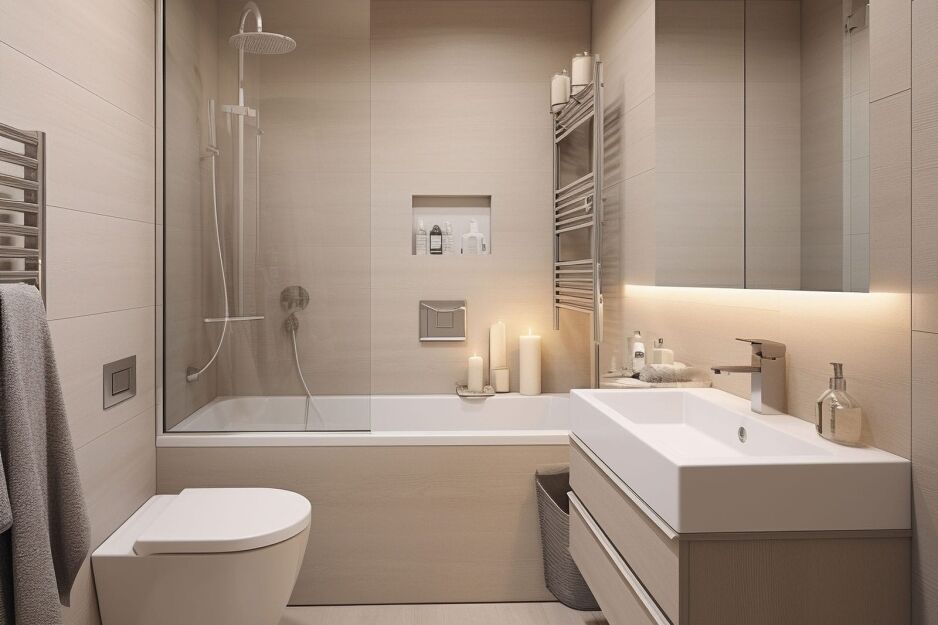
If there’s one question I hear constantly in our showroom, it’s some version of this: “I want both a bath and a shower, but I don’t have room for two.” My answer is almost always the same — a shower bath combination is probably exactly what you need.
Ross’s has been around long enough to see bathroom trends come and go. Shower baths aren’t a trend. They’re a practical, enduring solution that suits the realities of most Perth homes — especially the older brick-and-tile houses where the main bathroom is a modest 3×2 metres and the ensuite is even tighter.
Done right, a shower bath saves space, saves money, and looks great. Done wrong, you end up with an awkward shower space and a screen that leaks every time someone has a wash. So here’s my honest take on why they work, what to look for, and how to avoid the common mistakes.
1. They Solve the Space Problem Without Compromise
For most Perth homes, a shower bath is the most practical way to get both bathing and showering into a single bathroom. A standard 1500mm or 1700mm insert bath combined with a quality screen gives you full functionality in the same footprint as a bath alone.
I used our Pavillion Insert Bath in an investment property renovation a couple of years back. The second bathroom was a classic 2.4 x 1.8m — no room for separate fixtures. The Pavillion tiled in beautifully, we added a frameless screen, and suddenly the bathroom felt bigger than it was. That’s the real magic of a well-executed shower bath. It doesn’t feel like a compromise. It feels considered.
For smaller rooms, an insert bath like the Pavillion is the smarter pick over a freestanding bath. You get wall support for the screen and a cleaner look with less wasted floor space.
2. One Installation, One Plumber, One Bill
Installing a separate shower and bath means two sets of plumbing rough-ins, two drain locations, two waterproofing jobs, and a much longer tiling project. A shower bath consolidates all of that into a single fixture.
Our Pavillion Insert Bath starts at $280, and our bath shower screens start from $220. Combined, that’s a functional, good-looking shower bath setup under $500 in product costs before installation — which is genuinely hard to beat. Compared to speccing a separate semi-frameless shower and a freestanding bath, you’re looking at a fraction of the total cost.
For anyone renovating on a budget — and most people are — this is a meaningful saving.
3. The Flexibility to Shower or Soak, Whenever You Want
This sounds obvious, but it’s genuinely underrated. Life changes. When you buy a home in your twenties, a sleek shower-only setup seems plenty. Fast forward a few years, and you’ve got young kids who need baths, or you’ve had a long week, and a soak sounds better than anything.
A shower bath gives you both options without having to choose at renovation time. You can shower on a Tuesday morning when you’re in a rush, and run a proper bath on Sunday when you actually have time. That kind of day-to-day flexibility has real value in a family home.
4. Better for Families with Young Children
Bathing small kids in a dedicated shower recess is genuinely awkward. Young children need to be bathed in a tub — it’s safer, easier, and less stressful for everyone involved. A shower bath gives you the bath depth you need for the early years, and the overhead shower for when they’re old enough to wash themselves.
This is one of those things I always mention to young couples buying for their first home. Even if you don’t have kids yet, a bath is worth keeping. Removing one and then needing to add it back is an expensive lesson.
If you’re planning a family bathroom, check out our guide on How to Design a Kid-Friendly Bathroom.
5. Accessibility for a Wider Range of Users
Shower baths can be set up to work well for people with limited mobility, particularly when paired with grab rails and a low-entry design. The bath surround gives you something solid to grip, and the wide base provides stability compared to a narrow shower recess.
For families with ageing parents, or anyone considering longer-term livability in their home, a shower bath is a sensible addition. It’s far less disruptive to have it in place from the start than to retrofit later.
6. Not All Baths Work — Here’s What Actually Does
This is where I see many people go wrong. Not every bath is suitable for a shower. If you want a shower over your bath, you need to choose the right type from the start.
Insert baths
These are the most practical option for shower use. They sit flush against the wall, which makes screen installation straightforward. They’re also easier to waterproof and tile around. Our Pavillion Insert Bath is the go-to here.
Corner freestanding baths
Some corner freestanding designs — like our Madrid Left-Hand and Right-Hand Back to Wall Corner Baths — can work for shower combos because they have a straight edge against the wall. This gives you enough of a surface to fix a screen to. Not all freestanding styles work this way, so check before you buy.
True freestanding baths
A fully freestanding bath like the Cube Freestanding Bath is not designed for a shower. You can’t properly fix a screen to a freestanding unit, and waterproofing becomes a real problem. Save the freestanding bath for a bathroom where you’re also putting in a separate shower.
7. Screen Selection Matters More Than People Think
The bath is only half the equation. The bath shower screen you choose affects how comfortable the shower is, how easy the bathroom is to clean, and honestly how good the whole thing looks.
We stock the Alpine bath screen range, which covers the two decisions that actually matter: fixed vs pivot, and curved vs square profile. All four options are $280.
Fixed vs pivot
A fixed screen is a single stationary panel. It’s the cleaner look of the two and there are fewer moving parts to maintain over time. The trade-off is that access to the bath is through a gap at one end, which can be slightly awkward for bathing young kids or for cleaning the tub.
A pivot screen has a hinged panel that swings open, giving you much easier access to the full length of the bath. If you regularly bathe children or want to step in and out comfortably, the pivot option is worth the small additional complexity.
Curved vs square profile
The curved profile has a gentle bow at the top of the screen, which softens the look and works well in bathrooms with rounded fixtures or a more traditional style. The square profile has clean 90-degree edges and suits modern, straight-lined bathrooms. Both perform identically — it’s purely an aesthetic call based on your bathroom’s overall design direction.
My general advice: if you have kids under ten, go pivot. If it’s a couple’s bathroom or a second bathroom used mainly for showering, fixed keeps things simpler and gives a slightly cleaner finish.
8. Sizing: Getting Comfortable Shower Space
Standard baths are 1500mm long. That works for a shower, but 1700mm gives you noticeably more room to move — especially for taller people or for showering kids. Width matters too. A 700mm-wide bath feels tight for showering. 750–800mm is more comfortable.
Perth water pressure is generally good, but if you’re in a double-storey home or an older suburb with ageing infrastructure, it’s worth running a pressure check before you spec an overhead rain shower head. Low pressure and a large rain head are a poor combination. A quality handheld or adjustable head is a safer choice when pressure is uncertain.
The Pavillion Insert Bath is available in 1525mm and 1700mm long, by 750 wide and 440 high. For a family bathroom, I’d always recommend the 1700mm if the space allows it.
9. Low Maintenance Compared to Separate Installations
One of the underrated benefits of a shower bath is how much easier it is to maintain than two separate fixtures. There’s one drain to clean, one surface to seal, and a fraction of the grout lines compared to a fully tiled shower recess.
Acrylic baths in particular are easy to keep clean — a non-abrasive cleaner and a regular wipe-down is genuinely all you need. The most maintenance-intensive part of a shower bath is the screen, and that’s just a squeegee after each shower and a weekly wipe of the seals.
10. Adds Value When You Come to Sell
Bathrooms sell houses. That’s not an exaggeration — it’s something you see play out repeatedly in the Perth property market. A clean, modern bathroom with both a bath and a shower is a stronger selling point than a shower-only setup, particularly for families with young children.
Buyers looking at family homes almost always want a bath. Removing one to create a walk-in shower might feel like an upgrade when you’re living there, but it can genuinely narrow your buyer pool when it’s time to sell. A shower bath gives you both, and for buyers, that reads as practical and well-considered.
Is a Shower Bath Right for Your Bathroom?
For most Perth homeowners renovating a main bathroom or ensuite, a shower bath combination makes a lot of sense. It’s the practical choice for smaller spaces, the family-friendly choice for homes with kids, and the cost-effective choice for anyone trying to get maximum functionality out of a single bathroom.
The key is choosing the right bath type (insert or suitable corner design), pairing it with a quality screen, and getting the sizing right for your space. Get those three things right and you’ll have a bathroom that works hard every day and still looks good doing it.
Browse our Pavillion Insert Bath and full bath screen range at Ross’s Discount Home Centre, or come into the bathroom showroom and we’ll help you put the right combination together for your bathroom.
Shower Bath FAQs
A shower bath is a bathtub fitted with an overhead shower, typically enclosed by a bath screen or curtain. It combines both functions in a single unit, which makes it a practical choice for bathrooms where space or budget doesn’t allow for separate fixtures.
Insert baths are the most suitable option for shower use. They sit flush against the wall, which makes screen installation straightforward and waterproofing easier to achieve. Some corner back-to-wall designs also work well. Fully freestanding baths are generally not suitable — there’s no stable surface to fix a screen to, and waterproofing becomes a real problem
-

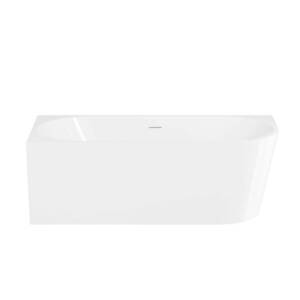 Price range: $1,440.00 through $1,490.00 inc.GSTSelect options This product has multiple variants. The options may be chosen on the product page
 -
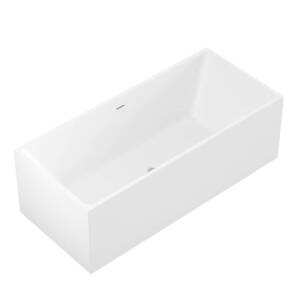 Price range: $1,480.00 through $1,530.00 inc.GSTSelect options This product has multiple variants. The options may be chosen on the product page
 -
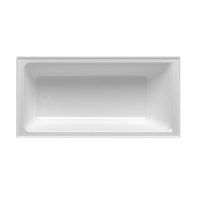 Price range: $280.00 through $320.00 inc.GSTSelect options This product has multiple variants. The options may be chosen on the product page
Shower baths are an excellent idea for small bathrooms. They give you full bathing and showering capability in the same footprint as a standard bath, which is far more practical than trying to fit in separate fixtures. An insert bath paired with an Alpine fixed screen gives you the cleanest, most spacious-feeling result.
A 1700mm bath works best for comfortable showering. It gives you noticeably more room to move than a 1500mm, particularly for taller people or when bathing children. Width matters too — aim for 750mm or wider if shower comfort is a priority. The Pavillion Insert Bath is available in both lengths.
The Alpine range comes in four configurations, all at $280. The key difference is fixed vs pivot: a fixed screen is a stationary panel that looks clean and minimal, while a pivot screen has a hinged panel that opens for easier bath access. Both come in curved or square profiles — curved suits softer, traditional bathroom styles, and square suits modern, straight-lined designs. The profile choice is purely aesthetic; both perform identically.
The main disadvantage of a shower bath is a narrower showering area compared to a dedicated shower recess. This can feel restrictive for larger people, and the curved bath base is less comfortable to stand on than a flat shower floor. If you have the space and budget for separate fixtures, a dedicated shower will give you a more comfortable showering experience. For most Perth bathrooms though, the trade-off is well worth it.
A shower bath can increase your home’s value by offering both bathing and showering in a single bathroom. This is a genuine selling point, particularly for buyers with young families. A well-presented shower bath — with a quality screen and clean tiling — reads as a practical, modern feature rather than a compromise.
