
Ceiling-Mounted vs Wall-Mounted Shower Heads: Which Is Right for Your Bathroom?
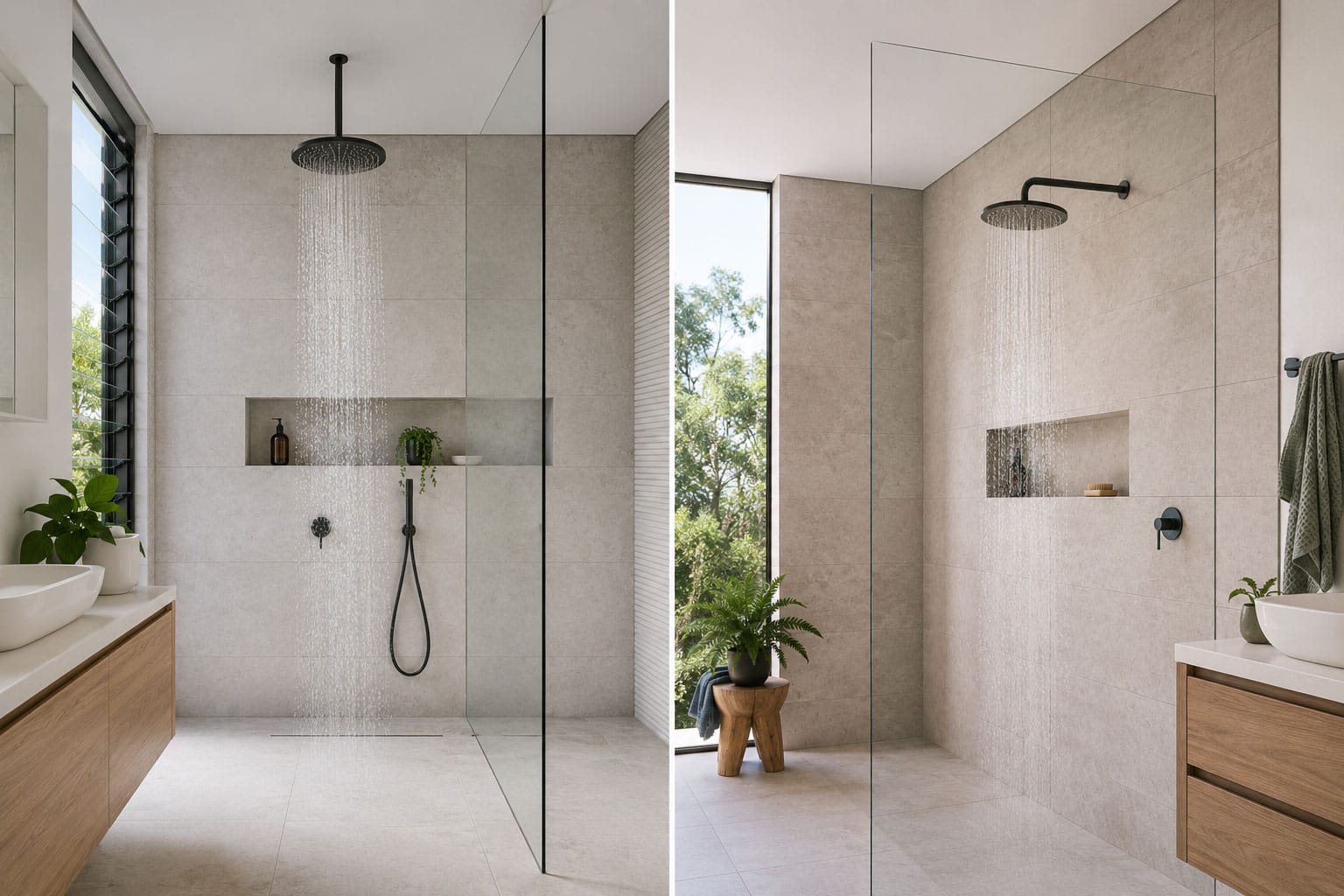
Ceiling mounted vs wall mounted shower head is a common decision for anyone renovating a bathroom or replacing an old shower head. A lot of people assume ceiling-mounted automatically means better or more premium, but that is not always how it plays out in a real renovation. In many bathrooms, a wall-mounted shower head is the simpler and more cost-effective choice, while switching to a ceiling-mounted setup can become a much larger plumbing job.
This article focuses on overhead shower heads rather than handheld or rail showers. The key difference is where the water point comes from and what that means for installation, cost, water feel, arm options, and overall practicality. That matters more than most people think.
I’ll also cover one of the biggest factors buyers overlook: the role of shower arms and shower roses. In a lot of cases, the right wall-mounted combination can give you the look and shower experience you want without the extra cost and disruption of moving plumbing.
What’s the Difference Between a Ceiling-Mounted and Wall-Mounted Shower Head?
When comparing a ceiling mounted vs wall mounted shower head, the main difference is not the shape of the shower rose or whether the shower looks modern. It comes down to where the water outlet is positioned. Both options can use a round or square rose. Both can create a rainfall-style shower. Both can work beautifully in a modern bathroom. The real difference is whether the shower arm comes out of the wall or drops down from the ceiling, and that affects installation, reach, flexibility, and overall cost.
What Is a Wall-Mounted Shower Head?
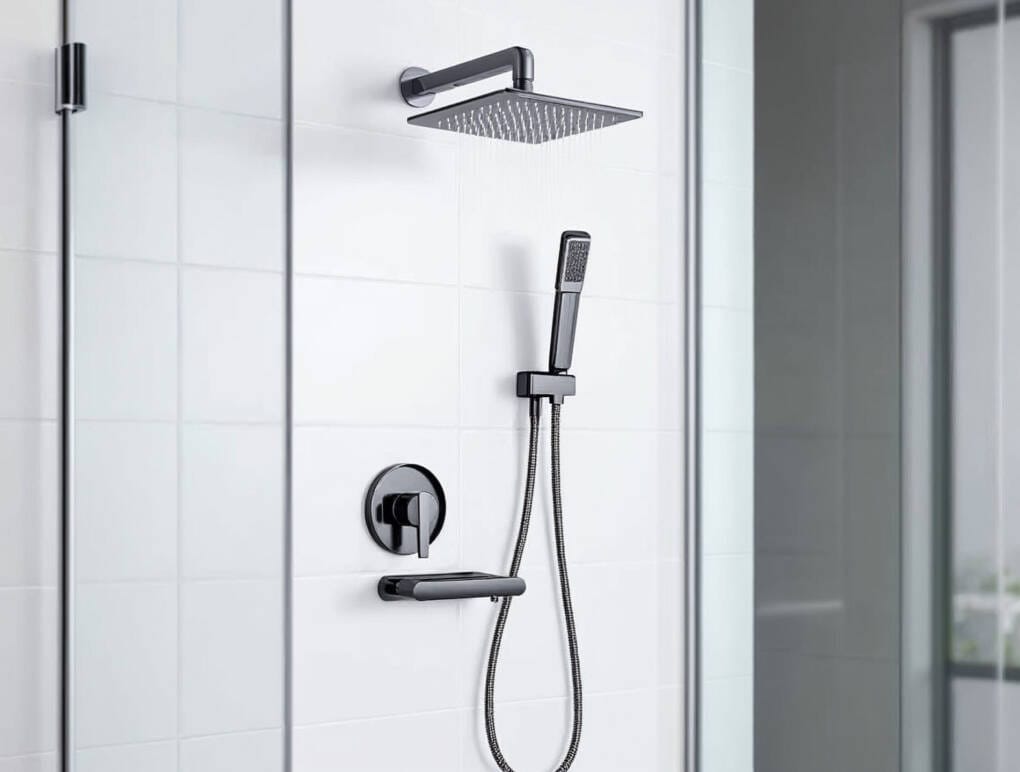
A wall-mounted shower head connects to a shower arm that comes out from the wall, usually above the mixer or from a nearby wall outlet. This is the most common overhead shower setup in Australian bathrooms, especially in existing homes. It is also the easiest type to replace because you are usually working with the plumbing position already in place. Depending on the arm style and the fixed shower rose you choose, a wall-mounted setup can still create a broad, drenching overhead shower without needing major changes behind the wall.
What Is a Ceiling-Mounted Shower Head?
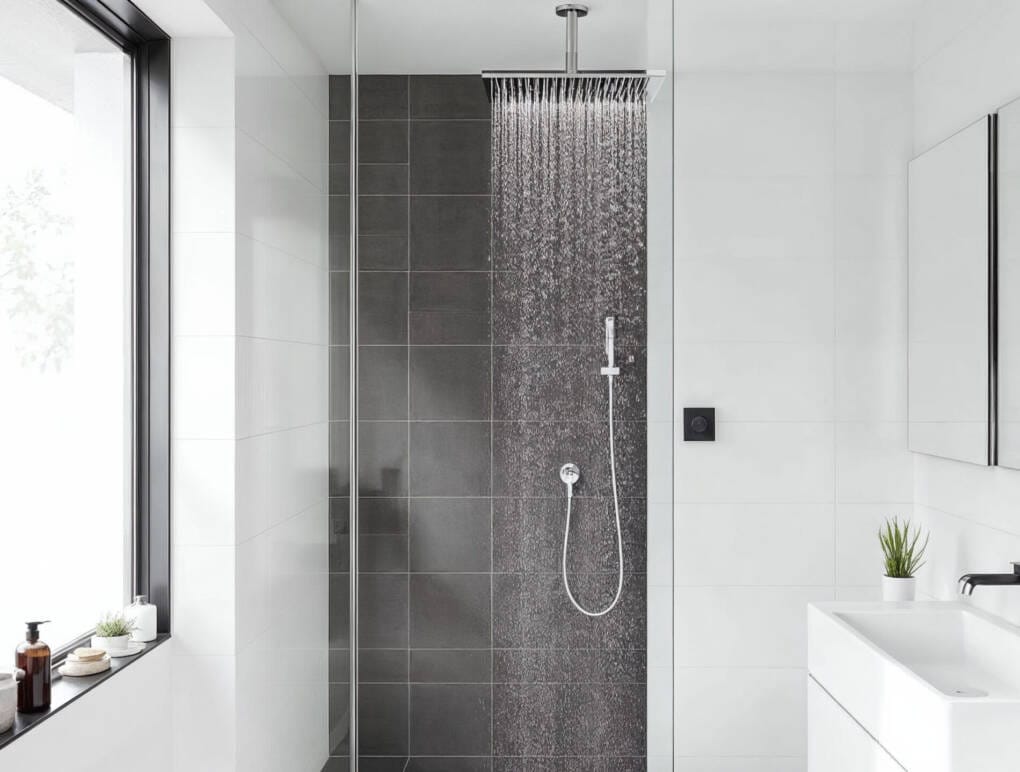
A ceiling-mounted shower head drops straight down from the ceiling on a ceiling dropper arm. This creates a more centred overhead shower effect, with water falling vertically from above. It is a popular choice in higher-end bathrooms and full renovations where the layout is being designed from scratch. The look is clean and architectural, but it usually needs more planning to get right.
The Real Difference Most Buyers Need to Know
In simple terms, a wall-mounted shower head is usually easier and cheaper to install because most bathrooms already have a wall outlet in place. A ceiling-mounted shower head can look more premium, but it is often more complex and more expensive to add if the bathroom was not originally designed for it. For a broader look at the category, read our guide on the pros and cons of fixed showerheads.
Ceiling-Mounted vs Wall-Mounted Shower Heads at a Glance
Before getting into the finer details, it helps to compare these two options side by side. When looking at a ceiling shower head vs wall shower head, the real difference is not just appearance. It is also about installation complexity, plumbing access, fitting flexibility, and whether the job is a simple retrofit or a more involved plumbing relocation. That is why this choice often comes down to your bathroom layout, your existing water outlet, and how much work you want the renovation to involve.
| Comparison Point | Wall-Mounted Shower Head | Ceiling-Mounted Shower Head |
| Look and finish | Clean, versatile, and suits most bathroom styles | More architectural and high-end in appearance |
| Water direction | Angled out from the wall, depending on arm style | Falls straight down from above |
| Installation difficulty | Usually simpler and more straightforward | Usually more complex |
| Upgrade suitability | Ideal for replacing an existing shower head | Better for full renovations or new bathrooms |
| Plumbing changes required | Often minimal if using the existing wall outlet | Often requires plumbing relocation |
| Likely cost impact | Usually lower overall install cost | Usually higher due to extra labour |
| Arm options | More flexibility with straight, high-rise, and gooseneck arms | Fewer practical variations once planned |
| Rose positioning flexibility | Easier to adjust using different arm styles and lengths | More fixed once the outlet is set |
| Cleaning access | Usually easier to reach and clean | Can be harder to access depending on height |
| Best bathroom types | Existing bathrooms, standard shower recesses, budget-conscious upgrades | Large walk-in showers, premium renovations, new layouts |
In simple terms, a wall-mounted shower head is usually the better fit for a straightforward replacement because it works with the plumbing most bathrooms already have. A ceiling-mounted shower head can look more premium, but it usually makes more sense when the bathroom is being built new or stripped back far enough to justify the added work. In most existing homes, the real question is whether the job is a simple replacement or a relocation, because that determines both cost and practicality. If you are also thinking about mixers, finishes, and the rest of the setup, our ultimate shower tapware buying guide is worth a read.
Installation Complexity Is the Biggest Difference
When people compare a ceiling mounted vs wall mounted shower head, they often start with the look. That makes sense, because the visual difference is easy to spot. In a real renovation, though, the smarter place to start is installation. This is usually where the decision becomes much clearer. One option is often a straightforward replacement. The other can mean relocating plumbing, increasing labour, and adding cost well beyond the shower head itself.
Why Wall-Mounted Shower Heads Are Usually the Easier Upgrade
In most Australian homes, the existing plumbing for an overhead shower is already wall-fed. That is why a wall-mounted shower head is usually the easier upgrade. In many cases, the old shower arm simply unscrews from the wall outlet and a new arm and rose can go back into the same position. If the fittings are compatible and the plumbing is sound, you are often working with the outlet that is already there rather than starting from scratch.
That makes wall-mounted the practical choice for replacing a dated shower head, freshening up the look of the bathroom, and keeping renovation costs under control. It also helps avoid opening walls or ceilings unless there is another issue that needs attention. For many homeowners, that replacement vs relocation difference is what makes the decision.
Why Changing to Ceiling-Mounted Is Often a Bigger Plumbing Job
Changing from a wall-mounted setup to a ceiling-mounted one is not usually a simple swap. You are not just changing the shower head. You are changing where the water comes from. That often means a plumber needs to reroute pipework, create a new outlet position, and work through the ceiling cavity or wall to get the new layout right.
Once that happens, other parts of the bathroom can come into play as well. Tile layout, mixer alignment, patching, and reinstatement may all need consideration. There can also be waterproofing requirements to think about, especially if surrounding surfaces are disturbed. This is where plumber cost and labour can climb quickly, even before the final shower head goes in.
Why Existing Plumbing and Slab Construction Can Increase Costs
This is where buyers need to be careful. If the bathroom layout makes the plumbing path difficult to alter, the ceiling-mounted look can become expensive very fast. In some homes, especially where access is limited or the existing plumbing setup is awkward, moving the water point is far from simple. If a concrete slab or other construction detail makes changes harder, costs can jump again.
The key point is not that ceiling-mounted is a bad option. It is that it should be treated as a layout decision, not a quick product upgrade. Once relocation becomes difficult, the cost difference between wall mounted or ceiling mounted shower head setups can be much bigger than people expect.
When a Ceiling-Mounted Shower Head Makes Sense
Ceiling-mounted can still be the right choice in the right project. It makes far more sense when the bathroom is being fully renovated, the walls and ceiling are already open, the shower zone is being redesigned, or a new walk-in shower is being built from scratch. In those situations, the plumbing can be planned around the layout rather than forced into an existing one.
If the budget already allows for plumbing relocation and the bathroom design suits a centred overhead shower, ceiling-mounted can look excellent. It just tends to work best when it is part of the renovation plan from the start.
The Practical Takeaway for Most Bathroom Upgrades
In my experience, this is the point at which many customers change direction. They start out set on a ceiling-mounted look, then realise the installation side is where the budget can blow out. Once they see that they can get a great result with a wall-mounted arm and shower rose, the more practical option starts to make a lot more sense.
If your bathroom already has a wall outlet and the goal is a smart, cost-effective upgrade, a wall-mounted option is usually the better value. Ceiling-mounted is best treated as a premium renovation decision rather than a simple replacement. If you are weighing up upgrade options, our guide to shower head replacement Perth is a useful next step.
Shower Arms Matter More Than Most Buyers Realise
Many buyers assume a wall-mounted shower head is the plain, basic option, while a ceiling-mounted setup is the only way to get that true overhead look. That is not really how it works in practice. One of the biggest advantages of a wall-mounted setup is the range of shower arms available. The arm you choose has a major effect on the shower rose position, the way water falls, and the overall look of the shower. In many bathrooms, changing the wall shower arm is enough to create a more premium result without the extra cost and disruption of converting to ceiling-mounted.
Straight Shower Arms
A straight shower arm projects the shower rose directly out from the wall in a clean, simple line. This style suits standard installations and works well in modern bathrooms where you want a neat, minimal look. A straight shower arm is often the most straightforward option for a like-for-like replacement, especially when the existing outlet position already works well with the shower space.
High-Rise Shower Arms
A high-rise shower arm lifts the shower rose higher before extending it out. This helps create a more overhead shower feel while still using a wall outlet. It is a smart option for buyers who want better height and a more open shower rose position without moving to a ceiling-mounted setup. In many cases, this is one of the easiest ways to make a wall-mounted shower head feel more generous.
Gooseneck Shower Arms
A gooseneck shower arm has a curved shape that moves the shower rose further out and more overhead. It is a popular choice for people chasing a softer rainfall-style effect from a wall outlet. It also adds a bit more visual character than a straight arm, which can suit bathrooms where the tapware has a more classic or decorative look.
Why Arm Choice Affects Both Comfort and Look
The shower arm changes more than appearance. It affects height, reach, drop, and the final shower rose position. That changes whether water falls straight down, slightly in front of you, or too close to the wall. The right arm can make the shower feel more comfortable and better balanced. It also affects the finished look, so the arm style should work with the shower rose, mixer, and tapware finish.
The Key Comparison Point
This is one of the biggest practical differences in the ceiling mounted vs wall mounted shower head decision. A wall-mounted setup gives buyers more flexibility than many people realise because the arm and rose can often be adjusted to suit the bathroom and the shower experience they want. In many cases, a better wall-mounted combination is enough to get the look and feel you are after without changing the plumbing at all.
Shower Roses and Water Experience: Can Wall-Mounted Still Feel Luxurious?
A lot of buyers mix up mounting type with the actual shower feel, but they are not the same thing. The way a shower feels depends on more than whether the arm comes from the wall or ceiling. Rose size, spray design, arm reach, water pressure, and the WELS water rating all play a part. That is why the best fixed showerhead for bathroom comfort is not always the one with the most high-end look on paper. In many cases, a well-chosen wall-mounted overhead shower can feel every bit as enjoyable as a ceiling-mounted one.
Why Ceiling-Mounted Often Feels More Like True Rainfall
A ceiling-mounted rain shower head usually creates the most direct rainfall effect because the water drops vertically from above. That centred position can feel more natural and more even across the body, especially in a large walk-in shower where the rose sits directly over the standing area. This is why ceiling-mounted setups are often linked with spa-style bathrooms and more architectural shower designs.
Why Wall-Mounted Can Still Deliver a Premium Overhead Feel
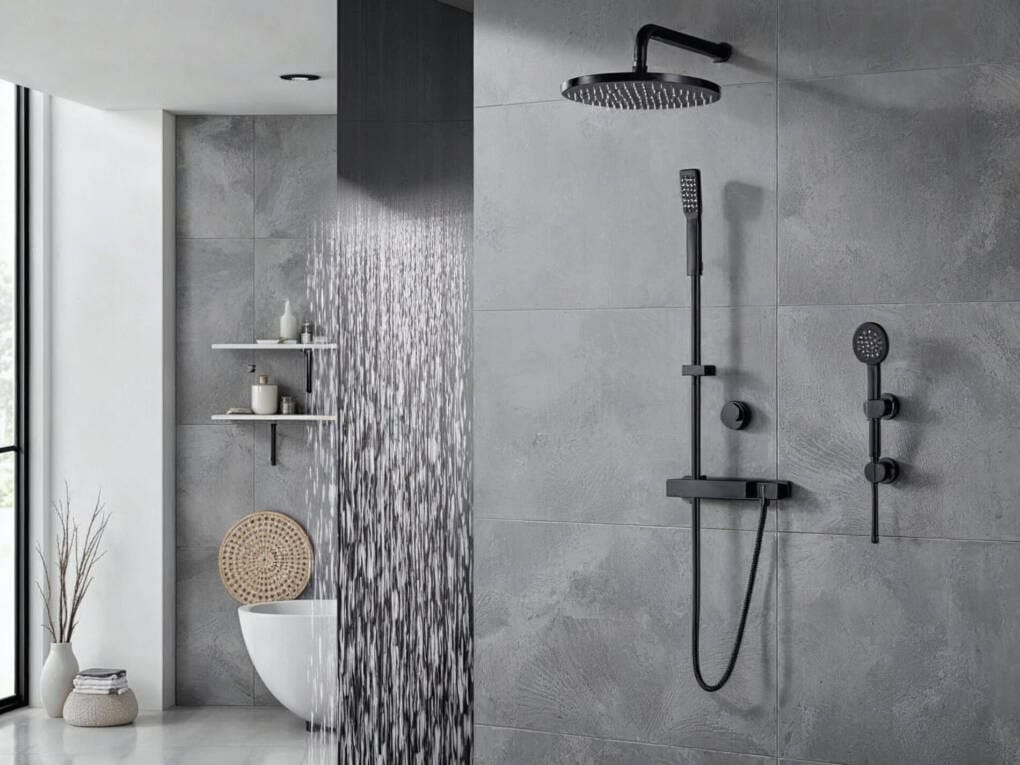
A wall-mounted shower can still feel generous and relaxing if the arm and fixed shower rose are chosen properly. A larger rain shower head paired with the right wall arm can give broad spray coverage and a more overhead feel than many people expect. This is where a high-rise arm or gooseneck arm can make a real difference. Both can help move the rose further out and into a better overhead position without the cost of switching to a ceiling feed.
Rose Size, Spray Design, and Pressure Still Matter
This is where buyers need to be practical. A poorly chosen ceiling-mounted rose will not automatically feel better than a well-chosen wall-mounted one. Water pressure matters. Spray coverage matters. The engineering of the shower rose matters. The WELS water rating matters too, as it indicates the product’s water efficiency and flow performance under Australia’s scheme. A shower that looks impressive but does not suit your pressure or layout will not feel luxurious in everyday use.
What Buyers Should Compare In-Store
When comparing our shower roses, look at the rose diameter, the reach of the shower arm, the final arm height, and the spray coverage you are likely to get. Also check that the finish matches your other tapware and that the size of the rose suits the bathroom. An oversized shower rose can look great in a large shower, but it can feel out of place in a compact recess. A smaller rose with the right arm can sometimes be the better match.
If you want more help weighing up rainfall-style options, read Are Rain Shower Heads Worth It? The Pros and Cons Explained.
Which Bathroom Layout Suits Each Option?
The right shower head does not just depend on style. It also depends on the shower space itself. A shower head that looks spot on in one bathroom layout can feel awkward or poorly positioned in another. This is why it helps to think about the room before choosing between a wall mounted shower head and a ceiling mounted shower head. The size of the shower, the mixer position, the tile layout, and the standing area all play a part in how practical the finished result will be.
Best for Standard Shower Recesses
A wall mounted shower head usually makes the most sense in a standard shower recess, especially in an existing bathroom. Most recesses already have a wall mixer and wall outlet in a position that suits a straightforward replacement. In a compact shower space, that can be a big advantage. A wall-mounted setup is easier to line up with the existing fittings, and it is usually easier to control the shower coverage so water lands where it should.
Best for Walk-In Showers and Open Layouts
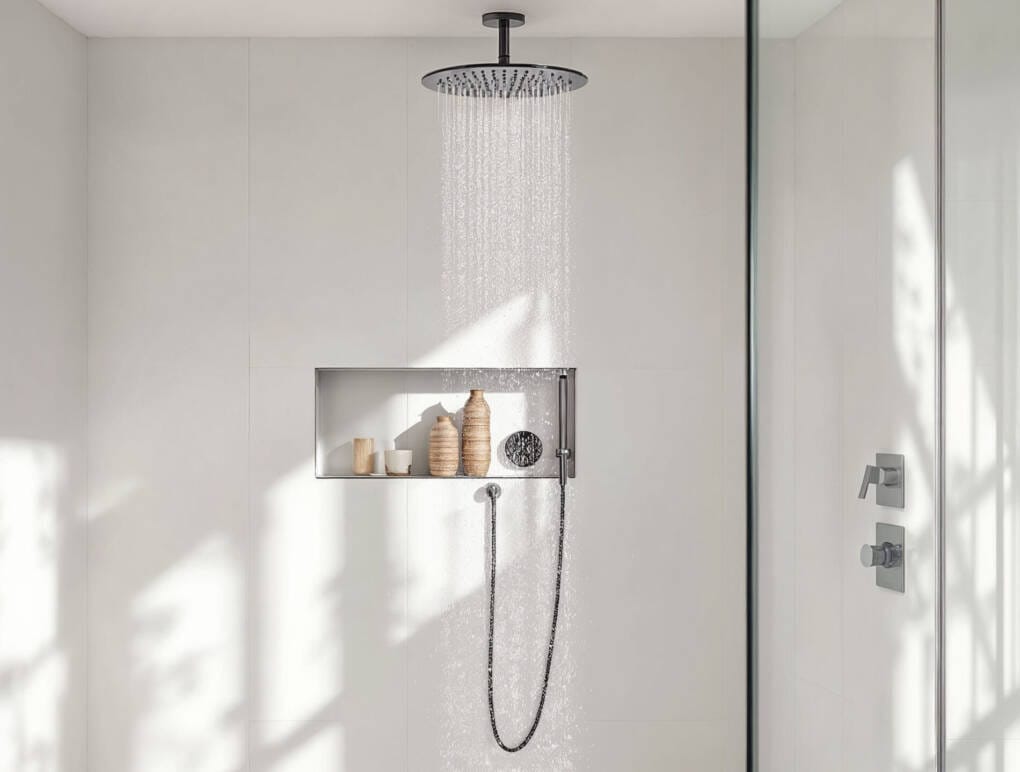
A ceiling mounted shower head tends to suit a larger walk-in shower or a more open bathroom layout where the shower zone is centred and planned from scratch. In that setting, the showerhead can sit directly over the standing area and create a balanced overhead effect. This is where ceiling-mounted can look its best and feel the most intentional.
Mixer and Outlet Alignment Matters
The shower outlet should look connected to the rest of the shower wall, especially the wall mixer and the tile layout around it. A wall-mounted setup usually feels visually tied together because the arm and mixer work along the same plane. A ceiling-mounted setup can look clean and minimal, but it can also feel disconnected if the rest of the shower design does not support that look.
If you need to purchase a matching mixer, be sure to check out our range of shower mixers.
Tall Users, Splash Zones, and Practical Use
Height, body position, and splash control all matter. A poorly placed shower head can send water too close to the wall, too far forward, or outside the main shower zone. In some bathrooms, a well-positioned wall-mounted shower head will be more practical than a ceiling-mounted option that looks good in photos but does not suit the actual space. If you want more inspiration on choosing a style that suits your bathroom, see Modern Showerheads for a Spa-Like Bathroom Experience.
Cost Reality: Product Price Is Only Part of the Story
A lot of buyers compare shower heads by product price alone, but that only shows part of the picture. The real cost difference often comes from installation. When you look at a fixed showerhead comparison properly, you need to separate the cost of the shower arm and rose from the labour needed to get the final result. In many bathrooms, that is where the difference between wall-mounted and ceiling-mounted becomes much clearer.
The Product Itself May Not Be the Biggest Difference
On the product side, the price gap is not always as dramatic as people expect. A shower rose and arm can vary in price based on finish, style, size, and brand, but wall-mounted and ceiling-mounted options are not always worlds apart on product cost alone. In many cases, the bigger issue is not what the shower head costs to buy. It is what it costs to install in the position you want.
Labour Is Where the Gap Opens Up
This is where the real upgrade cost usually shows itself. A wall-mounted replacement is often a much simpler job because it uses the existing plumbing position. That keeps labour down and avoids unnecessary disruption. A ceiling-mounted conversion is different because it often means plumbing relocation rather than a like-for-like replacement. Once a plumber needs to reroute pipework, work through a ceiling space or wall, and allow for patching or finishing work, plumber cost and labour can rise quickly.
Why Budget-Conscious Renovators Should Think Backwards
For a budget renovation, it usually makes more sense to start with the bathroom’s existing plumbing and work from there. That is often the smarter way to choose between replacement vs relocation. A lot of people fall in love with a product photo first, then realise later that the look they want comes with a much bigger install bill than expected. In many bathrooms, choosing a setup that works with the outlet already in place is what keeps the project practical.
Ross’s Practical Value Angle
I see this all the time. Customers come in focused on a ceiling-mounted look, then change direction once they realise how good a wall-mounted arm and rose combination can look in their bathroom. In many cases, they still get the finish they want, but with less labour, lower or no plumber costs, and a much more sensible overall spend.
That is where Ross’s can really help. We are not here to push the option that looks best in a photo. We help customers choose the setup that suits the bathroom, the budget, and the kind of upgrade they are actually doing. If you want a broader starting point, our ultimate showerhead buying guide is worth a look.
Who Should Choose Wall-Mounted and Who Should Choose Ceiling-Mounted?
If you are still weighing up a ceiling mounted vs wall mounted shower head, this is the simplest way to narrow it down. The right option usually comes back to the type of renovation you are doing, the bathroom design, and whether you are working with existing plumbing or starting fresh. In most cases, the easiest way to choose is to think about the job first and the product second.
Choose Wall-Mounted If…
- Easy upgrade: Best for replacing an existing wall-fed showerhead without turning the job into a bigger renovation.
- Lower install cost: Usually avoids major plumbing changes and keeps labour more manageable.
- More arm choice: Lets you change reach, height, and feel with straight, high-rise, or gooseneck arms.
- Practical layout: Suits most standard shower recesses and everyday bathrooms.
- Better value: Often gives the best overall result with the least disruption.
Choose Ceiling-Mounted If…
- New build or full reno: Best when plumbing is already being redesigned as part of the project.
- Architectural look: Suits high-end, minimalist bathrooms where the layout is planned around it.
- Centred walk-in shower: Works best when the shower zone is open, spacious, and symmetrical.
- Premium priority: Makes sense when the visual result matters enough to justify the extra installation work.
My Honest Recommendation
For most existing bathrooms, a wall mounted or ceiling mounted shower head is not really an equal choice. In practice, wall-mounted is usually the smarter and more practical upgrade because it works with the plumbing already in place and gives you more flexibility than many buyers expect. Ceiling-mounted can look excellent, but it tends to make the most sense when the bathroom design and plumbing plan support it from the start.
When a Twin Shower Set Makes More Sense Than Either Option Alone
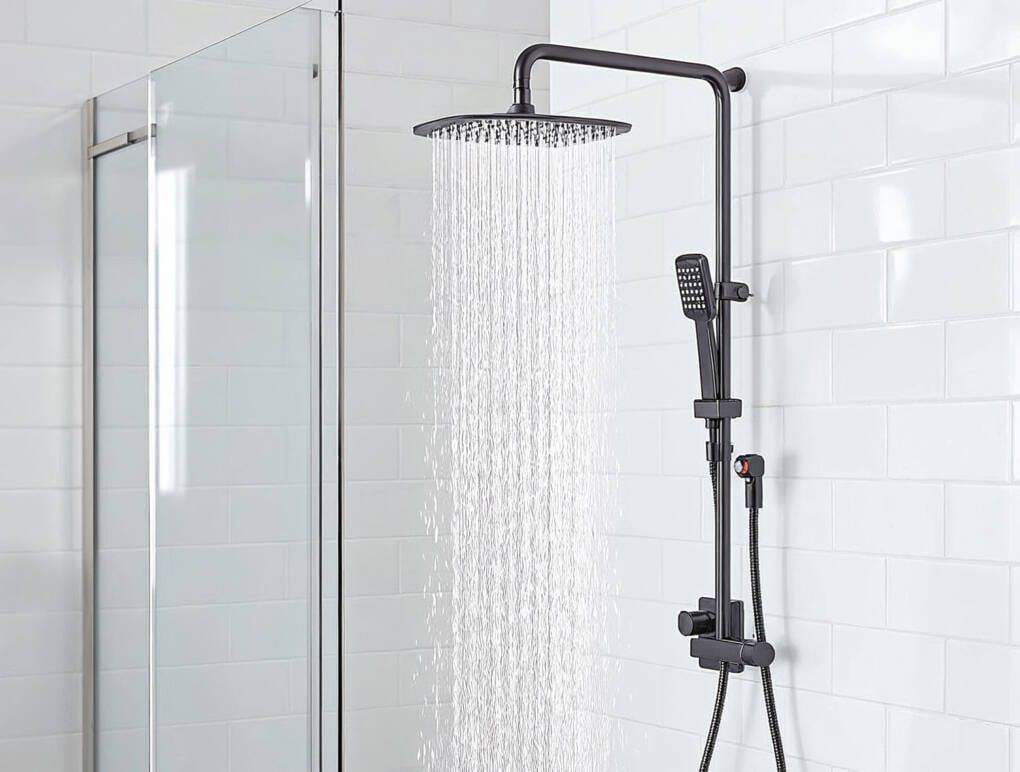
Sometimes buyers get stuck comparing ceiling-mounted and wall-mounted shower heads when the better answer is neither. If you want the look of an overhead shower but also need more flexibility in day-to-day use, one of our twin shower sets may be the smarter option. This is especially true in family bathrooms, ensuites, and practical renovations where bathroom usability matters just as much as style.
Why Some Bathrooms Need More Than an Overhead Shower
An overhead shower looks clean and modern, but it does not always suit every household on its own. A handheld shower can make everyday tasks much easier, whether that is rinsing down the shower, washing kids, cleaning pets, or simply directing water where you need it. In a busy bathroom, that extra flexibility can make a real difference.
When a Twin Shower Set Is the Better Alternative
A twin shower set combines an overhead shower and a handheld shower into one coordinated system. In many bathrooms, that gives buyers the best of both worlds. You still get the look and feel of an overhead shower, but with added practicality built in. It can also be a smarter alternative to converting an existing wall-fed shower into a ceiling-mounted setup, especially if the main goal is better functionality rather than a purely architectural look. If that sounds more like what you need, read our guides to dual shower heads in Perth.
FAQs About Ceiling-Mounted vs Wall-Mounted Shower Heads
These are the questions buyers most often ask when comparing wall-mounted and ceiling-mounted overhead showers, especially when balancing style, installation complexity, and practicality.
Conclusion
When it comes to a ceiling mounted vs wall mounted shower head, the biggest difference is not just how each option looks once installed. The real difference is the installation path behind it. For most existing bathrooms, a wall-mounted setup is usually the smarter choice because it is easier to upgrade, works with the plumbing already in place, and gives you more flexibility with the shower arm and shower rose than many buyers expect.
That does not mean ceiling-mounted is the wrong option. In the right bathroom upgrade, it can look excellent. It just tends to make the most sense in a premium renovation, where the layout is properly redesigned from the start and the plumbing is planned around it.
For most homeowners, though, wall-mounted offers the best balance of style, practicality, and value. If you are comparing options for your next bathroom upgrade, browse Ross’s range of showers, which include showerheads, shower arms, shower roses, and twin showers online, or visit our Guildford showroom for help choosing a setup that suits your bathroom and budget.
