Non-Slip Bathroom Floor Tiles: How To Choose The Right Finish And Rating
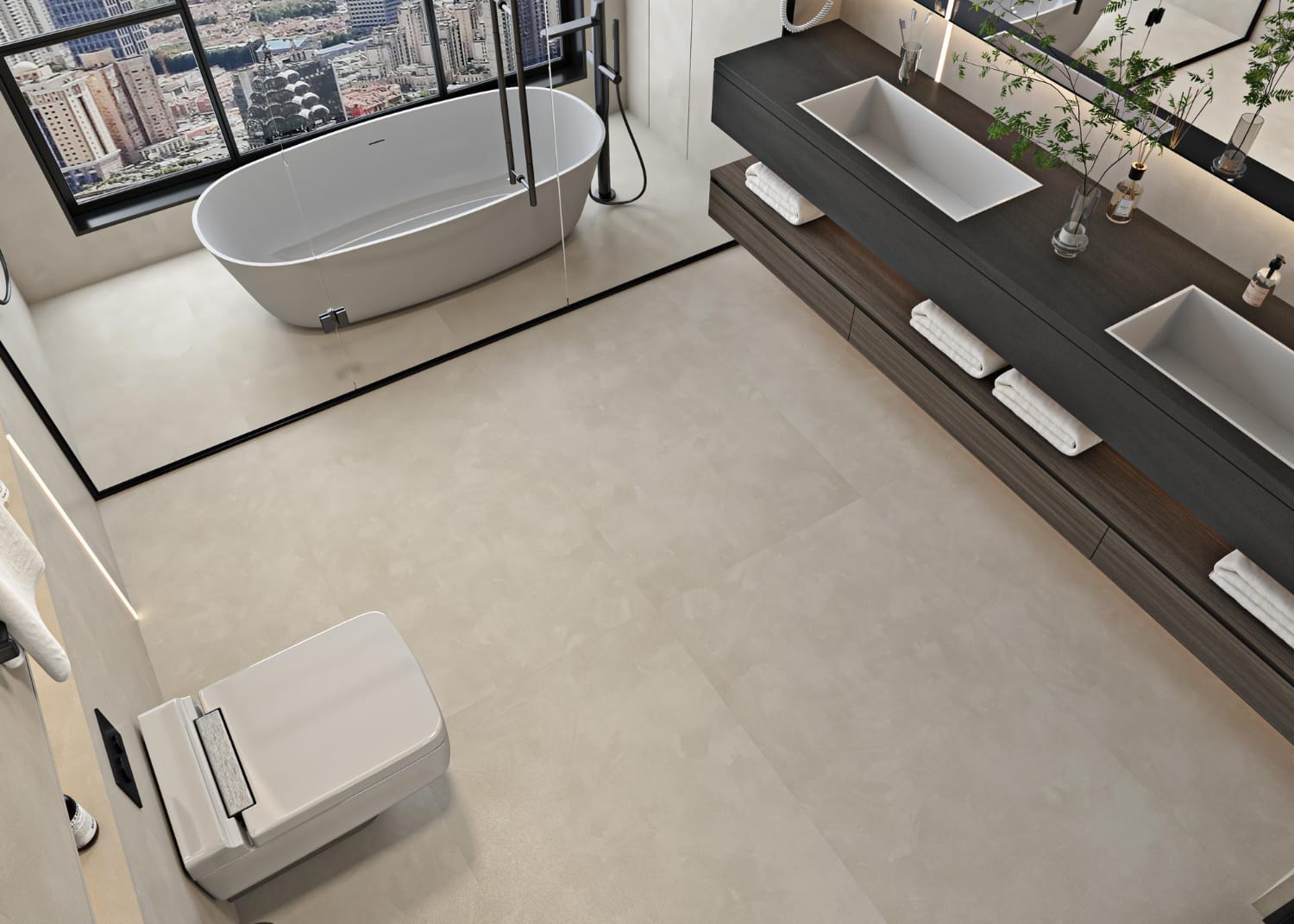
Bathroom floors get wet in different ways. A powder room might only see the odd splash near the basin, while a family bathroom or shower floor deals with water, soap and bare feet more often. That is why choosing non-slip bathroom floor tiles should start with the bathroom zone, not just the colour.
I see this all the time at Ross’s. Perth homeowners often come in looking for a tile that matches their vanity, tapware or wall tile. Once we talk through the room, they usually realise the finish and slip rating matter more in the shower or family bathroom than they first thought.
This guide focuses on choosing non-slip tiles for bathroom floors only. If you are still weighing up the broader value question, read our guide: are non-slip floor tiles worth it.
Quick Answer: What Slip Rating Should Bathroom Floor Tiles Have?
Bathroom floor tiles should generally have a P3 rating or higher, while shower floors and wet rooms are better suited to P4 or P5 tiles. The right rating depends on how wet the area gets, who uses the bathroom, and whether the tile finish gives enough grip underfoot.
A P rating comes from wet pendulum testing, which is part of AS 4586 slip resistance testing. In plain English, the higher the P rating, the more grip the tile surface gives in wet conditions. For more detail on how tile ratings work, read our guide to tile ratings and grades.
If you are comparing P rating bathroom tiles, I would use this as a practical starting point:
| Tile Rating | Where It Usually Fits Best | Practical Use |
| P3 | General bathroom floors, powder rooms and drier zones | Good grip for areas with lower water exposure |
| P4 | Main bathrooms, family bathrooms and wet zones | Better grip where water reaches the floor more often |
| P5 | Shower floors, wet rooms and higher-grip needs | Stronger grip for areas with regular water, soap and bare feet |
P3 bathroom floor tiles can work well across many standard bathroom floors. For P4 shower floor tiles, I would look closely at the tile size and finish as well as the rating. The number helps, but the surface texture, grout lines and drainage all affect how the bathroom feels underfoot.
Match The Tile To The Bathroom Zone
Different bathroom zones need different levels of grip. A powder room has a very different job from a shower floor, and a family bathroom usually works harder than a guest ensuite. Matching the tile to the zone helps you choose bathroom floor tiles non slip enough for daily use without making every part of the room feel overly textured.
| Bathroom Zone | Recommended Rating | Best Finish | Why |
| Powder room | P3 | Matte or lappato | Lower water exposure |
| Ensuite | P3 to P4 | Matte or SmoothGrip | Regular use in a smaller space |
| Main bathroom floor | P3 to P4 | Matte or SmoothGrip | Daily use and light splashes |
| Family bathroom | P4 | Matte, structured or SmoothGrip | Kids, water and frequent use |
| Shower floor | P4 to P5 | Structured, SmoothGrip or mosaic | Regular water and soap |
| Wet room | P4 to P5 | Structured or SmoothGrip | Larger wet area |
I usually tell customers to start with the wettest part of the bathroom first. If the shower floor needs more grip, choose that tile before deciding what works across the rest of the room. You can still keep the bathroom looking consistent, but the finish needs to suit how the space is used.
For most Perth homes, slip-resistant bathroom floor tiles should feel practical underfoot, not rough for the sake of it. The right tile gives you grip where you need it and a finish you can live with every day.
Best Finishes For Non-Slip Bathroom Floor Tiles
The finish matters as much as the rating. Two tiles can have a similar look but feel very different underfoot, especially once water, soap and bare feet are involved. I always look at where the tile will be used before I worry too much about the colour.
Matte Bathroom Floor Tiles
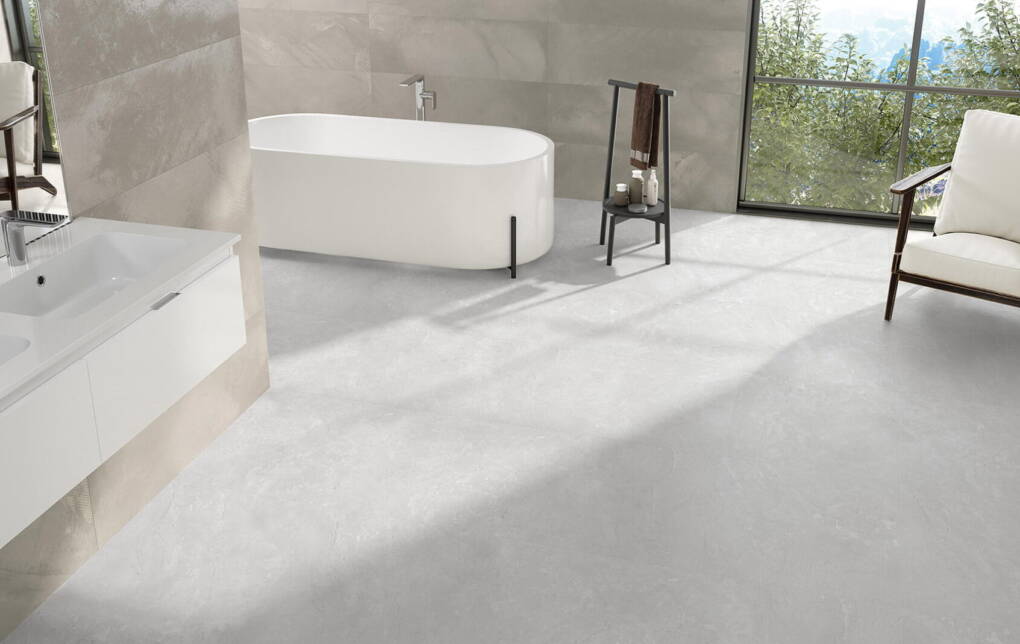
Matte bathroom floor tiles are a practical default for many bathrooms. They usually give more grip than gloss tiles, and they work well across powder rooms, ensuites, main bathroom floors and family bathrooms.
I also find matte tiles easier to recommend because they suit most styles without creating a slippery, polished feel underfoot. If you want one finish across most of the bathroom, matte is often the most practical place to start.
Structured Bathroom Floor Tiles
Structured finishes have more texture on the surface. That extra texture can help in wet zones, family bathrooms and bathrooms used by older family members.
The trade-off is cleaning. A more textured tile can hold more soap residue or marks than a smoother finish, so it needs to suit the way the bathroom will be used. I would use structured tiles where the extra grip has a clear purpose, not just because the surface feels rougher.
SmoothGrip Bathroom Tiles
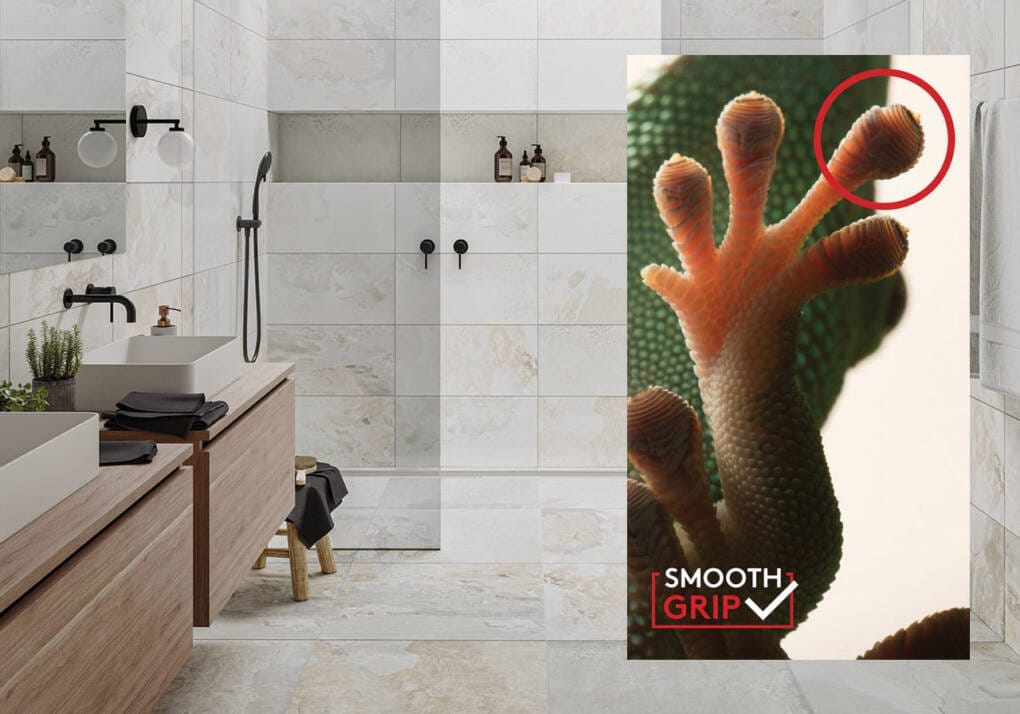
SmoothGrip bathroom tiles are useful because they aim to give extra grip without the harsh feel of some heavily textured tiles. That can make them a good option for main bathroom floors, family bathrooms and some shower areas, depending on the tile rating and size.
This is the type of finish I like customers to feel in person. A tile can look flat online, but the surface tells you much more once you run your hand across it or stand on it in the showroom.
Lappato Bathroom Tiles
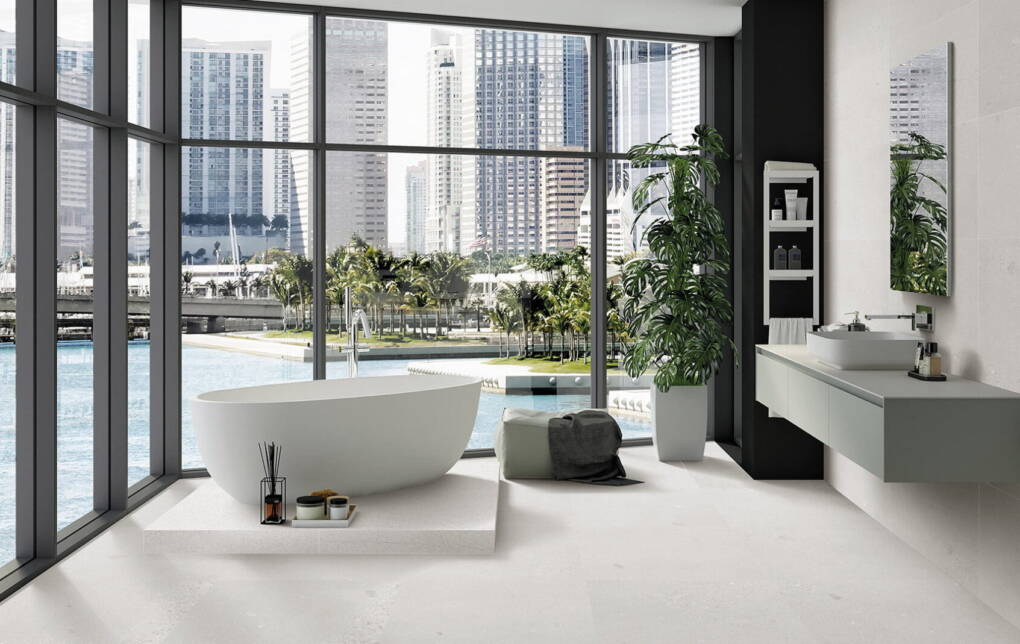
Lappato bathroom tiles have a semi-polished finish. They can work well in powder rooms, guest ensuites and drier bathroom zones where water exposure is lower.
I would not make lappato my first choice for shower floors or constantly wet areas. It can look smart, but the bathroom zone still needs to lead the decision. If the floor gets wet often, choose the grip and rating first, then narrow the look from there.
What To Use On Shower Floors
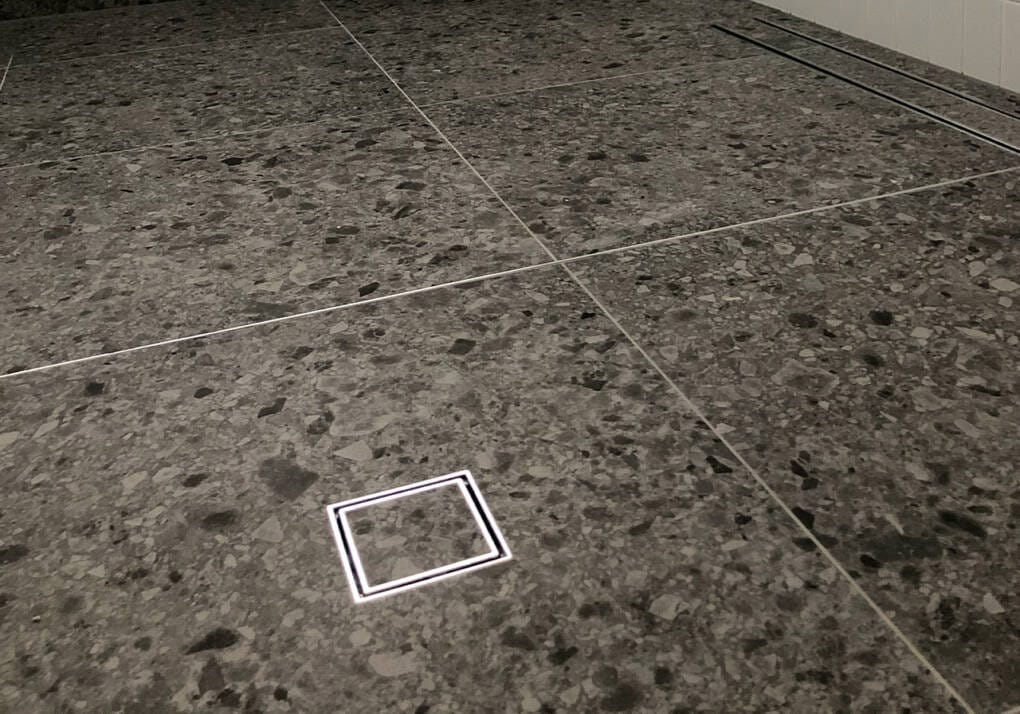
Shower floors need more grip than most bathroom floors because they deal with direct water, soap, shampoo and bare feet. This is where I would be more careful with the tile rating, finish and size. A tile that works well across the main bathroom floor may not be the right choice inside the shower.
For most non-slip shower floor tiles, I would start with a P4 or P5 rating. P4 shower floor tiles are a common starting point for many shower zones, while P5 can suit areas where extra grip is the priority. The finish also matters. Structured and SmoothGrip finishes can give better grip underfoot than gloss surfaces.
Tile size is part of the decision too. A 300×300 tile is often easier to use on a shower floor because it can follow the fall to the shower waste more easily than a large-format tile. Mosaics can also work well because the extra grout lines add traction underfoot and help with drainage.
I would avoid gloss tiles on shower floors. They can look sharp on a wall, but they are not my first choice where water and soap sit under bare feet. For a deeper look at tile size, drainage and shower-specific choices, read our shower floor tile guide.
Tile Size, Grout And Drainage Matter More Than People Think
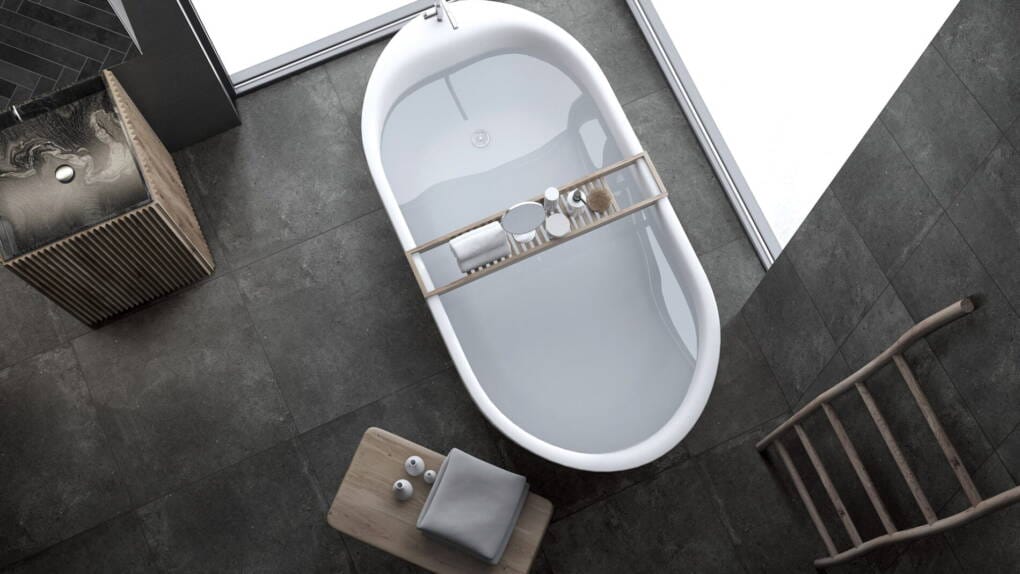
The best tiles for bathroom floor non slip performance are not chosen by rating alone. Tile size, grout lines and drainage all change how the bathroom works underfoot. This matters most in showers and wet rooms, where water needs to move away properly.
A 300×300 tile is often a practical choice for shower floors because it can follow the fall to the waste more easily than a large-format tile. Smaller tiles also create more grout lines, which can add traction underfoot. Mosaics do the same thing, which is one reason they are still used so often in shower bases.
Large tiles can still work well across the main bathroom floor. They can make the room feel cleaner and less broken up, especially in a bigger bathroom. The key is to avoid treating the whole bathroom as one surface. The main floor, shower floor and wet room zone may each need a different balance of size, texture and grip.
Grout also needs some thought. More grout lines can help with traction, but grout still needs regular cleaning in wet areas. I usually tell customers to think about the whole bathroom layout before choosing the tile size. A tile that looks great on the showroom floor still needs to work with the shower waste, drainage and how the room will be used every day.
Perth Bathroom Conditions To Consider
Perth bathrooms bring a few local issues into the tile decision. Hard water can leave marks on some finishes. Sandy feet from the beach, garden or backyard can make textured floors harder to keep clean. Family bathrooms also tend to collect more water outside the shower than people expect.
This is one reason I like customers to feel the tile surface before they buy. I’ve seen plenty of Ross’s customers change direction once they compare a matte tile, a structured tile and a smoother grip finish side by side. Texture is hard to judge online. A tile can look smooth on screen but still have grip underfoot.
Older Perth homes can also have smaller bathrooms with tighter shower zones. In those spaces, water can spread quickly from the shower to the main floor. You do not always need the roughest tile available, but the finish, size, grout lines and drainage need to work together.
For non-slip bathroom tiles, Perth conditions make in-person selection useful. Look at the colour, but also feel the surface and think about how much cleaning the finish will need after hard water, soap residue and everyday use.
Ross’s Non-Slip Bathroom Tile Options
Choosing tiles is easier when you can compare the finish, rating, colour and size together. That is especially true with slip-rated bathroom floor tiles because a tile can look right online but feel different underfoot once you check the surface in person.
At Ross’s, we make it simple to compare bathroom tile options before you buy. You can look at the P rating, feel the tile texture, compare finishes and think about where each tile will go in the room. That helps whether you are choosing for a powder room, an ensuite, a family bathroom or a shower floor.
I would always start with the wettest part of the bathroom first. Choose the rating and finish that suit that area, then work back to the colour and style. If you are planning a family bathroom, that might mean looking at non-slip tiles first. If you are comparing the full room look, our bathroom tile range can help you compare floor and wall options together.
We are a family-owned Perth renovation retailer based in Guildford, and we help customers choose tiles for real homes, not display rooms. You can visit our store for help with your tile range, order online, use our $100 Perth Metro delivery and buy with the support of our 14-day money-back guarantee.
FAQs About Non-Slip Bathroom Floor Tiles
Are Non-Slip Bathroom Floor Tiles Necessary?
Slip-rated bathroom floor tiles are strongly recommended because bathrooms deal with water, soap and bare feet. A general floor tile may look fine, but the finish can feel very different once the floor is wet. I would always choose the tile rating and surface finish based on the bathroom zone, especially for showers, wet rooms and family bathrooms.
What P Rating Is Best For Bathroom Floor Tiles?
A P3 rating suits many general bathroom floor tiles, while P4 or P5 is better for shower floors and wet rooms. The best P rating for bathroom tiles depends on water exposure, who uses the bathroom and how much grip the surface gives underfoot. I would start higher for wet zones and work back from there.
Are Lappato Tiles Safe For Bathroom Floors?
Lappato tiles can suit bathroom floors in drier zones, but they are usually not my first choice for shower floors or wet rooms. Their semi-polished surface can work well in powder rooms and guest ensuites where water exposure is lower. For constantly wet areas, I would choose a matte, structured or SmoothGrip finish first.
What Tiles Are Best For A Shower Floor?
P4 or P5 non-slip shower floor tiles are generally best, especially in 300×300, mosaic, structured or SmoothGrip finishes. Shower floors deal with direct water, soap and bare feet, so the tile needs grip, drainage and enough grout-line traction. I would avoid gloss tiles in this zone.
Are Matte Tiles Better Than Gloss Tiles In Bathrooms?
Matte tiles usually offer better grip than gloss tiles in bathrooms, especially where water reaches the floor. Gloss tiles can work well on bathroom walls, but they are not my first choice for wet floors. A matte finish is often the practical starting point for main bathrooms, ensuites and family bathrooms.
Can Large Tiles Be Used On Bathroom Floors?
Large tiles can be used on general bathroom floors, but smaller tiles are often better for shower floors. Large-format tiles can make the main floor feel cleaner and less broken up. In shower zones, smaller tiles and mosaics can help with fall to the waste, drainage and grout-line traction.
Choose The Right Bathroom Tile Before You Choose The Look
For bathrooms, I would always start with the wettest part of the room. Choose the rating, finish and tile size that suit that zone first. Then narrow the colour and style from there.
This approach keeps the decision practical. A powder room may work well with a softer matte or lappato finish. A family bathroom may need more grip. A shower floor or wet room should be chosen with water, soap, grout lines and drainage in mind.
The right non-slip bathroom floor tiles should feel good underfoot, suit the way the bathroom is used and still work with the look you want. If you are comparing options, browse our bathroom tiles online or visit our Guildford showroom to feel the finishes in person.
