
How to Choose the Right Kitchen Layout Shape
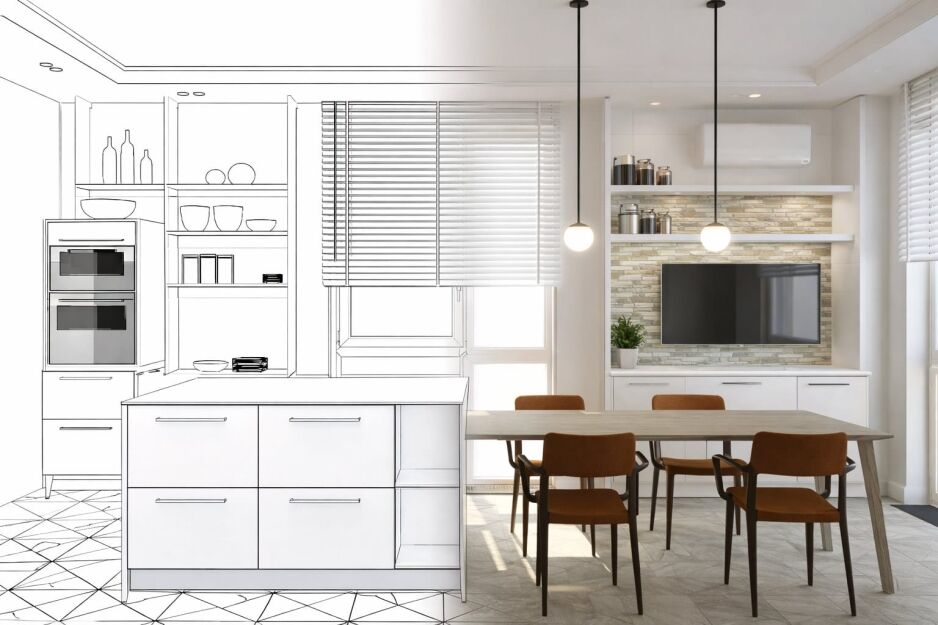
Every good kitchen starts with the right layout. Kitchen layouts determine how you move, cook, and use the space every day — long before finishes or appliances come into play. When the layout works, everything else falls into place. When it doesn’t, even the best materials can’t fix it.
Choosing among different kitchen layout shapes is one of the earliest—and most important—decisions in any kitchen project. From our experience planning kitchens in homes across Perth, most layout problems don’t come from bad products or poor workmanship. They come from decisions made too early, before the space was properly understood.
This guide is here to help you make that decision with clarity — before anything gets locked in.
Why There’s No “Best Kitchen Layout” — Only the Best One for Your Space
It’s common to search for the best kitchen layout, but the reality is simpler: the best layout is the one that suits your space. What works brilliantly in one home can feel awkward or restrictive in another, even if the kitchens look similar on paper.
Good kitchen design starts with understanding the room’s constraints, not chasing a layout just because it looks good in a display home or online. The shape and size of the space determine what will actually function well day-to-day.
A layout’s suitability is shaped by a few key factors:
- Room width versus length: Narrow spaces favour different layouts than wider, open rooms
- Wall availability: The amount of usable wall space affects storage, appliances, and workflow
- Traffic flow: Kitchens that double as walkways need layouts that keep work zones clear
- Storage needs: Some layouts naturally support more cabinetry than others
Display homes often ignore these realities. They’re designed to look good, not to handle real movement, real storage demands, or real family use. When a layout is copied without adapting it to the actual space, problems usually show up after installation — when they’re hardest to fix.
Choosing the right kitchen layout isn’t about finding the “best” option overall. It’s about selecting the one that works with the room you have, not against it.
A Simple Framework to Choose the Right Kitchen Layout
Choosing between different kitchen configuration ideas doesn’t need to be complicated, but it does need to be structured. The most reliable way to land on the right layout is to assess the space first, then work through a few practical questions before committing.
This framework is the lens you should use when comparing kitchen layout ideas. It keeps decisions grounded in how the room actually functions, rather than how a layout looks in isolation.
Start by asking:
- Is the kitchen narrow or wide?
Room width often rules out certain layouts before anything else is considered. - Is the space open-plan or enclosed?
Open kitchens benefit from layouts that maintain visual flow, while enclosed kitchens can prioritise efficiency and storage. - Do you need maximum storage or visual openness?
Some layouts naturally support more cabinetry, while others trade storage for a lighter feel. - Is seating a requirement?
Islands, peninsulas, or breakfast bars place very different demands on space and circulation. - Is the kitchen a throughway or a dedicated work zone?
Kitchens that double as walkways need layouts that keep traffic out of prep and cooking areas.
Using this framework helps narrow down which layouts genuinely suit the space and, just as importantly, which should be ruled out early.
Understanding the Main Kitchen Layout Shapes (And Who They Suit)
Different kitchen layouts solve different problems. The key is understanding where each layout performs well and where its limits start to show, so you’re choosing a shape that works with the room rather than against it.

Let’s explore each of these layouts…
One Wall Kitchens — Best for Simplicity and Tight Spaces

A one wall kitchen works best where space is limited, and the layout needs to stay compact. By keeping all cabinetry and appliances along a single run, this layout suits apartments, studios, and smaller homes where width is at a premium.
The trade-off is storage and workflow. With everything on one wall, there’s less room for separation between cooking, prep, and cleaning zones. This makes cabinet planning especially important. A well-balanced mix of drawers, base cabinets, and carefully chosen overhead storage helps maximise function without overwhelming the space.
In small kitchen design, success comes down to restraint and accuracy. When the cabinet mix is planned properly, a one wall kitchen can feel efficient and uncluttered. When it isn’t, the limitations become obvious very quickly.
One wall kitchens work best in:
- Small or narrow spaces where width is limited
- Apartments and studios with compact footprints
- Homes prioritising simplicity over separation
- Kitchens where storage needs are modest and well planned
View our One Wall Kitchen Design Guide
Galley Kitchens — Efficiency in Narrow Spaces
A galley kitchen is designed for long, narrow rooms where other layouts simply don’t fit well. With two parallel runs facing each other, this layout keeps everything close and organised, making it one of the most efficient options when width is limited.
The strength of galley kitchen designs lies in their workflow. Parallel runs naturally separate prep, cooking, and cleaning zones, reducing unnecessary movement and keeping tasks contained within a compact footprint. When spacing is right, galley kitchens feel purposeful rather than restrictive.
Problems tend to appear when clearances are ignored. Walkways that are too narrow, appliances placed directly opposite each other, or overloading both walls with cabinetry can quickly make the kitchen feel cramped. Careful clearance planning and restraint with overhead storage are what allow a galley kitchen to perform well.
Galley kitchens work best in:
- Long, narrow rooms
- Homes where width is limited but wall length is available
- Kitchens that need strong workflow over openness
- Spaces where traffic can be kept out of work zones
View our Galley Kitchen Design Guide
L-Shaped Kitchens — Flexibility for Open-Plan Living
An L-shaped kitchen is one of the most adaptable kitchen shapes, which is why it suits such a wide range of homes. By running cabinetry along two connected walls, this layout creates clear work zones while still keeping the space open and connected to surrounding areas.
The strength of kitchen shapes like this lies in balance. L-shaped kitchens offer more storage and bench space than single-run layouts, without enclosing the room or interrupting visual flow. How the corner is planned plays a major role in success — smart corner solutions improve access and prevent wasted space, while poor planning can quickly become frustrating.
Because the layout doesn’t dictate a fixed traffic path, L-shaped kitchens work particularly well in open-plan homes where flexibility and zoning matter.
L-shaped kitchens work best in:
- Medium to large kitchen spaces
- Open-plan layouts that flow into living or dining areas
- Homes needing a balance of storage and openness
- Kitchens where corners can be planned properly
View our L-Shaped Kitchen Design Guide
U-Shaped Kitchens — Maximum Storage and Bench Space
A U-shaped kitchen is designed for performance. With cabinetry running along three connected walls, this layout prioritises storage and bench space above all else. When the room suits it, a U-shaped layout can feel efficient and contained, with everything close at hand.
Clearances are critical. Because the kitchen wraps around the user, internal spacing needs to be planned carefully to avoid the layout feeling tight or overwhelming. When too many cabinets or appliances are packed in without enough breathing room, usability drops quickly.
For the right space, however, this is one of the most capable kitchen layout shapes, especially where storage and preparation areas are a priority.
U-shaped kitchens work best in:
- Medium to large rooms with adequate internal width
- Kitchens that don’t need to act as a throughway
- Homes prioritising storage and bench space
- Spaces where clear internal walkways can be maintained
View our U-Shaped Kitchen Design Guide
Kitchen Islands and Peninsulas — Features, Not Layouts
It’s easy to think of islands as a kitchen layout in their own right, but in reality, kitchen islands and peninsulas are features that sit within a layout — not layouts themselves. Whether they work or not depends entirely on the shape, size, and flow of the kitchen around them.
Islands interact very differently with each layout shape. In some kitchens they add valuable bench space, storage, and seating. In others, the same island can interrupt movement, block appliances, and reduce usability. The difference comes down to clearances, workflow, and how the island fits into the overall plan.
This is where peninsulas often come into play. In tighter kitchens, a peninsula can deliver many of the same benefits as an island — extra bench space, storage, or seating — without the clearance demands of a freestanding feature. Rather than being a compromise, a peninsula is often the smarter, more efficient solution when space is limited.
Understanding how these features behave within different kitchen layout ideas is key to choosing the right option. In general, islands work best in kitchens with enough width to maintain clear walkways on all sides, while peninsulas suit tighter layouts where space needs to be used more efficiently.
View our Island Kitchen Design Guide
How Cabinet Choices Change How a Layout Performs
Kitchen layouts don’t work in isolation. How a kitchen feels and functions is heavily influenced by the type and mix of kitchen cabinets used within the layout. The same layout shape can perform very differently depending on how cabinets are planned and positioned.
- Base cabinets handle bulk storage
Best suited to cookware, appliances, and larger items, base cabinets support storage-heavy layouts and keep heavier items within easy reach. - Kitchen drawers suit everyday access
Drawers work particularly well in prep zones, making utensils, cutlery, and commonly used items quicker to access and easier to organise. - Overhead cabinets need restraint
Overheads add valuable vertical storage in larger kitchens, but in compact layouts, they can quickly make the space feel closed in if overused. - Pantry cabinets influence the layout flow
A well-placed pantry can improve efficiency and consolidate storage, while poor placement can block movement or dominate the room.
If you want to explore how layout and cabinetry work together in more detail, our guides on How to Design a Functional Kitchen and How to Arrange Kitchen Cabinets for Optimal Functionality expand on these principles and how to apply them during planning.
Common Kitchen Layout Mistakes (Regardless of Shape)
Most kitchen layout problems don’t come from bad products — they come from decisions made too early, or without enough planning. These mistakes show up across all kitchen layouts, whether it’s a one wall, galley, L-shaped, U-shaped, or island design.
- Choosing a layout before measuring properly
Guessing room dimensions or working from old plans often leads to clearances that don’t work once cabinets and appliances are installed. - Forcing an island into unsuitable spaces
Islands are popular, but in tighter kitchens they can restrict movement, block work zones, and create ongoing frustration. - Underestimating storage requirements
Layouts that look clean on paper can quickly feel cluttered if storage needs aren’t realistically planned from the start. - Ignoring appliance clearances and walkways
Oven doors, dishwashers, fridge swings, and drawer access all need space — overlooking these details affects usability every day. - Selecting cabinets before finalising the layout
Cabinet choices should support the layout, not dictate it. Locking in cabinetry too early limits flexibility and often leads to compromises.
Plan the Layout First — Before Choosing Cabinets or Finishes
A kitchen layout is much harder to change than colours, handles, or appliances. Once walls, walkways, and cabinet runs are set, most decisions are locked in — which is why layout should always come before choosing cabinets or finishes.
Visualising the space early helps uncover problems that don’t show up on a flat plan. Clearances, door swings, storage access, and traffic flow all become easier to assess when the layout is mapped properly rather than guessed.
That’s also why designing first and ordering second reduces risk. Using our free 3D kitchen planner with our actual cabinets lets you test different kitchen layout ideas, adjust proportions, and confirm what fits before any cabinetry is ordered. It’s a practical step that saves rework and gives confidence that the final design will function as intended.
Final Thoughts: The Right Kitchen Layout Makes Everything Else Easier
A well-chosen kitchen layout does more than define how a space looks — it shapes how the kitchen works, how much it can store, and how comfortable it feels to use. Get the layout right, and most other decisions become simpler.
There’s no single “best” option among modern kitchen styles. The right choice depends on the available space, how the kitchen connects to the rest of the home, and what the room needs to support day-to-day use.
The most reliable way to move forward is to explore layout options first, test what actually fits, and lock in the structure before anything else. That approach reduces compromise, avoids costly changes later, and leads to a kitchen that performs as well as it looks.
If you’re planning your next step, explore our individual layout guides, test different options using our 3D kitchen planner, and finalise the layout before moving on to cabinetry or styling decisions. If you’d prefer a second set of eyes before locking anything in, you can also book a free design consultation with Fiona to walk through your layout and confirm what will work best in your space. Simply call the store on 1300 133 186 to book your free consultation in our kitchen showroom.
