
Bath vs Shower: Which Is Right for Your Bathroom?
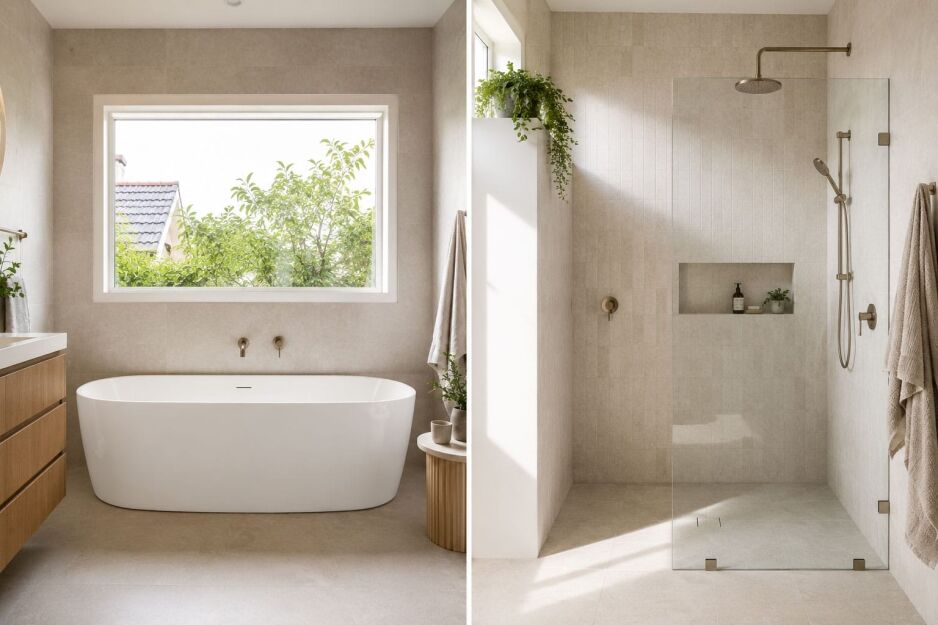
Every Perth homeowner planning a bathroom renovation hits the same crossroads: do you keep the bath, pull it out for a bigger shower, or try to squeeze both in? The bath vs shower debate is one of the most common questions I get asked — not just in our Guildford showroom, but also from friends and family doing up their homes.
The honest answer is that there’s no single right call. The best decision for your bathroom depends on your household, lifestyle, available space, and how long you plan to stay in the home. A young couple in a two-bedroom apartment has very different needs from a family of four in a three-bedroom house.
In this guide, I’ll walk you through the key differences between a bathtub vs shower — covering water use, hygiene, cost, family needs, resale value, and a combined bath-and-shower option many Perth homeowners overlook. By the end, you’ll have a clear picture of which option suits your situation.
Bath vs Shower — What’s the Actual Difference?
Before we get into the details, it helps to understand what each option actually offers at a basic level — because the bath vs shower comparison isn’t really about which one is better overall. It’s about which one is better for you.
A shower is built for speed and daily practicality. Water runs, you clean, you’re done. It suits busy mornings, tight schedules, and everyday hygiene without much thought. A bath is a different experience entirely — full immersion, slower by design, and more deliberate. Whether that’s a deep soak in a freestanding bath after a long week or bath time for the kids on a Tuesday night, it serves a purpose a shower simply can’t replicate.
In most Australian homes, the real question isn’t shower or bath as a binary choice. It’s a question of whether to include a bath alongside a walk-in shower or dedicate the full bathroom footprint to a shower-only setup. Both can coexist — in larger bathrooms as completely separate fixtures, or in smaller spaces as a combined shower-over-bath arrangement. That’s worth keeping in mind before we go any further.
Which Uses More Water — Bath or Shower?
Most people assume they know the answer here — showers win, end of story. The reality is a bit more nuanced, and in Perth, where water costs are genuine and drought conditions are part of life, it’s worth understanding properly.
How Much Water Does a Bath vs Shower Actually Use?
A standard bath uses roughly 100–150 litres per fill, depending on how far up you run it. A water-efficient showerhead flows at around 9.5 litres per minute — so a seven-minute shower uses somewhere between 63 and 70 litres, well under a bath.
The problem is older showerheads. A standard head from ten or fifteen years ago flows at 15–20 litres per minute. A ten-minute shower with one of those uses 150–200 litres — more than most baths. The tipping point is roughly the ten-minute mark with a modern head. Under that, a shower wins. Over it, a bath is often the more water-efficient option, which surprises most people when they first hear it.
Why Water Efficiency Matters More in Perth
Perth is one of Australia’s driest capitals, and that’s reflected in water bills. If you haven’t looked at your showerhead recently, it’s worth checking the WELS water efficiency rating — the star-based system that rates how efficiently fixtures use water. A 3-star rated head or above is what you’re aiming for.
I replaced the showerheads across two of my investment properties a few years back — swapped out old 15-litre-per-minute heads for 4-star WELS-rated ones. The difference showed up on the water bills within a quarter. A family of four making the same switch can save over 100,000 litres a year. That’s not a rounding error.
For the bath vs shower water usage comparison to work in your favour, the showerhead matters just as much as how long you shower.
Bath vs Shower for Families — What Works Best?

Household makeup is one of the biggest deciding factors in the bath vs shower question, and it’s something most guides gloss over. Who actually uses the bathroom — and how they use it — changes everything about which option makes sense.
Young Kids
If you have children under about eight, you almost certainly need a bath. Full stop. Bathing toddlers and young kids in a shower is impractical at best and unsafe at worst. A bath isn’t a luxury in a family home — it’s functional infrastructure, as essential as the toilet. This is one situation where the bath vs shower pros and cons debate is pretty much settled before it starts.
Teenagers and Adults
Once kids hit their teens, the dynamic shifts. Showers become the default for daily use — quick, efficient, no fuss. The bath moves into occasional-use territory, pulled out for a soak after sport or a long week rather than as the primary hygiene fixture. Adults follow the same pattern in most households.
Older Australians and Accessibility
This one doesn’t get enough attention in renovation planning. A walk-in shower with a low or no-hob entry is significantly safer and more accessible than a bath for anyone with mobility considerations. Stepping over a bath rim is a real safety risk as people age, and it’s worth thinking about longevity in your home — not just what suits your household today. For Perth homeowners planning to stay put long-term, an accessible shower design is increasingly worth prioritising.
The Bottom Line for Family Bathrooms
If space allows, having both is the ideal outcome for most family homes. If you’re forced to choose, families with young kids should protect the bath. Couples or adults-only households can generally go shower-only without any real compromise.
In my experience renovating investment properties across Perth, I’ve always kept at least one bath in any three-bedroom home. It broadens your tenant pool, it suits families, and it just makes practical sense. If you’re working through the decision for your own home, our bath buying guide covers what to look for once you’ve decided a bath is the right call.
Bath vs Shower: Hygiene and Health
This is one of the most commonly searched angles on the bath vs shower debate, and it’s worth being upfront: the hygiene question has a fairly clear answer, but the health and wellbeing side is more personal.
Which Is More Hygienic?
Showers win on daily hygiene — and it’s not particularly close. Running water continuously rinses soap, residue, and anything else you’re washing off straight down the drain. In a bath, you’re soaking in water that’s gradually collecting everything you’re cleaning away. That’s fine for a long soak at the end of the day, but it’s not the most effective method for daily cleaning.
That said, baths aren’t unhygienic — they’re just different in purpose. Bath vs shower hygiene comes down to intent. A shower is a cleaning tool. A bath is a recovery and relaxation tool. Treating them as the same thing is where the comparison breaks down.
The Wellbeing Case for Baths
A warm bath does things a shower genuinely can’t. Muscle relaxation, stress relief, and better sleep quality when taken before bed are all well-documented bath benefits. For anyone in Perth working a physically demanding job — trades, construction, anything outdoors — the occasional bath serves a real recovery function. I’ve found this myself after long days in-store or moving stock around the warehouse. A shower gets you clean. A bath actually lets your body unwind in a way that’s hard to replicate standing under a shower rose.
So while shower vs bath cleanliness favours the shower for daily use, the bath earns its place for what it does for your body and mind on the days you need it most.
The Practical Side: Space, Cost, and Resale Value
Personal preference and lifestyle will point you in a direction, but practical constraints often make the final call for you. Space, budget, and what the decision means for your property value are all worth working through before you commit.
Space: What Each Option Actually Needs

A standard bath has a minimum footprint of around 1500mm x 700mm — and that’s before you factor in clearance around it. If your bathroom is on the smaller side, that footprint can eat up the whole room. A walk-in shower, by comparison, can be configured into much tighter spaces and still feel generous to use.
In smaller Perth homes, apartments, and ensuites, a bath often isn’t practical — and forcing one in tends to compromise everything around it. If you’re working with a constrained layout, our guide to shower screens for small bathrooms is worth a look, and it’s also worth checking what bath size you actually need before ruling one out entirely — some options take up less room than people expect. If a corner configuration might work in your space, corner baths are another option worth considering.
Bath or Shower — Which Costs Less to Install and Run?
A walk-in shower, such as our Walk-In Glass Shower Panels, is generally less expensive to install than a bath — smaller footprint, simpler plumbing in most configurations. Bath installation costs vary more widely. A drop-in bath like our Pavilion Bath is reasonably affordable to install, while a freestanding model can involve additional plumbing work depending on where the waste and taps need to land.
On running costs, the water usage section covers this in detail — but the short version is that a water-efficient shower used daily is cheaper to run than a bath. The bath vs shower cost equation does favour the shower for everyday use, though the gap narrows if you’re disciplined about shower length.
At Ross’s, our baths start from $280 across a range of styles and sizes, while our shower screens start at $200, so the upfront cost gap between a basic bath and a basic shower setup is often smaller than people assume.
Does Removing a Bath Affect Your Home’s Resale Value?
This comes up constantly from Perth renovators, and it deserves a straight answer. Having both a bath and a shower is always the most appealing setup for buyers. It offers options and signals that the home has space. A freestanding bath in particular carries real perceived value; buyers respond to it in a way they simply don’t to a standard alcove bath.
In a family home with three or more bedrooms, removing the only bath is a risk worth taking seriously. It narrows your buyer pool, and families with young kids will notice. In an adults-only apartment or a secondary ensuite, a shower-only is increasingly expected and unlikely to hurt you. The key question is whether the bathroom you’re renovating is the main bathroom in a family-sized home — if it is, I’d think very carefully before the bath comes out.
What About a Combined Bath and Shower?
For many Perth homes, the bath vs shower question doesn’t have to be either/or. A shower-over-bath setup is one of the most practical solutions in Australian bathrooms, and it’s worth understanding properly before you make a final call on your renovation.
The concept is straightforward. A bath with a shower rose mounted above and a bath screen or curtain fitted to contain the water gives you both functions in one footprint. You shower standing in the bath, and you soak when you want to. It’s not a perfect version of either, but for many households it’s the most sensible outcome.
It works best in single-bathroom homes, older Perth properties with fixed footprints, and rental properties where flexibility matters. If budget is a constraint and you’re trying to satisfy both a bath and a shower requirement without a full bathroom reconfiguration, a bath/shower combo is usually the most cost-effective option.
The trade-offs are real, though. Stepping over the rim of the bath every morning is less convenient than walking into a dedicated shower, and a bath with a screen above it doesn’t deliver the same soaking experience as a deep freestanding bath with nothing around it. It’s a functional compromise, and a good one, but it helps to go in knowing that. If you want to understand the full upside of this setup, our article on the benefits of a shower bath combination covers it in detail.
If you do go down this path, the finishing product that makes or breaks it is the bath screen. A poorly fitted screen means water everywhere. At Ross’s, our bath shower screens are designed specifically for this setup, giving you a clean, watertight finish that makes the day-to-day experience a lot better than a curtain ever will.
So, Which Should You Choose?
After everything we’ve covered, here’s my honest take on the bath vs shower decision based on your situation.
Choose a shower-only setup if you’re renovating a small bathroom or ensuite, your household is adults-only, water efficiency and morning speed matter to you, or you’re working with a tight renovation budget. A well-designed walk-in shower in a compact space will serve you better than a bath that leaves the room feeling cramped. Browse our walk-in shower options if this sounds like your situation.
Choose a bath alongside a shower if you have young kids, you’re renovating the main bathroom in a family home, you have the space to do it properly, or resale value in the next five to ten years is on your mind. A bath in the right home is an asset, not a compromise. Take a look at our range of baths to get a feel for what’s available at different price points.
Choose both as separate fixtures if your footprint allows it and budget permits. This is always the most flexible long-term outcome and the one most buyers respond to positively.
In my own home, we kept the bath in the main bathroom and went shower-only in the ensuite. That split has worked perfectly. The kids used the main bathroom bath when they were young, and now it gets used on weekends when someone wants a proper soak. The ensuite shower handles the daily routine without taking up space we don’t need.
Whatever direction you’re heading, browse our full range of shower screens and baths to see what fits your bathroom and your budget.
Bath vs Shower FAQs
Here are the questions we hear most often from Perth homeowners trying to decide between a bath and a shower.
Which Uses More Water, a Shower or a Bath?
Shower vs bath water usage depends on two things: how long you shower, and what showerhead you’re using. A standard bath holds around 100 to 150 litres. A modern water-efficient showerhead runs at roughly 9.5 litres per minute, so a seven to ten minute shower uses 63 to 95 litres, well under a bath. But an older showerhead flowing at 15 to 20 litres per minute for ten minutes uses more water than most baths. Shower length matters more than most people realise.
Conclusion
The bath vs shower decision comes down to three things: your household, your space, and your plans for the property. There’s no universal right answer, and anyone who tells you otherwise is oversimplifying it.
If space and budget allow, having both is always the strongest outcome. You get the flexibility of a daily shower and the option of a bath when you need it, and your home appeals to the widest possible range of buyers if you ever decide to sell. If you’re choosing one, match it to your lifestyle honestly. A shower-only setup in a small ensuite makes perfect sense. Removing the only bath from a three-bedroom family home is a decision worth careful consideration.
At Ross’s, we stock a wide range of baths and shower screens to suit different budgets, bathroom sizes, and renovation goals. If you’re not sure which direction makes sense for your specific layout, come into our Guildford showroom and have a chat with the team. We’ve helped Perth homeowners work through this decision more times than I can count, and we’re happy to help you get it right.
