
Tiling Mistakes to Avoid: Selection, Prep & Installation
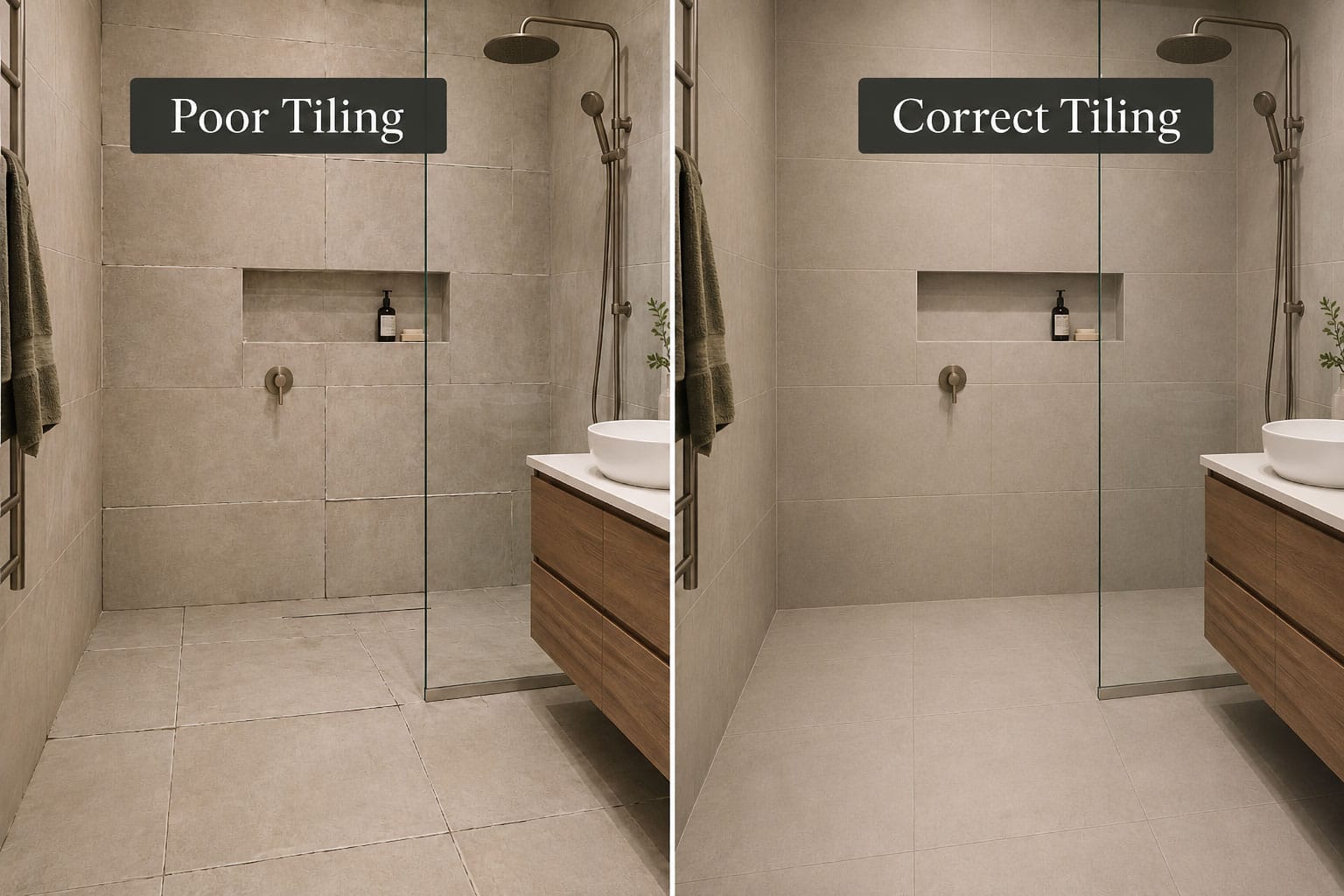
Tiling looks easy until you are doing it — and the tiling mistakes to avoid are not always the obvious ones. Some happen when you choose the wrong tile for the application. Others happen during substrate preparation before a single tile is laid. Many happen during installation itself. And some of the most frustrating ones happen right at the end, during grouting, when the project feels almost done.
After decades of helping Perth homeowners choose and buy tiles at Ross’s Discount Home Centre, I’ve seen the same tiling mistakes happen time and again. The pattern is always similar. Problems that could have been prevented during product selection, surface preparation, or installation end up costing two or three times as much to fix as they would have cost to get right the first time.
This guide covers all four stages in order — what to get right before you buy, before you start, while you are laying, and when you are grouting.
Tile Selection Mistakes: Choosing the Right Tile Before You Start
The most expensive tiling mistakes to avoid are often made before a single tile is laid. Choosing the wrong tile for the application, the wrong finish for the room, or the wrong quantity sets a project up to fail, regardless of how well the installation goes. These are the tile selection mistakes I see most often at Ross’s.
Ignoring the Slip Rating When Choosing Tiles
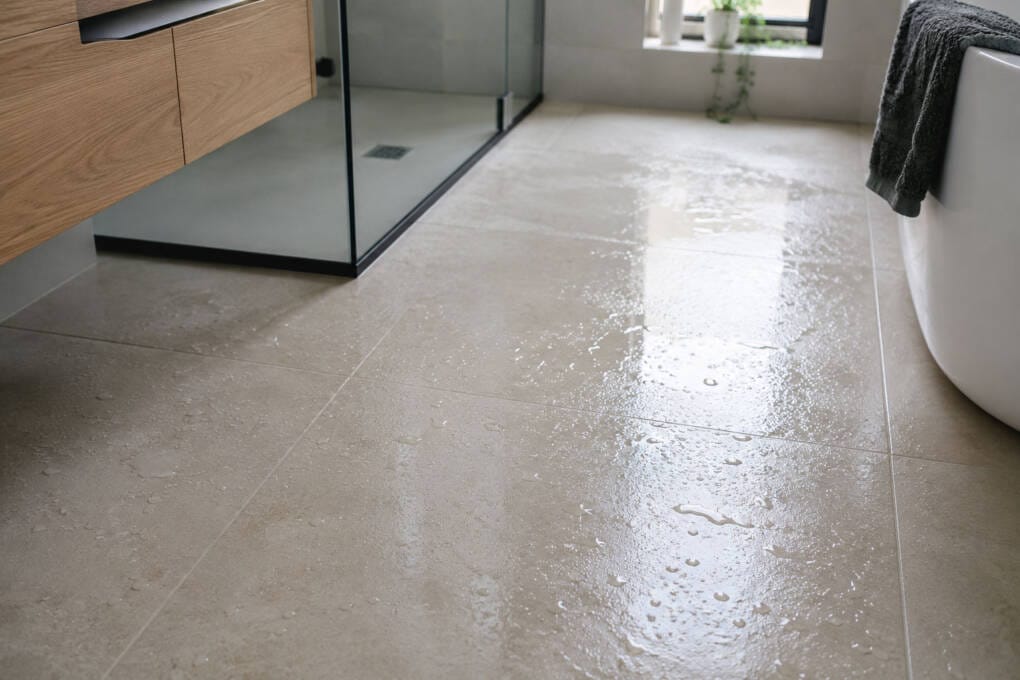
Choosing a tile based on appearance alone without checking its slip resistance rating is the most safety-critical selection mistake there is. Polished and gloss tiles look stunning in a showroom, but become genuinely dangerous on bathroom floors and outdoor surfaces when wet.
Under Australian residential standards, bathroom floors require a minimum P3 slip resistance rating. Outdoor areas and alfresco surfaces require P4. Pool surrounds require P4 to P5. These are not guidelines — they are the standard your tiled surfaces should meet for safety and compliance.
Many buyers don’t know to ask for the P-rating before purchasing. The fix is straightforward: always confirm the slip rating before buying any tile intended for a wet area or outdoor application. Our non-slip tiles range covers options rated for every wet and outdoor application, and our tile ratings and grades guide explains every rating system in full.
Choosing the Wrong Finish for the Room
Finish is one of the most common bathroom tiling mistakes and one of the most overlooked. Polished tiles on high-traffic floors show every footprint, dust mark, and scratch within days of installation. In Perth’s hard water suburbs, gloss tiles on floors and walls accumulate calcium deposits rapidly — and removing them requires acidic cleaners that damage grout over time.
I had a customer come back to our Guildford showroom about six months after purchasing polished marble-look tiles for her family bathroom floor. She loved how they looked but was dealing with constant slip concerns with young children and could not keep the calcium marks under control. The tile itself was not the problem — polished marble-look on a bathroom wall would have been perfect. On a busy family bathroom floor, it was the wrong finish entirely.
Matte and honed finishes are significantly more practical for bathroom floors, outdoor areas, and any space in a hard water suburb. They hide footprints, resist calcium deposits, and require far less maintenance. Our tile finishes guide covers the practical differences between every finish type.
Choosing the Wrong Tile Size for the Space
Tile size affects both the look of a room and the practicality of the installation. Large-format tiles in small spaces create awkward, narrow cut pieces at edges and corners that look unintentional and are difficult to install neatly. Small tiles across large open-plan floors multiply grout lines, increase cleaning time, and can make a generous space feel busy and fragmented.
The general rule is straightforward: large tiles suit large areas, smaller formats suit compact wet areas. For shower floors specifically, smaller formats work better — the additional grout lines improve grip underfoot in wet conditions, which matters for slip resistance. Our tile size guide covers how to match tile size to room dimensions and application.Skipping Waterproofing
Not Taking Tile Samples Home First
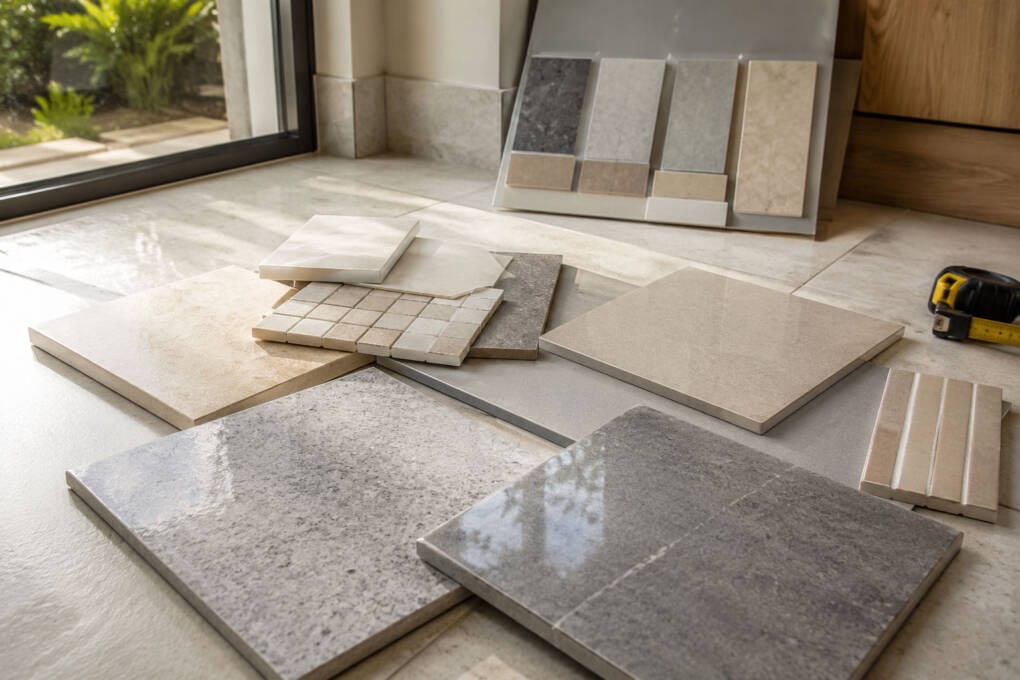
Tiles behave differently under showroom lighting than they do in a Perth home. A tile that reads warm and neutral under fluorescent showroom lights can look cold, grey, or stark once installed in a bathroom that gets strong morning sun through a west-facing window. The difference can be significant enough to change the entire feel of the room.
Always take samples home before committing to a full order. Place them on the actual floor or wall surface you are tiling, and check them at different times of day — in morning light, in afternoon sun, and under artificial evening lighting. Tile colours in particular read very differently across these conditions, and what looked right in the showroom can surprise you at home.
Ordering the Wrong Quantity of Tiles
Tiles are manufactured in batches, and shade variation between production runs is real. Order short and come back for more weeks later, and there is no guarantee the replacement stock will match what you have already laid. Even tiles from the same range can differ visibly between batches — particularly on stone-look and timber-look tiles with higher V-ratings, where natural variation is built into the design.
Always order a minimum 10% above your measured area to account for cuts, breakages, and wastage. For diagonal or herringbone layouts, allow 15%. Order the full quantity from a single batch at the same time, check the batch numbers on the boxes match, and keep any surplus tiles — they are invaluable if a tile cracks or chips years down the track and the product has since been discontinued.
Tiling Preparation Mistakes That Cause Long-Term Problems
Preparation is the stage most DIYers rush or skip entirely, and it is where the most structurally damaging tiling mistakes happen. A poorly prepared substrate will cause even the best tiles and the best adhesive to fail — not immediately, but within months. Cracked tiles, hollow spots, lifting, and water damage all trace back to poorly prepared or not prepared at all.
Skipping Waterproofing in Wet Areas
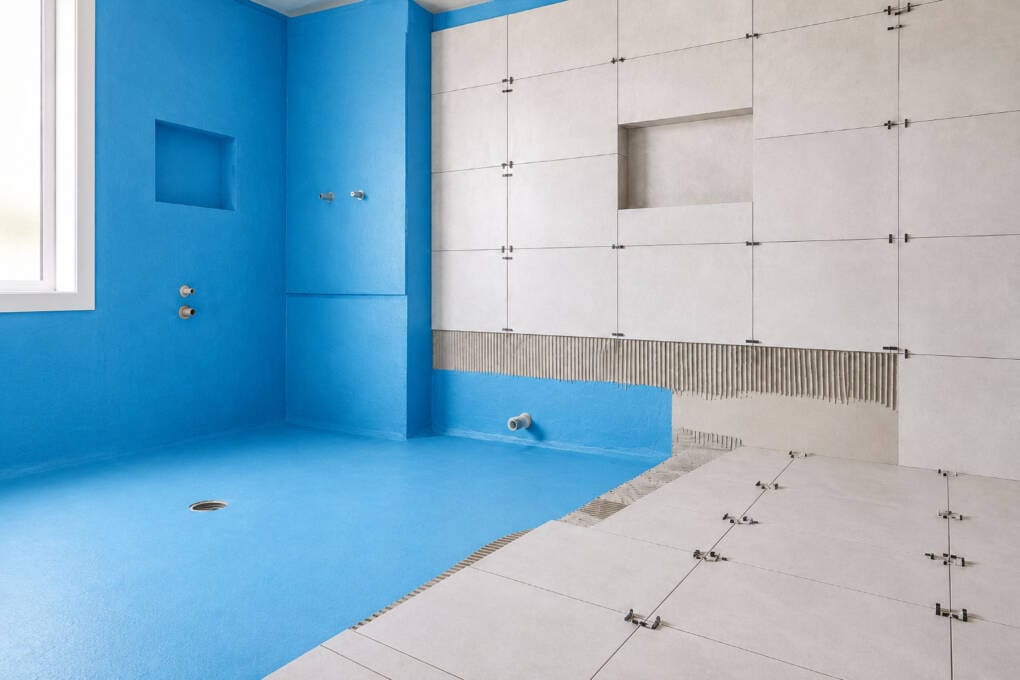
Skipping the waterproofing membrane is the single most costly mistake in residential tiling. Tiles and grout are not fully waterproof. Water finds its way through grout joints and micro-cracks into the substrate beneath, and once it does, the damage is serious — mould growth, rot in timber framing, and structural deterioration that costs thousands to repair and often requires the entire tiled area to be stripped out and started again.
Under the AS 3740 wet area waterproofing standard, waterproofing in bathrooms, shower recesses, and wet areas is a legal requirement in Australian residential construction. It is not optional, and skipping it creates compliance issues that surface when you go to sell the property. If you are tiling a wet area yourself, waterproofing must be done before any tile goes down — full stop.
Poor Substrate Preparation Before Tiling
The substrate must be clean, dry, level, and completely free of old adhesive, grease, dust, soap scum, and residue before any tile is laid. A basic wipe-down is not sufficient. Even a thin layer of old sealant or soap residue prevents the new adhesive from bonding correctly, and over time, this produces hollow-sounding tiles, tiles that shift underfoot, and grout joints that crack open prematurely.
For floors, levelness is critical. Large-format porcelain tiles are particularly unforgiving on an uneven substrate — any deviation telegraphs through to the finished surface as lippage. Concrete slabs should cure for a minimum of 28 days before tiling begins. These requirements are set out in the AS 3958 ceramic tile installation standard, which covers acceptable tolerances for substrate levelness, tile spacing, and overall finish.
For full step-by-step guidance on preparation and installation, our how to install bathroom tiles and how to tile a kitchen splashback guides cover both applications in detail.
Using the Wrong Tile Adhesive
There is no universal tile adhesive, and using the wrong one is a common DIY tiling mistake Perth homeowners make. Porcelain tiles are dense and non-porous and require a polymer-modified adhesive specifically formulated for non-porous surfaces. Standard ceramic tile adhesive used on porcelain will not bond correctly and will fail over time — often long after installation looks fine on the surface.
For outdoor and wet area applications, the adhesive must also be rated for those conditions. Walking into a hardware store and choosing whatever is cheapest or most familiar is a false economy. Always match the tile adhesive to the tile type and the application, and if you are unsure, ask before you buy.
For most indoor tiling applications on concrete or masonry substrates, our Drymastic Tile Adhesive 20kg is a reliable choice. For tiling over timber or wooden floorboards — where the substrate has natural movement and flex — our Monoflex Tile Adhesive 20kg is the better option. Its rubber-based formula accommodates the expansion and contraction of timber substrates, significantly reducing the risk of tiles cracking or lifting over time.
Browse our full range of tile adhesives and grout to find the right product for your application.
Not Leaving Expansion Joints
Tiles expand and contract with changes in temperature and humidity. Without expansion joints at the perimeter of the tiled area and at regular intervals across large tiled surfaces, tiles have nowhere to move and eventually push against each other. The result is cracking, tenting — where tiles pop up from the surface — or tiles detaching entirely.
Expansion joints must be filled with flexible silicone sealant in a colour matched to the grout, not with grout itself. Grout is rigid and will crack as soon as the tiles move. This is one of the most commonly skipped steps in DIY tiling and one of the hardest to fix without removing and relaying the affected tiles.
Common Tile Installation Mistakes and How to Avoid Them
Installation mistakes are the ones that show up most visibly in the finished result. Crooked lines, uneven grout, lippage, and poorly cut edges make an otherwise good tile look cheap and amateurish. These are the tiling mistakes to avoid during the laying stage — each one is preventable with the right approach before the adhesive goes down.
Plan Your Tile Layout Before You Start
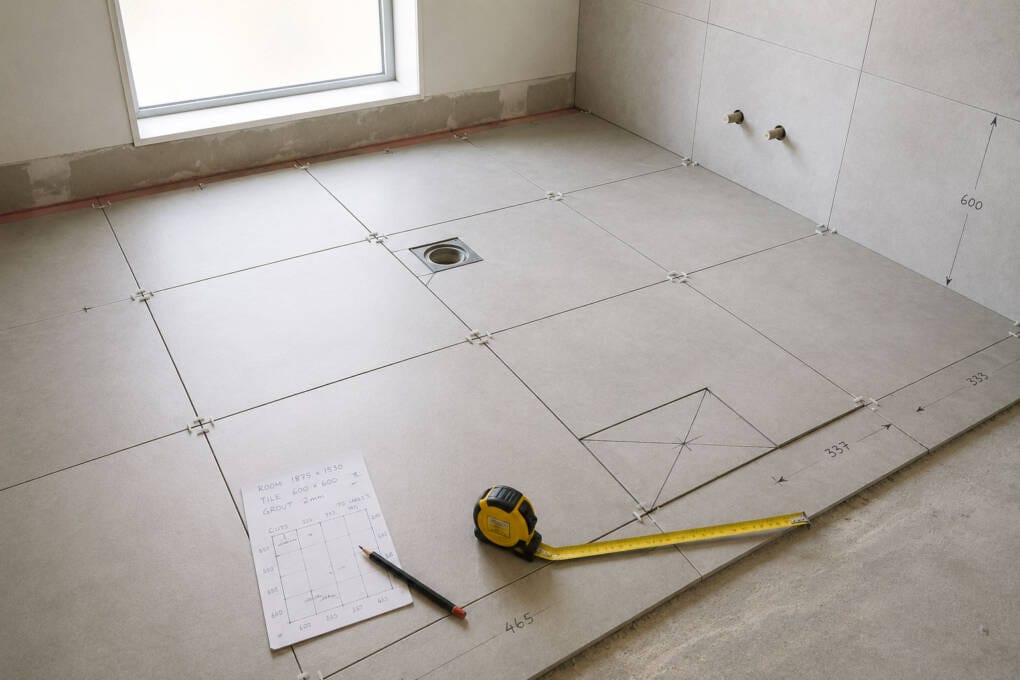
Starting from a corner and working across the room is one of the most common layout mistakes in DIY tiling. It almost always results in a thin, awkward sliver of tile at the opposite edge — and that sliver tends to land exactly where it is most visible, at a doorway, along the bath edge, or at the shower entry.
I had a customer who tiled his own bathroom, starting from the back corner. By the time he reached the shower entry, he had a 20mm strip of tile running across the full width of the opening. It looked wrong, it was difficult to cut cleanly, and it was the first thing anyone noticed when they walked into the room.
The correct approach is to find the centre point of the room, dry-lay tiles outward in both directions without adhesive, and adjust the starting position until cut tiles at both ends of each row are as equal and as generous as possible. This takes an extra hour at the start and saves significant frustration at the finish.
Always Use Tile Spacers
Tile spacers maintain a consistent grout line width across the entire tiled surface. Without them, grout lines wander — narrowing in some places, widening in others — which is the most immediately obvious visual sign of an amateur tile job. Spacers are inexpensive, and their use is non-negotiable for a professional-looking result. Choose a spacer width appropriate for your tile size and stick to it consistently across the entire installation.
Do Not Walk on Freshly Laid Tiles
Standard tile adhesive requires a minimum of 24 hours of cure time before foot traffic. Walking on tiles before the adhesive has set shifts them out of position, creates uneven surfaces, produces lippage, and leaves tiles that rock underfoot when the adhesive finally cures in the wrong position. Fast-setting adhesives may allow light foot traffic in four to six hours, but always follow the specific product instructions rather than assuming a standard timeframe applies.
Understand and Prevent Lippage
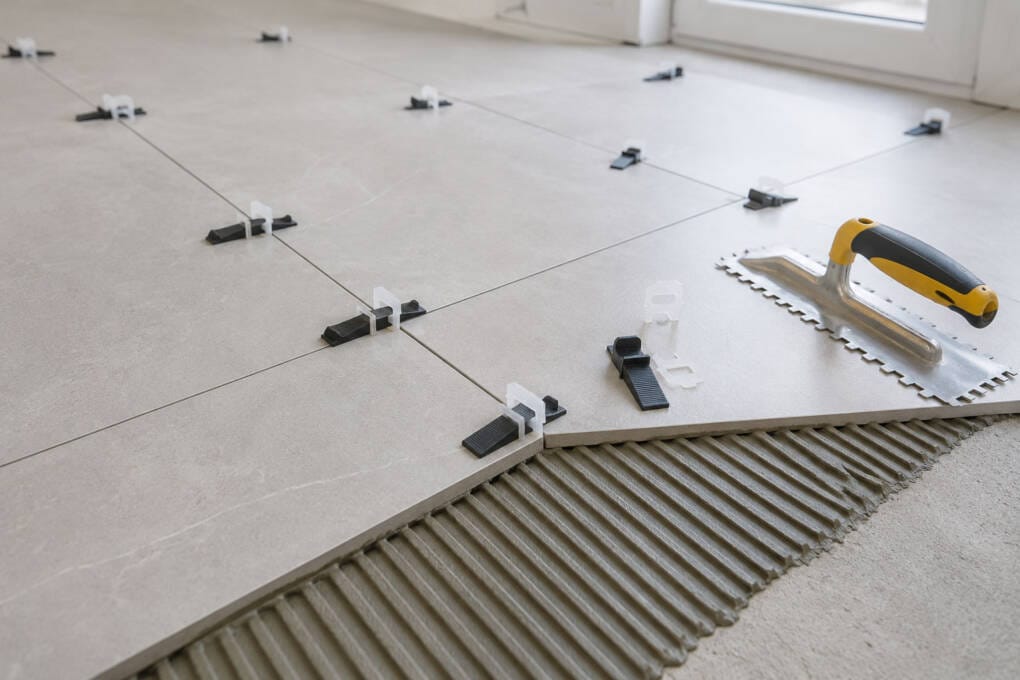
Lippage is when adjacent tiles sit at slightly different heights, creating a visible, feelable step between tiles. It is one of the most common signs of a poor installation and one of the hardest to fix without relaying the affected tiles. It is caused by an uneven substrate, inconsistent adhesive bed thickness across the floor, or natural warping in the tiles themselves.
Rectified tiles — machine-cut to precise dimensions — reduce the risk of lippage because their edges are consistent and flat. For large-format tiles in particular, a tile levelling system using plastic clips and wedges during installation eliminates lippage almost entirely by holding adjacent tiles at the same height while the adhesive cures. Under AS 3958 tolerances, a small degree of lippage is technically acceptable, but anything visible to the eye or felt underfoot when walking across the floor is a problem that should be addressed before the adhesive sets.
Grouting Mistakes That Ruin an Otherwise Good Tile Job
Grout is treated as an afterthought on most DIY tiling projects, but it is one of the most visible elements of any finished tiled surface and one of the most commonly done wrong. Common tiling mistakes at the grouting stage can undermine a tile job that was otherwise laid well. These are the grouting errors worth knowing before you open the bag.
Choosing the Wrong Type of Grout
Standard cement-based grout is porous. In dry, low-moisture areas, it performs adequately, but in shower recesses, bathroom floors, and kitchen splashbacks it will absorb moisture, staining, and mould over time — no matter how well it is applied.
For any high-moisture application, epoxy grout is the stronger choice. It is stain-proof, fully waterproof, and does not require sealing. It costs more than cement-based grout and is harder to work with — the working time is shorter, and it must be cleaned off tile surfaces promptly — but it lasts significantly longer in wet environments and eliminates the ongoing maintenance that cement grout in a shower demands.
For colour selection, our how to choose the right grout colour guide covers how grout colour affects the overall look of a tiled surface and how to match it effectively to your tile. For the grout itself, our Kemgrout Coloured Grout is a quality cement-based option suitable for low-moisture areas and general wall tiling applications.
Grouting Before the Adhesive Has Fully Cured
Tile adhesive must be fully cured before grouting begins. Grouting too early — one of the most common mistakes when DIYers want to finish a project in a single day — traps moisture beneath the grout, weakens the adhesive bond, and produces grout that cracks or crumbles within months of installation. Always check the adhesive manufacturer’s recommended cure time before mixing any grout. For most standard adhesives, that minimum is 24 hours, but in cool or humid conditions, it can be longer.
Not Sealing Cement-Based Grout
Cement-based grout is porous, and without a sealer, it will absorb coffee, oil, soap scum, and dirt — particularly in kitchens and bathrooms. In Perth’s hard water areas, calcium deposits penetrate unsealed grout lines and become extremely difficult to remove without acidic cleaners that can damage the grout itself over time.
Apply a quality grout sealer after the grout has fully cured — typically 48 to 72 hours after grouting. In high-use wet areas like shower recesses, reapply the sealer annually to maintain protection.
Not Removing Grout Haze in Time
After grouting, a thin dusty film forms across the tile surface as the grout begins to dry. This is grout haze, and it must be wiped off with a clean, damp sponge while it is still fresh — within 24 hours of grouting. Left beyond that point, it cures hard and becomes extremely difficult to remove without acid-based cleaners that risk damaging both the tile surface and the grout joints. Wipe the surface down in stages as you work across each section rather than leaving it all to clean at the end.
What Does a Bad Tile Job Look Like?
Knowing what bad tiling looks like helps you catch problems early — whether you are checking your own work as you go or inspecting a job a tiler has completed. The earlier a problem is identified, the cheaper it is to fix. Leave it too long, and what could have been a simple correction becomes a full strip-out and relay.
Visual Signs of Poor Tiling
- Uneven or wandering grout lines. The clearest sign of a job done without tile spacers or careful alignment. Grout lines that narrow, widen, or drift across the surface immediately signal an inconsistent installation technique.
- Lippage. A visible or feelable height difference between adjacent tiles. Run your hand across the tiled surface — any step you can feel between tiles is lippage, and on a floor it is both a trip hazard and a sign of poor substrate preparation or inconsistent adhesive coverage.
- Awkward cut pieces at edges and doorways. Thin slivers of tile at the most visible points in the room are the hallmark of poor layout planning. A well-planned tile job has balanced, equal cuts at both ends of each row.
- Grout residue on tile surfaces. Dried grout haze left on tile faces beyond 24 hours, or excess grout that was not cleaned off properly, dulls the tile surface and is difficult to remove without risking damage to the tile finish.
- Misaligned patterns. Particularly obvious with timber-look and stone-look tiles where grain direction matters. Tiles laid without regard for pattern continuity look disjointed and break the natural flow that the tile was designed to create.
Physical Signs of a Bad Tile Installation
- The hollow sound test. Tap each tile firmly with your knuckles. A solid tone indicates good adhesion between the tile and the substrate. A hollow or drum-like sound indicates an air pocket beneath the tile — the adhesive has not bonded correctly, and that tile will eventually crack or detach. Do this test across the entire tiled surface as soon as the adhesive has cured, while there is still a chance to lift and relay problem tiles without disturbing the surrounding work.
- Tiles that rock or move underfoot. Movement in a laid tile indicates adhesive failure, almost always the result of poor substrate preparation, the wrong adhesive for the tile type, or grouting before the adhesive had fully cured.
- Cracked tiles shortly after installation. Tiles that crack within weeks or months of being laid point to inadequate substrate preparation, movement or cracking in the substrate itself, or missing expansion joints that gave the tiles nowhere to move as they expanded.
- Grout that crumbles or cracks. Grout that deteriorates quickly indicates either grouting over adhesive that had not fully cured, the wrong grout type for the application, or grout mixed at the wrong consistency. In wet areas, crumbling grout is also a waterproofing risk.
Frequently Asked Questions About Tiling Mistakes
Conclusion
Tiling mistakes to avoid span the full journey — from the tile you choose in the showroom to the grout you seal at the end. The earlier a problem is caught, the cheaper it is to fix. Left until the job is finished, most mistakes require partial or complete reinstallation to correct properly.
Perth’s conditions add specific variables worth keeping in mind. Hard water, high UV, and the outdoor living lifestyle mean tile selection, finish choice, and slip ratings all carry more consequence here than in most other Australian cities. Getting those decisions right at the start is what separates a tiled surface that performs well for 20 years from one that causes problems within 12 months.
If you are unsure which tile suits your application, what finish is right for the room, or what slip rating you need for a wet or outdoor area, visit one of the best tile stores in Perth, Ross’s Discount Home Centre. Our team can help you match the right tile to the job before you commit. Browse our full range of tiles online or come in to see it in person.
