
Silestone Benchtops Perth: Guide, Colours & How to Order
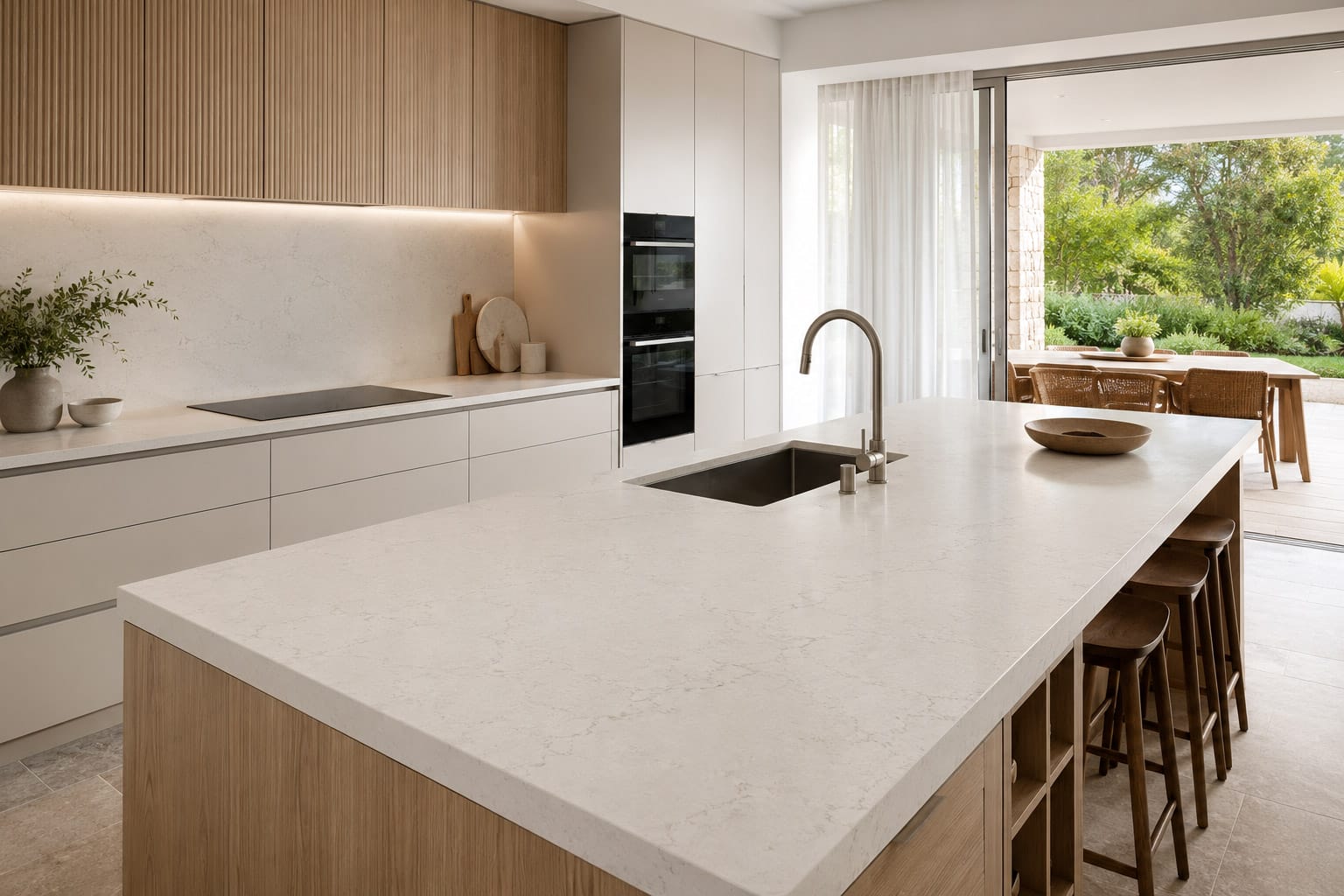
If you’ve been looking for Silestone benchtops in Perth and stumbled across worrying information about the engineered stone ban, the short answer is this: Silestone is still available. The product has been reformulated. The quality hasn’t dropped.
The confusion is understandable. Australia’s engineered stone ban was a major shift for the industry, and much of the online information hasn’t kept up. Some articles still refer to old products, discontinued colours, or pre-ban formulations, leaving Perth homeowners unsure whether Silestone is banned altogether. It isn’t.
This guide cuts through that. It covers what Silestone is today, why the product changed, how it holds up in Perth’s specific conditions, including hard bore water, strong UV exposure, and indoor-outdoor living, what the current range looks like, what it costs, and how to order it for your kitchen renovation in Perth. If you’re comparing it against other options first, our stone benchtops are a useful starting point.
One important thing to know before comparing the range is that Silestone and our other made-to-measure stone benchtops are available through Ross’s only as part of a complete kitchen purchased from our kitchen cabinet range. We don’t supply them as standalone replacements for an existing kitchen. If you’re keeping your cabinets and only want to upgrade the benchtop, consider our DIY options, including densified stone and laminate benchtops.
What Is Silestone Today?
Silestone is a manufactured surface made by Cosentino, a Spanish company with decades of experience in engineered benchtop surfaces. The product available in Australia today is a new generation of the range, now known as QXeron, which has been reformulated specifically to comply with Australia’s engineered stone ban. Where the original product was made from around 90% quartz, the current formulation contains less than 1% crystalline silica. It is made from up to 88% recycled materials, including recycled glass and minerals, and carries the same performance credentials the brand is known for.
The reformulation hasn’t compromised what made it worth specifying in the first place. It’s still non-porous, scratch-resistant, and stain-resistant. A 25-year warranty applies, though we’d recommend confirming current terms with our team at the time of purchase.
If you want a broader comparison of stone benchtop types before continuing, our stone benchtop buying guide provides the full picture.
Two Design Lines — Premium and Elemental
The range comes in two lines. The Premium line features veined and limestone-inspired designs with more visual movement and depth — it suits Hamptons-style and transitional Perth kitchens well. The Elemental line offers clean neutral tones with minimal surface variation, a good fit for contemporary and minimalist spaces.
Silestone benchtop colours within each line are updated periodically by Cosentino, so availability does change. The best way to assess them is in person — natural light gives you a far more accurate read on tone and finish than a screen ever will. Current samples are available at our Guildford showroom.
Why Silestone Changed — The Ban Explained
Silestone is still available in Australia. The current range has been reformulated to contain less than 1% crystalline silica, placing it outside the definition of the engineered stone ban. Homeowners looking for a compliant, zero silica benchtop in Perth can still choose it with confidence. The ban does not apply to the current formulation.
Safe Work Australia’s engineered stone ban came into force on 1 July 2024, prohibiting the manufacture, supply, processing, and installation of engineered stone containing 1% or more crystalline silica. The ban exists because stonemasons cutting and polishing these products were developing silicosis, a serious and irreversible lung disease. The old Silestone — made from around 90% quartz — fell squarely within that definition and is no longer available in Australia.
The current range does not. It is a silica-free benchtop product, reformulated from recycled minerals rather than high-silica quartz, and it meets the Safe Work Australia engineered stone ban requirements in full. For Perth homeowners who had previously specified engineered quartz, it is the natural compliant stone benchtop alternative — same aesthetic intent, updated and safer composition.
Performance and Durability
Silestone’s performance credentials haven’t changed with the reformulation — if anything, the updated mineral-based composition handles a couple of Perth’s specific conditions better than the old quartz product did.
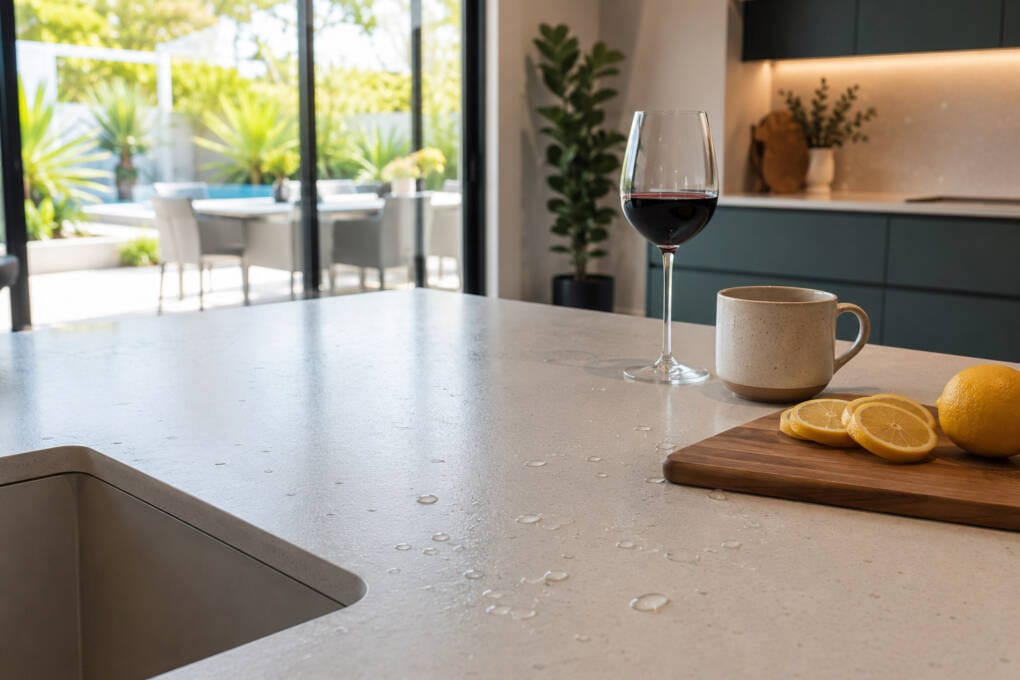
The surface is non-porous, which means no sealing required, ever. It resists staining from coffee, wine, oil, and citrus juice. It’s scratch-resistant and impact-resistant under normal kitchen use. It’s UV-stable, and because the current formulation uses significantly less resin than older engineered stone, it handles Perth’s UV intensity and thermal cycling better than its predecessor. Use trivets for hot pots — it’s heat-resistant, not heatproof, and that’s true of most benchtop surfaces.
I had a couple come into the showroom last year who’d had a marble kitchen benchtop for about four years. They weren’t unhappy with how it looked, but they were exhausted — sealing it twice a year, watching every glass of red wine that got near it, dealing with etching from lemon juice. Once they saw what a non-porous benchtop surface offered in terms of day-to-day maintenance, the decision was pretty straightforward.
Granite is a decent competitor and worth acknowledging. It’s harder than most surfaces and performs well in the long term. The table below shows where each material lands across the dimensions that matter most for a busy kitchen benchtop.
| Silestone | Granite | Marble | |
| Porosity | Non-porous | Low porosity | Porous |
| Scratch resistance | High | Very high | Low–medium |
| Heat resistance | Medium (trivets recommended) | High | Medium |
| UV stability | High | High | Medium |
| Sealing required | No | Yes (periodic) | Yes (frequent) |
| Maintenance level | Low | Low–medium | High |
For most Perth households — busy families, hard bore water, kitchens that open to outdoor entertaining areas — a non-porous, low-maintenance surface is the practical choice. Granite comes close on performance, but the sealing requirement adds ongoing effort that adds up over ten or fifteen years.
Why Silestone Suits Perth Kitchens
There are a few reasons Silestone in Perth gets asked about more than most benchtop options — and they come down to how well the current formulation handles conditions that are specific to living here.
- Hard bore water. Perth’s bore water is high in minerals, and calcium build-up is a real issue for porous benchtop surfaces over time. Spotting, dulling, and surface degradation happen faster here than in most other Australian cities. A non-porous kitchen benchtop doesn’t absorb any of it — the minerals sit on the surface and wipe off rather than working their way in.
- I’ve had more than a few customers come to us after previously installing granite or marble benchtops, only to be frustrated that the surface deteriorated faster than they expected. In most cases, nobody told them about Perth’s hard water. They’d been sealing it regularly but still seeing spotting and dullness within a few years.
- UV intensity. Perth gets some of the highest UV exposure in Australia. Older resin-heavy engineered stone surfaces can yellow or discolour near north-facing windows over time. The current mineral-based formulation handles this considerably better.
- Indoor-outdoor flow. Perth kitchens often open directly to alfresco areas, which means the benchtop spends a lot of time in natural daylight. Matte and honed finishes read particularly well in this context — they don’t glare, and they suit the relaxed indoor-outdoor aesthetic most Perth homeowners are after.
- Thermal cycling. Perth summers regularly push past 40°C. The shift between an air-conditioned kitchen interior and the heat outside creates thermal stress that affects resin-heavy surfaces over time. The mineral-based composition of the current formulation is more resistant to that kind of cycling than that of older engineered stone products.
Choosing Your Benchtop Design
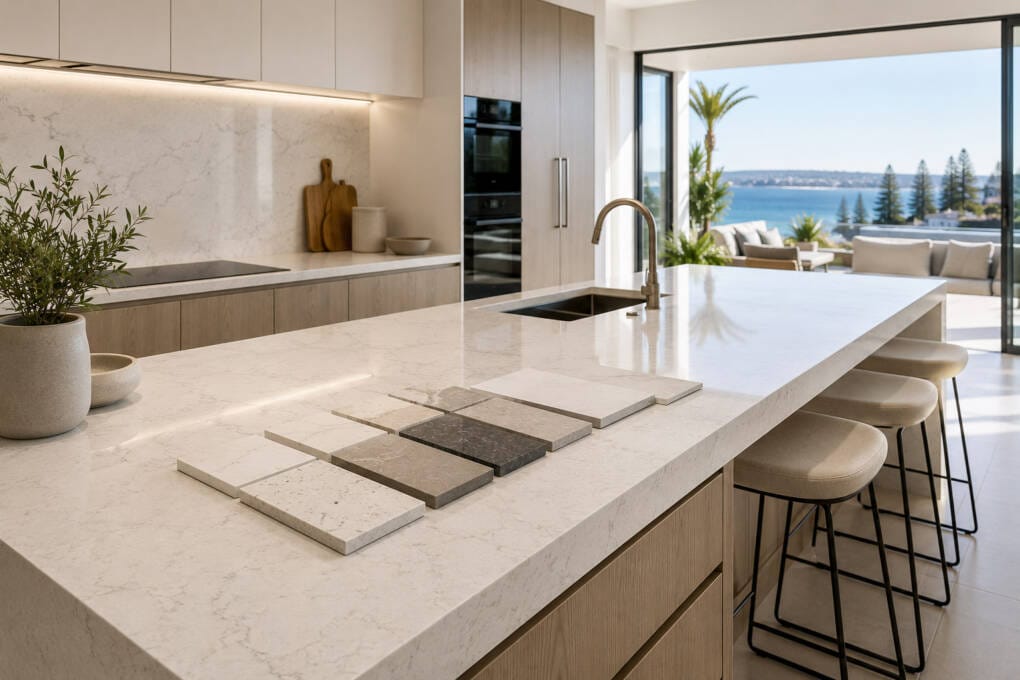
Silestone benchtop colours offer neutral, balanced hues — soft whites, warm beiges, layered greys, and subtle veining and limestone-inspired textures. The palette has been put together with longevity in mind rather than trend cycles, which suits Perth homeowners who want a kitchen that still feels current in ten years. Specific colour names change as the range updates, so rather than chasing a particular SKU, it’s worth coming into the showroom to see what’s currently available and how each option reads under natural light.
The two decisions that matter most before ordering are finish and thickness. Both affect how the benchtop looks and how it performs day-to-day, and both are worth thinking through before you commit. The right kitchen cabinets pairing can also shift which finish reads best — another reason the showroom comparison is worth doing in person.
Finish Options
Polished has a high sheen and reflects light well, but it shows fingerprints more readily and can create glare in north-facing Perth kitchens where natural light is strong for most of the day. Matte has a low sheen, hides everyday marks well, and pairs naturally with warm neutrals and timber cabinetry. Suede falls between the two — a tactile, slightly textured surface with good fingerprint resistance and a contemporary feel. For most Perth kitchens in 2026, matte or suede is the more practical and better-looking choice.
Thickness Options
The 12mm format is for splashbacks and vertical cladding only — it’s not suitable for horizontal benchtop use. The 20mm thickness is the standard kitchen benchtop specification and the most common choice for good reason: it balances durability, weight, and cost across most kitchen configurations. The 30mm slab suits statement island benchtops or waterfall ends where visual weight and presence matter more. Thicker slabs cost more and are heavier — if you’re considering 30mm, confirm your cabinetry can support the load before ordering.
Where Silestone Benchtops Can Be Used
Kitchen benchtops are the primary application. At Ross’s, Silestone and our other made-to-measure stone surfaces are supplied only as part of a complete kitchen purchased from our kitchen cabinet range. They aren’t available as standalone benchtop orders for an existing kitchen, bathroom vanity or laundry.
Beyond the standard benchtop format, it’s commonly specified as a full-height slab splashback running from the benchtop to the ceiling in the same material, with waterfall ends on island benchtops and on the island benchtops themselves, where a large unjoined slab makes the most of the format. Slabs are available up to 3,250 x 1,590mm, which covers most kitchen islands without needing a join.
If you’re planning a kitchen renovation and working through the full specification, our kitchen sinks are worth looking at alongside the benchtop decision — the two choices are closely connected.
Silestone Cost and How to Order with a Complete Kitchen
At Ross’s, Silestone and our other made-to-measure stone benchtops are available only as part of a complete kitchen purchased from our kitchen cabinet range. We don’t sell them as standalone replacements for existing cabinets. Your selected surface is measured and fabricated to suit the new cabinet layout, sink, cooktop and island configuration.
Silestone benchtop cost depends on the design line, thickness, total square metres, edge profile and number of cutouts. At Ross’s, the benchtop price forms part of your complete kitchen quote. As a broad guide, installed pricing for this type of surface in Perth typically runs from $400 to $1,200 per square metre, depending on the specification. Treat that as a starting reference only because your actual figure depends on the kitchen design and final measurements.
The ordering process starts with planning a complete kitchen with our team at Guildford. Once we have worked through your cabinet layout and overall kitchen design, you can compare the current Silestone samples and include your selected surface in the kitchen quote. Perth Metro delivery runs at a flat rate of $100. If you’re keeping your existing cabinets and replacing only the benchtop, consider our DIY benchtop range, including laminate and densified stone designs.
Caring for Your Benchtop
No sealing required — ever. A wipe with a damp cloth and mild detergent is all the benchtop needs. Avoid abrasive cleaners and scouring pads, and use trivets for hot pots and pans. The surface is heat-resistant but not heatproof, and that’s worth keeping in mind.
The one Perth-specific maintenance note worth knowing: bore water can leave mineral deposits on the surface over time. It won’t damage it, but calcium build-up can dull the finish if it’s left to accumulate. A diluted white vinegar solution — not neat vinegar — removes it without any risk to the surface. For periodic deeper cleaning, a stone-specific cleaner is a better choice than a general household product.
Beyond that, benchtop maintenance here is genuinely low effort. For a busy Perth household, that’s one of the more practical things it has going for it.
Frequently Asked Questions
Is Silestone still available in Australia after the engineered stone ban?
Silestone is still available in Australia. The current range has been reformulated to contain less than 1% crystalline silica, placing it outside the engineered stone ban definition. The ban covers products containing 1% or more crystalline silica combined with resins — the old quartz-based product fell within that, but the current formulation does not.
How much does a Silestone benchtop cost in Perth?
Silestone benchtop cost in Perth depends on the design line, thickness, total square metres, edge profile and number of cutouts. Ross’s quotes Silestone only as part of a complete kitchen purchased from our kitchen cabinet range. As a broad guide, installed pricing for this type of surface typically ranges from $400 to $1,200 per square metre, but the accurate figure forms part of your kitchen quote and depends on the final design and measurements.
Does a Silestone benchtop need to be sealed?
A Silestone benchtop does not need to be sealed — ever. The surface is non-porous, meaning it doesn’t absorb liquids, bacteria, or staining agents. This is a practical advantage over granite and marble, both of which require regular sealing to maintain performance. In Perth especially, where hard bore water accelerates mineral build-up in porous surfaces, a non-porous benchtop makes a real difference to long-term maintenance.
What thickness should I choose for a Silestone kitchen benchtop?
For most applications, 20mm is the right thickness for a Silestone kitchen benchtop because it balances durability, weight and cost across standard configurations. A 30mm slab suits island benchtops or waterfall ends where visual presence matters more. The 12mm format is designed for splashbacks and vertical cladding only and isn’t suitable for horizontal benchtop use. If you’re planning a complete Ross’s kitchen and are unsure, bring your floor plan and we can advise from there.
Can I buy a Silestone benchtop from Ross’s without purchasing kitchen cabinets?
Ross’s supplies Silestone and its other made-to-measure stone benchtops only as part of a complete kitchen purchased from our kitchen cabinet range. We don’t sell these surfaces as standalone replacements for existing cabinetry. If you’re keeping your cabinets and replacing only the benchtop, consider our DIY laminate benchtops and densified stone benchtops instead.
Can I see Silestone samples before ordering in Perth?
Seeing Silestone samples in Perth is strongly recommended when you’re planning a complete Ross’s kitchen because benchtop colours and finishes look very different under natural light than on a screen. Our showroom at 57 James Street, Guildford, carries current range samples, and you’re welcome to bring a cabinetry door sample to compare tones in person.
Conclusion
Silestone benchtops in Perth are still available in a reformulated, zero crystalline silica surface made from recycled minerals. The range is non-porous, backed by a 25-year warranty and well suited to Perth’s hard bore water, strong UV exposure and hot summers. It requires no sealing and very little ongoing maintenance. At Ross’s, every made-to-measure Silestone benchtop is supplied as part of a complete kitchen purchased from our kitchen cabinet range.
If you’re planning a complete new kitchen, visit our showroom at 57 James Street, Guildford, to explore our kitchen cabinet range and compare the current Silestone samples. If you’re keeping your existing cabinets and replacing only the benchtop, browse our DIY benchtop range, including laminate benchtops and densified stone options. Either way, we’re happy to help you find the right fit for your Perth kitchen renovation.
