
Wood Look Tiles: The Complete Perth Buyer’s Guide
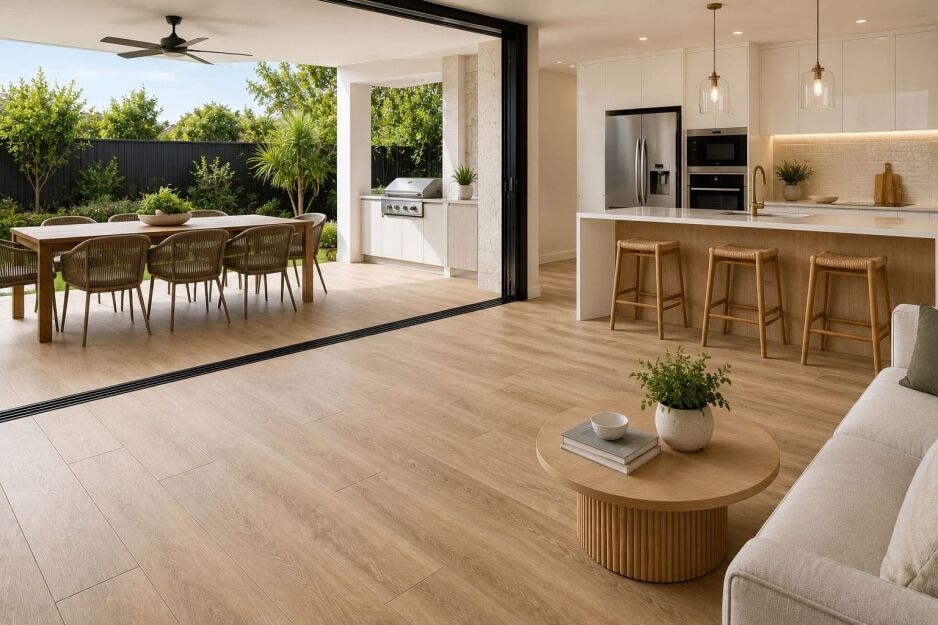
Most weeks at Ross’s, I watch the same thing play out. Someone walks in asking about flooring, convinced they want the timber look but unsure whether to go tiles or hybrid flooring. Once they understand what digital printing technology has done to timber-look tiles in the last five years, the decision usually gets a lot clearer.
Wood look tiles are ceramic or porcelain tiles manufactured using advanced digital printing to replicate the grain, colour, and texture of natural timber. They are available in a wide range of sizes, finishes, and tones and are suitable for floors and walls in bathrooms, kitchens, living areas, and covered outdoor entertaining spaces.
That’s the definition. What it doesn’t capture is why wood look tiles in Perth homes keep winning out over real timber. Our outdoor lifestyle, our hard-wearing family homes, the practical limits of real timber in wet areas and on alfresco slabs — all of it pushes the decision toward tile, once you know what today’s product actually looks like.
This guide covers the real pros and cons, how wood look tiles compare against actual floorboards and hybrid flooring, what they cost, where they work best in Perth homes, and what to check before you buy. If you already know you want to browse the range, our timber-look tiles collection is a good place to start.
What Are Wood Look Tiles?

Wood look tiles are made from a ceramic or porcelain body, pressed and fired at high temperature, with the timber grain, colour, and texture applied through digital printing technology. What’s changed over the last decade is the realism that printing can achieve. Entry-level tiles use as few as six different face prints, which means the repeat pattern becomes visible across a large floor. Quality timber look floor tiles use 30 to 60-plus unique face prints, which is what makes a tiled floor genuinely difficult to distinguish from the real thing at a glance. Format range has expanded alongside print quality, from 200x200mm feature tiles through to 1200x200mm long-format plank tiles, with the larger formats doing the most convincing job of replicating actual floorboards.
Porcelain vs Ceramic: Which Substrate Matters?
The substrate choice matters more than most buyers realise. Porcelain vs ceramic wood look tiles are not interchangeable for every application. Porcelain is fired at a higher temperature, which produces a denser tile with a lower water absorption rate and a higher PEI rating, typically 3 to 5 for floor use. That density makes it the right choice for wet areas, outdoor spaces, and high-traffic floors. Ceramic is lighter, easier to cut, and lower in cost, but its higher porosity makes it unsuitable outdoors and less reliable in bathrooms and laundries where moisture exposure is ongoing. For Perth bathrooms and alfresco areas, porcelain is the default recommendation. Our porcelain tiles range covers the full selection.
The Real Benefits of Wood Look Tiles
The renovation projects coming through Ross’s showroom have shifted noticeably over the last decade. Real timber barely gets a look-in anymore, and the reasons are practical rather than aesthetic. Perth’s lifestyle puts flooring under pressure that most other Australian cities don’t, and wood look tiles handle that pressure better than almost anything else. Indoor-outdoor flow, wet summers, hard bore water, alfresco entertaining areas that blur the line between inside and outside — durability and moisture resistance matter more here than in most places, and these tiles deliver on both.
Wood Look Tiles Last 20 to 30 Years Without Structural Degradation
Timber look floor tiles are scratch-resistant, won’t dent under furniture, and handle the everyday punishment of kids, pets, and high foot traffic without showing it. Porcelain options routinely last 20 to 30 years with no structural degradation. Real timber scratches under normal use and dents permanently under point load — a dropped cast iron pan leaves a mark that no amount of sanding fully removes.
Virtually Waterproof — No Warping, Swelling, or Rotting
These tiles are virtually waterproof. No swelling, no warping, no rotting from spills or sustained humidity. This is what makes them the right call for bathrooms, laundries, and Perth’s covered alfresco areas, where real timber is genuinely unsuitable and hybrid flooring hits its limits fast. Wood effect tiles withstand moisture exposure that would buckle an engineered floorboard within a season.
No Sanding, Sealing, or Specialist Products Required
Sweep and mop — that’s the full maintenance routine. No sanding, sealing, oiling, or polishing cycles. Perth bore water leaves mineral deposits on some surfaces, but timber-look tiles clean off easily with a standard mop and nothing specialist in the bucket.
Works on Floors, Walls, and Outdoor Spaces
Timber-look tiles work on floors and walls, indoors and in covered outdoor areas. Real timber cannot go on walls or survive in wet areas. A timber-look tile can run continuously from a kitchen floor through to the bathroom without a material change, which is something no timber product can do.
Lower Lifetime Cost Than Real Hardwood
The long-term cost of timber-look tiles compares well against real hardwood once maintenance is factored in. Indicative supply pricing starts from around $65/m2 for quality options in our range (confirm current pricing before publishing — this figure is indicative). Quality hardwood timber flooring runs $50 to $100-plus per square metre for supply only, before you add the sanding, sealing, and periodic refinishing costs that come with it over 20 or 30 years.
No Trees Felled — Manufactured from Natural Clay and Minerals
Timber-look tiles are manufactured from natural clay and minerals — no trees felled, no old-growth timber demand. A product life of 20-plus years means fewer replacements and less material going to landfill. For Perth renovators considering the environmental footprint of their material choices, Forest and Wood Products Australia puts the sustainable-sourcing picture in context — and ceramic and porcelain tiles sit well within it.
Last year, a family came in planning a full renovation that included an outdoor kitchen and a large covered alfresco. They wanted the timber look to run from the kitchen floor straight through to the entertaining area without a break in material or pattern. Outdoor-rated porcelain timber-look tiles made that possible. Real timber and hybrid flooring both stop at the door — neither can cross that threshold into an outdoor-exposed space. The family left with a continuous floor that reads as one cohesive space from inside to out, which is exactly what Perth’s indoor-outdoor culture calls for.
The Honest Drawbacks of Wood Look Tiles
Wood look tiles are not the right choice for every space or every household. Most articles on this topic stop at the benefits and leave you to discover the limitations after you’ve already committed. That’s not how I’d want to be sold something, so here’s the honest version.
Cold and Hard Underfoot
Tile is denser than timber and will feel cooler underfoot, particularly first thing in the morning or in rooms that don’t get direct sun through the day. In Perth’s climate, that’s actually an advantage through summer — ground-floor tiles stay cool through a 40-degree day in ways that carpet, vinyl, or hybrid flooring simply cannot match. The trade-off shows up in bedrooms and living areas where you spend long periods standing or walking barefoot, and where the hardness becomes noticeable over time. The practical solutions are straightforward: area rugs in high-use zones take the edge off both the hardness and the temperature, and underfloor heating installed beneath the tile gives you year-round comfort without compromising the look.
Professional Installation Is Essential — and Adds to Your Cost
Large-format plank tiles at 1200x200mm require a level, stable subfloor, precise cutting, thorough back-buttering, and real skill in executing laying patterns without lippage. Subfloor preparation is non-negotiable. Perth’s reactive clay soils expand and contract with seasonal moisture changes more than most Australian regions, and that movement transfers directly into grout cracking if the subfloor hasn’t been properly assessed and prepared before a tile is laid. Installation by a licensed tiler is the standard recommendation under AS 3958.1, the Australian standard for ceramic tile installation. We are supply-only, so we provide the tiles and you arrange your tiler. Budget approximately $50 to $80 per square metre for professional installation across Perth Metro, though verify current rates before committing — that’s an indicative range.
Grout Lines Can Break the Timber Illusion
Real timber is a continuous surface. Tiled floors are not, and grout joints are the thing that breaks the timber illusion fastest when they’re handled poorly. Wood look tile grout colour is where most installations go wrong — contrast grout, wide joints, or a grout tone that clashes with the tile body makes the floor read immediately as tile rather than timber. The fix is twofold. Rectified tiles with wood look designs are machine-cut to precise dimensions, allowing grout joints of 2 to 3mm rather than the 5mm or more that non-rectified tiles require. Pair rectified edges with a blending grout colour matched closely to the mid-tone of the tile body, and the joint almost disappears. Our guide on how to choose grout colour walks through the selection process in detail — it’s worth reading before you finalise your tile choice.
Poor Subfloors Can Cause Tiles to Crack
Tile cracks when the substrate beneath it moves, and Perth’s reactive clay soils give that substrate more reason to move than most. Homes built on unimproved clay need a proper subfloor assessment before any tiling begins — this is not a step to skip in the interest of getting started faster. It’s worth noting that porcelain is more resilient than ceramic when minor subfloor movement does occur, which is another reason porcelain is the default recommendation for Perth floor applications. If a tile does crack despite best practice, the repair is more contained than most people expect. Individual tiles can be replaced without pulling up the entire floor, provided you’ve kept tiles from the original batch. Ordering 10 to 15 per cent extra from the same batch and storing them is standard advice, and it’s advice I give to every customer before they finalise their order.
Wood Look Tiles vs Real Timber Floorboards
The comparison I get asked to make most often is: timber look tiles or real timber floorboards? After years of watching both perform in Perth homes, here’s my honest breakdown.
Comparison Table — Wood Look Tiles vs Real Timber Floorboards
| Factor | Wood Look Tiles | Real Timber Floorboards |
| Supply cost (indicative) | From ~$65/m2 | $50–$100+/m2 (hardwood) |
| Wet areas (bathrooms, laundries) | Yes — fully suitable | No — warps, swells, voids warranty |
| Outdoor / alfresco | Yes — outdoor-rated porcelain | No — UV, moisture, termite exposure |
| Maintenance | Sweep and mop only | Sand, seal, oil, polish every few years |
| Termite risk | None (ceramic/porcelain) | High in Perth — ongoing concern |
| Underfloor heating | Compatible | Limited compatibility |
| Subfloor movement (Perth clay) | Grout may crack — use rectified tiles | Boards expand/contract, gap formation |
| Feel underfoot | Hard and cool (see drawbacks) | Warmer, softer |
| Lifetime (installed correctly) | 20–30+ years | 20–30 years with maintenance |
| Resale value contribution | Moderate | Moderate to high (authentic timber premium) |
Timber Isn’t Suitable for Bathrooms, Laundries, or Wet Areas
Real timber cannot go in bathrooms or laundries and should not be used within 600mm of water sources. Wood look tiles vs floorboards is not a close comparison on this point — tiles carry no moisture restriction at all. For Perth homeowners wanting a single flooring material across an open-plan kitchen, laundry, and bathroom zone, timber look floor tiles are the only option that works across all three spaces without a material change or a warranty concern.
Tiles Are Impervious to Perth’s Termite Risk
Perth has one of the highest rates of subterranean termite activity in Australia. Real timber flooring in contact with or near a concrete slab is a genuine long-term risk that most interstate tile guides never raise. Ceramic and porcelain tiles are completely impervious to termite attack. According to the Timber Development Association, subterranean termites cause more damage to Australian homes than fire, floods, and storms combined — context worth having before you choose a timber floor in a Perth home.
Timber Stops at the Door — Tiles Don’t
Perth’s indoor-outdoor culture is the clearest argument for wood look tiles over real timber. An outdoor-rated porcelain tile with R-rated slip resistance and UV stability can run from the kitchen floor through to the alfresco slab without breaking the visual line. Real timber stops at the door. It cannot handle the UV exposure, moisture variation, or termite risk of an outdoor Perth environment. Timber-look tiles cross that threshold without compromise.
Tiles Have a Lower Carbon Footprint Than Hardwood
Timber-look tiles are manufactured from natural clay and minerals — no trees felled, no old-growth timber demand. A well-made porcelain tile carries a significantly lower embodied carbon footprint per square metre than harvested hardwood over a 30-year period. For Perth renovators thinking carefully about material choices, that’s a meaningful difference worth factoring into the decision alongside cost and performance.
Wood Look Tiles vs Hybrid Flooring and Vinyl
The other comparison that comes up constantly is tiles vs hybrid flooring. Both deliver a timber-look finish, both handle moisture better than real timber, and both are long-lasting when installed correctly. The difference is in where you can use them and how they feel to live with.
Wood Look Tiles vs Hybrid Flooring
Porcelain tiles win out in durability, scratch resistance, and outdoor applications. Hybrid flooring wins on comfort underfoot — it’s warmer, softer, and quieter underfoot than tile, and easier for a competent DIYer to install. The line between them is the door to the outside. Our hybrid flooring range is suitable for bathrooms and laundries, but it is not suitable for outdoor use. For Perth outdoor living areas, pool surrounds, or any space with direct weather exposure, outdoor-rated porcelain is the only viable choice. For bedrooms and living areas where comfort is the priority and outdoor flow isn’t a factor, hybrid flooring is a genuine competitor worth considering.
Wood Look Tiles vs Luxury Vinyl Planks
Luxury vinyl planks are the softest and warmest option across all three categories, but they are also the least durable. Lifespan depends heavily on wear layer thickness, and in high-traffic Perth homes LVP typically lasts 10 to 15 years against 20 to 30 years for porcelain tiles. The wood look tile cost comparison shifts over time — what looks like a cheaper option at purchase can cost more over two replacement cycles than a porcelain tile floor installed once. LVP is not outdoor-rated and has lower slip-resistance ratings than porcelain, which rules it out for wet zones and outdoor entertaining applications. If budget is the primary driver and the application is a low-traffic bedroom, LVP is a valid choice. If the space involves water, heavy foot traffic, or outdoor flow, porcelain wins clearly on every measure that matters.
For a full breakdown of supply and installation costs across all three options, our price comparison: timber-look tiles vs alternatives article examines the numbers.
Where Wood Look Tiles Work Best in Perth Homes
One of the things I see repeatedly at Ross’s is customers limiting where they plan to use timber-look tiles, even though wood look tiles in Perth homes are far more versatile than most buyers assume. These are the spaces where they genuinely earn their place.
Bathrooms and Ensuites
Wood look tiles bathroom applications are where this material pulls furthest ahead of the alternatives. Real timber and engineered flooring both carry moisture restrictions that make them unsuitable for bathrooms and ensuites. Timber-look tiles carry none of those concerns. Choose porcelain for the floor where moisture exposure and foot traffic are both ongoing, and either porcelain or ceramic for walls where the demands are lower.
Kitchens and Open-Plan Living
Timber look floor tiles handle dropped pans, spills, and heavy foot traffic without scratching or warping — which is exactly what a working Perth kitchen needs. In open-plan homes, running the same tile across the kitchen and living area creates visual flow without grout colour breaks or material transitions. Wide-format planks at 1200x200mm suit larger open-plan spaces particularly well, where the longer format reads as a continuous floor rather than a tiled surface.
Laundries
Laundries are a genuine wet area that most flooring guides treat as an afterthought. Timber-look tiles are more practical here than any timber or vinyl alternative. Ceramic wood look tiles are sufficient for most laundry wall applications, while porcelain is the stronger choice for the floor where water exposure from machine overflow or drainage is a real possibility.
Covered Alfresco and Outdoor Entertaining
This is the Perth-specific application that separates timber-look tiles from almost every other flooring type. Outdoor-rated porcelain tiles with an R11 or higher slip resistance rating can extend from the kitchen floor through a stacking or sliding door threshold and onto the alfresco slab, maintaining a continuous visual line across the indoor-outdoor flow. No other timber-look flooring material crosses that threshold. Browse our outdoor tiles range for options rated for Perth’s UV intensity and alfresco entertaining conditions. The key checks for any outdoor tile include UV stability, slip-resistance rating, and outdoor-rated porcelain construction. Frost resistance is generally not critical in WA, but the other three are non-negotiable.
Poolside
Pool surrounds in Perth are subjected to sustained UV exposure, constant water contact, and the pressure of bare feet on hot days. Outdoor-rated timber-look porcelain tiles handle all three. Perth pool area surface temperatures in summer exceed 50 degrees Celsius on some materials — porcelain absorbs and releases heat less dramatically than concrete pavers, which makes it a more comfortable barefoot surface through the middle of the day. Real timber cannot provide the slip resistance, UV stability, or moisture tolerance a pool surround demands.
Feature Walls
Timber-look tiles are not limited to floors. A timber-look feature wall in a bathroom or living area brings the warmth and grain of natural timber into the space without the sealing, oiling, or moisture management that real timber panelling requires. It’s an application most customers haven’t considered until they see it in the showroom — and one that consistently changes the brief.
How to Choose the Right Wood Look Tile
There are a few things I always ask customers to consider before they commit to a specific tile. Getting these decisions right up front avoids problems during installation and afterwards — and, in my experience, the customers who take the time to work through them leave with a result they’re genuinely happy with.
Porcelain or Ceramic?
The substrate decision should follow the application. Wet areas, outdoor spaces, and high-traffic floors need porcelain — denser, lower water absorption, higher PEI rating, and built to handle sustained punishment. Ceramic is a perfectly sound choice for low-traffic residential walls and feature applications where moisture and foot traffic are not factors, and it typically costs less. If you’re unsure which substrate your space calls for, the porcelain vs ceramic distinction covered earlier in this guide is the place to start.
Tile Size and Format
Larger plank formats at 1200x200mm create the most convincing timber effect and suit open-plan spaces where the long format reads as a continuous floor. Smaller formats — 200x400mm and 300x600mm — are better suited to compact rooms where a large plank will visually dominate the space and make it feel smaller. Laying pattern matters as much as size. Wood look tile herringbone and chevron patterns work best with tiles no wider than 200mm — wider tiles make the geometry awkward. A staggered brick-bond at a one-third or one-half offset is the most realistic timber floor simulation. A straight stack reads as wall tile, not floor, and breaks the timber illusion immediately.
Rectified Edges and Grout Width
Rectified tiles wood look options are machine-cut to precise tolerances, which allows grout joints of 2 to 3mm. Non-rectified tiles require joints of 5mm or more, and at that width, the grout becomes a visible grid across the floor rather than a barely-there line between planks. For the most realistic timber result, rectified edges paired with a closely matched grout colour are the two non-negotiable choices. It’s the single most consistent piece of advice I give customers standing in the showroom comparing options — and the one most often overlooked until it’s too late to change.
Tone and Finish
Warm tones — oak, honey, walnut, aged wood — suit Perth’s warm neutrals palette and the indoor-outdoor colour flow that defines most local renovations. Cool grey-wash tiles suit contemporary Hamptons and Coastal interiors where a cooler, more restrained palette is deliberate. Matte vs gloss finish is just as much a practical decision as an aesthetic decision: matte reads as more authentic timber and hides footprints and minor scratches, while gloss is easier to clean but shows every mark in strong light. Structured and textured finishes add grip, which matters for outdoor and bathroom floor applications where slip resistance is a priority. One consistent observation I see: Perth’s natural light reads warm finishes as warmer and cool finishes as considerably colder than they appear in product photography. Seeing tiles in person before committing is strongly recommended.
When you’re ready to move from research to selection, our floor tile buying guide covers the practical next steps.
Frequently Asked Questions
The questions below are the ones I get asked most often by Perth homeowners weighing up timber-look tiles. If your question isn’t here, come and see us in Guildford — we’re happy to talk through any application before you commit.
Conclusion
Wood look tiles are the practical choice when you need the timber look to work across a bathroom, laundry, alfresco, or a busy family home. If you want the feel and resale premium of genuine hardwood in a low-moisture, low-traffic living area, real timber is still worth considering. Most Perth homes have rooms in both categories, and the right answer is rarely the same material throughout.
In fifty years of helping Perth homeowners find the right renovation materials, the questions about timber-look tiles have shifted. It used to be “do they look realistic?” Now it’s “which one suits my alfresco?” That change tells you more about how far the category has come than any product specification could.
If you’re ready to see the range in person, come into our Guildford showroom and compare finishes under natural Perth light. Or browse our timber-look tiles range online and shortlist before you visit.
