
Pull Out Pantry vs Pantry Cupboard: Which Is Best for Your Kitchen?
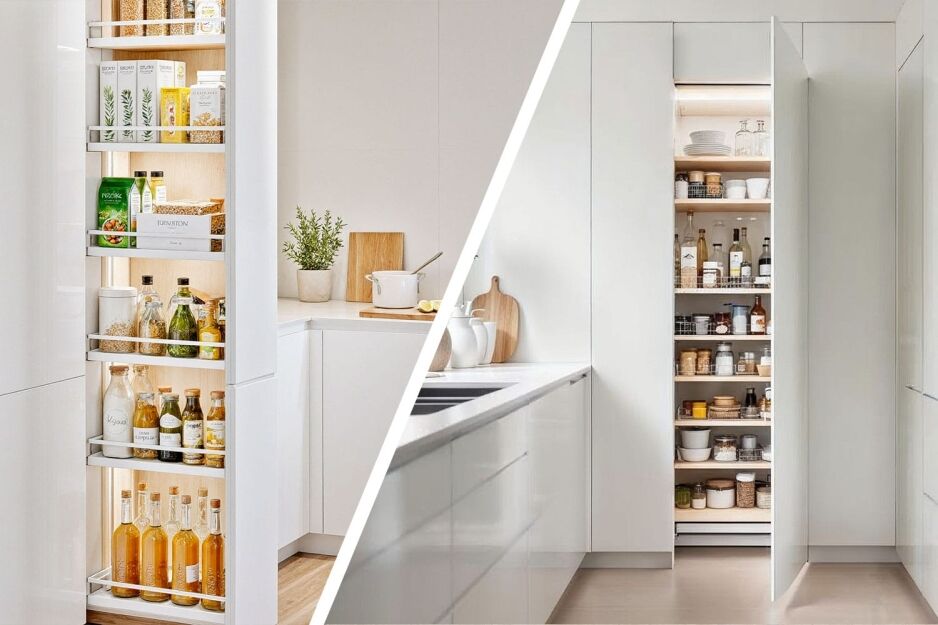
A pull out pantry can make kitchen storage easier to see and reach, but that convenience comes with a trade-off. Compared with a standard pantry cupboard, the pull-out hardware takes up some internal space, so you usually gain access rather than extra capacity.
I’ve had the same problem in my own kitchens. A deep fixed-shelf pantry can look like it holds plenty, but once tins and packets sit two or three rows deep, the back becomes hard to use. That’s why I separate storage capacity from easy access when I compare pantry layouts.
The real choice comes down to access, usable storage, cost and the space you have. If you already know a standard pantry is the right fit, you can browse our pantry cupboards online. If you’re still comparing the two, the differences below will help you choose the right setup for your kitchen.
What Is a Pull-Out Pantry and a Standard Pantry Cupboard?
Both options give you full-height kitchen storage, but they work differently. The pull-out version brings the contents forward, while a standard pantry cupboard keeps everything on fixed or adjustable shelves inside the cabinet. That changes both how much you can store and how easily you can reach it.
Pull-Out Pantries

A pull-out pantry uses shelves or wire baskets mounted on runners, so the storage section slides forward when you open it. You’ll also hear pantry pullouts described as a pull out larder, slide out pantry or roll out pantry.
The main benefit is visibility. Instead of reaching past the first row of tins and packets, you bring the stored items forward where they are easier to see and reach. That can be useful if easy access matters more than squeezing every last bit of storage from the cabinet.
The trade-off is that the runners, frame and basket clearances take up some of the internal space.
Standard Pantry Cupboards

A standard pantry cupboard uses fixed or adjustable shelves behind a conventional door. There is no pull-out frame taking up internal space, so more of the cabinet can be used for food, baskets and larger packets.
That extra usable volume makes a standard pantry a good choice for bulk storage. The downside is access. Deep shelves can hide items at the back once the cupboard starts filling up.
A pull-out pantry improves access to what you store. A standard pantry cupboard gives you more usable storage volume inside the same external cabinet footprint.
Pull Out Pantry vs Pantry Cupboard: Side-by-Side Comparison
A pull out pantry gives you better visibility and easier access, while a standard pantry cupboard gives you more usable storage at the same cabinet width and usually costs less. Neither is automatically better. The right choice comes down to whether easy access or maximum storage capacity matters more in your kitchen.
| Feature | Pull-Out Pantry | Standard Pantry Cupboard |
| Access | The storage system comes forward, making items easier to see and reach | Items at the back of deep shelves can take more reaching |
| Usable storage capacity | Lower at the same cabinet width because runners, the frame and basket clearances take up space | Higher because more of the cabinet interior can be used for shelves and stored items |
| Organisation | Easier to see food categories and check what you already have | Depends more on shelf spacing, baskets and how you organise the cupboard |
| Best use | Everyday items where easy access is the priority | Bulk food, larger packets and households wanting maximum capacity |
| Cost | Generally higher because of the pull-out mechanism and hardware | Generally lower because the internal setup is simpler |
| Moving parts | Includes runners and pull-out hardware | Fewer moving components |
| Ross’s full-height size | 450 mm W × 2200 mm H × 580 mm D | 450 mm W × 2200 mm H × 580 mm D |
The pull out pantry cupboard can feel more efficient because you can see and reach what you have, but that does not mean it holds more. If raw storage volume is the priority, fixed shelves make better use of the available cabinet space.
Pull-Out Pantry Pros and Cons
A pull-out pantry works best when easy access matters more than maximum storage volume. The mechanism makes everyday items easier to see, but it also takes up room inside the cabinet.
Pull-Out Pantry Advantages
The biggest advantage is access. Pull out pantry drawers and pull out pantry shelves bring food forward, so jars, tins and packets are easier to see and reach.
That visibility makes everyday staples easier to organise and check. It can be especially useful in a narrow cabinet run, provided the pull-out unit suits the available layout.
Pull-Out Pantry Disadvantages
The main compromise is capacity. Runners, the frame and basket clearances take up room, so a pull-out system generally holds less than a standard pantry cupboard with the same external dimensions.
It also costs more because there is more hardware and more moving parts. The surrounding layout also needs enough clearance for the unit to extend.
I’ve seen customers assume the pull-out holds more because everything is visible. Once you look at the baskets, runners and clearances, it’s the opposite. The pull-out earns its keep through access, while fixed shelves win on raw storage space.
Standard Pantry Cupboard Pros and Cons
A standard pantry cupboard uses more of its internal space for storage because there is no pull-out frame or runner system. It suits households that care more about capacity and flexibility than bringing every item forward.
Standard Pantry Cupboard Advantages
Fixed or adjustable shelves help with bulk buys, larger packets, baskets, tall bottles and small appliances. Adjustable shelf spacing also gives you more flexibility as your storage changes.
The simpler setup also means fewer moving parts and generally lower cost. If you buy in bulk or have a larger household, I would usually favour this format for the extra usable room.
Standard Pantry Cupboard Disadvantages
The downside is access. Deep shelves can hide smaller items behind larger ones, and it is easy to forget what is sitting at the back once the cupboard fills up.
Baskets, sensible shelf spacing and grouping similar items together can help, but the cupboard will not bring everything forward for you.
Which Pantry Type Suits Your Kitchen?
The best setup depends on what frustrates you most about your current pantry and how you shop. Choose around the problem you actually need to solve.
Choose a Pull-Out Pantry If Access Matters Most
Choose a pull-out pantry if you want everyday food easy to see and reach. A narrow pull out pantry can suit a compact cabinet run, and pantry pullouts are useful for jars, tins, packets and bottles you use regularly.
Choose a Standard Pantry Cupboard If Capacity Matters Most
Choose a standard pantry cupboard if you buy in bulk, store larger packets or want more flexibility from fixed or adjustable shelves. I’d also favour this format if keeping costs down matters more than bringing everything forward.
These cabinets are also useful outside the kitchen. We sell them as Pantry/Linen Cupboards, and customers use them in laundries for linen, towels, cleaning supplies and general household storage.
If you’re planning a separate prep and storage zone rather than a single cabinet, my butler’s pantry design guide covers layout, size and cabinet planning.
If You Still Need Help Choosing Size or Configuration
If you’ve decided a standard pantry cupboard suits you but still need to choose the right size or configuration, my guide to choosing a pantry cupboard covers those decisions in more detail. If the pantry is one part of a wider cabinet plan, my kitchen cabinet buying guide covers the broader choices.
Ross’s Pantry Sizes: What to Allow For
Our current full-height pull-out pantry and standard pantry cupboard are both 450 mm wide × 2200 mm high × 580 mm deep. That gives you a like-for-like cabinet footprint, so the storage trade-off is easy to compare.
The standard pantry uses more of that internal space for shelves. The pull-out version uses some of the same cabinet space for runners, baskets and the frame, so you gain easier access but lose some usable storage capacity.
Whichever option you choose, check the available cabinet width, height and depth before ordering. For the pull-out model, also make sure the surrounding kitchen layout gives the unit enough room to extend without hitting an island, wall or nearby cabinetry.
So, Which Pantry Should You Choose?
Choose a pull out pantry if easy access and visibility matter more than maximum storage capacity. Choose a standard pantry cupboard if you want to use more of the cabinet interior for shelves and stored items. Both use the same 450 mm full-height cabinet footprint, so the real difference is what happens inside.
I’d base the decision on the problem you are trying to fix. If you are tired of losing items at the back of deep shelves, the pull-out can make daily use easier. If you regularly run out of pantry space or buy in bulk, I’d stick with the standard cupboard.
If you’re ready to compare the actual cabinet options, browse our pantry cupboards online or visit our Guildford showroom to see both options in person.
