
Outdoor Tiles vs Pavers — Which Is Better for Your Perth Home?
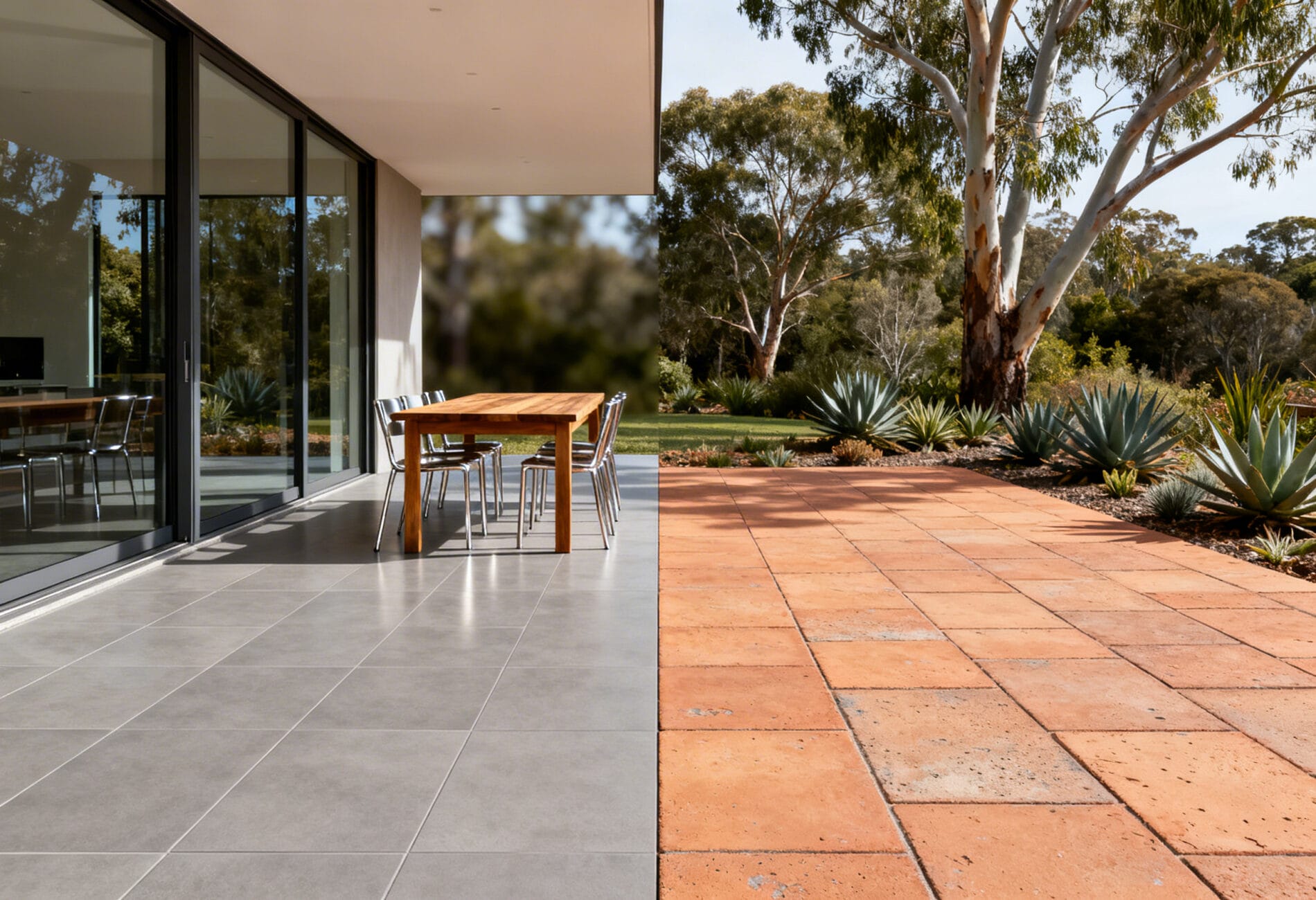
Whether to go with tiles or pavers is one of the first decisions Perth homeowners face when planning an alfresco, patio, or pool surround — and it’s rarely straightforward. Both are popular outdoor flooring choices, both look great when done well, and both have genuine advantages depending on your situation. The answer comes down to your existing setup, your budget, and what you want the space to do in the long term.
This guide covers the full outdoor tiles vs pavers comparison — design, cost, durability, maintenance, and Perth-specific considerations that most generic guides overlook. We’re not going to tell you tiles always win, because that’s not honest. What we will do is give you a clear picture of where each option genuinely performs better.
We stock outdoor tiles and see this question play out constantly across Perth outdoor renovation projects. Here’s the practical take on how to choose what’s right for your outdoor living space.
What’s the Difference Between Outdoor Tiles and Pavers? Quick Answer
The debate between outdoor tiles vs pavers comes down to thickness, installation method, and finish. Here’s how they compare:
| Outdoor Tiles | Pavers | |
| Thickness | 8–12mm | 20–30mm |
| Installation | Laid on concrete slab with adhesive and grout | Dry-laid on sand or gravel base |
| Design range | Wide — stone-look, timber-look, large format, geometric | Limited |
| Maintenance | Low — hose down, no resealing | Higher — resealing, relevelling, weed removal |
| UV performance | Stable — glaze doesn’t fade | Fades over time without resealing |
| Flexibility | Fixed — harder to repair individual tiles | Easy to lift and relay individual units |
| Best for | Alfresco, patio, pool surrounds | Driveways, unstable ground, traditional aesthetics |
Porcelain tiles in particular are dense, UV-stable, and low-maintenance. Pavers have a more natural, textured look and more structural flexibility if the ground shifts.
The key distinction for Perth homeowners is the slab. Most homes with an alfresco area already have a concrete slab in place, which considerably changes the tiles vs pavers cost equation. Where a slab exists, tiling is almost always the more cost-effective path.
Both are solid outdoor paving options. The right choice depends on your existing setup, your design goals, and how much ongoing maintenance you’re prepared to do.
Design and Aesthetics — Where Tiles Win Outright
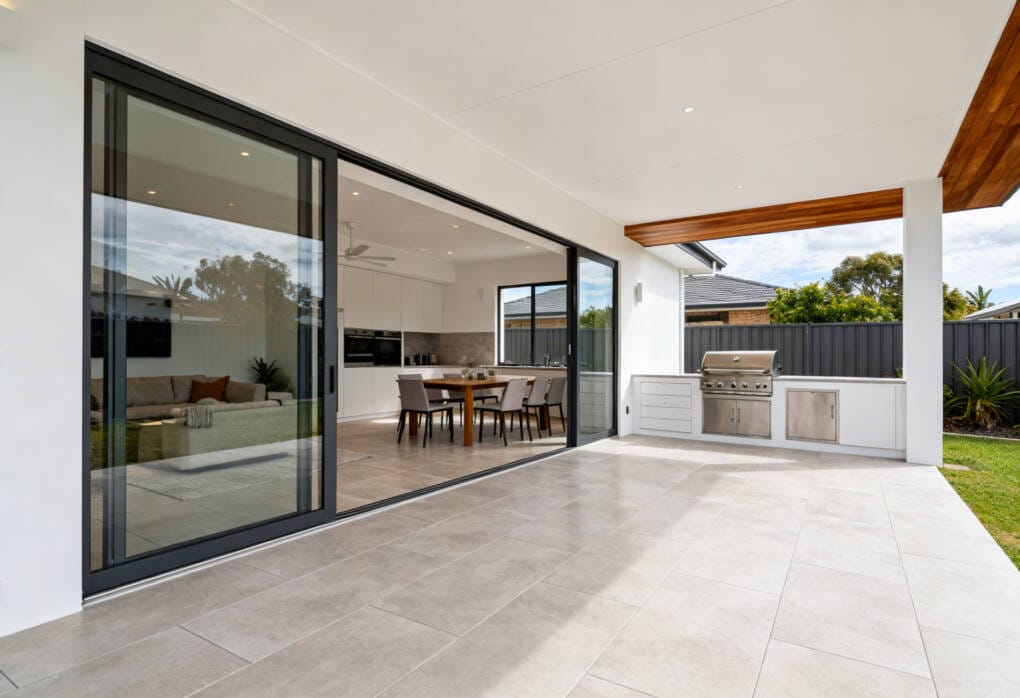
This is where the gap between tiles and pavers is most obvious. Outdoor tiles in Perth include stone-look, timber-look, concrete-look, large format, and geometric options — across hundreds of colours, finishes, and sizes. Pavers come in far fewer styles and sizes, and while natural stone pavers have genuine character, the design range simply isn’t comparable.
The bigger design advantage tiles have over pavers for Perth homes is indoor/outdoor flow. Continuing the same tile from your living area through to the alfresco is one of the most effective ways to make a home feel larger and more connected — and it’s a look that’s become central to contemporary outdoor design. You can’t replicate that with pavers. The material change at the door creates a visual break that works against the seamless transition most modern renovations aim for.
Large-format tiles amplify this further. Fewer grout lines across a large alfresco area creates a cleaner, more open feel that suits the scale of most outdoor living spaces well.
Pavers do have their place aesthetically. A cottage garden, a traditional limestone home, an informal entertaining area with a rustic feel — these settings suit the natural texture and earthiness of pavers genuinely well. That’s not a consolation point; it’s a real consideration. If your home’s style leans that way, pavers deserve consideration.
For most modern Perth homes, though, if the goal is a connected, contemporary outdoor space, choosing tiles is the stronger design choice — and the one most renovators land on when they see both options side by side.
Cost — Tiles or Pavers, Which Is Cheaper?
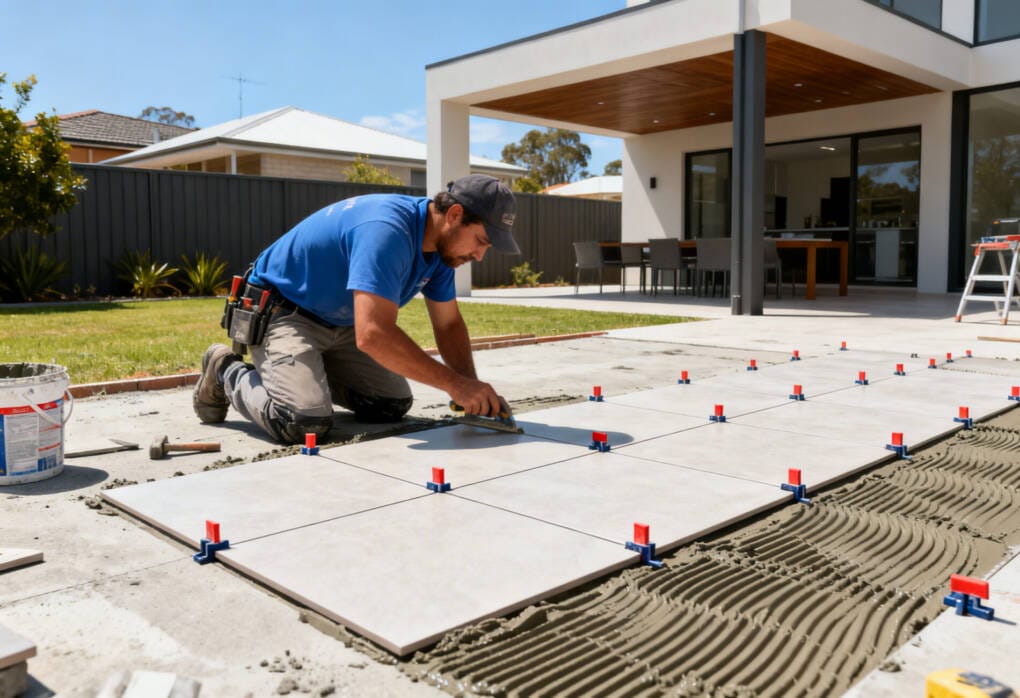
The honest answer to whether tiles or pavers are cheaper is: it depends on whether you already have a concrete slab.
Where a slab exists: Outdoor tiles in Australia generally cost $30–$60 per square metre. Standard masonry pavers cost around $60 per square metre at Bunnings. On that basis alone, the cost of outdoor tiles is lower, and installation on an existing slab is straightforward. For most alfresco renovation budgets, tiles are the more cost-effective choice when the groundwork is already done.
Where no slab exists: The cost comparison shifts. Pavers can be dry-laid on a compacted sand or gravel base, avoiding the cost of a concrete slab entirely. If you’re starting from bare ground, factor in the cost of pouring a slab before assuming tiles are the cheaper path — because on bare ground, they’re often not.
For most Perth homeowners, though, this isn’t the situation. The majority of homes here with an outdoor entertaining area have a concrete slab poured as part of the original build — and that tips the outdoor tiling cost comparison firmly toward tiles before you’ve even looked at a single product.
Ongoing costs are worth factoring in too. Pavers require resealing every 2–3 years to protect against UV fading and staining. If they shift — which happens in sandy soils — relevelling is an additional cost. Weed removal from joints is an ongoing maintenance task that tiles on a grouted slab simply don’t have. Over a ten-year period, the true cost comparison between tiles and pavers looks even more favourable for tiles.
Durability and Maintenance — The Honest Comparison
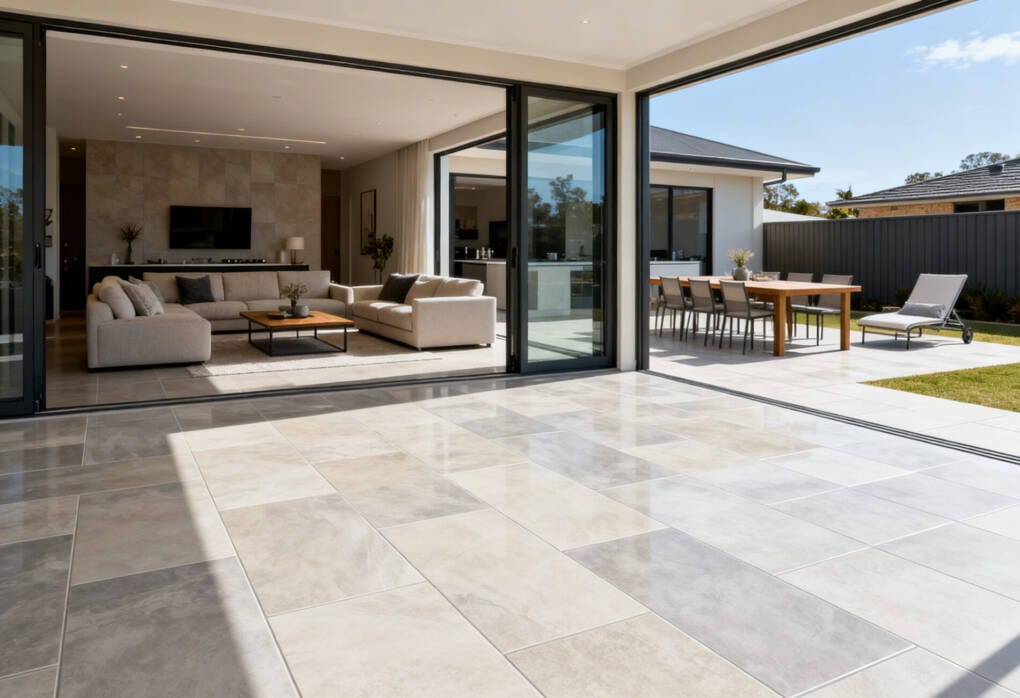
Durability is where the outdoor tiles vs pavers debate gets more nuanced. Here’s a straight assessment of both.
Where Tiles Have the Advantage
Porcelain tile durability comes from the manufacturing process — fired at high temperatures, the material becomes extremely dense and non-porous. That has practical consequences for outdoor use.
UV-resistant tiles don’t fade. Porcelain’s glaze locks in colour and finish, which matters in Perth where UV exposure is intense and sustained across long summers. Concrete pavers and natural stone pavers both fade over time without regular resealing — porcelain tiles don’t have that problem.
The non-porous surface also means no weed growth between joints, no water absorption, and no staining from pool chemicals or alfresco spills. Outdoor tile maintenance is straightforward — a hose-down and an occasional mop are genuinely all it takes under normal use. No specialist products, no annual resealing schedule.
Properly installed porcelain tiles carry an outdoor tile lifespan of 20–30 years with minimal intervention. That’s a long time to go without significant maintenance costs.
Where Pavers Have the Advantage
Paver maintenance involves more regular work, but pavers do offer one structural advantage tiles can’t match — flexibility.
Individual pavers can shift slightly with ground movement without cracking. In areas with reactive soils or uneven ground, that flexibility is genuinely useful. A shifted paver is easy to lift, relay, and reset without touching the surrounding surface. Individual damaged pavers can be replaced cleanly. With tiles on a slab, damage to one tile requires more invasive repair work.
The Tile Cracking Question
It’s worth addressing directly because it’s the concern most people raise when considering tiles vs pavers for outdoor use.
Tiles on a properly prepared concrete slab very rarely crack under normal residential conditions. The risk factors are poor slab preparation, significant ground movement, or heavy vehicle loads — none of which are typical for an alfresco area or patio. On a sound slab, cracking is not a realistic concern for most homeowners.
Where it does become relevant is driveways or areas with regular vehicle access. For those applications, standard tiles aren’t the right choice — but 20mm porcelain pavers on a concrete slab handle vehicle loads well and give you the tile aesthetic with the structural thickness the application needs.
Perth’s Climate — Why It Matters for This Decision
Most tiles vs pavers guides are written for a generic Australian audience. Perth’s conditions are specific enough to change the answer.
UV exposure here is among the most intense in the country. Natural stone, masonry, and concrete pavers fade and degrade faster under sustained UV — resealing schedules that might stretch to every three years in Melbourne, but need to happen annually in Perth to maintain the same result. UV-stable tiles with a porcelain glaze don’t have this problem. The finish is locked in at the manufacturing stage and doesn’t break down under sun exposure.
Heat retention is the other consideration. Concrete pavers absorb heat during the day and radiate it back at night, which is noticeable when you’re trying to use an alfresco area after a 40-degree summer day in Perth. Heat-resistant outdoor tiles in lighter finishes reflect more heat rather than store it, staying cooler underfoot when it matters.
Perth’s sandy soils are also worth factoring into the tiles or pavers decision. Pavers dry-laid on sand shift more readily in Perth’s sandy soils — relevelling becomes an ongoing maintenance task rather than a rare one.
The final point is cultural as much as practical. Alfresco Perth living means outdoor areas are used heavily year-round — not just in summer, and not just occasionally. In climates where outdoor spaces sit unused for months, durability and maintenance frequency matter less. Here, they matter a lot. That reality favours outdoor tiles over pavers for most Perth homes — lower maintenance, better UV performance, and a finish that suits the way people actually use their outdoor spaces here year-round.
When Pavers Are Actually the Better Choice
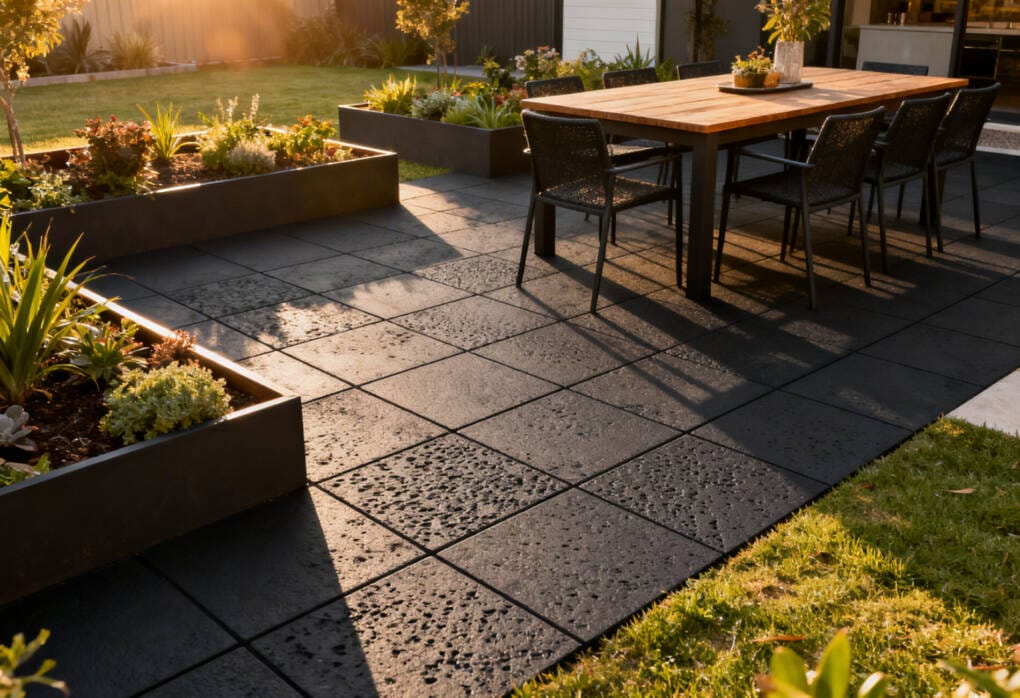
This is an honest tiles vs pavers comparison, so it’s worth being direct about when pavers are genuinely the smarter call.
- No existing concrete slab: Dry-laid pavers on a compacted sand or gravel base avoid slab costs entirely. If your budget is tight and the ground is stable, this is a legitimate cost advantage pavers hold over tiles.
- Driveways and vehicle access areas: Thicker pavers handle load-bearing better than standard outdoor tiles. 20mm porcelain pavers on a concrete slab are a strong alternative, but traditional pavers are the lower-risk choice for regular vehicle traffic.
- Unstable or reactive ground: Where ground movement is a known issue, pavers flex with the soil rather than cracking. Individual units can be lifted and relaid without disturbing the surrounding surface.
- Traditional or heritage-style homes: Natural stone pavers suit certain architecture in a way tiles don’t. A limestone cottage, a Federation-style home, a rustic garden setting — the earthy texture of pavers fits these aesthetics genuinely well.
Outside these scenarios, the outdoor tiles vs pavers debate usually favours tiles for most residential projects in Perth.
Can You Use Tile Instead of Pavers? What to Check First
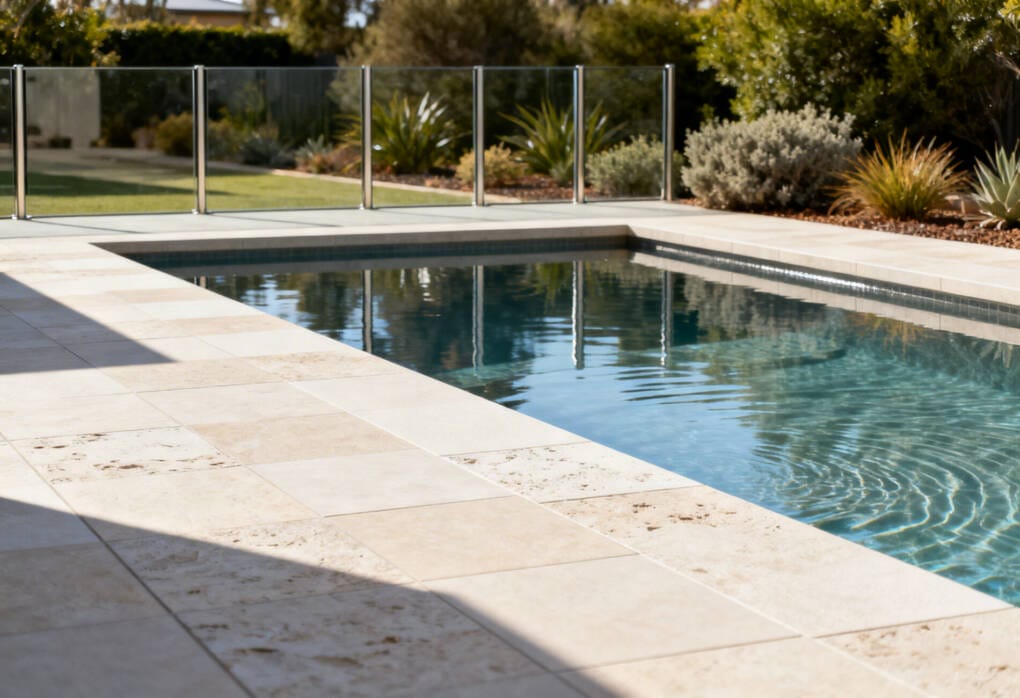
Yes — choosing tiles over pavers is entirely viable for most outdoor applications, provided you go in with the right preparation.
Start with the slab. Outdoor tile installation lives or dies on the base. A solid, level concrete slab is non-negotiable — cracks or movement in the slab will telegraph through to the tiles above. Before committing to tiles or pavers for your project, have the slab assessed if there’s any doubt about its condition. Remedying slab issues before tiling is far cheaper than dealing with cracked tiles after.
Check the slip rating. Not all porcelain outdoor tiles are equal on this front. For general outdoor areas, R10 R11 tiles are the minimum standard — R10 for covered alfresco areas, R11 for exposed areas, wet zones, and pool surrounds. Slip rating tiles are clearly labelled, so it’s a straightforward check before you buy. Our guide to what to look for when shopping for outdoor tiles covers this in detail, alongside other key buying considerations.
Match the format to the space. Large-format tiles work well across open, flat alfresco areas — fewer grout lines, a cleaner finish. For steps, curves, or more complex layouts, smaller formats give you more control and reduce the risk of lippage, and non-slip tiles for outdoor steps should sit at the top of the grip range as well.
For pool surrounds specifically, the slip rating and chemical resistance of the tile matter as much as the aesthetic. Our best outdoor tiles for poolside areas guide covers what to look for before you choose.
Final Verdict — Tiles vs Pavers for Perth Homes
The tiles vs pavers decision isn’t a universal rule — it’s a question of your slab, your style, and how you use the space.
For most Perth homeowners with an existing concrete slab, outdoor tiles are the better choice. Lower material cost, far greater design variety, better UV performance, easier maintenance, and a finish that connects indoor and outdoor spaces in the way Perth homes are designed to live. That’s a strong combination of practical and aesthetic advantages that pavers can’t match across the board.
For new ground without a slab, driveways, or homes where the architecture genuinely suits a natural paver aesthetic, pavers deserve honest consideration — and in those specific scenarios, they may well be the right call.
The best outdoor tiles for an alfresco, patio, or pool surround will always outperform pavers on maintenance and design flexibility for a standard Perth residential project. But the honest verdict is this: choose based on your actual situation, not on what looks good in a showroom or what a neighbour did. Get the slab question answered first, then make the call.
Browse our outdoor tile range to find tiles suited to your project, or come into Ross’s – the best tile store in Perth – and we’ll help you work through the options for your outdoor renovation.
