
Kitchen Benchtop Materials: Every Option Compared (With Perth Prices)
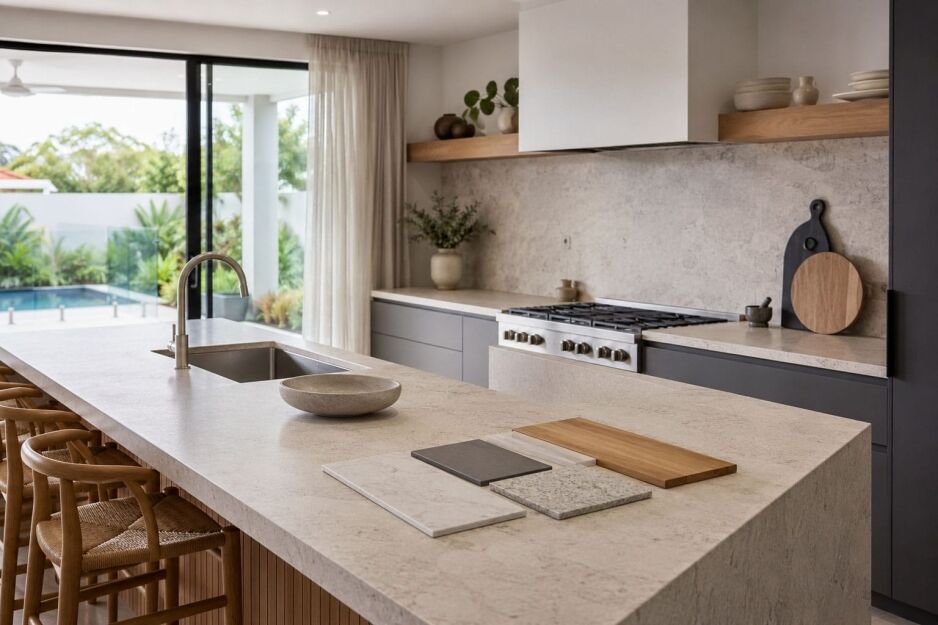
The kitchen benchtop materials picture has changed significantly over the past two years. Engineered stone dominated Australian kitchens for well over a decade, but the 2024 ban on products containing crystalline silica shifted the landscape overnight. Perth homeowners who were mid-renovation had to reconsider their choices quickly, and plenty of others are now researching a market that looks different from what it did before. This article covers all the current benchtop materials — laminate, silica-free engineered stone, Densified Stone, porcelain, natural stone, timber, stainless steel and concrete — with verified Perth price ranges and practical performance notes for each.
The best kitchen benchtop materials in Australia right now include laminate, silica-free engineered stone, prefabricated Densified Stone panels, porcelain and sintered stone, and natural stone. Timber, stainless steel and polished concrete are also genuine kitchen benchtop options for the right home. The best choice depends on your budget, how hard your kitchen works, and how much maintenance you are willing to commit to.
I’ve spent years helping Perth homeowners work through this exact decision in our Guildford showroom, and the question I hear most often isn’t ‘what’s the best material’ — it’s ‘what’s it going to cost me, and will it hold up?’ That’s the lens this article uses. Our how to choose a kitchen benchtop guide goes deeper on the decision process if you need it.
What Happened to Engineered Stone?
From 1 July 2024, engineered stone products containing at least 1% crystalline silica by weight were prohibited from manufacture, supply, processing and installation across Australia, under amendments to the model Work Health and Safety Regulations. It’s the most significant change to kitchen benchtop materials in a generation, and it’s worth understanding clearly before you start comparing options.
What the ban does not cover is just as important as what it does. Laminate, natural stone, porcelain, sintered stone, timber, stainless steel, concrete, and engineered mineral surfaces with zero crystalline silica are all unaffected. Silestone has reformulated its products below the 1% threshold and remains available. The Densified Stone panels we stock contain zero crystalline silica and fall entirely outside the ban definition.
Perth had a transitional arrangement for contracts entered on or before 31 December 2023, but that window has closed. The practical result for anyone renovating today is a wider, more interesting set of compliant types of kitchen benchtops than most people realise — and that’s what the rest of this article covers. Safe Work Australia has the full regulatory details.
Laminate Benchtops

Laminate is the most widely chosen material for kitchen benchtops in Australia, and for good reason. It’s affordable, available in an enormous range of finishes, requires no sealing, and suits DIY installation without specialist trades. For Perth homeowners working within a budget on a kitchen renovation, it’s often the most practical starting point.
The limitations are real but manageable. Laminate is heat sensitive — place a hot pan directly on it and you’ll mark the surface permanently, so trivets are non-negotiable. Deep scratches can’t be repaired, only replaced. Visible joins are part of the format for longer runs. Perth’s hard bore water has no particular effect on laminate itself, though correct substrate sealing around the sink cutout matters — moisture getting under a poorly sealed edge will cause the substrate to swell over time.
I’ll be direct about something: the quality of stone-look laminate today is genuinely impressive. Customers come into the showroom expecting to compromise and leave surprised. The texture, depth and veining on current finishes are a long way from what was available ten years ago. If cheap benchtops are the brief, modern laminate doesn’t look it.
Expect to pay $120 to $500 per square metre for laminate kitchen benchtops. Browse our laminate benchtops range online or read the laminate benchtop guide for a deeper look at finishes and installation. If you want a stone look without laminate’s limitations, the next two sections are worth reading closely — especially given what’s changed with engineered stone.
Silica-Free Engineered Stone Benchtops — Custom

Silica-free engineered stone is the direct successor to the products banned in 2024. The look and performance are the same — consistent colour and veining, low porosity, no ongoing sealing required — but the formulation sits below the 1% crystalline silica threshold that triggered the ban. For Perth homeowners who had their heart set on a classic engineered stone finish, this is the clearest path to it.
Silestone is the most recognised example of a compliant product. Current Silestone ranges are formulated below the banned threshold and remain fully available. These surfaces are among the most scratch resistant and low maintenance benchtop materials on the market, and the marble-look finishes in particular are hard to distinguish from the real thing without touching them.
At Ross’s, we offer silica-free engineered stone, sintered stone, and natural granite and quartzite — all available as part of a complete kitchen cabinet package. Silestone is the most recognised silica-free option and serves as the reference point for the pricing and performance notes in this section. Our stone kitchen benchtops involve stonemason measurement, fabrication and installation — it’s not a product you pick up and fit yourself. This suits customers undergoing a full kitchen renovation rather than a standalone bench replacement.
Silica-free engineered stone benchtop cost runs $400 to $1,200 per square metre for the slab, with fabrication and installation on top. For a standard Perth kitchen, the total supply and install cost typically falls between $2,000 and $5,000, depending on size and edge profile.
Browse our stone benchtops range, or read the stone benchtop buying guide for a deeper look at stone types — including sintered stone and natural stone options also available through our showroom. If you want a stone look without a full kitchen package, the next section covers the DIY alternative.
Densified Stone — DIY Prefabricated Stone-Look Benchtops
For Perth homeowners who want a stone look without the complexity, lead time and cost of a full custom order, Densified Stone is a kitchen benchtop option worth considering.
Densified Stone is an engineered mineral composite made using advanced vacuum compaction. The panels are non-porous, contain zero crystalline silica and zero formaldehyde, which places them entirely outside the engineered stone ban definition. Each panel comes in a 2400 x 600mm format. Customers cut them to size on-site, similar to working with a laminate panel, making them a popular DIY benchtop option that skips the stonemason step entirely. They suit drop-in sink configurations — not undermount.
We offer two designs at Ross’s. Golden Estatuario is a soft white with warm gold veining. Grey Whisper is a layered grey with a marble-look pattern. Both are available as benchtop panels and matching splashbacks, and our guide to kitchen splashback materials covers how the panels compare with tiles, glass and slab options on the wall, so the surfaces can be carried through the kitchen consistently.
Performance is solid for normal kitchen use. The surface is scratch-resistant, stain-resistant and heat-resistant — though trivets under hot cookware are still recommended. Easy to clean, and there’s no sealing required. Indoor use only.
Panels start from $595 each, which works out to approximately $413 per square metre. Browse the full DIY Densified Stone range online or come into the showroom to see them in person. For a surface that handles demanding kitchens with almost no maintenance, porcelain and sintered stone are worth considering next.
Porcelain Benchtops
Porcelain has risen sharply in popularity since the engineered stone ban, and it’s easy to understand why. It’s fired at temperatures above 1,200°C, producing a surface that is non-porous, UV-stable and exceptionally heat-resistant — and it contains no crystalline silica, so it sits well outside the ban entirely.
Wide-format slabs can replicate the look of stone, concrete, metal, or timber with very little maintenance required. No sealing, no special cleaners, scratch-resistant and stain-resistant under normal use. The UV stability makes porcelain benchtops a particularly strong choice for Perth homes with servery windows or outdoor kitchen setups, where most other kitchen benchtop materials degrade noticeably over time in our climate.
The limitation is installation. Edges and cut-outs must be fabricated by a specialist — porcelain is brittle at exposed edges if not correctly supported, and professional installation is non-negotiable. This is not a DIY material.
Expect to pay $700 to $1,500 per square metre, with fabrication and installation costs on top. We don’t stock porcelain benchtops at Ross’s — for this one, you’ll need quotes from specialist stone fabricators in Perth.
Natural Stone Benchtops — Granite and Marble
Granite and marble are the original benchmark for kitchen luxury, and neither is touched by the engineered stone ban. Both are quarried natural stone kitchen benchtops, cut and finished by a stonemason, which means no two slabs are identical. That’s part of the appeal for the customers who choose them.
Granite is the more practical of the two. It’s hardwearing, heat-resistant and resistant to staining when properly sealed. The Perth-specific consideration worth knowing: our hard bore water accelerates mineral build-up on unsealed or poorly sealed stone, so sealing maintenance matters more here than it would in a softer-water city.
Marble is a different commitment. It’s softer and prone to etching from acidic foods and drinks — lemon juice, wine and vinegar will mark an unsealed surface. It needs more regular resealing than granite. I’ve had plenty of customers come in knowing all of this and choose marble anyway, because nothing else delivers that look. For the right person, the trade-off is worth it.
Natural stone benchtop cost runs $500 to $1,000 per square metre for granite and $600 to $2,200 per square metre for marble, depending on origin, veining and rarity, with stonemason fabrication and installation on top. At Ross’s, we offer Sensa by Cosentino natural stone — a granite and quartzite range with surface protection pre-applied. For other natural stone options, you’ll need quotes from a specialist stonemason in Perth.
Timber is worth a look next if you’re drawn to natural materials but want something warmer and easier on the budget.
Timber Benchtops
Timber brings warmth and character that no engineered surface quite replicates — and it’s the one material that can be genuinely refinished if it gets damaged over the years.
Timber kitchen benchtops suit Hamptons, coastal and Scandinavian kitchen styles particularly well. The appeal is the natural variation and the way the material softens a kitchen that might otherwise feel clinical. The trade-offs are real though. Timber needs regular oiling or sealing to stay in good shape, and it’s sensitive to standing water near the sink. Perth’s summer heat and humidity accelerate wear on any areas where sealing has lapsed, so this isn’t a low-maintenance material in our climate. Most kitchen renovators who choose timber use it for an island bench or breakfast bar, away from the main cooking and sink run, where the exposure is lower, and the look can really shine.
Expect to pay $300 to $1,600 per square metre, depending on species and finish. Pricing varies significantly between supply-only and installed, so confirm with your supplier before committing. From here, stainless steel is a different kind of natural material choice — one built more for function than feel.
Stainless Steel Benchtops
Stainless steel is the choice for serious home cooks — totally heat resistant, non-porous, food safe and the same surface used in professional kitchens. It can be fabricated with an integrated sink for a seamless, easy-to-clean run that’s genuinely low maintenance.
The trade-offs are worth knowing upfront. Stainless scratches easily and shows fingerprints readily — though a uniform patina develops over time that most owners come to terms with, and some actively like. Without acoustic backing it can sound hollow under impact, so specify that when getting fabrication quotes. It’s also a material that commits you to a particular aesthetic. Stainless steel suits industrial-style kitchens, butler’s pantries and secondary prep surfaces well. As the main kitchen run in a family home, it’s a harder sell.
Expect to pay around $900 to $1,500 per square metre, with custom fabrication adding to the total.
Polished Concrete Benchtops
Polished concrete peaked in popularity around 2015 but still suits specific kitchen styles — industrial, raw and contemporary interiors where the material’s texture and weight feel intentional rather than dated.
The appeal is genuine. Concrete kitchen benchtops are completely custom — poured and finished on-site or off-site by a specialist fabricator, available in a wide range of colours, textures and inlays, and no two are identical. The limitations are significant enough to list plainly. Concrete is heavy and requires adequate structural support. It can crack if not correctly installed. It’s porous and needs sealing, and Perth’s hard bore water will deposit minerals on any surface where sealing has lapsed. Acidic foods — lemon, vinegar, wine — can etch or stain an unsealed surface. Lead times are long, and this is not a material for a standard kitchen upgrade. You need a specialist fabricator and a clear brief before you start.
Expect to pay $700 to $1,800 per square metre in Perth, depending on complexity, thickness and finish. With all the materials covered, the comparison table below puts them side by side.
Kitchen Benchtop Comparison Table
Every material has a different sweet spot. The table below compares all eight kitchen benchtop materials across the factors Perth homeowners consistently ask about — price per square metre, durability, maintenance, heat resistance, and suitability for Perth conditions including bore water and UV exposure. Use it to shortlist two or three options before committing to one.
| Material | Price/m² | Durability | Maintenance | Heat Resistance | Perth Suitability |
| Laminate | $120–$500 | Moderate | Low | Poor — use trivets | Excellent. Affordable, wide range stocked at Ross’s. No bore water issues. |
| Densified Stone (DIY) | ~$413 ($595/panel) | Good | Low | Moderate — use trivets | Good. Stocked at Ross’s. Zero silica, no sealing. Suits budget-conscious renovators. |
| Silica-free engineered stone | $400–$1,200 | Excellent | Low | Good — use trivets | Good. Silica-free engineered stone, sintered stone, and natural stone all available via Ross’s as part of a full kitchen package. |
| Porcelain | $700–$1,500 | Excellent | Very low | Excellent | Excellent. UV stable. Strong choice for servery windows and outdoor kitchens. |
| Natural stone (granite/marble) | $500–$2,200 | Excellent | High | Good / Moderate | Good. Hard bore water accelerates scale on unsealed surfaces — reseal regularly. |
| Timber | $300–$1,600 | Moderate | High | Poor — no direct heat | Moderate. Perth heat and humidity accelerate wear. Best for island benches. |
| Stainless steel | $900–$1,500 | Excellent | Low | Excellent | Good. Suits serious home cooks. Patina develops over time. |
| Polished concrete | $700–$1,800 | Good | Medium–high | Good | Moderate. Requires sealing. Bore water and UV can affect unsealed surface. |
No single benchtop material wins on every factor, which is why the stone benchtop cost versus laminate cost question comes up so often — they sit at opposite ends of the price range but both have a clear case depending on the kitchen and the budget. If you’re still deciding between those two, our stone benchtops vs laminate comparison covers the head-to-head in detail.
How to Choose the Right Kitchen Benchtop Material
The right material comes down to three things: your budget, how you use your kitchen, and how much maintenance you’re prepared to do. Work through each honestly before falling in love with a finish.
Budget first. Set a realistic per square metre figure before you start looking at samples. A standard Perth kitchen runs 3 to 5 square metres of benchtop — multiply your preferred material’s per-m² cost by that range to get a rough supply figure, then add fabrication and installation for stone kitchen benchtop options that require a stonemason. Laminate and Densified Stone panels are the two DIY-friendly materials that skip that step entirely and keep the total cost predictable.
Kitchen use second. High-traffic family kitchens need surfaces that handle heat, spills and heavy daily use without fuss. Porcelain, silica-free engineered stone and Densified Stone all perform well here. If your kitchen is more of a showpiece than a workhorse, marble is worth considering despite its maintenance demands — no other material delivers the same look.
Maintenance honestly. Every natural material — stone, timber, concrete — requires resealing at intervals. Non-porous surfaces like laminate, Densified Stone, porcelain and silica-free engineered stone don’t. In Perth, hard bore water accelerates mineral build-up on natural stone if sealing lapses, so factor that in before choosing on aesthetics alone.
Frequently Asked Questions
Which Benchtop Material Is Right for Your Kitchen?
The range of kitchen benchtop materials available to Perth homeowners today is broader than it’s been in years. The ban changed some things, but it also opened up kitchen benchtop options that hadn’t been on most renovators’ radar before. Laminate starts from $120 per square metre, densified stone panels from around $413 per square metre, and stone and porcelain from $400 to $1,500 per square metre and up — there’s a realistic choice at every budget.
We stock laminate benchtops and densified stone benchtops at Ross’s showroom and online. Both are available to browse, order and take home without a stonemason involved. For a full kitchen renovation in Perth with a custom stone finish, get in touch with your measurements, and our team will work through the options with you. A kitchen upgrade at this level is worth getting right, and we’ve been helping Perth homeowners do exactly that for a long time.
