
Shower Base vs Tiled Shower Floor: Which Is Better for a Perth Bathroom?
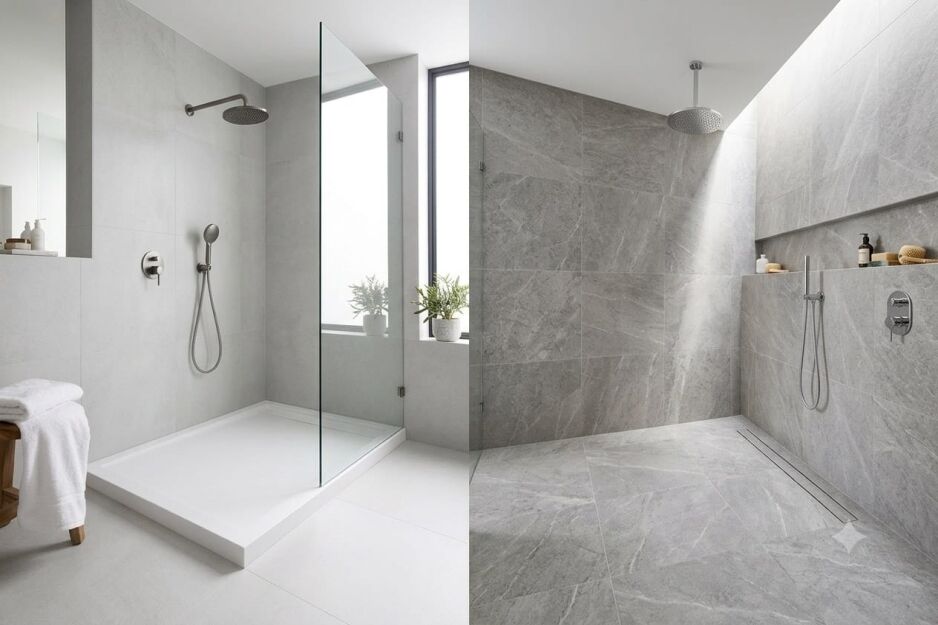
Picking the wrong shower floor is the kind of mistake you notice every morning. If you’re renovating a Perth bathroom, one of the first decisions is whether to choose a shower base or a tiled shower floor. A base is a ready-made tray that drops into place. A tiled floor is built on site from screed, waterproofing, tiles and grout.
Both options can work well. We supply shower bases, tileable trays, floor tiles and shower screens, so I have no reason to push one option for every job. The right choice comes down to budget, shower shape, waterproofing risk, and how much cleaning you want to take on.
Years ago, I had the tiled shower floor removed from an older Perth house of ours. The grout had stained badly, and water had started finding its way where it should not. What caught me off guard was the final bill. Most of it was labour, not tiles.
Below, I walk through cost, cleaning, Perth’s hard water, waterproofing, design flexibility, and the middle-ground option many people miss. By the end, you should know which shower floor suits your bathroom renovation and how that choice affects the shower screen you can fit.
What’s the Difference Between a Shower Base and a Tiled Shower Floor?
A shower base is a pre-moulded, one-piece tray with the fall and waste position already built in. A tiled shower floor is built on site over a screed bed and waterproof membrane, then finished with floor tiles and grout.
You may also hear a base called a shower tray or a shower pan. They mean the same thing. So if you are comparing a shower pan vs tile floor, or a tiled shower floor vs shower pan, you are asking the same basic question.
What a Shower Base Is
A shower base does the shaping work for you. It arrives as one moulded piece with the slope already formed, so water falls to the waste without anyone setting that angle on site. The waste position is built into the design, and the edges are made to meet the wall lining.
Because a base is one solid tray, it removes grout from the wettest part of the shower. That is one reason bases appeal to homeowners who want a simpler, lower-maintenance shower floor.
If you want a near-level walk-in look, a low-profile shower base gives you a shallower tray and a more streamlined finish without building the full shower floor from scratch.
What a Tiled Shower Floor Is
A tiled shower floor is built in layers. A tiler shapes the screed so the floor falls to the waste. A waterproofer applies the membrane. Tiles and grout go on last.
The payoff is control. You can choose the size, shape, waste position and tile finish. The trade-off is time, labour and more room for installation error if the falls or waterproofing are not done properly.
Here is the comparison at a glance before we look at each factor in more detail.
| Factor | Shower Base | Tiled Shower Floor |
| Construction | One-piece, factory-moulded tray | Built on site with screed, membrane, tiles and grout |
| Upfront cost | Lower | Higher, mostly due to labour |
| Cleaning | Smooth surface, no grout lines | Grout needs regular cleaning |
| Custom sizing | Set sizes and shapes | Fully custom size and shape |
| Look | Clean, defined shower edge | Seamless, tile-through finish |
| Install time | Faster | Longer, with curing stages |
Most people make the call based on three things: budget, cleaning, and whether the shower is a standard or custom shape. Cost is usually the first question, so let’s start there.
The Real Cost of Each Option in Perth
A shower base is usually the cheaper option upfront. Our shower bases currently range from $280 to $1,452, depending on size, material and shape. That gives you the finished shower floor as one product. From there, your plumber connects the waste, and the base is ready for the surrounding wall and screen work.
A tiled shower floor costs more because it is built by trades on site. The tile area is small, so the tiles are rarely the expensive part. The labour is where the cost grows.
Here is the cost comparison side by side.
| Cost Factor | Shower Base | Tiled Shower Floor |
| Floor product | $280-$1,452 for our current base range | Tiles and grout are usually a smaller part of the total |
| Trades | Plumber for the waste connection | Waterproofer plus tiler |
| Site work | Fall is pre-moulded | Screed, membrane and fall set on site |
| Indicative finished cost | Base price plus plumbing labour | Often around $1,200-$3,000 or more |
The figures above are indicative 2025-26 Perth prices, not a quote. They show why the gap exists. A base is one product and one main trade connection. A tiled floor needs screeding, waterproofing, tiling, grouting and curing time between stages.
As a rough guide for Perth, tiling labour often ranges from $60 to $110 per square metre, and waterproofing can cost $45 to $80 per square metre. Screeding materials may add another $150 to $300. Once the trades and curing time are added, a tiled shower floor can easily cost two to three times more than a mid-range base.
So if your decision comes down to budget, a shower base usually wins. That is the same lesson I learned in that old bathroom. The tiles were not the painful part. The labour was.
Cleaning, Mould and Perth’s Hard Water

A one-piece shower base is easier to keep clean because it has no grout lines. Grout is porous, so it holds soap scum and mineral residue. Over time, it can discolour and grow mould. A smooth moulded base is much quicker to wipe down.
This matters more in Perth than in many parts of Australia. Our water is hard, and the hardness varies by suburb. The Water Corporation’s hard water guidance notes that hard water can leave spots on surfaces and suggests drying them after use. On a shower base, that is a quick wipe. On grout and textured tile, mineral scale and soap scum hang on harder.
So, are tiled shower floors better for cleaning? In our water, usually no. A base wins if low maintenance is the priority.
Tiles can still work well if you choose the right products. Good sealing, epoxy grout instead of cement grout, and the right tile surface all reduce maintenance. Epoxy grout resists staining and mould better than cement grout, which can save you from re-grouting later.
Slip resistance matters too. A wet shower floor needs grip, not just a good look. In Australia, floor tiles are commonly assessed for slip resistance using a P-rating scale from P0 to P5. We label our non-slip range by its anti-skid surface, so check the rating on the actual tile you choose rather than assuming. If you are tiling the floor, look for tiles with an anti-skid surface that suit wet areas.
Durability, Leaks and Waterproofing to AS 3740
Both options can last for years when the job is done properly. The failure point is usually not the surface you stand on. It is the waterproofing, support or waste connection below and around it.
Every domestic wet area in Australia must be waterproofed to AS 3740. That standard covers how floors and walls are sealed, and how water must fall to the waste without ponding. The rule applies whether you choose a base or a tiled shower floor. What changes is how each option manages the risk.
A tiled floor relies on a waterproof membrane built on site. The fall is shaped by hand, and the tiler and waterproofer need to get the layers right. With a shower base, the floor tray is already moulded with its fall to waste. The walls and junctions still need correct waterproofing, but the wettest floor area is one seamless surface instead of tile and grout.
Base material also matters. Cheaper acrylic and fibreglass bases can flex or crack if they are not supported properly. Rigid moulded materials like polymarble, SMC and BMC feel more solid underfoot and generally wear better. So in a tile vs acrylic shower base comparison, the honest answer is that acrylic can be fine when supported well, but polymarble is the harder-wearing choice.
A tiled floor can also last a long time. It needs the right fall, membrane, the right adhesive and grout, and a good waterproofer. If any of those are rushed, the floor is more likely to fail.
The walls matter either way. A shower base does not remove the need to waterproof the surrounding wall area. It only changes how the floor is formed.
Warranty also varies by product. Some ranges start around five years, while others run closer to twelve. Check the warranty on the actual base you choose, and choose a rigid material if long service life is high on your list.
Looks, Custom Sizes and Odd-Shaped Showers
A tiled shower floor wins on design freedom. A shower base wins on simplicity. Both can look good, but they suit different bathrooms.
A standard shower base suits a standard recess. If your opening matches one of the available sizes, the base drops in neatly and gives the shower a clean, defined edge. That works well for most family bathrooms, ensuites and rental renovations.
A tiled floor gives you more design control. You can build an odd-shaped shower, choose a custom size, or create a hobless, level-entry shower that runs straight from the bathroom floor into the wet area. That continuous tile finish can make a small bathroom feel larger and more open.
The question is whether that design freedom is worth the extra cost, grout upkeep and installation risk. For some bathrooms, it is. For others, a base gives you a cleaner result with fewer moving parts.
The Best of Both: Tileable Shower Bases
You do not have to choose between a standard base and a fully site-built tiled floor. A tileable shower base gives you the tiled look over a factory-made tray. The fall and waterproof tray are already built in, and your tiler lays tiles over the top.
Our Square Tile Tray range is built for this kind of job. It comes in square sizes from 820x820mm to 1000x1000mm, rectangular sizes from 1200x900mm to 1500x900mm, and curved options for corner showers. You can carry the bathroom floor tile into the shower while the tray below handles the fall and floor waterproofing.
A woman came into our Guildford showroom last year with a Pinterest board full of tiled showers. She loved the seamless look, but she had spent years scrubbing stained grout in her old place and did not want a fully site-built floor again. I showed her a tileable tray. She got the tiled finish she wanted over a pre-formed base, with the fall already set.
The trade-off is clear. A tileable tray still needs tiling, so you still need a tiler and you still need to clean grout. What you avoid is the riskiest part of a fully built tiled floor: forming the waterproof tray and shaping the fall on site.
If your shower is an odd size, or you want the tiles to carry through from the bathroom into the shower, a standard base may not be the right fit. Before you commit, compare our bathroom floor tiles and read our guide to choosing the right shower floor tiles so the floor is safe, practical and consistent with the rest of the room.
If the tiled look is pulling you one way but the cost and grout upkeep are holding you back, a tileable tray is the middle ground I would look at first.
Frequently Asked Questions
Do Shower Bases Crack or Leak Over Time?
Shower bases rarely crack or leak when the material is right and the base is properly supported. Cheaper acrylic or fibreglass can flex if the floor underneath is not solid, which is where many cracks start. Rigid polymarble and SMC bases usually hold up better. Most leaks come from poor support, poor waste connection, or failed waterproofing around the shower, not the base alone.
Do I Still Need Waterproofing if I Install a Shower Base?
You still need waterproofing when you install a shower base, especially around the surrounding walls and junctions. The base forms the shower floor, but water still hits the walls every time you shower. AS 3740 still applies to the wet area. I would always have a licensed waterproofer handle the wall and junction work so the shower is sealed correctly.
Does a Tiled Shower Floor Add More Value to a Home?
A tiled shower floor can add a more seamless look that some buyers like, but it does not guarantee a higher sale price. Most buyers care more about a clean, well-built shower than the floor method. Stained grout can count against you. If resale appeal matters, a tileable base can give you a tiled look with less risk and upkeep.
How Long Does Each Option Take to Install?
A shower base is faster to install than a tiled shower floor, usually by several days. A base can be set and connected to the waste quickly, which helps the shower screen go in sooner. A tiled floor needs screeding, waterproofing, curing, tiling and grouting. Since we are supply-only, your plumber, waterproofer and tiler handle the installation.
So, Which Shower Floor Is Right for Your Perth Bathroom?
The right choice depends on your shower size, budget and cleaning tolerance. I would start with the practical stuff first, then look at the finish.
Choose a shower base if your shower is a standard size, your budget is tighter, the bathroom is a rental, or it is a busy family bathroom. You get faster installation, easier cleaning and fewer grout issues. Choose a tiled floor if your shower is an odd shape, you want a level-entry design, or you want a seamless tile-through look and accept the extra cost and maintenance.
Choose a tileable tray if you want the tiled finish with more built-in reliability than a fully site-built shower floor. For many Perth bathrooms, that is the option that balances looks, cleaning and waterproofing risk best.
Whichever way you lean, we supply shower bases, tileable trays, bathroom tiles and shower screens in one place.
See our shower base range online with $100 Perth Metro delivery, or visit our Guildford showroom to compare them in person. While you are there, choose a shower screen to finish the space and complete the shower enclosure.
