
Hybrid Flooring in Bathrooms and Wet Areas: What You Need to Know Before You Lay It
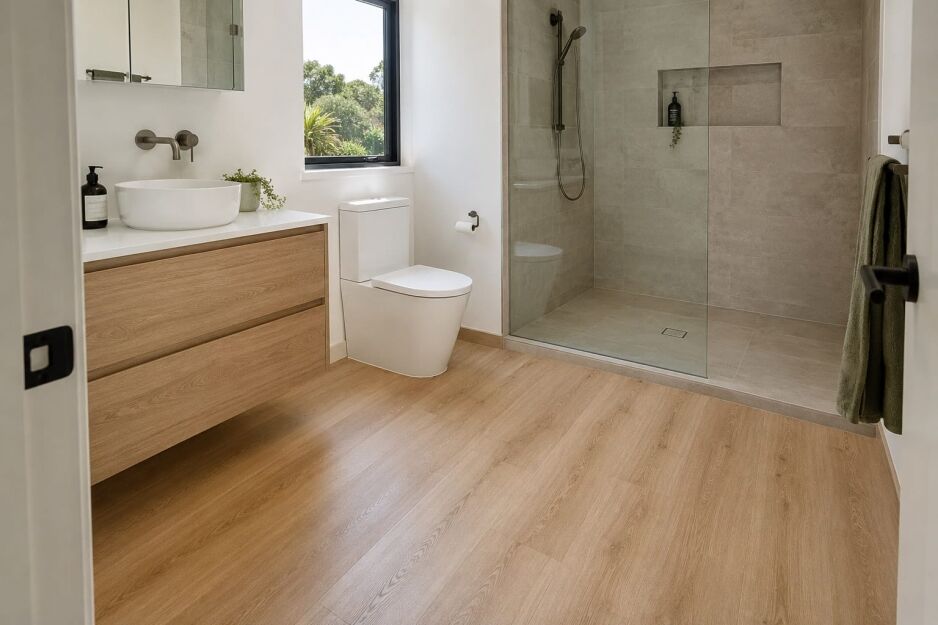
You have seen hybrid flooring in a showroom, liked the timber look, and been told it is waterproof. Now you are standing in your bathroom asking the real question: can hybrid flooring be used in bathrooms, or will it swell up and let you down? The honest answer is yes, but only in the right parts of the room. Hybrid works well in a bathroom’s dry zones, but it is the wrong choice anywhere water pools or stays on the floor. Getting that distinction right is what protects your floor and your money.
I have spent decades helping Perth homeowners choose flooring, and the confusion around hybrid flooring in bathrooms comes up almost every week. A rigid waterproof core is a genuine advantage, but it does not make every part of a wet room fair game. In this guide I will explain whether hybrid is truly waterproof, where it can and cannot go, what the Australian standard requires, and how to lay it so it lasts.
Can You Use Hybrid Flooring in a Bathroom?
Hybrid flooring can be used in bathrooms, but only in dry zones such as the vanity area, doorway, toilet and powder room. It should not be laid inside the shower recess or anywhere water pools constantly. Seal the perimeter, ventilate the room, and keep hybrid clear of direct wet zones.
The reason it is a “yes, but” rather than a flat yes is that a bathroom is really several moisture zones in one room. People ask me two versions of the same question: can you use hybrid flooring in bathrooms at all, and is hybrid flooring suitable for bathrooms like theirs. Both have the same answer, and it depends on where in the room they mean. Around the vanity and the doorway, hybrid works well. In the shower, it is the wrong product. The next sections walk through each zone, so you know exactly where it belongs.
Is Hybrid Flooring Really Waterproof?
So, is hybrid flooring waterproof? Yes, the core is. Hybrid is built around a rigid waterproof core, usually SPC, or stone plastic composite, which will not swell, warp or bubble from surface moisture the way a laminate floor does. Spills, mopping and the odd bath-time splash are no drama when they stay on the surface. That is a real advantage, and it is why hybrid suits a bathroom dry zone in the first place.
The catch is the difference between a waterproof plank and a waterproof floor. Hybrid is a floating floor. The planks click-lock together and lay over the subfloor rather than being glued or sealed down. Water on the surface is easy to manage. Water that finds its way past the edges and tracks underneath is the real failure path.
Once water gets under the planks, it can pool on the subfloor, feed mould you never see, and slowly lift the edges over months. When a label says a product is 100% waterproof, it is describing the board, not your full bathroom installation. So if you are asking is hybrid flooring 100% waterproof, the honest answer is that the material is, but the finished floor is only as watertight as the way you seal and lay it. If you want the full construction detail, our article on how SPC hybrid flooring is built walks through every layer.
I saw this play out a couple of years back. A customer came back in frustrated because hybrid he had laid right across his bathroom, shower included, was lifting at the edges near the recess after only a few months. He had assumed waterproof meant suitable for every wet spot. What had actually happened was water creeping under the planks at the wettest point in the room, pooling on the slab and working the joins loose. The boards were fine. The way they were laid was the problem. That one conversation is why I am so blunt about zones.
Where Hybrid Flooring Works in a Bathroom, and Where It Doesn’t

The trick to getting this right is to stop thinking of a bathroom as one room and start thinking of it as a set of moisture zones. Whether hybrid suits a spot comes down to one thing: how often water actually hits the floor and whether it has a chance to dry.
Split the room in two. The dry zones see occasional moisture, the odd splash and a bit of steam, and hybrid handles them well. The wet zones see constant, direct or pooling water, and hybrid does not belong in them. Hybrid is a floor covering, not a waterproofing system. The same logic applies to hybrid flooring in wet areas right across the home, not just the bathroom. Here is how it works zone by zone.
| Area | Water exposure | Hybrid suitable? | Notes |
| Bathroom dry zone (vanity, doorway, away from shower) | Occasional splashes | Yes | Seal the perimeter; ventilate the room |
| Toilet / WC and powder rooms | Low | Yes | Among the safest wet-area uses |
| Laundry (away from trough and washer splash) | Occasional | Yes | Avoid direct, constant wetting |
| Bathroom floor at the shower edge | Frequent | Risky | Water can track under the planks; avoid |
| Inside the shower recess | Constant, pooling | No | Needs a waterproofed, graded, tiled floor |
So, can hybrid flooring be used in bathrooms? Yes, through the dry zone and the toilet area if you like the look, as long as you keep it well clear of the shower. Laying hybrid flooring in a shower is the one move I will always talk a customer out of, because the shower recess needs a proper tiled, waterproofed floor that a floating board can never replace. Lay hybrid in the dry zone, tile the recess, and you get the best of both.
The same rule covers the laundry. Hybrid is fine across a laundry floor as long as it is outside the direct splash zone of the trough and the washing machine. That matches where we already recommend it: away from the spots that stay wet, and well sealed at the edges.
What the Australian Standard Says About Wet-Area Floors
It helps to know that bathroom floors are not just a matter of opinion. There is an Australian Standard that sets out what a wet-area floor has to do, and it backs up the dry-zone-only advice I have been giving you.
The standard is AS 3740. It sets the rules for waterproofing domestic wet areas and grades them by how much water they cope with. The shower recess is the highest-risk zone, and its floor must be fully waterproofed and graded so water runs to the drain. The parts of the bathroom away from the shower carry far less risk, which is exactly why the dry zone is suitable for hybrid and the recess is not. You can learn more about AS 3740, the standard for waterproofing domestic wet areas through the HIA.
Here is the part that matters most. AS 3740 is about the waterproofing membrane beneath the floor, not the floor covering on top of it. A floating hybrid floor lays over that layer. It is not a replacement for it. That is the technical reason hybrid can never stand in for a properly waterproofed, tiled shower floor. On a concrete slab in a dry zone, though, hybrid laid correctly over a sound subfloor is a sensible choice. The standard matters most in the shower and immediate wet zone, which are the areas you should be tiling anyway.
Laying Hybrid Flooring in a Bathroom the Right Way
If you have decided hybrid suits your dry zone, doing the job properly is what separates a floor that lasts from one that lifts. Installing hybrid flooring in a bathroom dry zone is well within reach for a confident DIYer, as long as you respect the wet-area limits and do not treat the floor as waterproofing. A few steps matter far more than the rest. Get these right and the floor has the best chance of performing for years.
Get the Subfloor Right
A hybrid floor is only as good as the surface beneath it. The subfloor needs to be flat, clean and dry before a single plank goes down. Most Perth homes are built on a concrete slab, which is an ideal base for a floating floor. Check it for level, and correct any dips or bumps first, because a high spot will rock the planks and a low spot leaves them unsupported. Our guide to laying hybrid on a concrete slab covers the prep in full.
Leave Proper Expansion Gaps
Hybrid expands and contracts a little as the temperature shifts. Leave the manufacturer-specified expansion gap around every wall and fixture so the floor has room to move. Blocking that gap is the single most common cause of buckling I see. Once the floor is down, conceal the gap with matching scotia, which we stock to suit each floor in the range.
Seal the Perimeter
This is the step that makes or breaks a bathroom install. Run a bead of perimeter silicone sealing around the edges, the vanity base, the toilet and the bath so splash water cannot get under the floating floor. Remember the core-versus-system point from earlier: the planks are waterproof, but sealing the edges is what keeps water out from underneath, where the real damage happens.
Ventilate and Acclimate
Let the planks acclimate in the room for around 48 hours before laying, which matters in Perth’s temperature swings. After that, ventilation does the long-term work. Run the exhaust fan and crack a window after showers so steam clears instead of hanging in a closed-up room over a hot summer. Good airflow protects any floor in a bathroom.
A quick word on what we supply and what we don’t. We sell the flooring, the scotia and the trims, and we are glad to talk you through the lot, but we are a supply-only business; we don’t offer installation. That said, a dry-zone hybrid floor is a job many keen DIYers can manage. I had a customer a few summers ago who did everything right in his dry zone, sealed the perimeter, left his gaps, kept the boards well clear of the shower, and years on, that floor still looks as good as the day he laid it. Compare that to the jobs where the perimeter gets skipped, and the result is completely different. Pick the right product, lay it properly, and keeping a hybrid floor clean is simple.
Hybrid Flooring or Tiles for a Bathroom?
Plenty of customers reach this point and wonder whether they should skip the question altogether and just tile the lot. So, is hybrid flooring better than tiles in a bathroom? Neither one wins outright. Both have a place, and the right choice depends on the zone, not on one product being better across the board.
Here is the practical split. Choose hybrid for the dry zone if you want the warmth and timber look, plus an easier floor to lay yourself. Choose bathroom tiles for the shower and any floor that stays constantly wet, because tiles pair with a compliant waterproofing membrane and handle pooling water indefinitely. If you are asking which is the best flooring for bathrooms, the honest answer is that it is rarely one or the other across the whole room.
In fact, we’ve had many customers use both. That is not a compromise or a halfway measure. It is the smart outcome: the warm timber look where you stand at the vanity and a tiled floor where the water actually lands.
Frequently Asked Questions
So, Should You Lay Hybrid Flooring in Your Bathroom?
So, can hybrid flooring be used in your bathroom? Yes, through the dry zone, the toilet and the laundry, and no in the shower or on any floor that stays constantly wet. Get three things right, and you will be glad you chose it: lay it in the correct zone, seal the perimeter, and keep the room ventilated. Our SPC hybrid range is built for dry-zone use like this. The boards have a waterproof core, click-lock together for a DIY-friendly lay, start from $30/m², and come with matching scotia to finish the edges cleanly. A 10-year residential warranty backs our range.
If you would like to lay hybrid flooring in your bathroom, take a look at our SPC hybrid flooring range online, with Perth Metro delivery at a flat $100. Better still, come and see the boards at our Guildford showroom, feel the finishes, and we will help you pick the right floor for your dry zone.
