
Best Flooring for a Rental Property: Durable Choices for Perth Investors
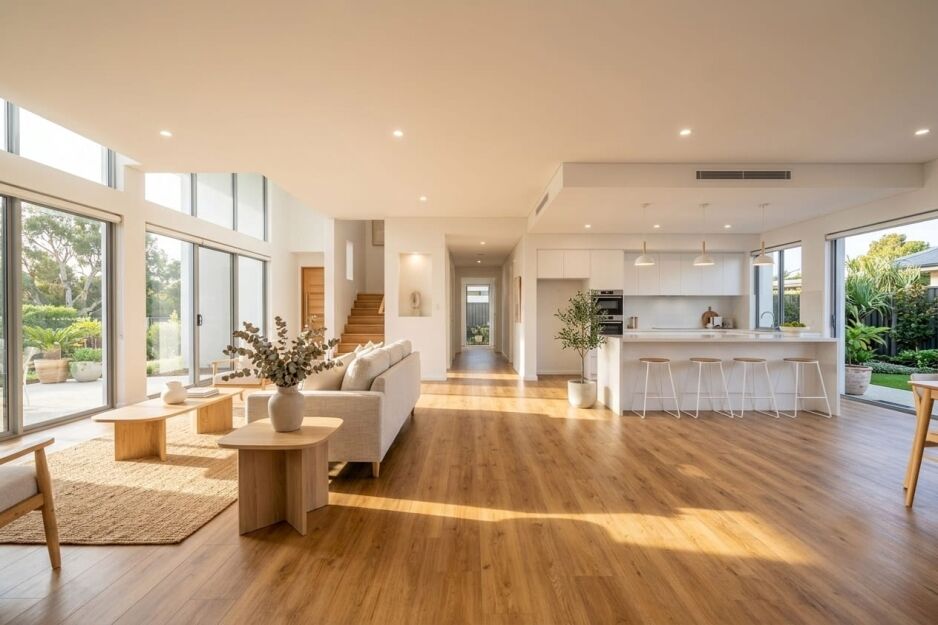
The best flooring for a rental property is usually SPC hybrid through living areas, kitchens, hallways and bedrooms, with tiles used in bathrooms, laundries and shower zones. That mix gives landlords durability, water resistance, tenant appeal and plank-by-plank repair without pretending one floor suits every room.
Get the flooring wrong in a rental and it quietly eats your return. The floor has to survive years of tenants, present well between leases, and avoid expensive repairs at every turnover. If it stains, swells or wears out too quickly, it can slow the next lease and add costs you did not plan for.
Perth’s rental market is tight, and well-presented properties lease quickly. The floor needs to look sound for years and handle what tenants bring, from spills to furniture drags. Every empty week costs rental yield, so flooring is more than a finish. It is part of the return.
What Makes Flooring Right for a Rental Property?
The floor you’d choose for your own home is rarely the right one for a rental. At home, you pick for taste, and you look after it yourself. A rental floor has to earn its keep under people who don’t own it, so I judge the flooring options for a rental property on five things, not on looks alone.
- Durability. It needs to take heavy, unpredictable use in high-traffic areas and still look sound after a tenancy or two.
- Waterproofing. Spills, leaks and constant mopping come with the territory, so water resistance saves you real grief.
- Easy to clean and repair. Low maintenance matters, and a floor you can refresh or patch between tenancies beats one you replace whole.
- Tenant appeal. A clean, neutral floor leases the property faster, and fast leasing protects your income.
- Total cost over the years. The cheapest floor upfront is often the dearest once you add up repairs and replacements.
Get those five right, and you are close to the right rental floor. Durability is where cheap floors fail first, so that is where we start.
The Most Durable Flooring for Rentals
The most durable flooring for a rental property is usually SPC hybrid. Its rigid stone polymer composite core resists scratches, dents and water, the three things that damage rental floors fastest. If a tenant damages one board, you can replace that single plank rather than relaying the whole floor.
Why SPC Holds Up Under Tenants

SPC works so well in rentals because of its layered build. A tough wear layer takes the scuffs, scratches and grit that tenants and pets track in. Underneath, the waterproof core handles spills, mopping and the odd leak without swelling the way laminate can. Because the planks float, a damaged board can be swapped between tenancies rather than forcing you to relay the whole room. For many landlords, that repairability is the difference-maker.
The alternatives all have their place, but each comes with a trade-off. Carpet wears and stains quickly, especially through hallways. Laminate is cost-effective in dry rooms, but it can swell once water gets into a seam. Solid and engineered timber look great in premium rentals, but they scratch and dent under furniture and pets, and refinishing a rental floor rarely makes financial sense.
I had a landlord come in a few years back who had re-carpeted the same Maylands unit three times. Every couple of tenancies, the carpet had tracked and stained so badly it had to go, and no between-tenant clean ever saved it. Carpet looked like the cheap option each time, which is why he kept choosing it, but the repeat replacements quietly cost him more than a better floor would have. We talked him through our hybrid flooring, and last I heard, it had been through several tenancies and still looked sound. The unit leased faster too, because a clean, neutral floor presents well at every inspection.
Comparing Your Options for a Perth Rental
So how do the main options stack up for a rental, rather than for a home? The answer changes once you judge them on what a landlord cares about: tenant wear, water resistance, repair cost and how the property presents between leases. The table below compares each option on those rental-performance points rather than upfront price, which I will come to separately.
| Flooring | Tenant Durability | Waterproof? | Repairable? | Rental Lifespan | Tenant Appeal |
| SPC Hybrid | Excellent | Yes | Yes, plank by plank | Long | High |
| Vinyl Plank | Good | Yes | Limited (glue-down) | Moderate | Moderate |
| Laminate | Good in dry rooms | No | Limited | Moderate | Good |
| Tiles | Excellent | Yes | Hard (individual tiles) | Very long | Moderate |
| Engineered Timber | Very good | No | Refinish, not swap | Long | Very high |
| Carpet | Poor | No | Replace, not repair | Short | Low to moderate |
Read across the rows and hybrid flooring is the clear all-rounder, because it scores well on the checks that matter in most rental rooms. If you are weighing the best vinyl flooring for a rental property, hybrid’s rigid core and plank-by-plank repairs win on durability and easier fixes, and our guide on hybrid versus vinyl for a rental has the full breakdown. Laminate is the pick for the best laminate flooring for a rental property on a tight budget, but only in dry, lower-traffic rooms, since it has no real moisture resistance. Our guide on how SPC compares with laminate covers where each one belongs. Tiles own the wet areas and last longest, though they are cold underfoot and harder to patch. Engineered timber suits premium rentals where the rent justifies the cost and the scratch risk. Carpet is the weakest long-term choice: cheap to lay, but quick to wear. For apartments, the best flooring for apartments is usually the same all-rounder, a click-lock floating floor that lays without mess, but check your strata rules on acoustic underlay first.
Which Flooring Suits Which Room
Running one floor through most of a rental is the efficient move. It keeps buying simple, gives the property a consistent look that leases well, and leaves you with matching spare planks for repairs. That is why I steer most investors toward hybrid for the bulk of the home and tiles only where water pools or stays on the floor. Here is how I would split it room by room.
- Living and Kitchen: hybrid is ideal here, because its waterproof core handles spills, dropped pans and the heaviest foot traffic in the house.
- Hallways and Entries: these are the busiest traffic zones in most rentals, so hybrid’s scratch-tough wear layer earns its keep.
- Bedrooms: hybrid works well, and it avoids the staining and wear that carpet often shows between tenancies.
- Bathrooms and Laundries: tiles are the right call wherever water pools, so fit tiles for shower and wet zones in these rooms.
- The Shower Itself: never hybrid. We do not recommend it for the shower floor or any constantly wet zone, where tiles and proper waterproofing are the sound choice.
Run hybrid through the main dry areas and tile the wet rooms, and you have a practical flooring plan without overcomplicating the project. That mix suits most rentals because it puts each product where it performs best. If you want details on where hybrid stops and tiles take over, our guide to using hybrid flooring in bathrooms and wet areas walks through it.
What It Costs and the Return Over Time
Upfront price is the wrong measure when you are choosing rental flooring. What matters is the total cost across the years you hold the property, not just the number on the quote. A durable floor that survives tenant after tenant beats a cheap floor you replace every few cycles, because each replacement adds labour, downtime and the risk of a vacant week or two.
REIWA’s latest vacancy data shows why presentation still matters in Perth. In April 2026, Perth’s rental vacancy rate was 1.9%, down from 2.4% a year earlier and below the 2.5% to 3.5% range REIWA describes as a balanced market. In a tight market, a floor that looks sound and installs quickly can help reduce vacant days and protect rental yield.
That is where the budget question gets interesting. The best flooring for an investment property is often mistaken for the cheapest option upfront, and I understand why when you are watching every dollar. But cheap flooring for a rental property that needs replacing every couple of tenancies costs more in the long run than an affordable product that keeps presenting well.
Our SPC hybrid starts from $30/m². Because it is a click-lock floating floor we supply for you to lay, the DIY saving can be a real cost lever for hands-on investors, and delivery across Perth Metro is a flat $100. For the full price-per-square-metre breakdown against the alternatives, see our full timber-look flooring price comparison.
I met an investor last year who was fitting out a Midland unit on a tight budget. He was torn between the cheapest vinyl he could find and something more durable. The cheapest option felt safer at the counter, but once we talked through tenant turnover, repairs and presentation, he chose our affordable hybrid flooring instead. It handled the next tenancy without a repair and the unit leased quickly. That is where good investment property flooring pays you back.
Can You Claim Flooring on Tax?
New flooring for a rental can usually be claimed, but the way you claim it depends on the type of floor and your own situation. Rental property flooring depreciation generally comes down to two streams in the ATO’s rental-property guidance: depreciating assets and capital works.
Depreciating assets, often discussed under Division 40, are items that decline in value over time. The ATO lists floating timber flooring and carpet as examples of assets that decline in value. Capital works, often discussed under Division 43, relate to the building structure itself, with many building costs claimed over time, commonly at 2.5% per year. That is why a floating click-lock floor and a tiled floor can be treated differently for tax purposes.
One change matters for established properties. Since 9 May 2017, investors who buy second-hand residential properties generally cannot claim depreciation on previously used plant and equipment, but they can usually claim on new eligible assets they install themselves. A quantity surveyor can prepare a depreciation schedule that sets all of this out properly, and the cost of that schedule may also be deductible.
I’ll be straight with you: we sell flooring, not tax advice. Treat this as general information drawn from the ATO’s rental property guidance, and confirm your own position with your accountant or a quantity surveyor before you claim anything.
Flooring, Bond and Fair Wear and Tear in WA
The floor you choose also changes how well you are protected when a tenancy ends. Under WA tenancy guidance, tenants are not responsible for fair wear and tear from normal use, but they are responsible for damage they or their guests cause. That distinction matters because a floor that wears out quickly can leave you with little to claim, even when it looks tired.
The Property Condition Report helps draw the line. Consumer Protection WA advises tenants to compare the report from the start and end of the tenancy to work out whether something is fair wear and tear or damage. A carpet worn thin down a hallway often reads as normal wear. A deep gouge or a cigarette burn in a hard floor is easier to document as damage against the report.
Hybrid helps because the repair is clearer. If a tenant damages one board, you can replace that plank and put a direct cost against the repair, rather than arguing over a whole worn room. Keep in mind the bond is held by the Bond Administrator, not by you, so any end-of-lease claim goes through that process. Outcomes vary case by case, so for more details, see Consumer Protection WA’s bond guidance.
Does Perth’s Climate Affect Your Flooring Choice?
Perth’s sun is the one factor that can affect a hybrid floor if you ignore it. SPC is heat-stable, so it copes with normal warmth. Intense direct sun through unprotected glass is different. It can drive expansion or plank separation, and it can fade the wear layer over time. The risk is highest in hot north- and west-facing rooms.
The fixes are simple.
- Choose a UV-stable wear layer. A UV-stable floor holds its colour far longer in a sun-soaked Perth room.
- Leave correct expansion gaps. An 8 to 10 mm expansion gap at every wall and fixed object lets the floor move as temperatures shift.
- Prep the subfloor. Acclimatise the planks to the room first, then lay them over a flat, dry subfloor.
- Manage the sun. Blinds, curtains or window tint take the heat and glare off the glass.
Cleaning is simple. A regular sweep and a damp mop keep the floor looking sound, and if you are on bore water, wipe up promptly to avoid mineral streaks. For the full routine, see our guide to cleaning hybrid floors.
Frequently Asked Questions
Which Floor Is the Smartest Choice for Your Perth Rental?
For most Perth rentals, hybrid flooring is the smart pick: durable, waterproof, and quick to repair plank by plank, so turnover stays low and the property keeps presenting well between tenants. Tile the wet areas, and you have every room covered. The cheapest floor rarely stays the cheapest once you add re-flooring, labour and vacant weeks. A durable floor protects rental yield, can usually be claimed at tax time, and leaves you in a stronger position if a tenant causes real damage. That balance is what makes hybrid my pick for rental properties.
When you are ready, browse our SPC hybrid flooring range online, or come and see it at our Guildford showroom. We deliver across Perth Metro for a flat $100, and the click-lock planks are DIY-friendly if you would rather lay them yourself.
