
How to Renovate a Kitchen on a Budget: A Perth Guide
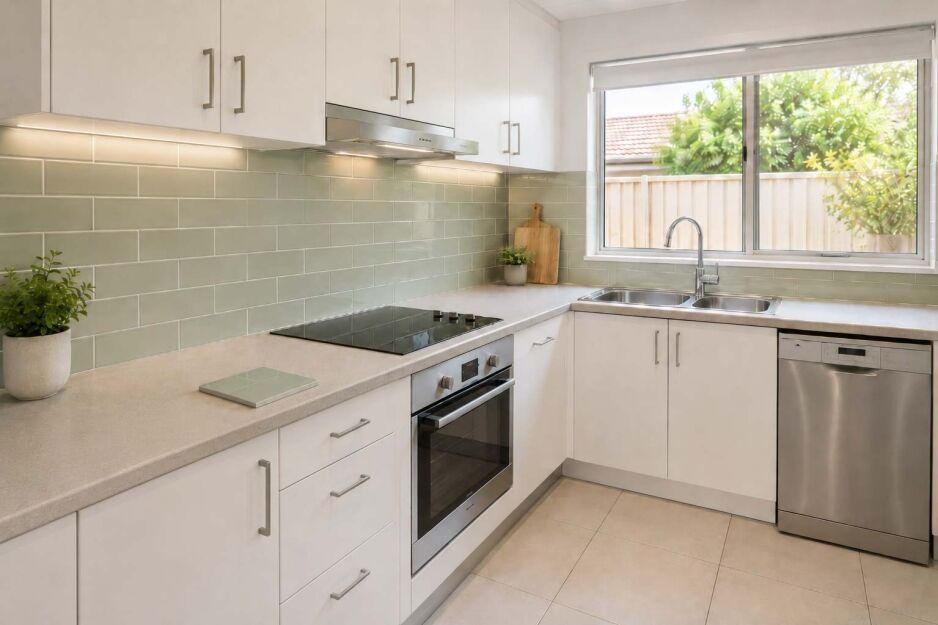
Plenty of Perth kitchens look tired long before they stop working. The cabinets are sound, the layout still makes sense, but the benchtop, splashback, sink and tap date the whole room. Learning how to renovate a kitchen on a budget starts with one simple idea: keep the parts that still work and spend where the change shows.
I have spent years helping Perth homeowners choose products that make the biggest visible difference without pulling a kitchen apart. Most budget stress comes from one fear: spending money in the wrong place. This guide helps you avoid that.
We will look at realistic budgets, high-impact swaps, cabinet refresh options, DIY jobs, trade-only work, benchtop choices and the changes that make a modest budget stretch further. Keep your kitchen layout and plumbing where they are, and your money works much harder.
Key Takeaways
- A budget kitchen renovation works best when you refresh high-impact areas instead of gutting the whole room.
- The splashback, sink and tap usually give the biggest visible change for the least spend.
- Solid cabinets can often be refreshed with handles, paint or new door fronts before you replace them.
- Keeping the sink, waste, power and gas points in place protects the budget more than any single product choice.
- Laminate and DIY Densified Stone panels give budget renovators practical benchtop options without engineered stone.
Set a Realistic Budget Before You Start
Money decisions come first. A clear budget tells you which ideas are realistic and stops you from spending on changes that do not improve the room enough.
To renovate a kitchen on a budget, set a firm limit, keep the layout in place, and put the money into the surfaces and fittings you see every day. For most Perth kitchens, that means the splashback, sink, tap, handles, cabinet fronts and benchtop.
A budget kitchen renovation usually falls into one of three spending bands:
- Under $1,000: handles, paint, deep cleaning, small splashback changes and other cosmetic updates.
- $1,000 to $5,000: a new splashback, sink, tap, handles, selected cabinet updates, basic resurfacing and possibly a new benchtop.
- $5,000 and up: larger cabinet work, a new benchtop, more trade involvement and a broader room refresh.
Trades can also book out quickly across Perth Metro, so lock in the scope before you start buying. Changing the plan halfway through is one of the easiest ways to lose the savings you worked hard to find.
Separate Your Needs From Your Wants
Before you spend, split the job into two lists. Needs come first: safety issues, broken parts, damaged surfaces, poor storage and layout problems that stop the kitchen working properly.
Wants come second. Colours, finishes and nice-to-have extras are worth considering, but only after the practical problems are covered. Where two products do the same job and the main difference is looks, I usually steer people to the mid-range option. You keep the function and save money for the areas that show more.
Spend Where It Makes the Biggest Difference

The fastest way to waste a budget is to spend on work that barely changes how the kitchen looks or functions. A smart kitchen renovation on a budget puts money into visible, high-use areas and leaves costly hidden work alone where possible.
I saw this with a Perth customer who wanted to move the sink to a new island. Once we worked through the cost, keeping the sink on its original wall freed up enough money for a new splashback and benchtop. The kitchen looked more modern, and they avoided spending a big part of the budget on pipework nobody would see.
Leave the Plumbing Where It Is
Moving water, waste or gas points adds labour, rough-in work and repair work around the walls, floors and cabinets. Even a short move can mean opening up cabinetry, rerunning services and making the area good again. Keeping the sink and tap where they already are usually gives you the biggest budget protection of any single choice.
Work With Your Existing Layout
Your kitchen layout controls what is cheap to change and what costs more. New doors, fresh handles, a tiled splashback and updated fittings can change the way a kitchen feels without touching the cabinet runs. Only look at removing a return, adding an island or moving services if the budget still covers the essentials first.
Refresh the Splashback for Less
A new splashback is one of the best-value changes in a budget kitchen. It covers a small area, so even a stronger tile choice can update the whole room without needing a large quantity of product.
Tiled splashbacks are the most practical low-cost option for most homeowners. The choice of splashback tiles is wide, from plain gloss subways to patterned and stone-look finishes, and they start from around $30 per square metre. Because the area is usually small, the total can stay low.
Where the existing tiles are sound, flat and well stuck, your tiler may be able to tile over them. That can save the cost and mess of stripping the old surface back. Have the surface checked first, because a poor base will undo the work.
Glass, stainless steel and pressed metal can work, but they usually cost more or need more specialised cutting. For most budget kitchens, tiles give the strongest result for the spend.
If you want a stone look, our DIY Densified Stone splashback panels are a smart middle ground. Each 2400 x 600mm panel is $295 inc. GST in Golden Estatuario or Grey Whisper, and the panels fix to a sound wall with construction adhesive. They suit homeowners who want a stone-style finish without paying for custom stone.
You can also use the splashback to add character without reworking the whole kitchen. A small dining nook, return wall or open shelving area can take a feature tile without adding cabinetry. Keep the feature area small and the cost stays under control.
Update the Sink and Tap
A dated sink and tired tap can make a kitchen look older than it is. Swapping both is one of the cheapest upgrades you can make, and the change is obvious the moment you walk in.
When you replace the sink, try to match the new one to the existing cut-out in the benchtop. A like-for-like size can drop into the hole that is already there, which avoids cutting or repairing the benchtop. Our range of kitchen sinks starts from $140 and covers common sizes, so finding a practical match is usually simple.
A new mixer tap gives the room a fast lift, especially if the old tap is scratched, leaking or dated. A modern kitchen mixer tap starts from $80 and changes the look straight away. Black and brushed finishes are popular, but chrome still looks sharp and often costs less. Check the WELS star rating while you shop, because a more efficient tap uses less water.
Perth water can carry enough minerals to mark and scale sinks and tapware over time, so easy-clean surfaces and quality mixers are worth choosing. Small swaps like these are where affordable kitchen renovations get strong visible return for modest spend.
Refresh Cabinets First, Then Replace Only What You Need
Cabinets are usually the biggest line in a kitchen, so this is where budgets are won or lost. If you want to know how to renovate a kitchen on a budget, check the existing cabinets before you price up a full replacement.
Refresh What You Already Have
If the carcasses are solid, square and free from water damage, the doors and fronts are often the part that dates the room. Start small. New cabinet handles are the cheapest visible change, at $10 to $12 each depending on size.
The next step is repainting the doors and fronts. It takes more time and care, but it still costs far less than new cabinetry. The biggest refresh is replacing the door fronts while keeping the existing carcasses, which can look excellent but adds up once every door and drawer is counted.
A customer came in not long ago ready to rip out the whole kitchen. After talking through the cabinet condition, they went home, changed the handles and repainted the fronts instead. They told me later the kitchen looked fresh enough that full replacement came off the list entirely.
Pre-Assembled vs Flat-Pack Cabinets
If the cabinets are damaged, poorly made or no longer suit the layout, replacement may be the better spend. At that point, the choice is usually between pre-assembled cabinets and a flat-pack kitchen you build yourself. If you know your old cabinets need replacing but want to understand what you’ll actually gain from a full upgrade, read our guide to the benefits of replacing kitchen cabinets before you compare cabinet types.
| Factor | Pre-Assembled Cabinets | Flat-Pack Cabinets |
| Assembly | Arrives built and ready to install | You build each unit on site |
| Time and Effort | Lower time commitment | Higher time commitment, with more room for assembly errors |
| Finish and Alignment | More consistent because the cabinet is already built | Depends on the product and assembly quality |
| Best For | Budget renovators who want a faster, cleaner result | Confident DIYers with time, tools and patience |
For many budget renovators, pre-assembled cabinets are the safer pick. They save time and remove the assembly mistakes that can throw out alignment across a whole run.
If you want to compare the two options properly, our guide to pre-assembled vs flat-pack kitchens breaks down the cost, time and finish differences. We supply pre-assembled cabinets, which suits homeowners who want a clean result without building every unit from a flat box.
Reuse and Resurface What Still Works
Reusing and resurfacing is different from a cabinet facelift. This is the wider audit of the whole kitchen: what can stay, what can be repaired, and what must be replaced.
Start with the cabinet boxes, then check the benchtop, sink, tap, handles, hinges and internal storage. If a part still works, looks acceptable and is not damaged, it may not need replacing. That is how a low cost kitchen renovation stays focused.
Benchtops can sometimes be resurfaced, depending on the material and wear. A benchtop that is structurally sound but tired on top may be a candidate. Heavy swelling, water damage or deep failure usually means replacement is the better spend.
The same thinking applies to fittings. A tap, sink or handle that still works and suits the new look does not need replacing just because the rest of the kitchen is getting attention. If the cabinets are your main focus, our guide to a DIY cabinet refresh on a budget gives more detail on paint, doors and hardware.
Decide How Much to Take On Yourself
Doing some of the work yourself is one of the easiest ways to bring a kitchen budget down. The key is knowing which jobs are safe to take on and which ones need licensed trades.
Many tasks are realistic for a confident homeowner. Safe strip-out, painting, fitting handles, cleaning, product selection and basic surface prep can all reduce labour costs. These are the jobs that quietly inflate a quote when you pay someone else to do them.
Some work is not DIY. Leave plumbing, electrical and gas work to licensed trades. WA Building and Energy provides a licence search for electricians, gas fitters and plumbers, and WA electrical safety guidance states that electrical work must be carried out by someone with the relevant electrical licence. Check the relevant WA licence requirements before you start any service changes.
A clear order keeps the job moving and stops you redoing finished work. Keeping the existing kitchen layout makes this easier, because the plumbing and cabinet positions stay put.
Here is a simple order of works for a budget kitchen:
- Plan the scope and set the budget
- Strip out only what needs to go
- Book licensed plumbing, electrical or gas work where required
- Install cabinets and benchtop
- Tile or fit the splashback
- Fit the sink, tap and finishing fixtures
- Paint and complete final touch-ups
Choose a Benchtop That Fits the Budget
Natural stone looks great, but it rarely suits a tight budget. Laminate and stone-look panels give budget renovators a more practical path, and both can change the feel of a kitchen quickly.
A laminate benchtop is the practical low-cost choice for most budget kitchens. Modern laminate comes in finishes that mimic stone, timber and concrete, so you get a current look for a fraction of the price of a solid surface. It is also DIY-friendly, which helps keep installation costs down if you are happy cutting and fitting it yourself.
If you want a real stone look, our DIY Densified Stone panels are the step up at $595 per 2400 x 600mm panel. You can cut the panel to size and fit a drop-in sink with common tools, much like laminate. It is non-porous, scratch and stain resistant, and contains zero crystalline silica.
If you have been looking at engineered stone, remember that the national engineered stone ban has applied since 1 July 2024. Safe Work Australia states that the use, supply and manufacture of engineered stone benchtops, panels and slabs is prohibited, with limited exceptions for existing installations. Safe Work Australia explains the engineered stone ban in more detail.
Full stone such as Silestone is only available as part of a complete kitchen with us, so it sits outside a budget refresh. Match the benchtop to your budget and installation path. Laminate and Densified Stone are both strong picks for cheap kitchen renovations because they give the look without the cost of a custom stone job.
Frequently Asked Questions
Can You Refresh a Kitchen for $1,000?
You can refresh a kitchen for around $1,000 if you focus on high-impact, low-cost changes. A small splashback update, new sink or tap, fresh handles and paint can modernise the room without touching the structure. A full kitchen renovation under $1,000 is unlikely once cabinets or benchtops are involved, so keep this budget to cosmetic work.
What Is the Cheapest Way to Renovate a Kitchen?
The cheapest way to renovate a kitchen is to keep the layout and plumbing in place and update the surfaces people see. Paint or refresh the cabinet fronts, fit new handles, lay a new splashback and replace the sink and tap. These changes improve the look without the labour cost of moving services or rebuilding cabinetry.
In What Order Should You Renovate a Kitchen?
The best order for a kitchen renovation is planning, budgeting, strip-out, licensed trade work, cabinets, benchtop, splashback, sink, tap and finishing touches. Painting and detail work should come last so you do not damage finished surfaces. This order keeps the job practical and reduces the chance of redoing work.
What Is the Most Expensive Part of a Kitchen Renovation?
The most expensive part of a kitchen renovation is usually cabinetry, especially custom-made cabinets. Benchtops, appliances and trade work can also take a large share of the budget. Choosing pre-assembled cabinets and a laminate or Densified Stone benchtop helps keep the largest costs under control.
So, What Can You Change on Your Budget?
A budget can change more than many people expect, as long as the money goes into the right places. Once you keep the layout and services where they are, how to renovate a kitchen on a budget becomes a matter of choosing the swaps that work hardest.
Start with the splashback, sink, tap and handles. Refresh cabinet fronts before replacing the whole run. Add a laminate or Densified Stone benchtop if the budget allows. Replace only what is damaged, unsafe or no longer doing its job.
My advice is simple. Refresh first, then replace where the existing product has reached its limit. That order keeps the budget under control and still gives the kitchen a cleaner, more current look.
When you are ready to price it up, browse our pre-assembled kitchen cabinets online, or come and see them at Ross’s Guildford. Delivery across Perth Metro is a flat $100, so you know the cost before you start.
