
Kitchen Cupboards vs Cabinets: What’s the Difference?
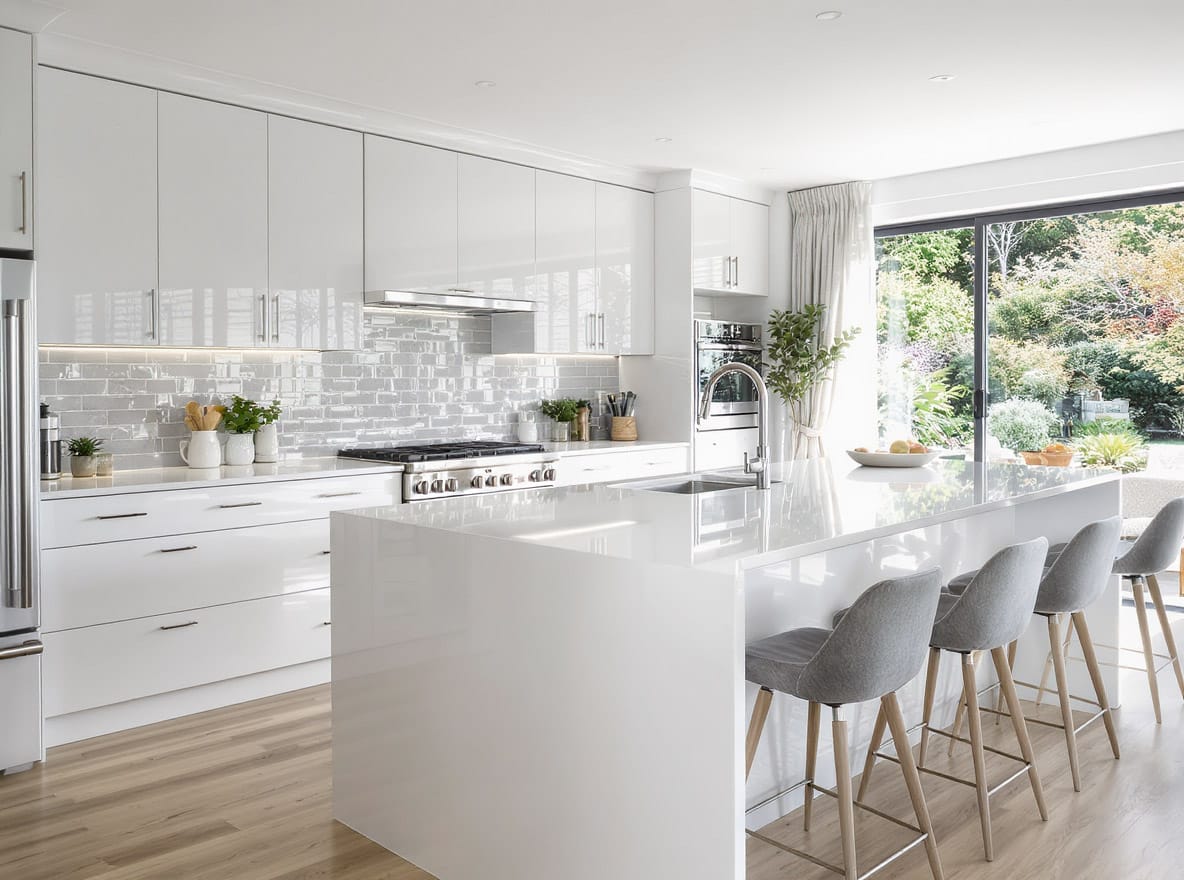
In Australia, the terms kitchen cupboards and kitchen cabinets are often used interchangeably, so there isn’t a strict rule that separates the two in everyday conversation. Both describe the storage units that make up a kitchen.
For this guide, the useful distinction is their position and job in the layout. Kitchen cupboards generally refer to overhead or tall storage such as wall units and pantries, while kitchen cabinets often refer to the floor-mounted units beneath the benchtop. Understanding that practical difference makes it easier to plan where your storage should go and what each unit needs to hold.
Most kitchens use both. The important decision isn’t which term you use, but how you combine upper, base and tall storage to suit the room and the way you use your kitchen.
What Is a Kitchen Cupboard?
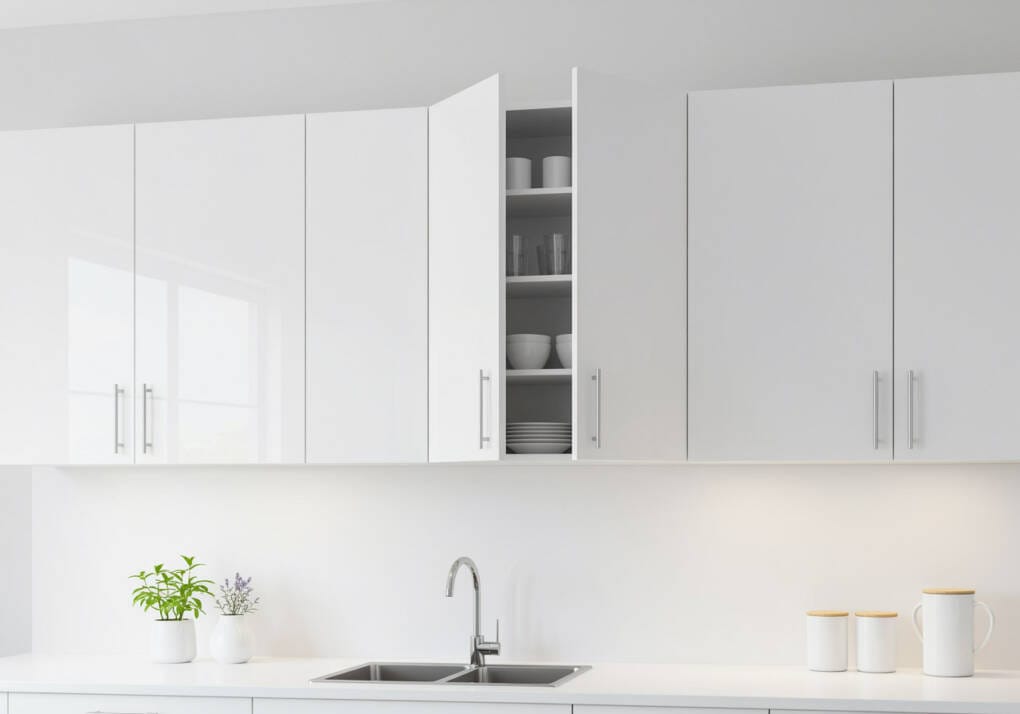
Kitchen cupboards generally use the vertical space above the benchtop or in tall pantry positions. Typically mounted on the wall or designed as tall pantry kitchen cupboards, they make the most of unused space above benchtops or in corner sections.Their purpose is simple: to maximise vertical storage while keeping frequently used items like dishes, glasses, and dry goods within easy reach.
Wall kitchen cupboards are a staple in both traditional and modern kitchen designs. Available in a range of widths, heights, and finishes, they’re easy to match with base cabinets and drawers for a seamless, cohesive look. Many homeowners choose them to store lighter kitchenware, freeing up benchtops and reducing clutter. Tall pantry configurations, on the other hand, offer deep shelving ideal for bulk storage and efficient pantry organisation.
| Pros | Cons |
| Ideal for compact kitchens where space efficiency matters | Limited depth compared to base cabinets |
| Keeps benchtops clear for food preparation | Not suited for heavy cookware or appliances |
| Provides quick, eye-level access to everyday items | Requires sturdy wall fixing for safe installation |
| Visually opens up the room by drawing the eye upward |
To explore layout and size variations, see Overhead Kitchen Cabinet Types & Configurations for guidance on matching your cupboards to the rest of your design.
TL;DR: Kitchen cupboards are wall-mounted or tall vertical storage units that maximise space and accessibility, making them useful for compact kitchens and everyday storage.
What Is a Kitchen Cabinet?
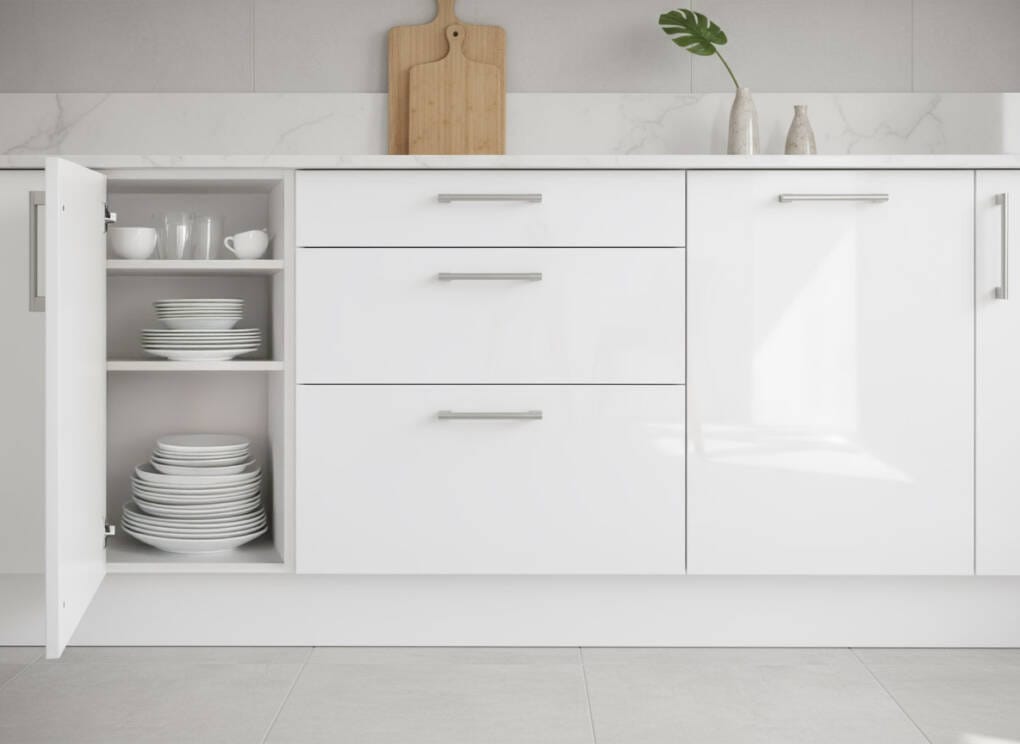
Kitchen cabinets generally refer to the floor-mounted units that form the base of a kitchen layout. Unlike wall cupboards, these are floor-mounted units installed beneath benchtops to form the main structure of the kitchen. They include drawers, shelves, and appliance housings, providing the strength and storage capacity that every functional kitchen needs.
As part of a modular cabinetry system, kitchen cabinets are designed to support benchtops and house sinks, dishwashers, or ovens. They offer deep, sturdy storage for pots, pans and heavier cooking essentials that need easy access during food preparation. In most layouts, kitchen cupboards and cabinets work together: cabinets anchor the kitchen structurally, while cupboards add lighter storage above.
| Pros | Cons |
| Sturdy and durable — built to support benchtops and appliances | Require more floor space |
| High-capacity storage ideal for cookware and utensils | Less flexible placement once installed |
| Adds structure and balance to the overall kitchen design | Can be costlier to modify later |
| Customisable layouts through modular cabinetry |
Understanding the difference between cupboards and cabinets helps homeowners choose the right mix for their needs while keeping the layout practical and space-efficient. For more guidance on planning layouts and selecting units, see The Ultimate Kitchen Cabinet Buying Guide.
TL;DR: Kitchen cabinets form the main base of the kitchen layout, offering stability, strength, and the bulk of storage capacity.
Key Comparisons Between Cupboards and Cabinets
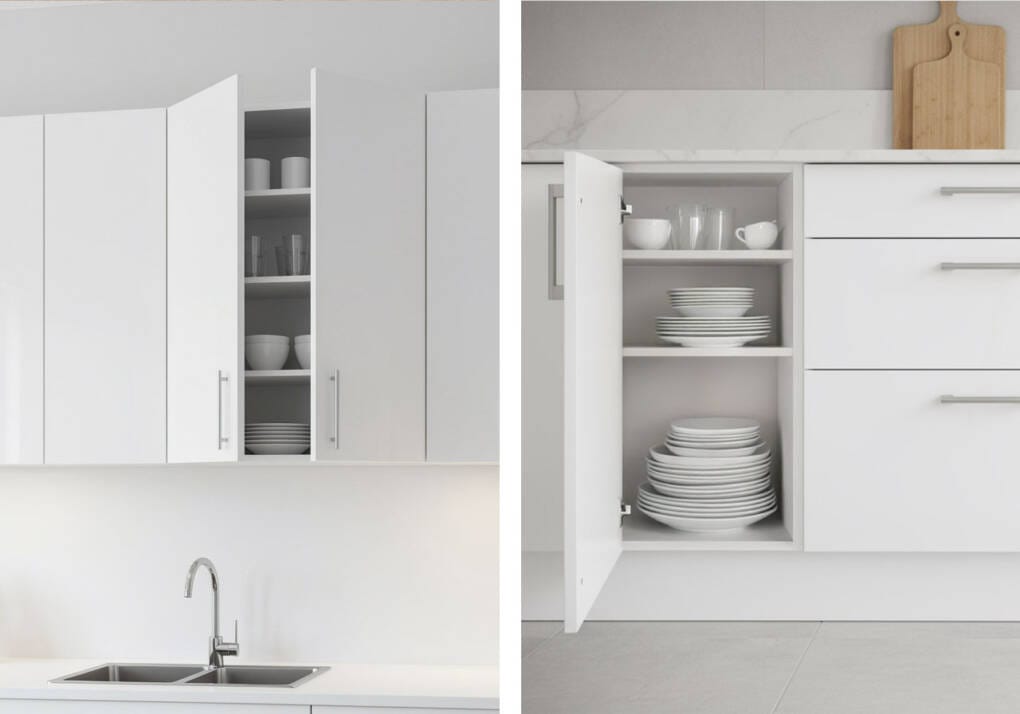
While kitchen cupboards and cabinets both serve the same storage purpose, they differ slightly in structure, placement, and function. Understanding these distinctions helps homeowners plan a practical, well-balanced kitchen design that works well in everyday use.
Design
In Ross’s current range, wall cupboards and base cabinets use the same moisture-resistant cabinet construction and matching door finish.
The difference lies in their setup: cupboards are wall-mounted or stacked vertically, while cabinets are installed at floor level with support feet, forming the kitchen’s base. Cabinets are designed to sit beneath benchtops, while cupboards include a finished top, making them complete standalone storage solutions when mounted or stacked.
Placement
Cupboards are typically mounted above benchtops or used as tall pantry units to maximise vertical storage in a modular layout. Cabinets arefloor-mounted and act as built-in cabinetry, defining the kitchen’s base structure and supporting appliances and benchtops.
Storage Use
Cupboards are ideal for storing lighter items such as crockery, cups, and dry goods. Cabinets handle heavier cookware, small appliances, and cleaning supplies, which benefit from deeper shelves and stronger structural support.
Material
Cupboards and cabinets don’t need different materials simply because they sit in different parts of the kitchen. In a matching kitchen system, the doors, cabinet boards and finishes will usually be consistent across wall, base and pantry units.
What matters more is choosing cabinetry made for kitchen conditions. Moisture-resistant board, durable door finishes and reliable hinges and drawer runners all contribute to how well the cabinetry handles regular use.
Ross’s current kitchen cabinet range uses moisture-resistant HMR board, 2-pack painted doors and soft-close hardware across its pre-assembled cabinetry.
Cost
Base cabinets often cost more than a similar-width wall cupboard because there is usually more involved in the unit. Base cabinets may include support legs, deeper carcasses, drawers or other hardware, and they need to carry the benchtop and whatever sits above them.
Size and configuration also make a big difference. A simple wall cupboard, drawer unit, pantry and sink cabinet can all have very different prices even when they come from the same cabinet range.
For that reason, compare the units you actually need for your layout rather than assuming cupboards will always be cheaper than cabinets.
Aesthetic
Cupboards help open up visual space by drawing the eye upward, while cabinets ground the kitchen visually, creating structure and balance. Together, they achieve a cohesive look that suits both contemporary and traditional kitchens.
Durability
Both cupboards and cabinets need to cope with regular kitchen use, but they deal with different loads.
Base cabinets carry benchtops and often store heavier cookware or appliances. Wall cupboards carry less weight but depend on secure wall fixing. Good cabinet construction matters in both positions, so durability comes down more to the materials, hardware and installation than whether the unit is called a cupboard or cabinet.
Customisation
Cupboards and cabinets can still be configured differently even when they use the same cabinet style.
The main choices are usually the width and type of unit, the mix of doors and drawers, internal shelving and handle selection. That lets you build a combination of base, wall and pantry storage around the available space without making every cabinet perform the same job.
TL;DR: Cupboards maximise wall space, while cabinets provide deeper storage and support at floor level.
When to Choose Each One
Most kitchens use a combination of cupboards and cabinets to balance storage with the available layout. Knowing where each type works best helps you keep everyday items accessible without crowding the room.
Wall kitchen cupboards are ideal for small kitchen designs where every centimetre counts. Mounted above benchtops, they free up valuable floor space while keeping everyday items close at hand. Because they sit at eye level, they also create a sense of height and openness, making compact kitchens appear larger than they are.
Base cabinets provide the foundation of everyday kitchen functionality. These floor-mounted unitswork well for storing heavier cookware, small appliances and cleaning supplies, which need sturdy, easily accessible storage.Their structure also supports benchtops, sinks, and built-in appliances, making them essential to any well-planned kitchen layout.
For vertical organisation, pantry kitchen cupboards are useful where you need a lot of storage without spreading cabinetry across more wall space. Tall units can bring food, containers and smaller appliances into one dedicated storage area.
In practice, most kitchens need a combination. Start with the base cabinets required for your benchtop, sink and appliances, then add wall cupboards and pantry storage where they improve access without making the room feel crowded.
If you’re moving from planning into product selection, you can compare Ross’s range of pre-assembled kitchen cabinets once you know which types of units your layout requires.
For more inspiration, see How to Maximise Your Kitchen Space.
TL;DR: Combine wall-mounted cupboards with base cabinets to balance upper and lower storage in the kitchen.
Cupboards And Cabinets Work Best Together
Kitchen cupboards and kitchen cabinets serve different practical roles, even though Australians often use the terms interchangeably. Wall and tall cupboards make use of vertical space, while base cabinets support the benchtop and give you deeper storage closer to the work area.
Most kitchens need a combination rather than one or the other. The right balance depends on your room size, layout, appliances and what you need to store.
Once you’ve worked out the mix your kitchen needs, you can compare our kitchen cabinets to see the available base, wall, drawer and pantry configurations.
