
Wall-Mounted Bathroom Taps: Pros and Cons
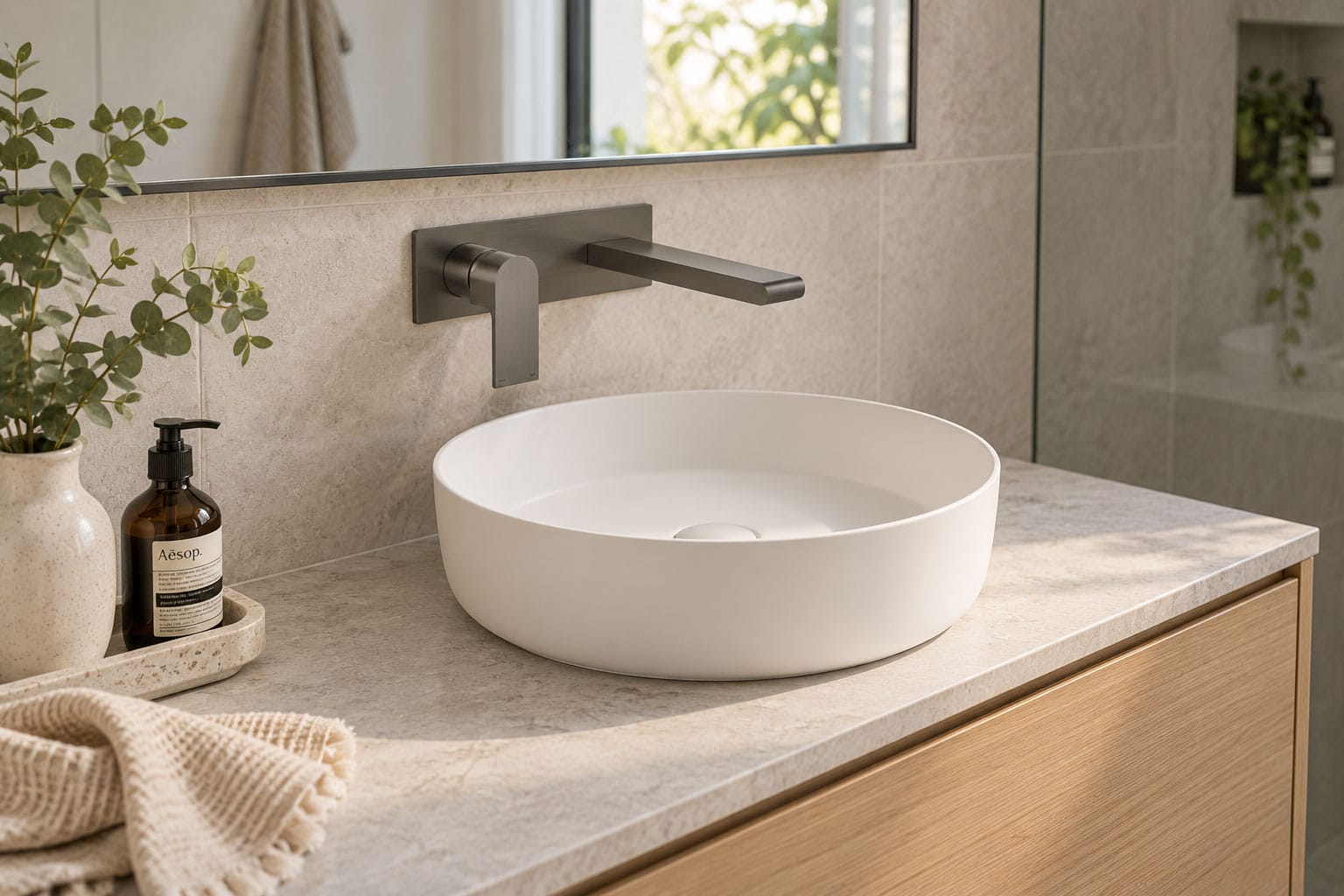
Are wall mounted taps good? In the right bathroom, yes, especially when the basin, plumbing and wall position are planned together before tiling starts.
I see this all the time with Perth renovations. Someone comes into the showroom loving the clean look of wall-mounted tapware, then we start talking about the basin, where the spout will sit and whether the plumbing can be set correctly. That is usually when the real decision becomes clear.
Wall-mounted taps can free up vanity space and make the area around the basin easier to wipe down. They can also work really well with above-counter basins. The trade-off is that they need more planning than a deck-mounted mixer and give you less flexibility to change the setup later.
This guide covers the practical pros and cons so you can decide whether wall-mounted taps make sense for your bathroom renovation.
Are Wall Mounted Taps Good?
Wall-mounted taps can be a very practical choice for bathrooms when the basin, plumbing and tap position are planned before tiling. They keep the vanity surface clear and make cleaning around the basin easier, but they need more precise planning than deck-mounted tapware and give you less flexibility to change the setup later.
That planning starts with the plumbing. The plumbing position, vanity height, basin position and spout location all need to work together before the wall is finished. If any of those details are wrong, even good tapware can be frustrating to use every day.
The clean vanity top is a real advantage, particularly with an above-counter basin. There are fewer fittings sitting around the basin, which gives you more clear surface and fewer awkward spots to wipe around.
That is why the pros and cons of wall-mounted bathroom taps really come down to the renovation itself. They can work extremely well in a planned renovation, but another setup may be easier if you are keeping the existing plumbing and making a quick update.
Benefits of Wall Mounted Taps in a Bathroom
Wall-mounted tapware has several practical advantages when the vanity and basin layout are being planned together from the start.
Clearer vanity surface. Because the tapware sits on the wall, there are fewer fittings taking up room around the basin. That can leave more usable space on the vanity.
Easier cleaning. With fewer fittings on the vanity top, there are fewer tight gaps where water, dust and soap residue can collect.
A good match for some above-counter basins. The spout can be positioned independently of the basin deck, which can avoid the need for a tall basin mixer behind a taller bowl.
A cleaner basin area. Keeping the tapware on the wall can make the area look less cluttered, but I would still treat that as a secondary benefit. Plumbing position, basin height and spout reach matter far more than appearance.
Best suited to planned renovations. The benefits of wall mounted bathroom taps are strongest when the basin, vanity and plumbing are coordinated together rather than being forced into an existing layout.
What Are the Disadvantages of Wall Mounted Taps?
The main disadvantages of wall-mounted taps come back to concealed plumbing and the fact that the final position is fixed before the wall is finished.
They need earlier decisions. The basin, vanity, tapware and plumbing rough-in all need to work together before tiling starts. Deck-mounted tapware usually gives you more flexibility later.
Positioning mistakes are harder to fix. If the spout sits too high, too low, too far back or too far forward, correcting it can involve more than simply swapping the tap.
Spout reach matters. A spout that is too short can direct water too close to the back of the bowl, while too much projection can increase splashing.
Retrofits can involve more work. Changing an existing bathroom from deck-mounted to wall-mounted tapware may require plumbing relocation and access to the wall.
Future changes can be less flexible. Servicing and replacement depend on the wall mixer design, the existing rough-in and whether compatible parts remain available. That does not mean the wall always needs to be opened.
Wall-mounted tapware can also cost more to install if extra plumbing or wall work is needed. That does not make it a poor choice, but the bathroom layout and plumbing need to suit it from the start.
Wall Mounted vs Deck Mounted Tapware
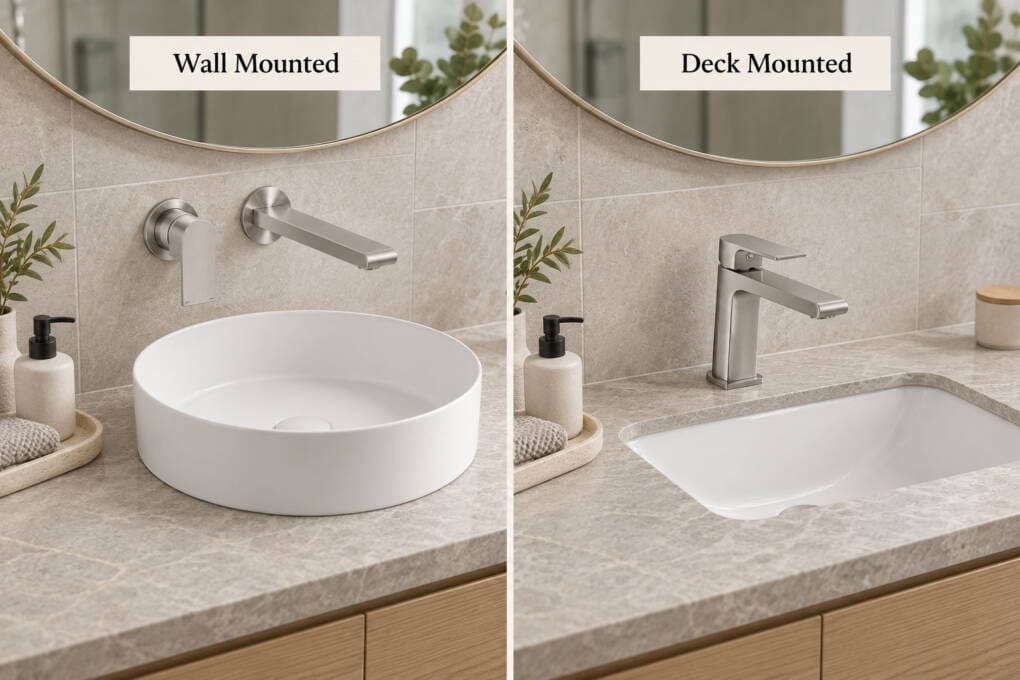
For anyone comparing wall mounted vs deck mounted tapware, the main difference is where the tap is fixed and how early that decision needs to be made. Some suppliers also describe deck-mounted tapware as bench-mounted tapware when it is fitted through the vanity top.
| Factor | Wall-Mounted Tapware | Deck-Mounted Tapware |
| Mounting position | Fixed through the finished wall | Fixed through the basin, vanity top or deck |
| Vanity surface | Keeps the tap body off the vanity | Tapware uses some basin or vanity space |
| Cleaning | Fewer fittings to wipe around on the vanity | More fittings and edges to clean around |
| Plumbing | Concealed behind the wall | Usually accessed below or behind the basin or vanity |
| Renovation timing | Needs to be planned earlier | Usually more flexible during an update |
| Retrofit suitability | Can require plumbing and wall changes | Often easier if existing holes and plumbing remain |
| Changes later | More restricted once the wall is finished | Usually easier to replace within the same deck layout |
| Basin coordination | Height and spout reach need careful planning | Still important, but usually more forgiving |
Wall-mounted tapware often suits a full bathroom renovation where the plumbing can be set before tiling. A deck-mounted basin mixer can be simpler when the existing vanity, basin holes or plumbing are staying. Neither option is automatically better.
If you are still weighing up the mixer itself, our guide to choosing a bathroom mixer tap covers the main practical considerations.
Cleaning and Vanity Space
Wall-mounted taps keep the tap body off the vanity, leaving fewer fittings to clean around. On a larger vanity, the space saving may be minor, so I would not choose wall-mounted tapware for bench space alone if the rest of the layout does not suit it.
Plumbing and Renovation Timing
This is where the wall mixer vs deck mixer decision matters most. Wall-mounted tapware needs the rough-in set correctly before the finished wall goes on. Deck-mounted tapware is usually more forgiving in a retrofit because the plumbing can often stay below the basin or vanity.
Replacement and Flexibility
Future changes are another difference between a wall-mounted setup and a basin mixer. A deck-mounted mixer can often be replaced within the same hole or deck layout, while wall-mounted tapware is tied more closely to the existing rough-in. Servicing does not always mean opening the wall, but moving the tap later can be more involved.
What Needs to Be Planned Before Installing Wall Mounted Taps?
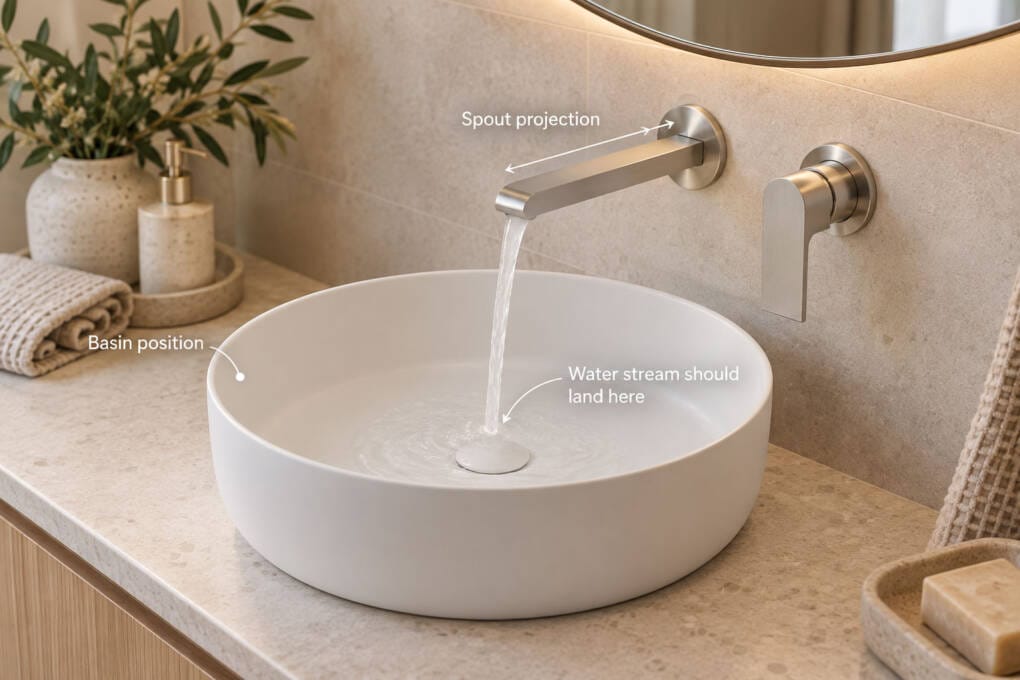
Wall-mounted tapware needs more forward planning because the plumbing position is set before the bathroom is finished. The basin, vanity, spout and wall all need to work together, so this is one decision I would lock in early.
Confirm the Basin Position First
Start with the basin and vanity layout. You need to know the basin height and position before the final tap position is set. This matters even more with an above-counter basin. There is no single mounting height that works for every bathroom.
Check Spout Reach and Water Position
Spout reach is just as important as tap height. A short spout can make the basin awkward to use, while too much projection can increase splashing. I always recommend checking the actual basin dimensions and spout projection together before the plumbing rough-in is finalised.
Allow for the Finished Wall
The plumber also needs to allow for the finished wall surface. Tiles, adhesive and wall linings add thickness, so exact rough-in measurements should come from the tapware manufacturer’s installation instructions rather than a generic rule.
If you want more detail on the installation side, see our guide to installing quarter-turn taps and wall assemblies.
Use a Licensed Plumber
In WA, installing wall-mounted tapware is work for a licensed plumber or permit-holder.
Before installation, check that the tapware has the required WaterMark certification. For basin taps covered by the scheme, also confirm the product’s WELS registration and rating.
Getting those decisions right early makes the tapware easier to live with and helps avoid expensive changes after tiling.
Are Wall Mounted Taps Harder to Maintain or Replace?
Wall-mounted taps are not automatically difficult to maintain, but servicing and replacement depend more on the original installation and tapware system.
Some cartridges, handles and trim components can be serviced from the front, depending on the design. I would not assume every repair means removing tiles. The bigger limitation is changing the setup or moving the tap position because the plumbing is concealed.
Replacement parts matter too. Future servicing is easier when compatible cartridges, trims and other components remain available. For me, that is part of deciding whether wall-mounted taps are worth it. If future flexibility is a major priority, deck-mounted tapware can be easier to change.
Frequently Asked Questions
These are the practical questions that usually come up once someone has decided wall-mounted tapware could suit their bathroom.
Are Wall Mounted Taps Worth It?
Wall-mounted taps are worth considering when the bathroom is being substantially renovated and the plumbing can be planned before the wall is finished. They make the most sense when the basin and vanity positions are known and clear vanity space and easier cleaning matter to you.
I have had customers come in set on wall-mounted tapware because they love the look, then realise their existing vanity, basin holes and plumbing are all staying put. In that situation, a basin mixer can be the more practical choice. There is no point creating extra wall and plumbing work just to force a layout that does not suit the renovation.
If you are starting fresh, wall-mounted tapware can be an excellent option because the rough-in can be positioned to suit the basin from the beginning. For a quicker update, deck-mounted tapware usually gives you more flexibility.
For the right bathroom, wall-mounted taps can work extremely well. Choose them because they suit the layout and renovation stage, not just because you like the look.
If wall-mounted tapware suits your plan, compare our wall taps and mixers online or visit our Guildford showroom to see the options in person.
