
Bathroom Tile Trends You’ll Want to Follow!
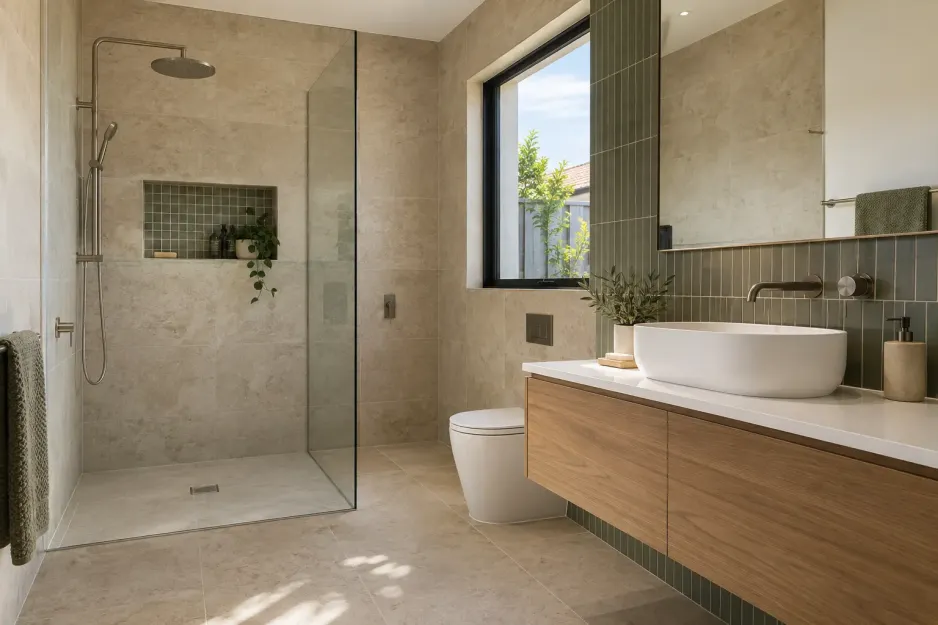
Bathroom tile trends 2026 are warmer, more textured and far more personal than the cold grey bathrooms we saw everywhere a few years ago. Warm stone looks, earthy colours and carefully placed patterns are taking over. The hard part is knowing which trends will last and which ones may quickly date your bathroom.
I see this play out in our Guildford showroom all the time. A customer arrives certain they want the same cool grey bathroom they saved years ago. Once we place that tile beside a warm stone-look option and their vanity finish, they often realise the warmer combination feels fresher and easier to live with.
In this guide, I’ll explain which bathroom tile trends are leading 2026, which looks are fading and how to use them without overdoing your room. This keeps the focus on what is in and out, rather than becoming another catalogue of bathroom tile ideas.
What Bathroom Tiles Are Trending in 2026?
The bathroom tiles trending in 2026 include warm stone and travertine looks, earthy colours, bold marble-look veining, small mosaics, restrained vintage patterns and larger formats with fewer grout lines. Cold grey schemes and busy feature treatments are fading as homeowners choose warmer, calmer bathrooms with more natural variation and personality.
The latest bathroom tile trends share one clear direction. They add interest through colour, texture or scale without making every surface compete for attention. A strong pattern may cover one defined area, while quieter tiles carry the rest of the room.
I think that balance matters more than following every trend on the list. The best 2026 bathroom tile trends can still look good years from now, provided the tiles suit the room and their intended use. In the next section, I’ll show you how each trend works and where it makes the most sense.
The Bathroom Tile Trends Leading 2026
The bathroom tile trends shaping Perth homes in 2026 are less about one fashionable product and more about how the whole room feels. Warmth, texture and natural variation are replacing the colder, flatter bathrooms of recent years. I have narrowed the list to six trends that feel current, work in real bathrooms and can be created using tiles available from Ross’s.
Warm Stone and Travertine Looks

Warm stone is one of the strongest bathroom tile trends this year. Instead of sharp whites and blue-based greys, homeowners are choosing sand, cream, beige and softly varied stone tones. These colours bring warmth into the room while remaining easy to coordinate with other finishes.
I particularly like this look with a timber vanity because the two materials share a natural warmth. It also works with white bathroomware and most tapware finishes. Chrome and brushed nickel keep the scheme light, while black or brushed gold can create stronger contrast.
Travertine-look and stone-look porcelain tiles give you the visual character of natural stone in a practical tile format. They are lookalike products, not natural stone, and each tile still needs to be checked for its intended application. Our guide to travertine-look tiles compared with natural travertine explains the differences in more detail.
For a calm result, use one warm stone family across the largest surfaces. You can then bring in interest through your vanity, tapware or one smaller feature area.
Earthy Colours and Muted Greens
Colour has returned to bathrooms, but it is more relaxed than the bright feature walls many of us remember. Muted greens, mineral blues, warm beige and clay-influenced neutrals add character without making the room feel restless.
Green tiles work particularly well because they connect naturally with timber, stone and indoor plants. Sage and olive tones can feel soft and settled, while a deeper green gives a vanity or shower wall more weight. Terracotta is also appearing in current bathroom design, although it works best as part of a warm bathroom colour scheme rather than an isolated burst of orange.
You do not need to use colour across the entire bathroom. A muted green shower wall, vanity splashback or tiled niche can provide enough interest. Warm neutral tiles can cover the remaining walls and floor, giving the stronger colour room to breathe.
Before committing, compare the tile with your vanity top, tapware and planned lighting. A green that looks soft under showroom lighting may appear darker or cooler in a bathroom with little natural light.
Statement Marble-Look Veining
Marble-look tiles have been popular for years, but the current bathroom tile design trend favours stronger, more expressive veining. The effect can add movement to a bathroom without relying on several colours or patterns.
The key is deciding where the marble-look tile should lead the design. One shower wall or vanity wall usually has more impact than scattering different marble patterns around the room. You can also continue the same suitable tile through a defined zone if the size and application work.
I recommend matching the surrounding tiles to either the background colour or a softer vein in the marble look. A warm white base works well with cream or beige tiles. Cooler veining can pair with soft grey, provided the finished room does not become cold.
Marble-look porcelain gives you the appearance of marble without pretending to be the natural material. Product variation, finish and application still differ, so always check the individual tile before choosing it for a bathroom floor or wet area.
Small Mosaics in Focused Areas
Small mosaics and narrow Kit Kat tiles are returning as carefully placed details. Rather than covering every wall, homeowners are using them to draw attention to shower niches, vanity splashbacks and compact feature zones.
This approach gives a bathroom texture and personality without making the room feel busy. It can also be a practical way to bring a stronger colour into the design. A green, blue or patterned mosaic may feel like too much across a full wall but work perfectly in a smaller area.
More grout joints create part of the visual effect, but they also mean more grout to clean. That trade-off matters in a shower. Before selecting a mosaic, confirm where it can be installed and ask your tiler how the sheets will line up around corners, niches and fittings.
Our guide to using mosaic tiles in bathrooms covers the available styles and placement ideas in more detail. For this trend, restraint is the difference between an interesting detail and a room with too much happening.
Vintage-Inspired Pattern in Softer Doses
Vintage influence is back through familiar shapes, softened colours and encaustic-look patterns. The current version feels more controlled than the loud patchwork floors that appeared in many renovations several years ago.
At Ross’s, we describe these products as encaustic-look tiles because they recreate the appearance of traditional encaustic designs. They are not handmade encaustic or hydraulic tiles. That distinction matters when comparing materials, maintenance and price.
Pattern can work well across a bathroom floor, powder-room wall or one defined feature area. It is harder to balance when it covers several large surfaces, especially in a small bathroom. Plain surrounding tiles allow the design to remain the focus without adding another competing pattern.
Choose colours that connect with the vanity, wall tile or tapware rather than treating the patterned tile as a separate decoration. Our guide to using feature tiles without overdoing them can help you choose the right location and scale.
Larger Formats and Continuous Surfaces
Larger tile formats continue to shape modern bathroom tile trends. Sizes such as 600 × 600 mm can reduce the number of grout lines and create a calmer, less interrupted surface. They can work in both large and small bathrooms, but the room dimensions and tile set-out still matter.
A related look is tile drenching. This means carrying the same tile or colour family across several surfaces to create visual continuity. It can make a bathroom feel more cohesive, particularly when the tile has soft variation rather than a strong repeating pattern.
That does not mean one tile automatically suits every surface. Bathroom walls, the main floor and the shower floor have different installation and performance considerations. Your chosen product must be suitable for each intended use.
Larger tiles can also create awkward cuts around floor wastes, corners and fixtures if the room has not been planned properly. Ask your tiler to review the dimensions, falls and starting points before ordering. A well-planned layout can feel calm and generous. A poor one can leave narrow cuts that draw attention for all the wrong reasons.
These six trends are not a checklist for one bathroom. Choose the idea that suits your space, then give the other surfaces a quieter supporting role. For a broader range of styles, layouts and colour combinations, see our guide to bathroom tile ideas for Australian homes.
Bathroom Tile Looks That Are Going Out of Style
Bathroom tiles do not become unusable because the year changes. In most cases, it is the way a colour, pattern or format is used that begins to feel dated. Grey, white and patterned tiles can still work well, but newer looks favour more warmth, restraint and natural variation.
| Fading treatment | Why it can feel dated | A more current approach |
| Cold grey across every surface | Using the same cool grey on the floor and walls can make a bathroom feel flat and impersonal, especially under cool lighting. | Keep grey if you like it, but add sand, beige, timber or muted colour to bring warmth and contrast into the room. |
| Plain white subway tiles in a standard brick layout | This combination has appeared in so many bathrooms that it can feel like a default choice rather than a considered design. | Try a vertical layout, a softer colour, a handmade-look surface or grout that works more deliberately with the tile. |
| Busy patchwork across large areas | A strong repeating pattern can overwhelm a bathroom and limit your options for the vanity, tapware and accessories. | Use encaustic-look pattern on one floor, wall or defined feature area, then support it with quieter surrounding tiles. |
| Several competing feature tiles | Combining marble veining, mosaics and bold floor pattern can divide the room into too many focal points. | Choose one main feature and let the remaining surfaces repeat its colour or undertone. |
| Choosing a fashionable floor tile by appearance alone | A tile may suit the desired style but be difficult to set out, clean or use safely in the planned location. | Confirm its intended application, available technical information, room dimensions, floor falls and likely cuts before ordering. |
I have seen good grey and white tiles produce bathrooms that still feel fresh years later. I have also seen fashionable products date quickly because too many strong ideas were used together. The product is rarely the whole problem. The colour balance, layout and number of competing features usually make the greater difference.
That is why I would not call grey tiles, subway tiles or patterned tiles “out”. Each can still suit a modern bathroom. The safer approach is to give an established tile a warmer palette, a fresher layout or a more controlled role in the room.
How to Use Tile Trends Without Dating Your Bathroom
A trend can give your renovation a clear direction, but it should not make every decision for you. I prefer to start with the surfaces that need to work hardest, then decide where colour, pattern or texture will have the most impact. This keeps the bathroom practical while still giving it a current look.
Start With a Long-Term Base Tile
Choose the main floor and largest wall areas first. These tiles should suit their intended surfaces, work with the room’s light and use a colour you already enjoy. Warm stone, soft beige and restrained marble-look tiles can provide a flexible base without making the room feel plain.
If you are unsure about a stronger bathroom tile trend, use it across a smaller area. A vanity wall, shower niche or splashback is easier to balance than an entire room covered in bold colour or pattern.
Choose One Main Trend
In one of my own renovation projects, I kept the main tile quiet and used the stronger pattern in one smaller area. Years later, that bathroom still felt settled. I have found that one clear feature usually ages better than asking the marble, floor pattern and mosaic to compete for attention.
Choose one trend to lead the design. The remaining surfaces should repeat one of its colours or undertones rather than introduce another unrelated idea.
Check the Tile in the Room’s Actual Light
Bathroom lighting can change how a tile appears. Warm artificial light may bring out beige or cream tones, while cool light can make the same tile look greyer. Green, blue and marble-look tiles can also appear darker in a bathroom with little daylight.
Bring your vanity finish, tapware colour and other fixed finishes into our Guildford showroom where possible. Comparing them together can reveal undertone clashes that are easy to miss when each item is chosen separately.
Confirm Where Each Tile Can Be Used
Select bathroom wall tiles, main-floor tiles and shower-floor tiles according to their intended application. Words such as “matt”, “textured” and “grip” describe aspects of a surface, but they do not prove that every tile suits a wet floor.
Ask for the available product and slip-test information before ordering. AS 4586 classifies the slip resistance of new pedestrian surface materials in Australia, but there is no single rating I would apply to every private bathroom without considering the location and project.
Our non-slip bathroom floor tile guide explains what to check in more detail. Style matters, but the tile still needs to work safely and practically where you plan to use it.
Bathroom Tile Trends FAQs
These are some of the questions Perth homeowners ask as they compare current bathroom tile trends with styles they already know. The answers can help you decide which looks still work and how to use newer ideas without losing practicality.
Choose a 2026 Tile Trend That Still Feels Right in Years to Come
Of all the bathroom tile trends 2026 has brought, the strongest direction is a move to warmth, natural variation and more personal use of colour. You do not need to follow every current look. Choose one that suits your home, then support it with quieter tiles and finishes.
I always recommend thinking beyond the day the bathroom is completed. A warm stone-look tile, restrained pattern or carefully placed mosaic can feel current now without controlling every future decorating choice. The tile must also suit the room’s light, layout and intended surface.
You can explore our range of bathroom tiles in Perth online or visit Ross’s Discount Home Centre at 57 James Street, Guildford. Bring your room measurements and details of your planned vanity and tapware so you can compare colours, formats and finishes together. We also offer $100 Perth Metro delivery and a 14-day money-back guarantee, so you can compare your options in person or order from home.
