Best Kitchen Floor Tiles: Durability, Maintenance & Style

Picking a kitchen floor tile comes down to three questions: which one lasts under daily traffic, which one stays safe underfoot when something spills, and which one still looks right with your cabinets. After decades of helping Perth families work through that decision, I give the same answer most weeks. The best kitchen floor tiles for the majority of homes are porcelain. They are the most durable, the easiest to keep clean, and they cope with a busy kitchen better than anything else underfoot. Ceramic is the smart budget pick for lighter-use kitchens, and stone-look porcelain is where I send anyone who wants the natural look without the upkeep.
Most people who come into Ross’s to buy kitchen floor tiles, especially families renovating busy main kitchens, end up choosing porcelain. The ones who hesitate are usually worried about two things, slipping and cracking, and both have clear answers, which we’ll get to.
This comparison looks at porcelain, ceramic and stone-look options through the factors that decide a kitchen floor: durability, maintenance, slip resistance and colour. That’s how you choose the best tiles for your kitchen floor and your budget, rather than the tile that just looked good in a showroom photo.
Kitchen Floor Tile Comparison Table
Choosing the right kitchen floor tile means balancing durability, maintenance, water resistance and style. We focus mainly on porcelain, ceramic and stone-look options at Ross’s, but I have included natural stone and marble here because customers often compare them before deciding. The table below shows the main trade-offs so you can choose a tile that fits your kitchen.
| Tile Type | Best For | Why It Works | Watch-Out |
| Porcelain Tiles | Busy family kitchens and long-term use | Dense, water-resistant, low-maintenance and available in stone-look, timber-look and matte finishes. | Costs more than ceramic and needs careful installation, especially in larger formats. |
| Ceramic Tiles | Lighter-use kitchens and budget renovations | Affordable, easy to clean when glazed, and available in plenty of colours and patterns. | Less dense than porcelain and more prone to cracks under heavy traffic. |
| Stone-Look Porcelain | Natural-stone style with low upkeep | Gives the look of stone with porcelain’s durability, water resistance and no sealing. | Check tile variation and face patterns so the finished floor looks natural. |
| Natural Stone Tiles | Style-led kitchens where upkeep is acceptable | Real variation, texture and depth give the floor a natural finish. | Needs sealing and ongoing maintenance, and it can stain if neglected. |
| Natural Marble Tiles | Statement kitchens where appearance is the priority | Natural veining creates a high-end look that many homeowners still compare against porcelain. | Scratches, etches and stains more easily than porcelain, so it asks for more care. |
| Patterned Tiles | Feature floors and vintage or eclectic kitchens | Adds character and can help disguise crumbs and small marks between cleans. | Needs simple cabinetry and benchtops around it so the floor does not fight the room. |
| Timber-Look Tiles | Warmth without timber upkeep | Creates a timber-style floor while keeping tile durability and water resistance. | Choose realistic grain, colour and grout carefully so the floor reads naturally. |
Best Types of Tiles for Kitchen Floors

Here’s how the main kitchen floor tile materials stack up, starting with the one I’d put down in my own kitchen.
Winner: Porcelain Floor Tiles
Porcelain is the tile I recommend most for kitchen floors, and it’s not close. It brings together strength, low upkeep and good looks in one tile, which is exactly what a kitchen floor needs. The best porcelain options for kitchens come in stone-look, marble-look and timber-look finishes, so you can get almost any look you’re after without giving up durability. That mix is why porcelain tops my list of the best tiles for kitchen floors, and why it’s the best tile material for a busy kitchen. Browse our porcelain tiles and you’ll see how much ground one material covers.
Pros: Porcelain kitchen floor tiles are extremely durable, water-resistant and stain-resistant. They need little maintenance and come in matte, gloss and textured finishes, plus popular looks like timber-look, stone-look and patterned designs.
Cons: Porcelain costs a little more than ceramic and is heavier, which can mean professional installation on larger jobs.
Runner-Up: Ceramic Floor Tiles
Ceramic is the budget-friendly pick for a kitchen floor. For lighter-use kitchens, or when you’re keeping a close eye on the budget, ceramic does a solid job at a lower price. It isn’t as tough as porcelain under heavy daily traffic, but in a quieter kitchen it holds up fine. Our ceramic tiles come in a wide range of colours and patterns and are easy to work with. If you’re torn between the two for your kitchen floor, our porcelain vs ceramic comparison weighs them up in full.
Pros: Ceramic tiles are affordable, come in plenty of colours and patterns, and are easy to install.
Cons: They’re less durable than porcelain and more prone to cracking under heavy loads. They’re also less water-resistant, which makes them less ideal for high-traffic or spill-prone kitchens.
Stone-Look and Marble-Look Tiles
Plenty of people come in set on the look of natural stone or marble, and I get the pull. Real stone and marble have natural depth, variation and veining that manufactured surfaces try to replicate. The catch in a kitchen is upkeep. Natural stone and marble are porous, so they need sealing and resealing, they stain if a spill is left too long, and marble in particular scratches and etches. None of that makes them a bad material, it just makes them a higher-maintenance one for a floor that cops daily traffic.
The route I point most kitchen buyers to is marble-look and stone-look porcelain. You get the same natural look, the veining and the colour, with porcelain’s durability and near-zero maintenance underneath. No sealing, no babying a spill, and it copes with a busy kitchen far better than the real thing. That’s the version we range, and for a floor in daily use it’s the smarter buy for most kitchens. If you’ve got your heart set on the natural material, go in clear-eyed about the sealing and care it’ll ask of you.
For more on matching a tile to your space, our floor tile buying guide goes deeper on sizes, finishes and laying patterns.
Best Kitchen Floor Tiles for Durability
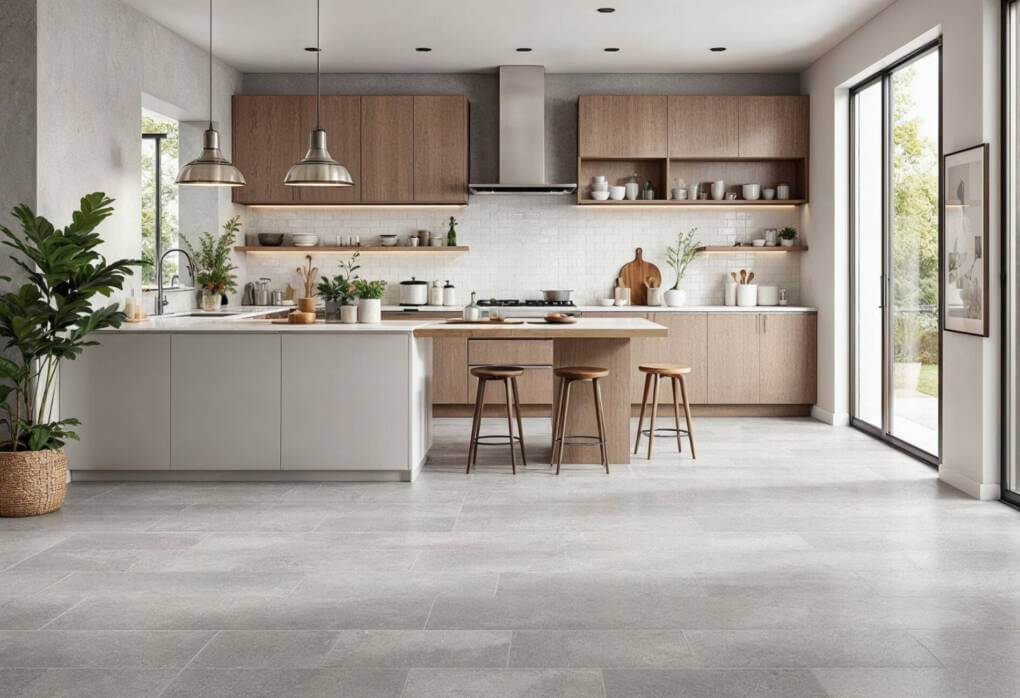
The most durable kitchen floor tile is porcelain. Kitchens take a beating, with heavy foot traffic, dropped pans and constant spills, so durability is the first thing I weigh up. The right tile keeps your kitchen looking good and working hard for years, and porcelain handles that better than anything else underfoot.
Winner: Porcelain Floor Tiles
Porcelain stands out as the most durable kitchen floor tile thanks to its low porosity, high density and strong resistance to impact. That combination is what makes it ideal for high-traffic kitchens that never really stop. A dense porcelain tile shrugs off the chips, cracks and surface wear that a busy kitchen throws at it, which is exactly why it tops the list for kitchen floors.
The durability isn’t just marketing. Porcelain is measured against recognised industry tests, including ASTM standards for abrasion resistance and breaking strength, so you can see how it holds up to wear and weight rather than taking a brand’s word for it. For glazed porcelain, the PEI rating is the one to check: a PEI rating of 3 or higher is well suited to a kitchen floor and the daily traffic it gets.
The worry I hear most often is cracking, usually from someone picturing a dropped cast-iron pan. With a good porcelain tile laid properly, that’s rarely the problem people expect. The families and busy households I deal with almost always end up on porcelain for that reason: it takes the daily knocks without showing them. For a kitchen in real use, that peace of mind is worth more than a small saving up front.
Runner-Up: Ceramic Floor Tiles
Ceramic is the budget-friendly alternative, but it’s less dense and less durable than porcelain. It’s a practical choice for lighter-use kitchens or when the budget is tight, and it still performs well in everyday use. The trade-off is that it’s more prone to damage under heavy, constant traffic, so I wouldn’t put it down in a high-traffic family kitchen if porcelain is within reach.
TL;DR: For heavy-use kitchens, porcelain is the most durable kitchen floor tile, backed by industry wear and strength testing and an easy-to-check PEI rating. Ceramic is a sound, cheaper option for kitchens with lighter traffic. Match the tile to how hard your kitchen actually works, and you won’t have to think about the floor again for years.
Best Non-Slip Tiles for Kitchen Floors
The best non-slip tiles for a kitchen floor are matte or textured porcelain with a mid-range slip rating. A kitchen gets wet and greasy in a way most rooms don’t, with splashes at the sink, spills while you cook and the odd bit of oil near the cooktop. A polished, glossy tile turns slick in those spots, so for a kitchen floor the finish matters as much as the material.
Winner: Matte or Textured Porcelain
For grip underfoot, matte or textured porcelain is the one I steer people to. The surface gives you traction when the floor’s wet without being a pain to mop, and you still get porcelain’s durability and low upkeep. Slip resistance is measured by a P-rating (AS 4586), from P0 to P5, and for most kitchen floors a mid-range rating is the sweet spot. Our tile ratings and slip resistance guide explains the full scale if you want to match a rating to your space.
Runner-Up: Textured Ceramic
A textured glazed ceramic can also give decent grip in a lighter-use kitchen, at a lower price. It won’t match porcelain for durability under heavy traffic, but in a quieter kitchen it does the job. Whether the extra slip resistance is worth paying for comes up a lot, so we cover whether non-slip tiles are worth it separately.
When someone tells me they’re nervous about a slippery kitchen, this is the easy fix: a matte or textured tile in a sensible P-rating, and the worry goes away. You can see the range in our non-slip tiles.
Best Kitchen Floor Tiles for Maintenance

The easiest kitchen floor tiles to keep clean are porcelain, with glazed ceramic close behind. No one wants to spend their weekend scrubbing grout or worrying about a spill leaving a mark, so for a busy kitchen I always weigh up upkeep alongside durability. Both porcelain and ceramic make that side of things easy, which is a big part of why they’re the materials I keep coming back to for kitchen floors.
Winner: Porcelain Tiles
Porcelain is the easiest kitchen floor tile to maintain. Its non-porous surface naturally resists stains and moisture, so spills and splatters wipe straight off with no fuss. There’s no sealing to keep on top of either, which takes a whole job off your list. A regular mop and standard cleaning products are all it takes to keep porcelain looking sharp, and that’s exactly what you want in a home with kids, pets or a lot of cooking going on.
Runner-Up: Ceramic Tiles
Ceramic cleans up easily too, though it depends on the type. Glazed ceramic is stain-resistant and quick to wipe down, which makes it a practical kitchen floor. Unglazed ceramic is more porous and may need sealing to stop stains and dirt working their way in. Once it’s sealed it’s easy enough to live with, but that extra step means it’s not quite as low-maintenance as porcelain.
TL;DR: Both porcelain and ceramic cut down the day-to-day cleaning load. If saving time is the priority, porcelain leads the way, with the best stain resistance and no sealing to worry about. Ceramic is still a good option but asks for a little more attention. Our tile cleaning and maintenance guide has more on keeping your kitchen floor looking its best.
Best Colour Tiles for Kitchen Floors

Colour is where a kitchen floor shows some personality, but the most practical pick balances looks with how easy it is to keep clean. Here’s how the main options stack up for a kitchen you actually use day in, day out.
Neutral Tones (Beige, Grey, White): Most Versatile
Neutrals are the easiest colour to live with in a kitchen. Beige, grey and white pair with almost any cabinetry or benchtop, from a classic timber look to a sleek modern finish, so you’re not boxed into one style. Lighter grey floor tiles and white floor tiles also bounce light around, which makes a smaller or darker kitchen feel more open. The practical trade-off is that a very pale floor shows crumbs and marks sooner, so a mid grey or a warm beige is often the sweet spot for a working kitchen.
Dark Tiles: Stylish but Higher-Maintenance
Dark floors like charcoal and black bring a bold, modern edge, and they hide general wear well, which is a real plus in a busy kitchen. The catch is that dark tiles absorb light, so in a small or dim kitchen they can make the space feel closed in. They also show dust, smears and water spots more than a neutral floor, so they take a bit more wiping to keep looking sharp. If your kitchen has good natural light and a bit of room, dark floors look fantastic. In a tight galley, I’d think twice.
Patterned Tiles: Bold and Statement-Making
Patterned floors are the way to show some character, and they suit eclectic or vintage-leaning kitchens. A bold pattern works as a focal point, but it needs the rest of the kitchen to stay fairly simple so the floor isn’t fighting the cabinets and benchtops. If your cabinetry is understated, a patterned floor can tie the whole look together, and our patterned tile ideas guide is a good place to see how to use a bold floor without it taking over the room. Pattern also helps disguise the odd crumb or mark between cleans, which is a quiet bonus underfoot.
TL;DR: The right colour balances looks with upkeep. Neutrals are the most versatile and forgiving, dark tiles bring drama but show more and suit lighter, larger kitchens, and patterns add character as long as you keep the rest simple. Weigh up your kitchen’s size, light and style, then pick the colour you’ll be happy mopping for years.
Kitchen Floor Tile Trends
Kitchen floor tile trends shift around, but the practical looks tend to stick. The ones I see most in Perth kitchens are timber-look porcelain for warmth, concrete-look tiles for a modern edge, and large-format and stone-look tiles for a clean, open floor with fewer grout lines. If it’s inspiration you’re after, our trending kitchen floor tile ideas guide covers the looks in depth, while this page stays on which tile is the smart buy for a kitchen in daily use.
Final Tips for Choosing the Best Kitchen Floor Tiles
Choosing the best tiles for your kitchen floor comes down to matching the tile to how hard your kitchen works. The right flooring pulls together durability, easy upkeep, safe grip underfoot and a look that suits the room. Get those four right and you won’t think about the floor again for years.
For most kitchens, here are my recommendations:
- Material: Porcelain is my pick. It’s the most durable and the easiest to clean, and it handles a busy kitchen better than anything else underfoot. Ceramic is the sensible budget option for lighter-use kitchens.
- Finish: A matte or textured tile in a sensible P-rating takes the worry out of a slippery floor, which is the question I’m asked more than any other.
- Colour: Neutrals are the safe, versatile choice. Dark or patterned floors bring character if your kitchen has the light and space to carry them.
If you’re still weighing it up, the easiest thing to do is see the tiles in person. Bring your benchtop or cabinet colour in and lay a few options side by side, because a tile can look very different in your kitchen’s light than it does on a screen. We’re always happy to talk through what suits a busy family kitchen versus a quieter one, and point you to the finish and rating that fits.
Kitchen Floor Tile FAQs
What Are the Best Tiles for a Kitchen Floor?
The best tiles for a kitchen floor are porcelain, which brings together durability, easy cleaning and good grip in one tile. Ceramic is a strong budget option for lighter-use kitchens, and stone-look porcelain gives you the look of natural stone without the sealing and upkeep. For a busy family kitchen, porcelain is the one I’d put down nearly every time.
What Is the Best Non-Slip Tile for a Kitchen Floor?
The best non-slip tile for a kitchen floor is a matte or textured porcelain with a mid-range P-rating. A textured surface grips underfoot when the floor gets wet near the sink or cooktop, where a polished tile turns slick. You don’t need the highest slip rating indoors, just enough to keep things safe without making the floor hard to mop.
Which Kitchen Floor Tile Is the Most Durable?
The most durable kitchen floor tile is porcelain, thanks to its high density and low porosity. Those traits help it resist the chips, cracks and surface wear a busy kitchen dishes out. For glazed porcelain, a PEI rating of 3 or higher suits a kitchen floor and the daily traffic it gets, which is why porcelain outlasts ceramic in heavy-use kitchens.
What Is the Best Tile Material for a Kitchen Floor?
The best tile material for a kitchen floor is porcelain, which leads on durability and low maintenance. Ceramic is the better material if budget is the priority and the kitchen sees lighter use. Stone-look porcelain suits anyone chasing a natural look without the sealing real stone needs. Match the material to how hard your kitchen works, and porcelain wins for most homes.
Are Porcelain or Ceramic Tiles Better for a Kitchen Floor?
Porcelain tiles are better than ceramic for most kitchen floors, especially high-traffic family kitchens, because they’re denser, tougher and more water-resistant. Ceramic is the better pick for lighter-use kitchens or a tighter budget, where its lower price wins out. If you’re weighing the two up, see how porcelain and ceramic compare in full.
What Colour Floor Tile Works Best in a Kitchen?
The colour floor tile that works best in a kitchen is a neutral, like beige, grey or white, because it suits almost any cabinetry and hides the odd mark well. A mid-tone neutral is the most forgiving for a working kitchen. Dark floors look striking but show dust and water spots, while patterned tiles add character as long as the rest of the kitchen stays simple.
Find the Right Kitchen Floor Tiles at Ross’s
When you’re ready to compare options, start with our kitchen tiles range. It covers porcelain, stone-look, timber-look and non-slip options in the colours and finishes a real kitchen needs. Our wider floor tiles range gives you even more to compare. We’ve spent decades helping Perth renovators get this decision right, so if you’d like a hand narrowing it down, come and see the tiles in person at our Guildford showroom. Lay a few side by side, see them in the light, and we can help you find the floor that suits your kitchen and your budget.
