
Non-Slip Tiles for Outdoor Areas: How to Choose for Perth Patios, Pools and Steps
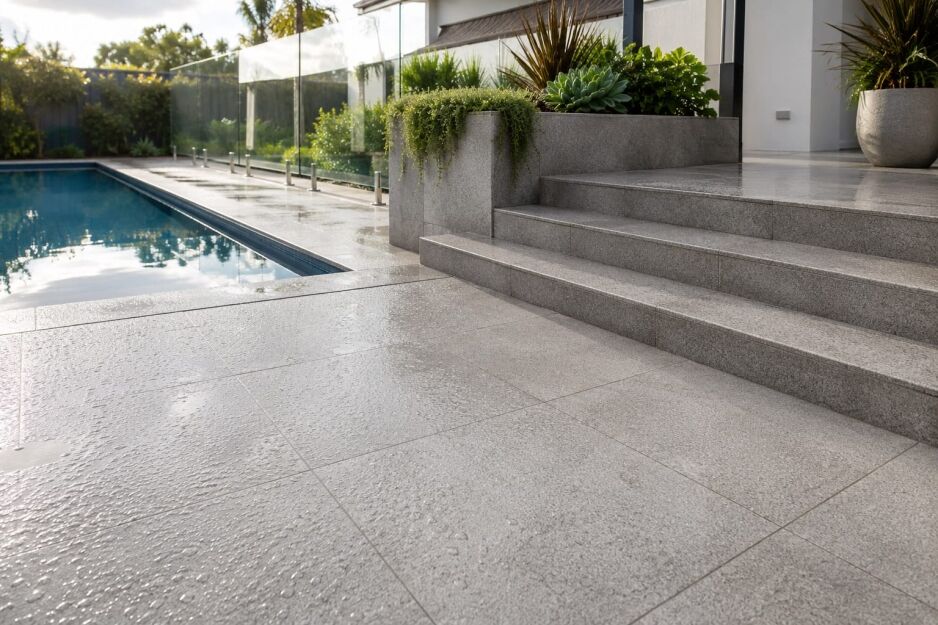
Picture the tile that stops you in the showroom. The colour is spot on, the finish looks sharp underfoot, and you can already see it out on the patio. Then the first big summer storm rolls through, water sheets across that smooth surface, and that good-looking tile turns into a skating rink. That is why I treat non-slip outdoor tiles as a safety choice, not a style preference, and why I steer Perth homeowners toward outdoor tiles that stay safer underfoot when wet.
Outdoors, the wrong tile is a safety problem, not just a styling one. A slip on a wet step or a pool surround can do real damage, and it tends to happen on the day nobody planned for.
In this guide, I will show you how to match the right tile to each outdoor area, what to look for in a finish that gives you traction, and the slip rating that keeps things safe underfoot. Perth’s long dry spells followed by sudden downpours make this a bigger call here than most people realise.
Why Outdoor Tiles Get Slippery (And Why It Matters in Perth)
Here is why this matters before anything else. Smooth, water and a hard surface make a fall waiting to happen, and the most dangerous version is the one you never saw coming.
The cause is simpler than people think. A glazed, polished surface gives your foot something to hold on a dry day, but add a thin film of water, and there is nothing left to grip. The surface texture is doing all the work, and a smooth tile has almost none.
Most outdoor falls happen in the same handful of spots. Wet entry points where you come in from the rain, steps, the area around the pool, and shaded corners that stay damp long after everywhere else has dried. South-facing areas hold moisture the longest because they see less sun through the day.
This is where our climate catches people out. We go weeks without rain, so a smooth tile can look like a safe bet. Then a summer downpour arrives, dumps water in minutes, and that same tile turns hazardous underfoot. I have seen it happen more than once. One customer chose a polished porcelain for a back patio on looks alone, waved off my suggestion to go textured, and came back after the first big storm asking for something with grip underfoot. The tile looked sharp. It was the wrong surface once it got wet.
Once you have watched a smooth tile behave like that, the question of whether non-slip tiles are worth the spend tends to answer itself. The fix is not complicated: match the finish, the material and the slip rating to how wet the area really gets. The rest of this guide shows you how.
What Makes an Outdoor Tile Non-Slip
Grip comes down to two things: the finish on the surface and the material underneath it. Style is the easy part. These two are what keep you on your feet.
Surface Finish and Texture

The finish does most of the work here. Structured, grip and matte finishes all give your foot traction, because the fine texture breaks up the film of water that causes a slip. Polished tiles and high-gloss lappato finishes look superb indoors, but outdoors they are the ones to avoid. They are the surfaces that turn dangerous the moment it rains.
The words on the box matter when you shop. Ask for one of our non-slip tiles in a matte, structured, grip or SmoothGrip finish, and you are looking at the right surfaces from the start. The finish is what separates outdoor tiles that stay safer when wet from a tile that only looks the part. None of these feel harsh or industrial underfoot either, so you are not choosing between safe and good-looking.
There is an honest trade-off. More texture grips better, but it also traps a little more dirt, so it takes slightly more effort to keep clean. For an outdoor area, that is a fair swap.
Why Porcelain Leads Outdoors
If finish is the first decision, then material is the second, and porcelain leads outdoors for good reason. It has very low water absorption, so rain runs off rather than soaking in. It holds its colour under our harsh UV, takes a textured grip finish well, and never needs sealing.
Compare our porcelain tiles to natural stone, and the difference is in upkeep. Stone looks superb, but it is porous, so it needs ongoing sealing to stay protected outdoors, which is a cost I will come back to in a moment. For most Perth homes, a non slip outdoor porcelain tile gives you the same look with far less work.
You do not give up style for safety either. Our outdoor porcelain tiles come in stone-look, concrete-look and timber-look. The safest tile can still be the one you actually like underfoot.
What Slip Rating Do Outdoor Tiles Need?
Outdoor tiles should generally be rated P4 to P5 on the wet pendulum scale, with R11 often used as a practical minimum on spec sheets. Use R12 or P5 for pool surrounds, outdoor steps and areas that stay wet, where bare feet, rain and slope increase the slip risk.
You will see two different rating systems on spec sheets. The P rating comes from the wet pendulum test, and the R rating comes from a separate ramp test, so treat them as separate checks rather than direct conversions. You do not need to memorise the science to choose well. For outdoors, you want a high rating; the figures above are your target, and non slip tiles for outdoors should sit in that higher range for wet zones.
These ratings are not marketing terms. Slip resistance for new pedestrian surfaces is classified under the Australian Standard AS 4586, with recommended minimums for each type of area set out in its supporting handbook. That is the benchmark to trust when a supplier tells you a tile is outdoor tile slip resistant.
I will not reproduce the full scale here, because it needs more room than this guide allows. For the complete breakdown of how each scale is tested and what every rating means, see our article on how tile slip ratings are tested.
Choosing Non-Slip Tiles for Each Outdoor Area
This is the heart of the guide. Not every outdoor area needs the same tile, and a covered alfresco lives a very different life to a set of exposed steps. The smart move is to choose your non-slip outdoor tiles area by area rather than buying one tile for the whole yard. Our outdoor tiles start from around $20/m², so getting the right one for each zone doesn’t have to blow the budget.
Use the table below as a starting point, then read the zone notes underneath for the detail.
| Outdoor Area | Target Slip Rating | Best Finish | Notes |
| Covered patio / alfresco | P3 to P4 | Matte or structured | Sheltered, so slightly lower is fine; comfort underfoot matters |
| Open patio (exposed to rain) | P4 to P5 | Structured / grip | Full sun and storms, so don’t under-spec |
| Outdoor steps & stairs | P5 | Grip / structured | Highest fall risk; choose the highest grip |
| Pool surrounds | P5 | Structured (barefoot-friendly) | Constant water and bare feet |
| Paths, driveways & entryways | P4 to P5 | Structured / grip | High traffic, often wet at the door |
| Balconies & verandahs | P4 to P5 | Structured | Exposed, often above ground level |
When in doubt, step up a level. You can’t retrofit grip into a tile once it’s laid, so choosing anti slip outdoor tiles at the start beats trying to fix a smooth surface later.
Patios and Alfresco
Your patio is where covered versus open changes everything. A sheltered alfresco stays out of the worst weather, so you can run a comfortable matte tile that feels good underfoot on a summer evening. An open patio is a different story. It cops full sun and every storm, so structured or grip non slip patio tiles are the safer pick. Think about barefoot comfort too, because the tile that grips well also has to feel right on a hot day, and that comes down to colour and finish, which I will get to shortly.
Outdoor Steps and Stairs (the Highest-Risk Zone)
If you read one section closely, make it this one. Outdoor stairs carry the highest fall risk of any zone, and it is the spot most guides skip over. Choose P5 with a grip finish, because the nosings and edges of each step are exactly where a foot lets go. I had a customer come in not long after nearly going down on their slick old back steps. They wanted a like-for-like replacement, but I steered them to a higher-grip tile instead, and they thanked me for it later. Non slip tiles for outdoor steps are not the place to save a few dollars or chase a smoother look. This is where you need the most traction.
Pool Surrounds
Around a pool, the brief is simple but strict. You have constant water and bare feet, so this is a P5 job with a barefoot-friendly structured finish. A smooth tile near a pool surround creates the wrong kind of risk. This is one area where the right non-slip outdoor tiles really earn their keep, and there is more to weigh up than grip alone. For the full treatment on materials, heat and layout, see our guide on choosing tiles for poolside areas.
Paths, Driveways and Entryways
Paths, driveways and entryways take constant foot traffic, and the spot right at your door is wet more often than you would think. Structured or grip tiles at P4 to P5 handle it well. A driveway follows the same logic, with the bonus that texture helps when you are carrying shopping in from the rain. Watch the slope, too. A sloped path sheds water fast but also speeds up a slip, so non slip garden path tiles on an incline should sit at the higher end of that range.
Balconies and Verandahs
A balcony or verandah is exposed to the weather and is often above ground level, so the cost of a slip is higher. This is one of those spots where the safety margin counts. Go with a structured finish at P4 to P5, and don’t talk yourself into something smoother just because the space is small. Non slip balcony tiles in a structured finish give you the grip you want without feeling rough underfoot.
Getting Style and Colour Right in the Perth Climate
Safety sorted, this is the part everyone actually enjoys. In Perth, though, colour and finish are a practical decision as well as a style choice.
Start with the good news. Stone-look, concrete-look and timber-look porcelain all come in non-slip finishes, so you never trade safety for the style you want. Grey is the runaway favourite outdoors. It hides dust between sweeps and works with almost any home, which is why grey non slip outdoor tiles are the ones I reach for most often when a customer is stuck.
- Barefoot heat: dark tiles soak up our summer sun and get hot underfoot, which you feel most around pools and on an open alfresco. Lighter and mid tones stay far more comfortable when you are walking across them with no shoes on.
- UV fade: our WA sun is brutal on cheaper tiles, and lower-quality colour can fade over a few seasons. Quality porcelain holds its colour, so it still looks right years down the track.
- Texture vs cleaning: the grip you want does trap a little more dirt than a smooth tile would. A quick sweep and a hose sorts it out, so go in with eyes open rather than expecting a polished-tile clean.
- Sealing: here is a real cost difference. Porcelain in a stone-look finish needs no sealing at all. Genuine porous stone like travertine or limestone needs ongoing sealing to survive our conditions, which adds money and a recurring job to your year.
A couple of practical notes round this out. If you are weighing thicker formats, 20mm porcelain pavers are an option for some outdoor builds. And for the wider checklist beyond grip and colour, we cover what else to look for in outdoor tiles in a dedicated guide. If a true stone appearance is the goal, our stone-look tiles will show you how close porcelain gets without the upkeep.
Frequently Asked Questions
Here are the questions we hear most across the showroom counter, with quick answers to each.
What Is the Best Non-Slip Tile for Outside?
The best non-slip tile for outside is porcelain in a structured or grip finish rated P4 to P5, which gives you the strongest all-round performance when the surface is wet. From there, match the rating to the zone: a covered patio can run slightly lower, while steps and pool surrounds want P5. Porcelain also resists fading and never needs sealing, so it holds up well outdoors.
What Outdoor Tiles Are Not Slippery When Wet?
Outdoor tiles that are not slippery when wet are the ones with a textured, structured or matte finish and a high wet pendulum rating, because that surface breaks up the film of water underfoot. Polished and gloss tiles are the opposite, turning dangerous the moment it rains. For any wet outdoor area, choose a textured finish rated P4 to P5 and you will stay on your feet.
Can You Make Existing Tiles Non-Slip?
You can improve the grip on existing tiles with an anti-slip treatment or coating, which etches or textures the surface to add traction. These work as a partial fix for tiles already laid, though the result is rarely as reliable or long-lasting as choosing the right finish from the start. If you are still at the planning stage, picking a structured or grip tile now is the better outcome.
Do Outdoor Porcelain Tiles Need Sealing?
Outdoor porcelain tiles do not need sealing, because their very low water absorption stops moisture soaking in and causing damage. That is one of the big advantages porcelain has outdoors. Porous natural stone like travertine or limestone is the opposite, needing regular sealing to stay protected through Perth’s extreme conditions. If low maintenance matters to you, porcelain saves you that recurring job.
What Colour Outdoor Tile Is Best in the Perth Heat?
For the Perth heat, lighter and mid-tone outdoor tiles are the best choice, because dark tiles soak up the summer sun and get hot underfoot, especially around pools and on an open alfresco. Grey is the most practical all-rounder, hiding dust while staying cool enough for bare feet. Quality porcelain also resists UV fade, so a good colour keeps looking right for years.
Which Non-Slip Outdoor Tile Is Right for Your Space?
So how do you settle on the right non-slip outdoor tiles for your space? The rule is simpler than the choice feels. Pick porcelain, then match the finish and rating to how wet and how busy the area gets. A covered alfresco can run a matte or structured tile at P3 to P4. An exposed or regularly wet area steps up to structured or grip at P4 to P5. Steps and pool surrounds always need P5, because that is where grip underfoot matters most. Get those three calls right and you have a surface that looks the part and stays safe long after the next storm.
When you are ready to choose, browse our outdoor tile range online, or come and feel the finishes in person at Ross’s in Guildford. Perth Metro delivery is a flat $100, so getting your tiles home is easy once you have decided.
