
How to Choose a Cheap Bathroom Vanity Without Sacrificing Quality
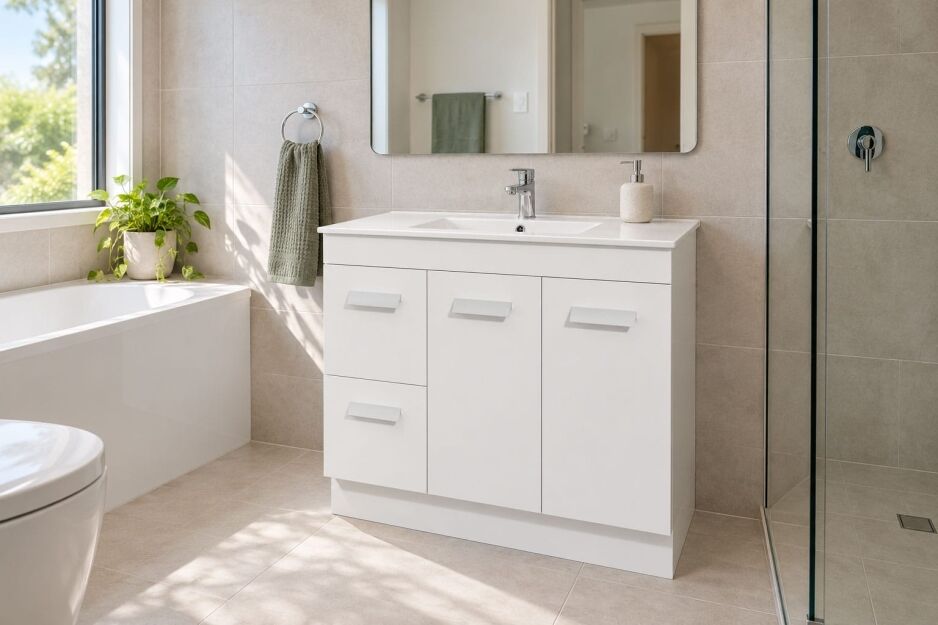
A cheap bathroom vanity can be a smart buy or an expensive mistake, and the price tag alone won’t tell you which. The difference comes down to the cabinet material, the hardware and whether the vanity actually suits your bathroom.
In my experience, the vanity that lets people down on a budget is rarely the cheapest one on the floor. It’s usually an MDF or particleboard cabinet that looked fine in a showroom, then sat where water splashed off the shower and pooled around the base. A few years later, the bottom edge swells and the doors stop closing properly.
So buying an affordable bathroom vanity isn’t about finding the lowest price. It’s about knowing what you’re paying for. In this guide, I’ll explain what drives bathroom vanity prices, what to check before you buy, where you can safely save and which features are worth a little extra.
What Makes A Bathroom Vanity Affordable?

Two vanities can look almost identical in photos and still be hundreds of dollars apart. The gap usually comes down to a handful of things, and most of them have nothing to do with how good the vanity looks.
- Size: More cabinet means more board, a bigger top and more hardware. A compact ensuite vanity will almost always cost less than a 900mm or 1500mm unit.
- Cabinet material: PVC board, MDF and particleboard sit at different price points and handle water very differently. This is the factor I’d pay most attention to, and I cover it in the next section.
- Basin configuration: A double basin top costs more than a single, and so does the second set of tapware and plumbing that comes with it.
- Hardware: Soft-close hinges and drawer runners cost more to make than basic ones, but they’re also the parts you touch every day.
- What’s included: Some vanities are priced as the cabinet only, while others include the top and basin. Always check before you compare prices.
To give you a sense of bathroom vanity cost, our range starts at around $320 for a compact ensuite vanity. At the top end, a 1500mm double bowl unit goes past $2,000. Every vanity we sell comes with the option of a vanity top with an integrated basin.
If you’re still working through the bigger decisions like mounting style, basin type and storage, our bathroom vanity buying guide walks through each one. Price explains what you pay, though. It doesn’t tell you whether the vanity will last, and that’s the question most people really want answered.
Are Cheap Bathroom Vanities Good Quality?
Budget vanities can be good quality, but the price alone won’t tell you. A well-priced vanity with a moisture-resistant cabinet, soft-close hardware and a top that suits the basin can last as long as a premium unit. A cheap vanity with a particleboard cabinet and basic hinges usually won’t.
Here’s what I check before I’d put any vanity in a bathroom, whatever it costs.
Check the Cabinet Material First
The cabinet material matters more than anything else on a budget vanity, because the bathroom is the wettest room in the house. MDF and particleboard rely on paint or laminate to keep water out. Once an edge chips or a seal fails, water gets into the board and it starts to swell.
PVC board doesn’t absorb water in the first place. Most of our vanities use high-grade PVC board between 16mm and 18mm thick, which is why I’m comfortable recommending them for family bathrooms and rentals. If you want the detail, I’ve explained why PVC vanities handle water so well in a separate guide.
Open the Doors and Drawers
Hardware is the second thing I check. Hinges and drawer runners take a beating every day, and cheap ones are usually the first part of a vanity to sag, rattle or slam. Soft-close doors and drawers are standard across our vanity ranges, so you shouldn’t have to pay extra for them.
Look at the Warranty
A long warranty tells you the supplier trusts the cabinet. Our vanity warranties run from 5 to 15 years depending on the range, so check the warranty when you compare two units at a similar price. It’s one of the clearest quality signals you’ll find on a product page.
Once you know what quality looks like, it’s much easier to decide where you can cut back.
Where Can You Save Money When Buying A Bathroom Vanity?
The best savings come from practical choices, not from buying the thinnest cabinet you can find. If you’re working with a tight budget, these are the places I’d look first.
- Stick to a standard size: 600mm, 750mm and 900mm are the most common vanity widths, so you’ll find the most choice at every price point. Odd sizes and custom widths cost more.
- Keep the plumbing where it is: Moving the waste and water points is where a cheap vanity turns into an expensive job. A vanity that suits your existing plumbing position can save you more than any difference in cabinet price.
- Think about freestanding versus wall hung: A freestanding vanity sits on the floor and usually works with the plumbing you already have. A wall hung vanity needs solid framing behind the wall to carry its weight, which can mean extra work in an older home. Our guide to freestanding and floating vanities covers the trade-offs.
- Buy the top and basin with the vanity: A matching top and basin means everything lines up. You’re not paying for extra fittings or chasing a top that fits. If you’d rather choose your own surface, our vanity top buying guide explains the options.
- Skip the trend finishes: Gloss white and simple timber-look finishes stay in favour for years. A bold colour can date quickly, and replacing a vanity just to update the look is money you didn’t need to spend.
None of these savings touch the cabinet or the hardware. That’s deliberate, because those are the two areas where I’d rather spend a bit more.
Vanity Features Worth Paying More For
Some upgrades pay for themselves because you use them every day. When I’m deciding where a little extra money goes on a vanity, these are my priorities.
- A waterproof cabinet for wet rooms: In a family bathroom, a rental or an ensuite next to the shower, this is the one upgrade I’d never skip. Our waterproof PVC vanities are made for exactly these rooms.
- Drawers instead of cupboards: Drawers keep everything visible and within reach. A cupboard under the basin often turns into a dark space where things get lost behind the waste pipe.
- An easy-clean finish: Hard water leaves mineral spots as it dries, and those marks show up fast on dark matte surfaces. If your home is on bore water or in a harder-water area, a gloss finish that wipes clean will save you a lot of scrubbing.
- A sensible amount of bench space: A slightly wider top gives you somewhere to put things down. That matters more than most people expect, especially in a shared bathroom.
A bigger or more expensive vanity isn’t automatically better. Spend where you’ll feel the difference every day, and save everywhere else.
How Vanity Size Affects Your Bathroom Vanity Budget
Smaller vanities usually cost less because they use less board, a smaller top and fewer drawers. But the smallest vanity isn’t always the best-value choice once you’ve lived with it for a while.
A compact unit is perfect for a powder room or a tight ensuite. In a busy family bathroom, though, it leaves nowhere to store things and the bench ends up cluttered.
I learned this fitting out bathrooms in our own investment properties. I stopped buying the narrowest, cheapest unit I could find. A slightly wider budget bathroom vanity with drawers cost a little more, but tenants had somewhere to put their things and the bench stayed clear and dry.
Before you settle on a width, work through these steps in order:
- Measure the wall width, and leave room for the door swing, the toilet and the shower screen.
- Note exactly where the waste and water points come out of the wall or floor.
- Check the depth so the vanity won’t crowd the doorway or the walkway.
- Work out what you actually need to store, then choose the width that fits both.
For most standard bathrooms, our 900mm vanities are a good place to start. Once you know your width, the next question is usually whether you need one basin or two.
Single Or Double Basin Vanity: Which Suits Your Budget?
From a budget point of view, a single basin is almost always the cheaper option. You’re paying for one basin, one set of tapware and one set of plumbing connections, and the cabinet is often smaller too.
A double basin earns its extra cost when two people regularly use the bathroom at the same time, such as a busy family bathroom or a shared ensuite. If that isn’t your household, a single basin on a wider vanity gives you more bench space and keeps the cost down.
If you’re still weighing it up, our guide to single and double basin vanities goes through the pros and cons of each layout in detail.
Common Mistakes When Buying A Cheap Bathroom Vanity
Most of the vanity regrets I hear about weren’t caused by spending too little. They came from skipping a check that would have taken five minutes. These are the ones I see most often.
- Comparing prices that aren’t like for like: One vanity includes the top and basin, another is cabinet only. Check what’s included before you decide which one is cheaper.
- Forgetting the tapware: Your basin mixer needs to suit the tap hole in the vanity top. Choose your basin mixers once the vanity is locked in, not before.
- Skipping the measurements: A vanity that’s too wide makes the room feel cramped, and one that’s too narrow wastes storage. Measure the wall, the depth and the plumbing position first.
- Putting MDF next to the shower: An MDF cabinet can work in a dry powder room. Next to a shower, it’s the vanity most likely to swell.
- Choosing on looks alone: A vanity has to be easy to use and clean, not just good in photos. Open the drawers and check the hardware before you buy.
Get these right, and you can buy a well-priced vanity with confidence. If you still have a question or two, the answers below cover the ones I’m asked most.
FAQs
So, Which Cheap Bathroom Vanity Should You Choose?
Start with the cabinet, not the price. A moisture-resistant cabinet, soft-close hardware and a size that suits your plumbing will give you more value than any other saving. After that, save on size, finish and extras you won’t use every day.
You can compare sizes, finishes and warranties across our full range of bathroom vanities online, or come and open the drawers yourself at our Guildford showroom. We deliver across Perth Metro for a flat $100, and your purchase is backed by our 14-day money-back guarantee.
