
The Pros and Cons of Sliding Shower Screens
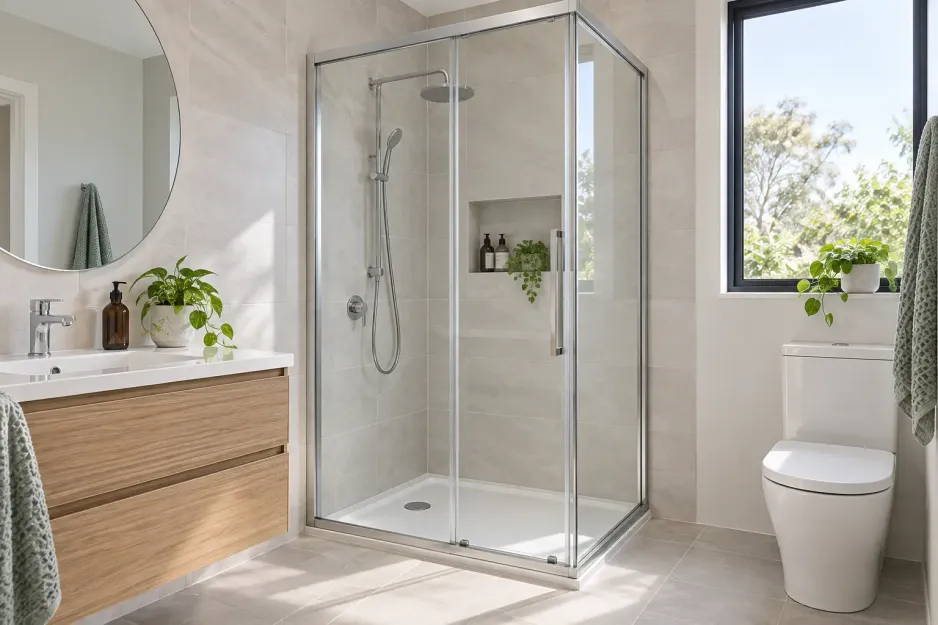
A sliding shower screen can look like the obvious choice when a vanity or toilet leaves no room for a door to swing open. But that solves only half the problem. The pros and cons of sliding shower screens depend on the space outside the shower and the usable entry width once the panels overlap.
I often find that people measure the full shower recess and assume that is how much room they will have to walk through. It is an easy mistake to make. You also need to allow for the fixed panel, sliding panel and any overlap between them.
That does not mean sliding screens are a poor choice. They can work brilliantly in compact Perth bathrooms and ensuites with limited swing clearance. You just need to understand the trade-offs before ordering one.
In this guide, I will cover the space-saving benefits, entry limitations, bottom-track cleaning and maintenance requirements so you can decide whether a sliding screen suits your bathroom.
Are Sliding Shower Screens a Good Choice?
Sliding shower screens are a good choice when your bathroom has limited swing clearance and the shower opening is wide enough to leave a comfortable walk-through space. Their main trade-offs are a narrower entry caused by overlapping panels and the extra cleaning needed around tracks, guides and rollers.
This is why sliding shower screens for small bathrooms need to be judged by two separate spaces. The floor area outside the shower may be tight, yet the recess itself can still be wide enough. In that case, a sliding door can solve a real layout problem without crowding the vanity or toilet.
Problems start when the overall opening is already narrow. Once the fixed and sliding panels overlap, the usable entry width may be tighter than expected. For households where easy access matters, the clear opening and bottom track deserve as much attention as the screen’s overall size.
When I weigh up the pros and cons of sliding shower screens, I start with these measurements before looking at the frame colour, finish or overall appearance.
Advantages of Sliding Shower Screens

The main advantages of sliding shower screens are practical. The door moves along the screen rather than swinging into the bathroom, which changes how you can use the surrounding space. A good sliding system can also provide smooth operation, reliable water control and a clean semi-frameless finish.
They Do Not Need Swing Clearance
A sliding panel stays within the shower screen’s footprint as it opens. You do not need to leave an empty arc in front of the shower for a hinged or pivoting door.
This is one of the most useful benefits of sliding shower screens in bathrooms where the vanity, toilet or doorway sits close to the shower. You can use the available floor area without worrying about the glass door striking another fixture.
They Open Smoothly
A well-fitted sliding door should move smoothly along its track. You do not need to guide a glass door through a wide arc or step back as it opens.
That smooth action depends on correct alignment and regular cleaning. If the track or guides collect debris, the door can become harder to move.
They Help Keep Water Inside the Shower
A correctly measured, installed and sealed sliding shower screen helps direct water back into the shower area. The overlapping panels and seals reduce the open gaps through which spray can escape.
No shower screen is completely watertight. Water control also depends on the shower base or floor fall, silicone sealing, screen alignment and showerhead direction. The screen can do its job properly only when those parts work together.
They Offer a Neat, Modern Finish
Sliding screens suit homeowners who want a fully enclosed shower without a door opening into the room. Semi-frameless designs reduce the amount of visible framing while still providing support around the moving panels.
The result can feel less bulky than a fully framed enclosure, particularly when the frame finish matches the other fittings in the bathroom.
They Use Toughened Safety Glass
Ross’s sliding shower screens use toughened safety glass made for bathroom use. Toughened glass is stronger than ordinary annealed glass and is designed to break into relatively small pieces if breakage occurs.
AS 1288:2021 covers the selection and installation of glass in buildings. AS/NZS 2208:2023 covers the testing of safety glazing materials used in buildings.
Disadvantages of Sliding Shower Screens
The disadvantages of sliding shower screens mostly come from the same mechanism that makes them useful. Overlapping panels save swing space, but they also reduce the entry width and create tracks, guides and edges that need regular attention. These trade-offs deserve equal weight when assessing the pros and cons of sliding shower screens.
The Walk-Through Opening Is Narrower
A sliding door cannot provide the full enclosure width as an entry. Part of that width remains occupied by the fixed panel and the overlap needed for the moving panel.
This can become a problem in a narrow shower recess. I always recommend checking the stated walk-through width rather than relying on the overall screen measurement. A screen may fit the opening perfectly while leaving less entry space than you expected.
Tracks and Overlapping Edges Need Cleaning
Tracks, panel edges and guides create extra places for soap residue, hair and mineral deposits to collect. The glass itself may be easy to wipe, but the operating areas need more detailed cleaning.
Glass coatings can reduce water spots and soap build-up on the treated surface. They do not make the screen self-cleaning, and they do not remove the need to clean the track.
Rollers, Guides and Seals Need Ongoing Care
Rollers and guides must stay clean and correctly adjusted for the door to move smoothly. Seals can also wear or move over time.
Good sliding shower door maintenance helps prevent stiffness, rattling and poor alignment. Before buying, check the care instructions and warranty for the specific model. Do not assume that every screen uses the same components or has the same replacement parts available.
Installation Can Be More Involved
A sliding screen relies on accurate alignment. The frame or track needs to be level, the panels must move cleanly, and the seals need to sit correctly.
Small installation errors can affect how the door moves and contains water. If you are not confident measuring, assembling and sealing the screen, use a suitably qualified installer.
The Entry May Not Suit Every User
Saving room outside the shower does not automatically make a sliding screen suitable for someone with limited mobility. A narrower opening or bottom track may make entry harder.
Check the actual clear opening and threshold against the needs of everyone using the bathroom. This is more useful than relying on general claims that sliding doors provide easier access.
Some Sliding Screens Cost More
Extra panels, tracks and operating hardware can make a sliding model more expensive than a basic pivot screen. The final price will depend on the size, configuration, glass and hardware.
Our guide to how much a shower screen costs provides a broader comparison of current shower screen prices. Consider the purchase price alongside cleaning, access and the space the door saves.
Are Sliding Shower Screens Good for Small Bathrooms?
Sliding shower screens can work very well in small bathrooms because the door does not swing into the room. This can solve clearance problems near a vanity, toilet or bathroom doorway. However, the shower recess must still be wide enough to leave a comfortable entry once the glass panels overlap.
Sliding shower screens for small bathrooms work best when the tight area is outside the shower. If the shower opening itself is narrow, the fixed panel and sliding panel can reduce the walk-through space too far.
| A Sliding Screen May Suit | Another Option May Be Better |
| The vanity or toilet limits door-swing clearance | The overall shower opening is very narrow |
| The recess allows a comfortable walk-through width | Maximum entry width is essential |
| You are comfortable cleaning a track | You want the simplest possible cleaning routine |
| The screen’s adjustment range suits the finished opening | The opening falls outside the available adjustment range |
| A small threshold will not create an access problem | A track-free entry is important |
The bathroom’s total floor area does not give you the answer on its own. I would first measure the finished shower opening, then check the usable entry width of the screen you are considering.
If both measurements work and the door avoids a nearby fixture, a sliding screen can make excellent use of a compact layout. If the entry feels restrictive on paper, it will not become more comfortable after installation.
When Might Another Shower Door Type Suit Better?
A sliding screen may not be the best choice if you need the widest possible entry or want to avoid a bottom track. The overlapping panels that save swing space also reduce the clear opening, so the layout needs to suit that trade-off.
A different door style may work better where the shower recess is narrow but there is enough space outside the enclosure for a door to open. Another option may also be more practical if easier access to the glass and fewer track areas are priorities.
I would not choose between these styles based on appearance alone. Entry width, nearby fixtures, cleaning and the needs of the people using the bathroom should guide the decision.
Our guide comparing sliding, hinged and pivot shower screens explains the differences in detail. You can also review the main shower screen door types before deciding which opening style suits your bathroom.
Sliding Shower Screen FAQs
These quick answers cover the practical questions customers often ask after weighing up the main benefits and drawbacks. Most sliding shower screen problems relate to measurement, installation, cleaning or worn moving parts rather than the glass itself.
Is a Sliding Shower Screen Right for Your Bathroom?
The pros and cons of sliding shower screens come back to one practical question: does the space saved outside the shower outweigh the narrower opening and extra track cleaning?
A sliding screen is a strong choice when a vanity, toilet or doorway limits swing clearance. It also needs to leave enough room for comfortable entry once the panels overlap. If both conditions are met, the design can make excellent use of a compact bathroom without sacrificing a fully enclosed shower.
A different door style may suit you better if maximum walk-through width, a low threshold or easier access to every glass edge matters more. I would always put those daily-use needs ahead of frame colour or appearance.
If you have decided a sliding design is right for your room, compare our sliding shower screens in Perth online. You can review the available configurations, sizes, finishes and current prices, or visit our Guildford showroom for practical advice before ordering.
