
Gold Bathroom Tapware: How to Style It Without Overdoing It
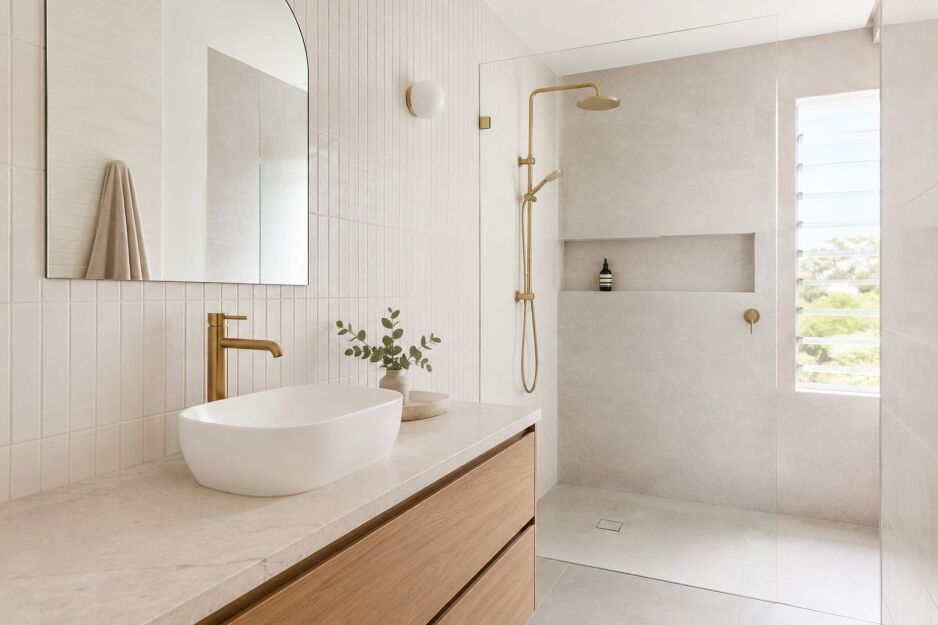
Gold bathroom tapware is one of those things that looks incredible in a showroom and raises questions the moment you’re standing back home, staring at your existing tiles. Will it clash? Will it look excessive? Is it going to feel like a 1980s throwback in five years?
I’ve had this conversation with hundreds of Perth homeowners over the past 20-odd years. The hesitation is almost always the same, and so is the answer: gold tapware works beautifully in a bathroom, but the details matter. The finish, the colours it sits beside, and how many gold elements you introduce all determine whether the result looks considered or cluttered.
This guide covers what you need to know before committing. We’ll look at the difference between brushed and polished gold, which colours and tiles pair well, how to use gold without overdoing it, and what accessories to match. By the end, you’ll have a clear picture of whether gold tapware suits your bathroom and exactly how to make it work.
Why Gold Bathroom Tapware Is Having a Moment (And Why It Is Not Going Anywhere)
Gold bathroom tapware spent a long time in the wilderness. The shiny, polished brass fittings that filled Australian bathrooms in the 1980s left a lasting impression — and not a good one. I still hear that hesitation in the showroom, even when someone is clearly drawn to a finish they’ve seen and liked.
What’s available now is genuinely different. Today’s gold tapware uses brushed and matte finishes rather than high-shine polished brass. The tone is warmer and more restrained — it reads as sophisticated rather than showy.
Warm, natural materials have taken over Perth bathrooms — honed stone, travertine-look tiles, timber vanities, textured surfaces. Chrome reads cold against all of that. Gold doesn’t. It belongs in that palette in a way that stainless steel finishes never quite managed, which is why it keeps appearing in 2026 tapware trends alongside the other warm-metal finishes gaining ground.
The result is a finish that’s moved well past trend status. If you’re considering it for a bathroom renovation, you’re not chasing something about to turn. You’re working with a finish that has earned its place. Browse our gold tapware range or come into the Guildford showroom to see how the different gold tones read against tiles in person.
Are Gold Bathroom Fixtures Still in Style?
Gold bathroom fixtures are still very much in style, and the finish has moved well past trend status into something more permanent. Today’s brushed and matte gold options look nothing like the polished brass of the 1980s. They suit the warm, natural palettes that dominate current Australian bathroom design — honed stone, earthy tiles, timber accents — and they hold up over time when the quality is there.
Brushed Gold or Polished Gold — Which Finish Works in a Bathroom?

Not all gold tapware reads the same way in a space. The finish changes everything — how warm or formal it looks, how it holds up to daily use, and how forgiving it is when Perth’s hard water does its thing on the surface.
| Brushed Gold | Polished Gold | |
| Visual effect | Warm, matte, understated | High-shine, reflective, formal |
| Best suited to | Contemporary, natural, earthy bathrooms | Traditional, maximalist, or Art Deco bathrooms |
| Fingerprints and water spots | Hides well | Shows readily |
| Durability | High — especially with PVD coating | Moderate — surface marks more visible over time |
| Perth hard water | More forgiving — mineral deposits less obvious | Deposits show clearly on reflective surfaces |
| Best pairing tiles | Stone-look, travertine, terrazzo, warm timber | Marble, white gloss, dark feature tiles |
For most Perth bathrooms, brushed gold tapware is the safer and more practical choice. The satin texture hides fingerprints and water spots better than a reflective surface, it suits the natural materials that are popular locally, and it’s significantly more durable when the finish uses physical vapour deposition — PVD coating, in plain terms. A PVD-coated finish bonds at a molecular level rather than sitting on top of the metal. That matters in Perth, where hard water leaves mineral deposits faster than in softer-water cities, and where a finish that can’t handle daily wiping becomes a problem quickly.
If you’re drawn to something slightly warmer or deeper than standard brushed gold, champagne gold and antique gold bathroom tapware are worth considering. Champagne gold has a softer, slightly muted tone — closer to warm sand than bright gold. Antique gold reads darker and suits heritage or more traditional bathroom styles. Both are better suited to bathrooms with warm or earthy palettes than to cool-toned or minimalist ones.
Polished gold has its place — in a marble bathroom with traditional fixtures, or a powder room where drama is the point. But for a main bathroom that needs to look good through daily use, brushed gold tapware is the finish I’d reach for first.
Colour Schemes and Tiles That Work with Gold Bathroom Tapware
Gold bathroom tapware is warm-toned, which means it works best against materials and colours that either reinforce that warmth or provide a clean, contrasting backdrop. The finishes it clashes with are cool-toned — stark grey tiles, brushed stainless steel accessories, cool-white walls with blue undertones. If your bathroom leans in that direction, gold tapware will fight the space rather than sit with it. Our bathroom colour schemes guide covers the broader principles, if you want a starting point before narrowing down to tapware.
White and Gold — The Classic Combination
White and gold are the most forgiving pairing, and they work with both brushed and polished finishes. The key variable is the white. A warm white — linen, cream, or anything with a yellow or beige undertone — lets gold tapware read as intentional. A stark cool white with blue undertones makes gold look brassy and out of place. It’s a small distinction that makes a significant difference in practice. Wall-to-wall white tiles with a gold basin mixer on a white vanity is one of the most common combinations we see, and when the white is warm, it works every time.
Black and Gold — For a Bolder Look
Black and gold are more dramatic and suit a bathroom where the intent is to make the space feel deliberate rather than expansive. Matte black, deep charcoal, and slate feature tiles paired with brushed gold tapware create a sophisticated contrast without reading as cold. The matte textures on both surfaces do most of the work — they stop the combination tipping into something harder or more formal than intended. If you’re weighing up black as the dominant finish rather than gold, our black tapware colour scheme guide covers that direction in full.
Stone, Terrazzo, and Natural Textures
This is the pairing that resonates most with what Perth homeowners are choosing right now. Honed stone, travertine-look tiles, terrazzo, and warm timber accents all sit naturally with brushed gold tapware — the finish reads as an extension of the material palette rather than a contrast to it.
I saw this clearly in a bathroom renovation a few years back. The homeowner had chosen a honed limestone-look tile across the floor and feature wall, with a warm timber vanity. They were considering chrome tapware because it felt like the safer option. We put a brushed gold basin mixer against the tile in the showroom and it was immediately obvious — the gold picked up the warm undertones in the stone in a way chrome simply couldn’t. The finished bathroom looked considered rather than assembled.
Warm neutrals, natural stone textures, and timber all amplify what brushed gold does well. If your bathroom already has any of those elements, gold tapware is likely your strongest finish option.
What to Avoid
Cool-grey tiles with cool-white walls and gold tapware is the combination that causes the most problems. The gold reads as out of place — neither warm enough to belong nor contrasting enough to feel intentional. Navy or teal walls can work with gold, but they require a polished or deeper gold tone rather than brushed, and the rest of the bathroom needs to be kept very simple.
The other pairing to avoid is gold tapware directly alongside chrome or stainless steel accessories in the same visual zone. A gold basin mixer next to a chrome soap dispenser on the same vanity surface reads as an oversight rather than a design decision. Keep finishes separated by distance if you’re mixing them, or commit to one finish family for everything within the same eyeline.
Before committing to any combination, hold a sample of the tapware finish against your actual tiles. Finishes read differently under showroom lighting than they do in a bathroom with a small window and warm globe lighting. The sample test takes thirty seconds and saves a lot of second-guessing.
The Rule of Balance — How Much Gold Is Too Much?
Gold fixtures work best as an accent finish, not a dominant one. The most common mistake isn’t choosing gold — it’s choosing too many gold elements across too many surfaces until the finish stops feeling considered and starts feeling busy.
A useful way to think about it: in any well-balanced bathroom, roughly 60% of the visual space is the base — tiles, walls, the vanity itself. Another 30% is the secondary layer — cabinetry colour, flooring, and any feature surface. The remaining 10% is the accent. That’s where gold tapware sits. It’s the jewellery, not the outfit. When gold starts creeping into the 30% zone, the bathroom stops feeling restrained and starts feeling themed.
In practice, a gold basin mixer, a gold shower mixer, and a gold towel rail are a coherent set. Three functional elements, all serving a clear purpose, all in the same finish. That works. Start adding gold toilet roll holders, gold soap dishes, gold light fittings, and a gold mirror frame on top of that, and you’ve tipped past the point where gold reads as an accent. The rule of thumb I use: if you can count more than four or five gold elements in a bathroom, start editing. Keep the pieces that get used and noticed most — tapware first, then one or two accessories that sit within the same visual zone.
I’ve had this conversation with customers more times than I can count. One that sticks in my mind was a couple renovating a mid-sized ensuite in the northern suburbs. They came in wanting gold across everything — tapware, accessories, mirror frame, towel ring, the lot. We talked through the 60-30-10 idea and pulled back to a brushed gold basin mixer, a shower mixer, and a single heated towel rail. The rest of the accessories were kept in a warm white. The finished bathroom looked far more expensive than the original plan would have been, because the gold had somewhere to land.
Can You Mix Gold With Other Metal Finishes?
Yes, but deliberately. The principle is simple: metals with different undertones can coexist if there is enough visual separation between them. Gold tapware at the vanity and a brushed nickel towel rail near the door — that works. Gold and chrome sitting side by side on the same vanity surface reads as inconsistent rather than intentional.
Gold and matte black are the easiest combination to pull off. Both are warm-adjacent, the contrast is obvious enough to feel deliberate, and neither finish competes with the other for attention. Gold and brushed nickel are trickier but manageable with distance. Gold and polished chrome on the same surface is the pairing to avoid. If you’re weighing up nickel as an alternative finish altogether, our brushed nickel styling guide covers how to work with it in a bathroom.
Coordinating Your Gold Tapware with Bathroom Accessories
Once the tapware is chosen, the accessories need to follow the same finish family. A brushed gold basin mixer paired with a chrome towel rail on the same wall reads as an oversight rather than a choice — and it’s the kind of detail that undermines an otherwise well-considered bathroom.
Not every accessory needs to be gold. But the ones within the same visual zone as the tapware should be. In order of visual impact, these are the accessories worth prioritising:
- Towel rail or heated towel rail: This is the largest accessory in most bathrooms and the one that draws the eye most after the tapware itself. If your basin mixer is brushed gold, the towel rail should match. A mismatched finish here is the hardest to overlook.
- Toilet roll holder: Small but consistently in view. Matching the finish here costs very little and makes the bathroom feel more resolved.
- Mirror frame: If the mirror has a framed edge rather than a frameless profile, the frame finish matters. A gold-framed mirror with gold tapware ties the vanity wall together without any additional effort.
- Soap dispenser holder: The lowest priority of the four — often tucked to the side of the basin — but worth matching if the other three are already aligned.
We carry a coordinated range of brushed gold bathroom accessories that pair directly with our tapware finishes, which takes the guesswork out of matching. If you want to see how the full range of products fits together before committing, the gold bathroom collection shows the coordinated groupings online — or come into the Guildford showroom and compare finishes in person against the tiles and vanity samples we have on display.
Will Gold Tapware Last? Finishes, Durability, and Perth’s Hard Water
A common concern with gold bathroom taps is whether the finish holds up over time. The honest answer depends on two things: the quality of the coating and how you clean it.
Electroplated finish: A layer of gold-toned metal deposited onto the surface of the fitting. It’s the cheaper process and it shows over time — more prone to chipping, tarnishing, and wear, particularly in a humid bathroom environment.
PVD coating: Physical vapour deposition bonds the finish at a molecular level rather than sitting on top of the metal. Significantly more resistant to tarnishing, scratching, and surface degradation. For a finish you’re expecting to live with for a decade or more, PVD-coated tapware is the only version worth considering.
Perth’s hard water adds another layer to this. The high calcium and magnesium content in Perth’s water supply leaves mineral deposits on tapware faster than in softer-water cities. On a PVD-coated brushed gold finish, those deposits are far less obvious than on a polished chrome or electroplated surface. Regular gentle wiping with a soft damp cloth after use keeps the finish clear — avoid harsh chemical cleaners, which can damage even a quality coating over time.
Solid brass construction matters too. Brass resists corrosion better than zinc alloy alternatives, which can degrade quickly in humid bathroom conditions. Solid brass with a PVD finish is the combination that holds up.
The gold tapware we stock meets Australian standards for both water efficiency and plumbing compliance. Water efficiency is certified by a WELS rating confirmed on each product. The WaterMark certification confirms full compliance with Australian plumbing standards — look for it on any tapware you’re considering, regardless of where you buy. Further details on both schemes are available at the WaterMark certification portal and the WELS scheme. Our brushed gold tapware starts from $160.
FAQs — Gold Bathroom Tapware
Are Brushed Gold Fixtures Still in Style?
Brushed gold fixtures are still very much in style — and in 2026 the finish has moved from trending to established. The version that’s current looks nothing like the shiny polished brass of the 1980s. Brushed and matte gold finishes have a warm, understated quality that pairs well with natural materials and the calm, layered bathroom aesthetic popular in Australian homes. Having watched what Perth homeowners choose and revisit over 20-odd years, brushed gold fixtures read as a considered finish, not a fad.
Do Gold Bathroom Taps Tarnish Over Time?
Whether gold bathroom taps tarnish depends on the type of finish. Cheaper electroplated finishes can discolour over time, especially in humid bathrooms or areas with hard water like Perth. PVD-coated gold finishes are far more durable — the coating bonds at a molecular level and resists tarnishing, scratching, and the mineral deposits Perth’s hard water leaves. Stick to PVD-coated solid brass tapware and long-term tarnishing is unlikely to be an issue.
Are Brushed Gold Taps Hard to Keep Clean?
Brushed gold taps are not hard to keep clean — they’re actually more forgiving than polished chrome or polished gold. The satin texture hides water spots and fingerprints better than a reflective surface. For regular upkeep, a soft damp cloth after use is usually enough. Avoid abrasive cleaners or anything acidic, which can damage the finish over time. PVD-coated brushed gold is especially low-maintenance, even in Perth bathrooms where hard water leaves mineral deposits more quickly than in softer-water cities.
Can I Mix Gold Tapware With Chrome Accessories in the Same Bathroom?
Mixing gold tapware with chrome accessories in the same bathroom can work, but it needs to be intentional. The safest approach is to keep them in separate visual zones — gold tapware at the basin, chrome elsewhere. Placing a gold tap directly next to a chrome soap dispenser on the same vanity surface reads as unintentional rather than designed. If you’re committed to the mix, warm chrome — satin or brushed — is easier to blend with gold than highly reflective polished chrome.
What Colour Tiles Go With Gold Tapware in a Bathroom?
Gold tapware works best with warm-toned or neutral tiles — off-white, cream, stone-look, travertine, terrazzo, and warm timber accents. It also pairs well with black or deep charcoal tiles for a bolder, more dramatic result. The tiles to avoid are cool-grey or stark white with blue undertones, which make gold tapware look out of place. Testing a tapware finish sample against your actual tiles before committing is always worth doing.
Conclusion
Gold bathroom tapware looks outstanding when it’s used as an accent finish, paired with materials that reinforce its warmth, and backed by quality construction. The trick is restraint, not avoidance. A bathroom with two or three well-chosen gold tapware pieces and coordinated accessories can look far more considered than one where chrome covers every surface by default.
Get the finish right — brushed gold for most Perth bathrooms, PVD-coated for longevity — pair it with warm tiles and a clean colour palette, and keep the gold elements to the pieces that matter most. The result tends to speak for itself.
If you’re ready to see the range in person, our gold tapware range is on display at the Guildford showroom. You can also browse online and take advantage of Perth Metro delivery from $100.
