
Pros and Cons of White Subway Tiles in Bathrooms

White subway tiles in bathrooms can create a clean, bright finish, but they are not the right choice for every renovation. Grout maintenance, installation accuracy and the risk of a familiar look all deserve consideration before you buy.
I used white subway tiles in one of my own smaller bathrooms because the room had limited natural light. The finished wall felt brighter and calmer, but the tiles did not achieve that result alone. The light grout, simple layout and surrounding white surfaces all helped. That experience is why I never tell customers that one tile choice will automatically make a bathroom look larger.
The best decision comes from weighing the tile finish, grout, room size, shower application and installation requirements together. These practical details will tell you whether the look suits your bathroom and the level of maintenance you are comfortable with.
Are White Subway Tiles Good for Bathrooms?
White subway tiles can work well on bathroom and shower walls when the selected product suits the application and forms part of a compliant waterproofing and tiling system. They offer a bright, flexible finish, but grout maintenance, wall preparation and installation accuracy all affect the final result.
A bathroom tile needs more than the right look. The product specification must confirm that the tile suits the intended wall and wet-area use. The tile, adhesive and grout also sit over the waterproofed surface, so they do not replace the waterproofing itself. The National Construction Code sets out the relevant wet-area waterproofing requirements for bathrooms and showers.
| Pros | Cons |
| White surfaces can help reflect available light | More grout joints can mean more grout to maintain |
| The simple format can suit many bathroom styles | A familiar format can feel repetitive without considered finishes or layout |
| Gloss and matte options create different effects | Straight lines make poor alignment and uneven joints more visible |
| The tile face is generally easy to wipe | Labour varies with wall preparation, cuts, tile size and layout |
The right choice depends on the room, grout expectations, layout and installer requirements. The sections below explain where these advantages and trade-offs matter most.
Advantages of White Subway Tiles in a Bathroom
White subway tiles remain popular because they solve several practical design problems at once. They can brighten a bathroom, work with a broad mix of fittings and finishes, and give homeowners plenty of choice in tile size and surface. Each benefit still depends on the room, grout and product selected.
Brightness and Light Reflection
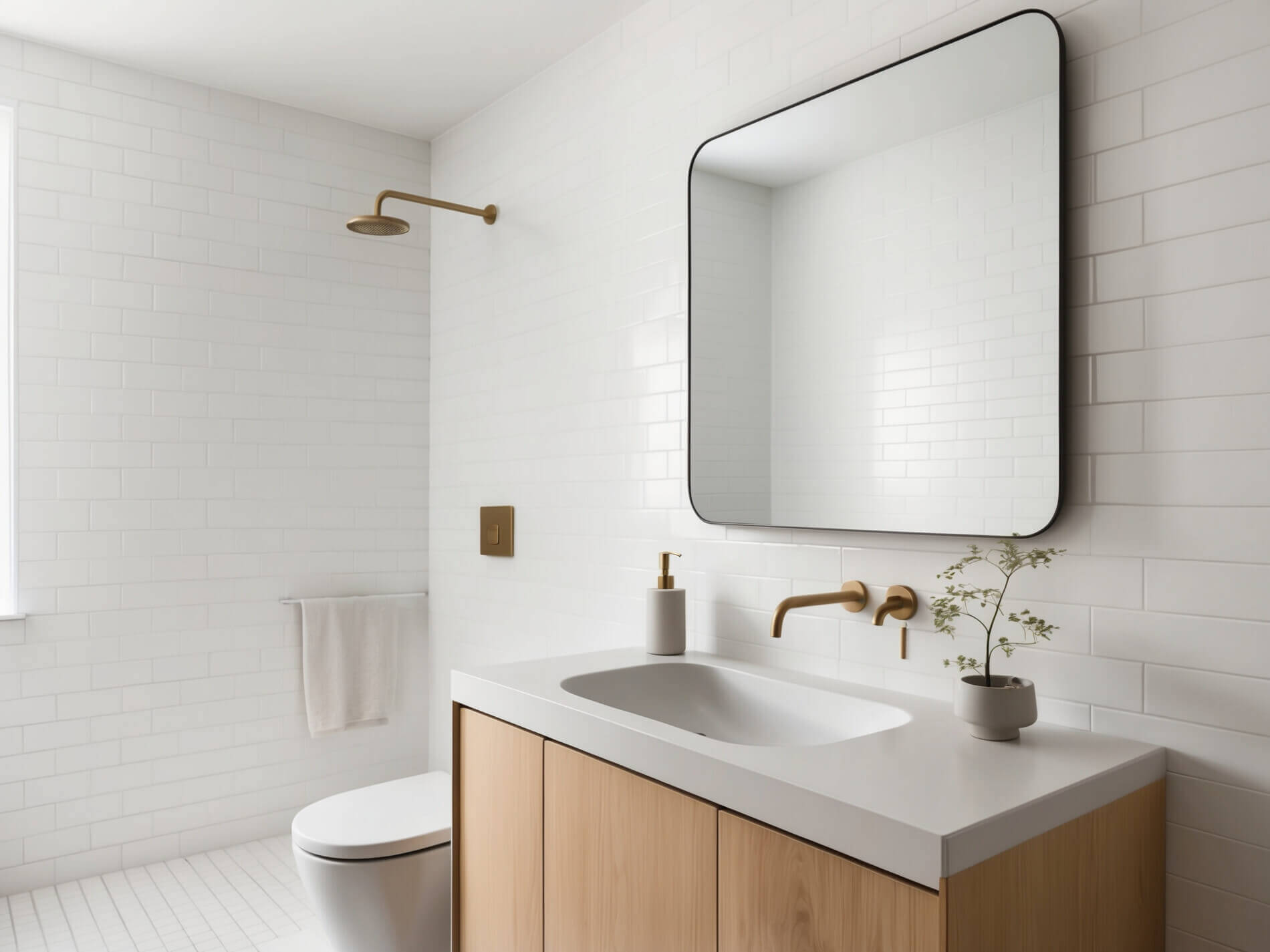
White surfaces return more available light than darker colours, which can help a bathroom feel brighter. A gloss finish usually reflects light more strongly, while a matte finish gives a softer and less reflective result.
The effect also depends on the room itself. Windows, mirrors, artificial lighting and surrounding finishes all influence how bright the bathroom feels. I would never promise that white tiles will make a room look larger, but they can reduce some of the visual heaviness created by darker wall finishes.
Flexible Bathroom Styling
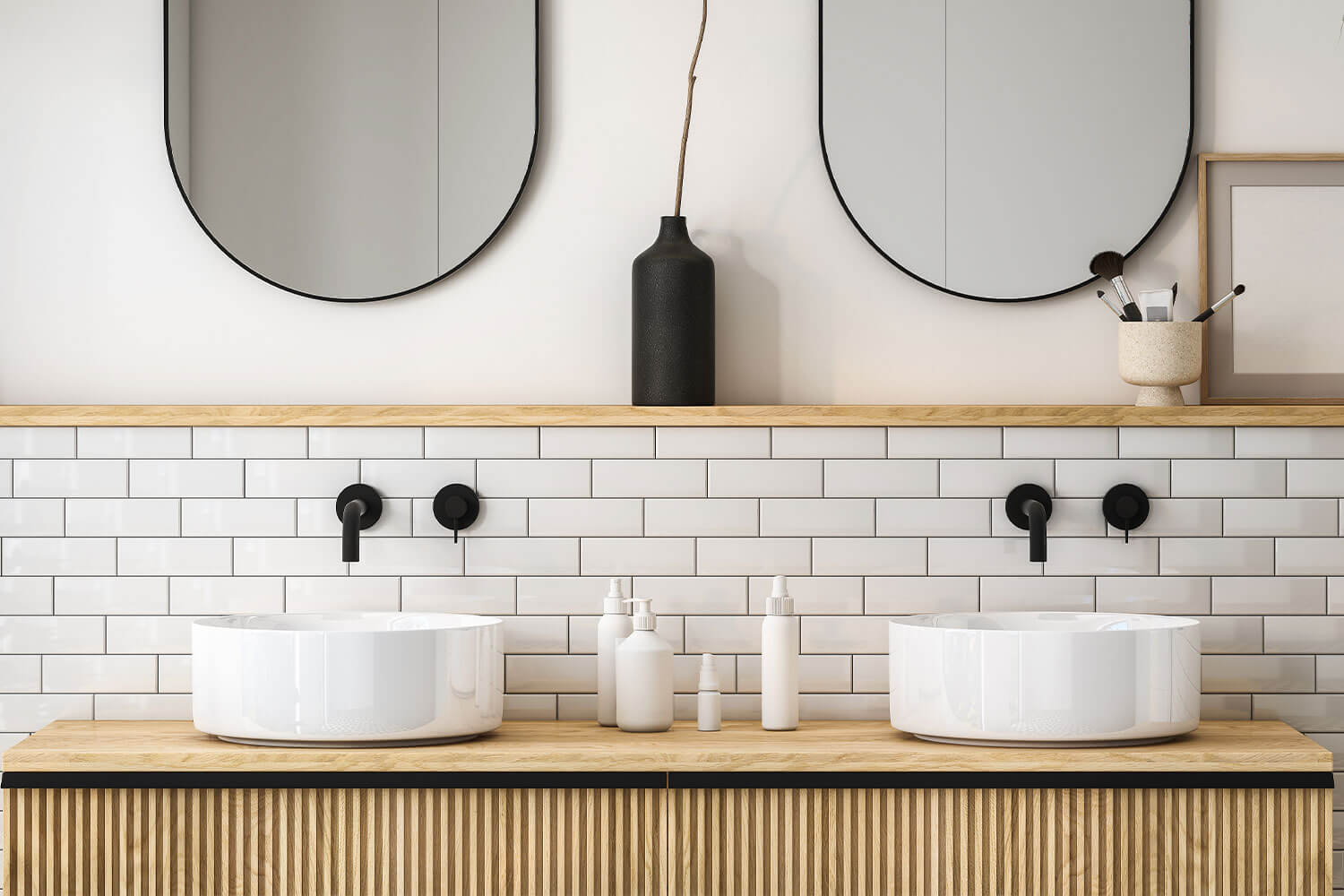
A simple white rectangular tile can support many bathroom styles without controlling the whole design. It can sit comfortably with timber-look vanities, white cabinetry, chrome tapware, brushed finishes or darker accents.
The grout, fittings and joinery still need to work together. Strong grout contrast creates a more graphic result, while a quieter grout colour lets the wall read as a more continuous surface. Homeowners comparing other finishes and formats may also find our guide to Australian bathroom tile ideas useful.
Accessible Sizes and Finishes
White subway tiles in bathrooms are available in different proportions, edges and finishes. Smaller formats create more joints, while longer formats can reduce the number of visual interruptions across the wall.
The wall dimensions matter just as much as the tile size. A format that looks balanced on a wide vanity wall may create awkward cuts in a narrow shower. I recommend checking the complete wall width and fixture positions before settling on a proportion.
Tile Faces Are Generally Easy to Wipe
A glazed ceramic tile face is usually straightforward to wipe with an approved non-abrasive cleaner. Flat surfaces are generally easier to clean than rippled, bevelled or heavily textured tiles.
Grout needs separate attention, so an easy-to-wipe tile face does not make the whole wall maintenance-free. The product and grout manufacturer’s care instructions should guide the cleaning method.
Disadvantages and Maintenance Trade-Offs
Most of the drawbacks come from the grout joints, straight lines and installation detail rather than the white tile face itself. These issues are manageable, but they are worth understanding before you commit to the look.
Grout Needs Its Own Maintenance Plan
Subway tile layouts usually create more grout joints than larger wall tiles. That means there is more grout to clean and inspect over time, especially around showers and vanity splashbacks.
Cement-based grout and epoxy grout have different care needs. Some cement-based products may need sealing, while epoxy grout can offer stronger stain resistance in certain applications. Neither option suits every project, so the grout manufacturer’s instructions should guide sealing and cleaning.
I also recommend choosing a grout colour with maintenance and appearance in mind. Light grout can create a softer wall, while mid-tone or darker grout makes each tile more defined. Dark grout may disguise some marks, but it still needs regular care.
A Familiar Look Can Feel Repetitive
White subway tiles are common, and that familiarity can make some bathrooms feel generic. The problem usually comes from repeating the same tile, grout and fitting combination without considering the room.
A simple format can still feel current when the proportion, grout and surrounding finishes work together. Too much contrast can make a compact bathroom busy, while too little contrast may flatten the design. The best result comes from treating the whole wall as one composition.
Straight Lines Expose Installation Errors
Are subway tiles hard to install? The format is simple, but the straight rows make errors easy to notice. Uneven joints, drifting lines, lippage and awkward end cuts can disrupt the finished wall.
Accurate installation starts with a flat, properly prepared surface and a clear layout plan. Corners, niches, tapware and shower fittings all affect where cuts fall. The chosen tile dimensions also influence how balanced the wall looks.
Labour Depends on the Project
Subway tiles do not always cost more to install. Labour depends on the wall condition, tile size, layout, waterproofing scope and number of cuts.
A basic offset or stacked layout may be straightforward, while herringbone, diagonal work, niches and uneven walls can add time. Local installer rates also vary. Our guide to bathroom tiling costs in Perth explains the broader factors that can affect the total.
White Subway Tiles in Small Bathrooms
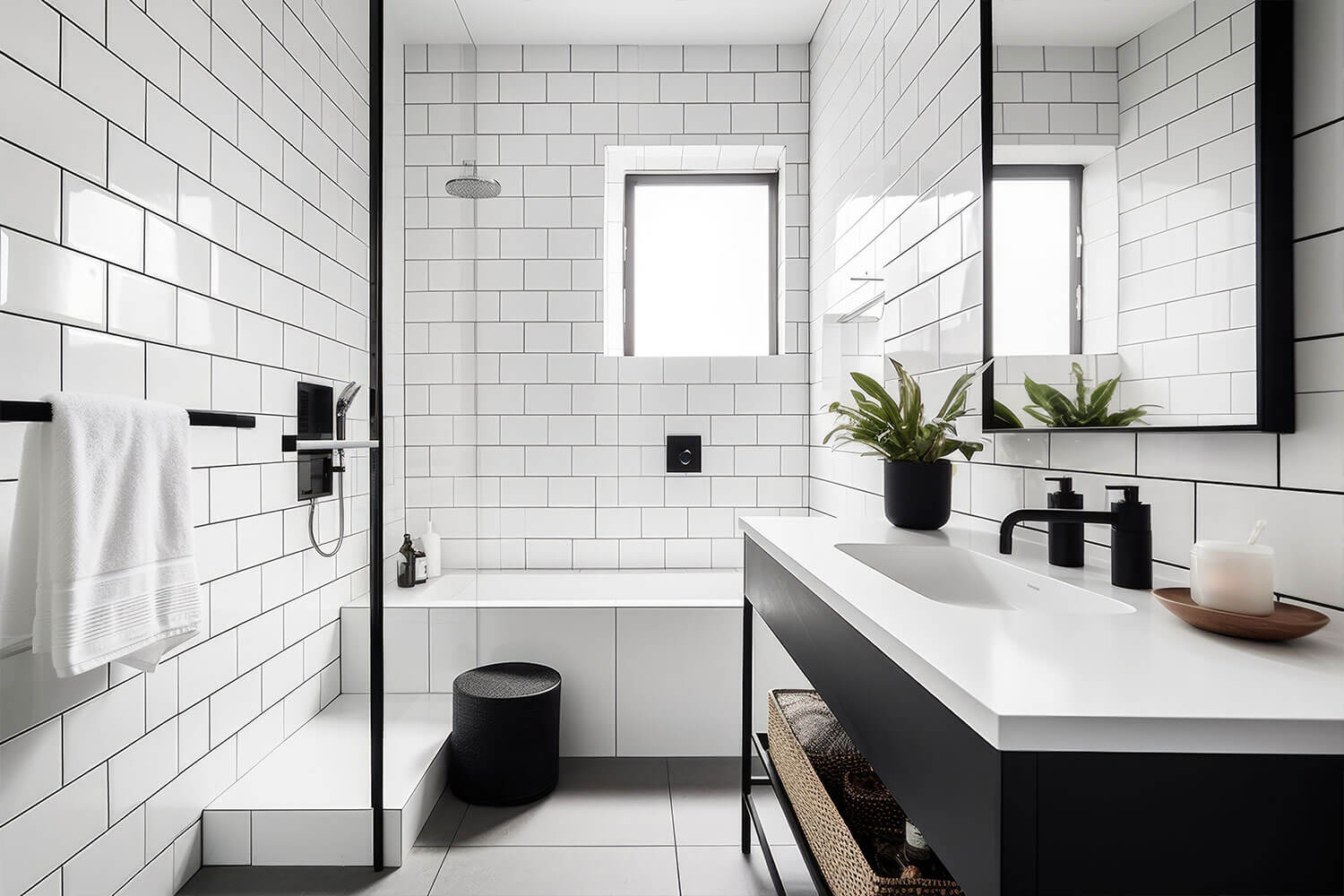
White subway tiles can help a compact bathroom feel brighter and calmer, but they cannot guarantee that the room will look bigger. The final effect depends on the light, tile proportion, grout, wall coverage and fittings working together.
Light and Surface Finish
A light tile can return more available light than a dark wall finish. A gloss surface may strengthen that effect, while matte creates a softer and less reflective result.
Natural light still plays a major role. So do mirrors, artificial lighting and the colours used across the vanity, floor and fittings. In a room with limited light, these elements often matter as much as the tile itself.
Tile Proportions and Grout Lines
Subway tiles in small bathrooms can look very different depending on their proportions. Smaller formats create more joints, while longer subway-style tiles may reduce the number of visual interruptions across the wall.
The wall width also matters. A tile that looks balanced in a showroom can create awkward end cuts on a narrow shower wall. I recommend checking the full wall dimensions and fixture positions before choosing the format.
Grout Contrast and Visual Calm
Low-contrast grout can help the wall read as a quieter surface. Darker grout outlines every tile and makes the pattern more noticeable.
Neither choice physically changes the room size. The better option depends on whether you want a calm background or a stronger graphic effect. Maintenance expectations should also form part of that decision.
Tiling Height and Pattern Direction
Tiling higher can strengthen the vertical line and create a more continuous finish across a shower wall. A vertical layout may emphasise height, while horizontal lines may place more focus on width.
These are visual effects, not guarantees. Ceiling height, wall proportions and surrounding fixtures can change the result. Our guide to subway tile pattern ideas explains the main layouts in more detail.
How to Keep White Subway Tiles Looking Current
White subway tiles can still look current in a bathroom when the tile proportion, finish, grout and surrounding fittings are chosen as one design. The tiles themselves are rarely the only reason a bathroom feels dated.
- Tile proportion. Longer subway-style tiles can create a cleaner, more contemporary wall, while smaller formats often feel more traditional. The right choice depends on the wall width and where the cuts will fall.
- Surface finish. Gloss tiles reflect more light and can create a crisp result. Matte tiles give the wall a softer, quieter appearance. Neither finish is automatically more current than the other.
- Grout contrast. Strong contrast makes the tile pattern more graphic. A closer grout colour allows the wall to read as a more continuous surface. Both can work, but the grout needs to support the rest of the room.
- Fittings and joinery. Tapware, vanity colour, mirror shape and shower-screen finish all influence how the tiles read. A familiar white tile can feel dated when every surrounding choice copies the same past trend.
Are subway tiles out of style? I do not believe they are, but the finished bathroom still needs a clear direction. One considered layout usually works better than combining several competing ideas. The next step is checking whether the chosen tile and layout suit the actual wall.
What to Check Before Buying Bathroom Subway Tiles
The finished result depends on more than choosing a white tile you like. Wall size, grout, fittings and the number of cuts can all change how the bathroom looks and how practical the installation will be.
I once helped a customer who had chosen dark grout and a detailed layout for a narrow bathroom wall. After we checked the wall width, fixture positions and likely cuts, they moved to a quieter grout and a simpler layout. The revised choice reduced visual interruption and made the wall plan easier to resolve.
- Wall Application: Confirm that the selected tile is rated for the intended bathroom or shower wall.
- Floor Suitability: A wall-tile specification does not mean the product is suitable for a bathroom floor.
- Wet-Area Use: Check the product specification and your installer’s requirements for the intended wet area.
- Wall Dimensions: Measure the full tiled area and account for corners, niches, fittings and end cuts before choosing the format.
- Quantity and Wastage: Confirm the required quantity with your installer and allow for the selected layout, cuts and breakage.
- Batch Consistency: Order enough tiles from the same batch where colour or finish variation could affect the result.
- Grout and Trim: Choose the grout colour, trim and joint width as part of the complete wall design.
- Installer Input: Discuss wall preparation and layout before ordering if the room has uneven walls or detailed cuts.
Our current subway tile range shows the latest prices, sizes, finishes and product specifications. You can also compare the finishes and proportions in our Guildford showroom before making your final choice.
Frequently Asked Questions About White Subway Tiles in Bathrooms
These are the practical questions I hear most often before homeowners settle on the tile, grout and layout for a bathroom renovation.
Are White Subway Tiles Right for Your Bathroom?
White subway tiles in bathrooms suit homeowners who want a bright, flexible wall finish and do not mind visible grout lines. They work best when the tile proportion, grout and fittings support the room rather than compete for attention.
A different format may suit you better if you want fewer grout joints, a quieter continuous surface or a less familiar shape. Wall dimensions also matter. A tile that creates awkward cuts around corners, niches or fittings can weaken an otherwise simple design.
Before deciding, check the intended wet-area use, actual wall measurements and current product specification. You can compare the available finishes and proportions online or visit our Guildford showroom to see how the tiles look in person.
