
Open Shelving vs Kitchen Cabinets: Which Works Better?
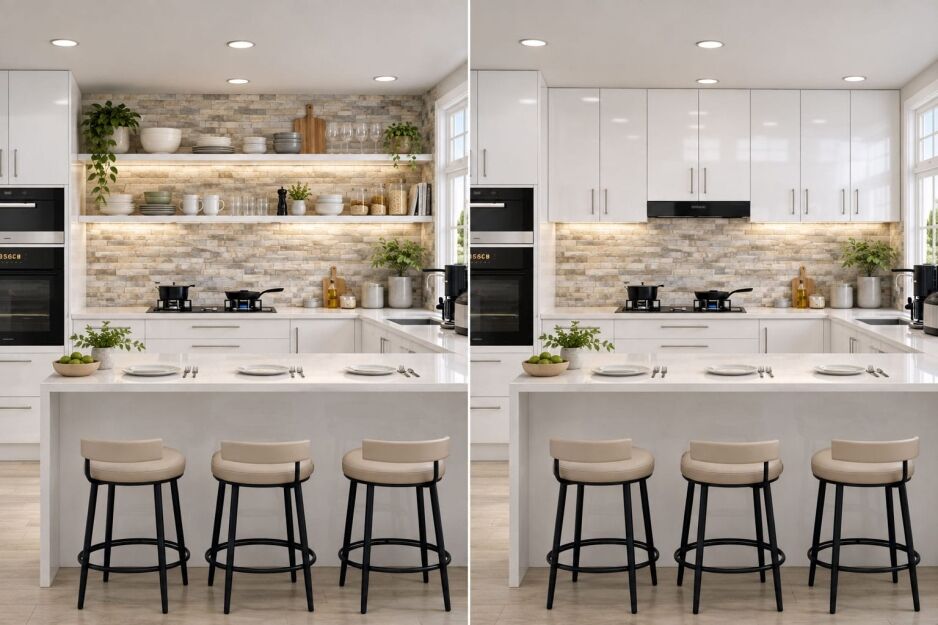
Open shelving vs cabinets is one of those kitchen decisions that looks easy in photos and gets harder once you think about what you actually need to store. Open shelves can make a wall feel lighter and keep everyday items close at hand. Kitchen cabinets give you more enclosed storage and somewhere to hide the things you would rather not have on display.
After years of helping people plan kitchens, I find the biggest mistake is choosing the look first and counting the storage second. A few open shelves holding mugs and bowls are very different from living with groceries, cookware, small appliances and everything else a working kitchen collects.
We sell enclosed kitchen cabinetry rather than open shelving, so I’m not going to pretend both options suit every home in the same way. I’ll compare storage, cleaning, clutter and small-kitchen trade-offs so you can work out whether shelving, cabinets or a mix of both makes more sense.
Open Shelving vs Kitchen Cabinets at a Glance

Neither option is better for every kitchen. Open shelving gives you faster access and a lighter visual effect, while kitchen cabinets give you more enclosed storage, protect contents from dust and grease, and hide clutter. Many kitchens work best with cabinets for bulk storage and a smaller open section for everyday or display items.
The biggest difference between open shelving vs kitchen cabinets is how much storage stays visible. Shelving puts it on show. Cabinets keep it behind doors and drawers. That changes how the kitchen looks, how much you can store and how much cleaning is involved.
| Factor | Open Shelving | Kitchen Cabinets |
| Access | Items are visible and easy to reach | Items are stored behind doors or in drawers |
| Storage capacity | Lower overall storage density | Higher enclosed storage capacity |
| Clutter | Everything remains visible | Everyday clutter can be concealed |
| Dust and grease | Contents stay exposed | Doors protect most stored items |
| Cleaning | Shelves and displayed items both need cleaning | Mainly fronts, handles and internal spills |
| Visual effect | Lighter and more open | More solid and contained |
| Best for | Frequently used or display items | Bulk storage, cookware, appliances and pantry goods |
| Small kitchens | Can reduce visual weight | Usually gives you more usable storage |
| Mixed layout | Works well as a limited feature | Usually forms the main storage system |
For most homeowners, the choice comes down to storage habits more than appearance. If you like everything tucked away, cabinets usually make more sense. If you use the same mugs, bowls or plates every day and are happy to keep them visible, a small amount of open shelving can work well.
What Open Shelving Is Actually Like to Live With
Open shelving can work well in a kitchen, but it asks more of you than a styled photo suggests. The easiest shelves to live with hold things you reach for all the time, such as mugs, bowls, plates or cookbooks. Because those items move in and out regularly, they are easier to keep clean and organised.
The trade-off is visibility. Open shelves leave everything on show, including mismatched containers, half-used pantry items and anything that starts to look untidy. That does not make open shelving a bad choice. It just means the storage works best when you are comfortable keeping the contents fairly edited.
Shelves near a cooktop or busy preparation area will also pick up more dust and cooking residue. I find kitchen open shelving easiest to live with when the items on it earn their place through regular use. If something stays untouched for months, it is usually better behind a cabinet door.
An open shelving kitchen works best when the shelves have a specific job. Use them for the things you want close at hand, not as a replacement for every bit of enclosed storage.
Storage Capacity and Organisation
Storage capacity is where open shelves vs cabinets start to feel very different. Open shelves suit selected items, but they are not a straight replacement for drawers, pantry units and deeper cabinet storage.
Kitchen shelving gives you quick access, but everything stays visible. That works for crockery and cookbooks. It gets harder once you add food packaging, small appliances, mixing bowls and cookware. The more you load onto open shelves, the easier it is for the kitchen to feel crowded.
Cabinets give you more flexibility because they can combine shelves, doors and drawers. Kitchen cabinets with shelves can handle pantry goods and cookware, while drawers keep smaller items easy to reach. They also give you somewhere to store the less attractive parts of a working kitchen.
If the terminology is confusing, our guide to kitchen cupboards and cabinets explains how those terms are commonly used in Australia. For this decision, the more useful question is how much storage you want hidden and how much you are happy to leave on display.
I would work out what genuinely needs enclosed storage first. Once that is covered, the shelf vs cabinet decision becomes much easier.
Cleaning, Dust and Cooking Grease
Cleaning is one of the biggest practical differences between open shelves and closed cabinets. With open shelving, both the shelf and the items on it stay exposed. Dust settles on things that are not used often, and shelves near the cooktop can also pick up cooking residue.
Open shelves are easier to manage when they hold things you use regularly. Plates, mugs and bowls that are constantly being washed and put back usually create less of a cleaning problem than decorative items that stay untouched for months.
Closed cabinets protect most stored items behind doors. You still need to wipe fronts, handles and internal spills, but you are not cleaning every plate or glass simply because it has been sitting out.
Placement makes a big difference with open shelves vs closed cabinets. I would keep open shelving away from the greasiest cooking zones where possible. A shelf near a coffee station or preparation area is usually easier to manage than one directly beside a cooktop.
Does Open Shelving Work in a Small Kitchen?
Open shelving can work well in a small kitchen, but it does not create extra space. What it can do is reduce the visual weight of upper storage, especially where a long run of overhead cabinets would otherwise dominate the wall.
The trade-off is storage capacity. Closed cabinets usually hold more because you can use the full depth and hide less attractive items behind doors. Small kitchens with open shelving can look lighter, but removing too many upper cabinets can leave you with nowhere practical to put everyday items.
I normally look at storage first and appearance second. If you already have enough base cabinets, pantry space and drawers, a small section of shelving can break up the wall nicely. If every cupboard is already doing a job, I would keep the enclosed storage.
That matters in plenty of Perth homes with open-plan kitchens, where the kitchen is visible from the dining or living area. Open shelves can make the room feel lighter, but they also put more of your storage on display.
For more ideas on getting more from a tight layout, see our guide on how to maximise your kitchen space.
Is Open Shelving Cheaper Than Kitchen Cabinets?
Open shelving can look cheaper than kitchen cabinets because there are fewer components involved, but that does not always mean the full kitchen costs less.
A simple shelf may only need the shelf material, brackets and installation. A cabinet includes the carcass, doors, hinges and sometimes drawers or internal hardware. That can make shelving look like the budget option.
The catch is storage. If open shelves do not give you enough room, you may still need extra cabinets, drawers or pantry storage elsewhere. I would compare the total storage plan rather than the price of one shelf against one cabinet.
Because we do not sell open shelving, I would not give you a shelf-versus-cabinet price comparison from our range.
When Open Shelving Makes Sense
Open shelving works best when you give it a clear job. It suits items you reach for often and want easy access to, such as mugs, plates, bowls or cookbooks.
I also like it for smaller feature areas. A short shelf near a coffee station can be practical without asking the whole kitchen to stay display-ready. It can also break up a long run of upper cabinets where you already have enough enclosed storage elsewhere.
If you are planning an open shelf kitchen, keep the contents fairly edited and avoid the greasiest cooking zones where you can. If you are trying to store appliances, food packets, cleaning products and bulky cookware, cabinets will usually do a better job.
For me, open shelving makes the most sense as a limited feature rather than the main storage system.
When Kitchen Cabinets Make More Sense
Kitchen cabinets make more sense when storage capacity and clutter control matter more than keeping everything on display. They give you somewhere to store cookware, pantry goods, small appliances and cleaning products without turning the room into a wall of visible stuff.
They also work better if you want drawers, deeper storage and different cabinet configurations doing different jobs. Base cabinets can handle heavier items, wall cabinets keep everyday things within reach, and pantry units give you more vertical storage.
I generally recommend working out everything you need to hide before deciding how much upper storage you can afford to leave open. That usually tells you whether open shelving is a useful extra or whether it would leave you short on practical storage.
If enclosed storage suits the way you use your kitchen, our pre-assembled kitchen cabinets include base, wall, drawer and pantry configurations.
Can You Combine Open Shelving and Kitchen Cabinets?
Yes. A mixed layout is often the most practical way to use open shelving without giving up too much enclosed storage.
I would start with cabinets for the things you want hidden or stored in bulk, such as cookware, food packets, small appliances and cleaning products. Then use open shelving for the items you reach for often or genuinely want on display.
The balance matters. Replacing every overhead cabinet with shelves can leave you short on storage quickly. Open shelving with cabinets lets you break up a long run of cabinetry without sacrificing the whole storage system.
Keep open shelves away from the messiest cooking zones where possible, and line them up with nearby cabinetry so the layout looks deliberate.
This hybrid approach also has a practical Australian example. HIA’s storage example combines floor-to-ceiling cupboards and cabinets with open shelving above the benchtop for easier access.
For me, that is the strongest argument for combining open shelving vs cabinets. You can use each where it does the best job instead of forcing one storage type across the whole kitchen.
FAQs
Which Storage Setup Fits the Way You Use Your Kitchen?
Open shelving vs cabinets comes down to how much storage you need, how much you want on display and how much cleaning you are prepared to do.
Open shelves work well for selected, frequently used items. Kitchen cabinets make more sense for bulk storage, cookware, appliances and anything you would rather keep hidden. In a small kitchen, I would be careful about giving up too much enclosed storage just to make the room feel lighter.
A mixed layout can be the best answer if you want both. Keep cabinets where storage matters most, then use a smaller open section where it genuinely improves access or breaks up a long run of cabinetry.
If cabinets are the better fit for your kitchen, our Kitchen Cabinet Buying Guide will help you work through the next decision, including cabinet types and configurations.
