The right kitchen tiles can make your kitchen easier to clean, better to use and more enjoyable to live with. Wall tiles, floor tiles, grout colour, tile size and surface finish all affect how the room looks and performs.
At Ross’s Discount Home Centre, we help Perth homeowners choose kitchen tiles that suit real homes, not just display kitchens. Some customers need a hard-wearing floor tile for a busy family kitchen. Others want a wall tile that works with white cabinets, timber-look cabinetry or darker benchtops. The best choice depends on where the tile is going and how the kitchen is used.
Understanding Kitchen Wall And Floor Tiles
Kitchen wall tiles and kitchen floor tiles do different jobs. Both need to be practical, but they do not need the same finish, surface feel or strength rating. Start by deciding where the tile will be used, then choose the look from there.
Why Kitchen Floor Tiles Need To Be Practical
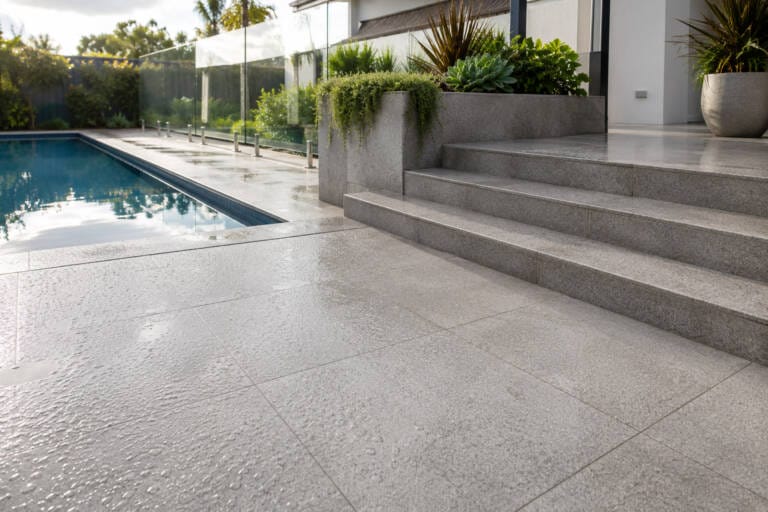
Kitchen floor tiles need to handle daily wear, spills, dropped items and regular cleaning. Porcelain tiles are a strong option for kitchen floors because they are dense, durable and available in many finishes.
For busy households, I usually recommend choosing a floor tile that hides light marks between cleans. Very pale grout can look fresh on day one, but it needs more upkeep in a cooking area. A mid-toned tile with a practical surface is often a better fit for everyday Perth homes.
The size of your floor tile also changes the room. Larger tiles can make a kitchen feel more open, while fewer grout lines can make cleaning easier.
Why Kitchen Wall Tiles Matter
Kitchen wall tiles protect painted walls from cooking marks, steam and daily splashes. They also help tie your cabinetry, benchtop, tapware and flooring together.
Ceramic tiles and porcelain tiles both work well on kitchen walls. Ceramic tiles are often lighter and easy to work with on vertical surfaces. Porcelain tiles add extra strength and a more solid feel.
If your project is focused on the area behind the bench or cooktop, our splashback tiles range is the better place to compare those options. This kitchen tiles range is broader, covering wall and floor tiles for the whole kitchen space.
Types Of Kitchen Tiles To Consider
Kitchen tiles come in different materials, finishes and formats. The right choice depends on whether you are tiling a floor, wall, feature area or full open-plan space.
Porcelain Kitchen Tiles
Porcelain kitchen tiles suit floors and walls because they are strong, dense and easy to clean. They work especially well on kitchen floors where durability matters most.
Many porcelain tiles are also available in larger formats, stone-look finishes and rectified edges. Rectified edges can allow for a cleaner look with narrower grout joints, depending on the tile and installation.
If you want the same flooring to continue from the kitchen into a dining, living or laundry area, porcelain is often the safest choice. It gives you a consistent look without giving up everyday practicality.
Ceramic Kitchen Wall Tiles
Ceramic kitchen wall tiles are a practical choice for vertical surfaces. They come in a wide range of colours, shapes and finishes, making them easy to match with cabinetry and benchtops.
I often suggest ceramic wall tiles when a customer wants a simple kitchen update without changing the whole room. They are a good fit when the floor is staying as is and only the wall area needs a cleaner, fresher finish.
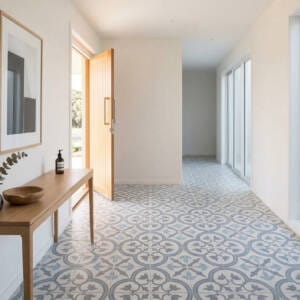
Feature And Patterned Kitchen Tiles
Feature tiles and patterned kitchen tiles can add personality without changing the whole kitchen. They work best when the surrounding finishes are kept simple.
If your cabinets, benchtop and flooring already have strong colour or movement, use feature tiles carefully. A small amount of pattern can look great. Too much can make a kitchen feel crowded, especially in smaller Perth homes, villas and units.
How To Match Kitchen Tiles With Cabinets And Benchtops
Kitchen tiles should work with the fixed finishes around them. Start with your cabinetry and benchtop, then choose tiles that support those colours rather than fight them.
Match The Tile Colour To The Room
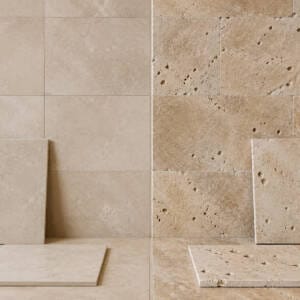
White and light grey tiles suit many cabinet colours and keep the room feeling clean. Warm beige, stone-look and travertine-look tiles can soften a white kitchen. Darker tiles can add contrast, but they need enough natural or overhead light so the room does not feel closed in.
For investment properties, I usually lean toward neutral kitchen tiles that will suit more than one tenant’s furniture and appliances. In a personal home, you can take more of a design lead, but the tile still needs to work with the finishes you are keeping.
Think About Gloss, Matt And Texture
Gloss wall tiles reflect light and can brighten darker kitchens. Matt tiles create a softer look and can be easier on the eye in rooms with strong daylight.
For kitchen floor tiles, surface feel matters more. The tile needs to be easy to clean, but it should also feel practical underfoot. If you are choosing floor tiles for a family kitchen, compare the surface in person before you commit.
The Importance Of Tile Size And Grout Lines
Tile size and grout colour can change the whole feel of a kitchen. They also affect cleaning, which matters in a room used every day.
Large Kitchen Floor Tiles
Large kitchen floor tiles can make a room feel wider and more open. They also reduce the number of grout lines, which can make floors easier to keep clean.
Large tiles work especially well in open-plan kitchens where the flooring continues into dining or living areas. Just make sure the tile size suits the room and the floor is prepared properly before installation.
Smaller Kitchen Wall Tiles
Smaller kitchen wall tiles add more detail and pattern. They suit wall areas where you want texture, shape or a more decorative finish.
Subway, mosaic, Kit Kat and small-format feature tiles can all work on kitchen walls. The key is balance. If the wall tile has a strong shape or colour, keep the surrounding finishes calmer.
Choosing Grout Colour
Matching grout creates a softer, more seamless finish. Contrasting grout makes the tile shape stand out.
On kitchen floors, I usually recommend avoiding very light grout unless the customer is happy to clean it often. On walls, lighter grout is easier to manage because it does not take the same wear as a floor.
Helpful Kitchen Tile Guides
Need help narrowing down the right tile? These guides cover kitchen tile choices in more detail:
Why Shop For Kitchen Tiles At Ross’s Discount Home Centre?
At Ross’s Discount Home Centre, we stock kitchen tiles for walls, floors and full kitchen renovations. Our range includes ceramic, porcelain, feature, patterned, stone-look and neutral tiles, with options for modern, classic and investment-property kitchens.
We have helped Perth homeowners with renovations for decades, and tiles are one of those products where seeing the colour and texture in person really helps. Online photos are useful, but they do not always show how a tile looks under your home’s lighting.
Shop kitchen tiles online or visit our showroom at 57 James Street, Guildford. Our team can help you compare wall and floor tile options, match them with your kitchen finishes and choose a practical tile for your renovation.